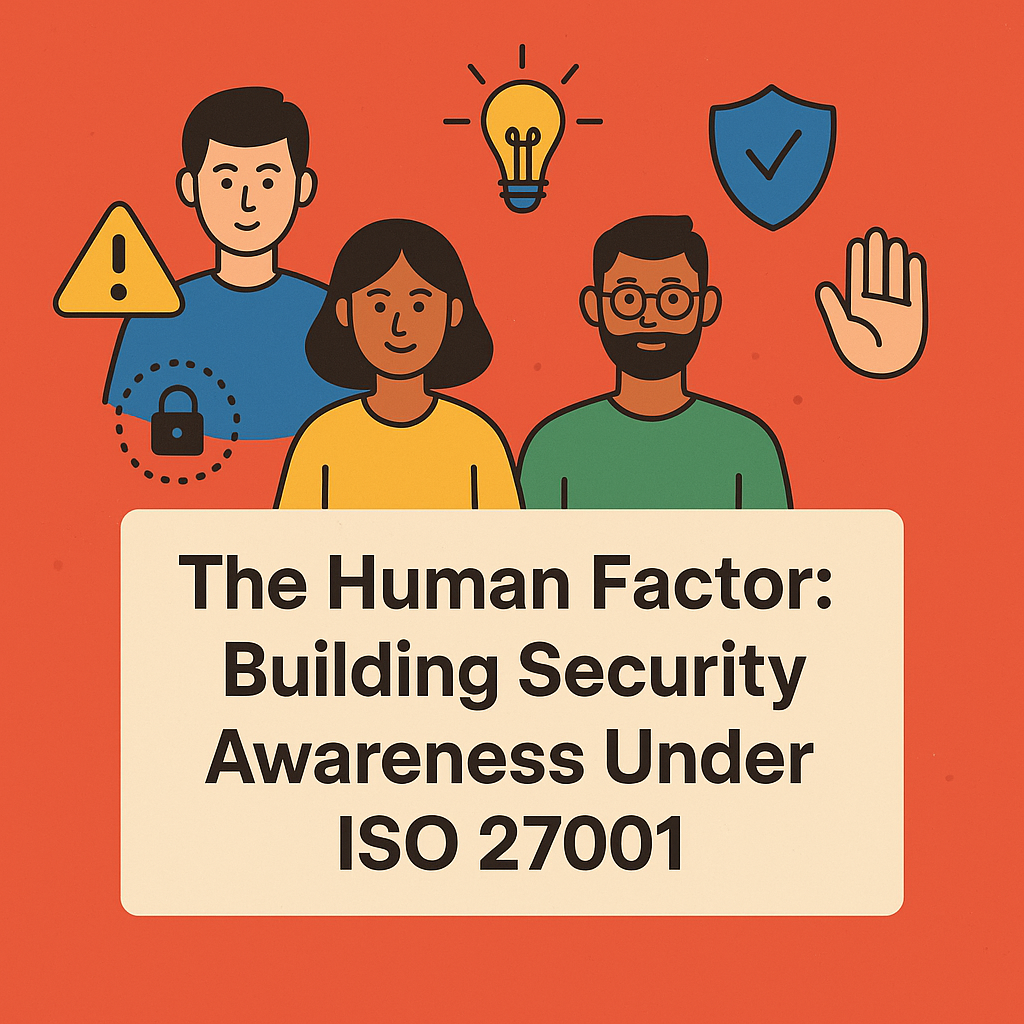
The Human Factor: Building Security Awareness Under ISO 27001
When most Canadian organizations begin their ISO 27001 journey, their leadership teams tend to focus on the technical pieces first encryption, access controls, asset inventories, and incident response plans. But during implementation, they often discover something surprising:
Their biggest risk isn’t the cloud. It’s their people.
This is the story of NorthPeak Analytics, a fictional Canadian SaaS and data-processing company that learned this
lesson firsthand.
Note: NorthPeak Analytics is a fictional example used for illustration. It is not a real company.
The Turning Point: A Near-Miss Incident
NorthPeak Analytics was growing quickly. Their platform supported dozens of Canadian clients in logistics, real estate, and public services. Like many scaling companies, they began receiving vendor security questionnaires from enterprise clients each one asking the same question:
“Do you have ISO 27001 certification?”
Inspired by the growing demand for ISO 27001 across Canadian industries, NorthPeak decided it was time. They hired a consulting team and mapped out their Information Security Management System (ISMS). The technical work
began smoothly patching, encryption, documentation.
No breach occurred thanks to MFA, but the message was clear: their human risk was higher than their technical risk.
Clause 7: The Most Overlooked Part of ISO 27001
As NorthPeak continued their ISO journey, they discovered that Clause 7 Support required a structured focus on
people, not just technology:
- Competency validation
- Security training
- Awareness programs
- Role-based responsibilities
- Human-centric controls
Many organizations underestimate Clause 7, but Canadian Cyber’s market insights show that companies regularly request staff training and awareness support as part of their ISO 27001 engagements. NorthPeak realized they needed a security awareness program that didn’t just check boxes it had to change behavior.
Building a Human-Centric ISO 27001 Awareness Program
NorthPeak’s leadership designed a strategy focused on real-world risks, Canadian regulatory expectations, and ISO 27001 control requirements.
1. Start With a Baseline Awareness Assessment
- Do employees recognize phishing attempts?
- Do they understand the value of customer data?
- Do they know how to report a suspicious incident?
The results were eye-opening: less than 40% could identify social engineering attempts. This highlighted exactly why ISO 27001 strongly emphasizes human factors.
2. Launch Role-Based Training (Not Generic Videos)
Different teams received practical, role-specific training instead of generic awareness videos:
- Technical staff: secure coding, access control usage, cloud platform best practices
- Administrative staff: data handling, password hygiene, email and attachment safety
- Executives: security governance, incident escalation, risk-based decision-making
This aligned with ISO 27001’s expectation that competency must match responsibility.
3. Reinforce Policies With Real-World Canadian Context
NorthPeak built in practical Canadian examples, including:
- PIPEDA breach reporting requirements
- Québec’s Law 25 privacy expectations
- Vendor security scrutiny from Canadian enterprise clients
This made security feel relevant not theoretical.
4. Create an Always-On Culture Through Micro-Training
To keep security top-of-mind without overwhelming staff, NorthPeak used micro-training, such as:
- Monthly 3-minute video refreshers
- Quarterly security quizzes
- Regular phishing simulations
- Brief internal “security tips” posts in Slack or Teams
5. Practice Real Incidents Tabletop Style
Once each quarter, the team ran a mock incident response exercise, including scenarios like:
- Phishing attacks targeting finance or HR
- Simulated ransomware attempts
- Unauthorized access to a key system
- A lost laptop or mobile device with client data
These exercises satisfied ISO 27001’s competency requirements and prepared the team for real emergencies.
6. Make Security Part of Onboarding
Every new employee at NorthPeak:
- Completed core security training on day one
- Read and signed key security policies
- Was assigned role-specific security responsibilities
This ensured no one slipped through the cracks and security became part of the culture from day one.
How NorthPeak Transformed Its Culture
Six months later, the transformation was obvious:
- 92% of employees could identify phishing attempts
- Staff reported suspicious emails immediately
- Security responsibilities were clearly understood across teams
- Vendor security assessments became easier to pass
- Enterprise clients expressed greater confidence in the company
For NorthPeak Analytics, ISO 27001 wasn’t just a certification. It became a cultural shift one powered by people, not tools.
Canadian Context: Why Awareness Matters More Than Ever
Canadian businesses across industries now pursue structured security frameworks because of regulatory pressure, cyber risk, and customer expectations.
Within that trend, human-focused controls are increasingly in scope for vendor and audit reviews, including:
- Security awareness training
- Staff competency validation
- Policy understanding and attestations
- Incident communication and escalation procedures
These expectations are especially strong in finance, healthcare, and manufacturing where people, processes, and
systems all intersect.
Organizations can no longer rely solely on technical safeguards. “People are now the first line of defense.”
Need to Build an ISO 27001-Ready Awareness Program?
Canadian Cyber helps organizations design and implement human-focused security programs that align with ISO 27001 Clause 7 and support certification efforts.
-
- ✔ Build security training programs aligned with ISO 27001 Clause 7
- ✔ Run phishing simulations and behaviour-changing micro-training
- ✔ Deliver role-based awareness sessions for technical, business, and leadership teams
- ✔ Prepare staff for vendor security reviews and external audits
- ✔ Implement HR-driven security governance and onboarding practices
Ready to Strengthen Your Human Security Layer?
Stay Connected with Canadian Cyber
Follow us for practical cyber awareness tips, ISO 27001 insights, and Canadian-focused security guidance: