ISO 27001 Certification: Building a Secure Foundation for Your Business
Why Canadian organizations are using ISO 27001 to protect data, meet regulations, and earn long-term trust.
Cybersecurity used to be a technical concern. Today, it is a business requirement.
Customers ask how their data is protected. Partners demand proof of security controls.
Regulators expect accountability. Boards want assurance that risks are managed.
For many Canadian organizations, ISO/IEC 27001 is the framework that brings all of this together.
ISO 27001 is not just a certification. It is an internationally recognized standard for managing information security risk in a structured, repeatable way.
Quick Snapshot
| Category | Detail |
|---|---|
| Topic | ISO 27001 certification and building an Information Security Management System (ISMS) |
| Best for | SaaS, professional services, fintech, healthcare, government vendors, regulated organizations |
| Why it matters | Stronger risk management, audit readiness, privacy alignment, and customer trust |
| Key insight | ISO 27001 is a foundation for continuous improvement not a checkbox exercise |
What Is ISO 27001, Really?
ISO/IEC 27001 is the global standard for establishing, implementing, maintaining, and continually improving an Information Security Management System (ISMS).
In simple terms, an ISMS answers four critical questions:
- What information do we need to protect?
- What risks threaten that information?
- What controls reduce those risks?
- How do we prove those controls work over time?
Unlike point-in-time security tools, ISO 27001 focuses on governance, risk management, and continuous improvement.
That’s why it’s trusted worldwide.
Why ISO 27001 Is Gaining Momentum in Canada
Across Canada, ISO 27001 adoption is increasing rapidly, especially in:
- Finance and fintech
- Healthcare and healthtech
- Government contractors
- Professional services
- Technology and SaaS companies
The reason is simple: Canadian privacy and regulatory expectations are rising. Organizations must demonstrate reasonable safeguards, accountability, and structured security programs.
ISO 27001 aligns well with this reality because it forces you to define governance, assess risk, implement controls, and maintain evidence continuously.
ISO 27001 as a Foundation Not a Checkbox
A common misconception is that ISO 27001 is “just another compliance exercise.”
In reality, it provides a foundation that supports:
- Privacy compliance
- Risk management
- Incident response readiness
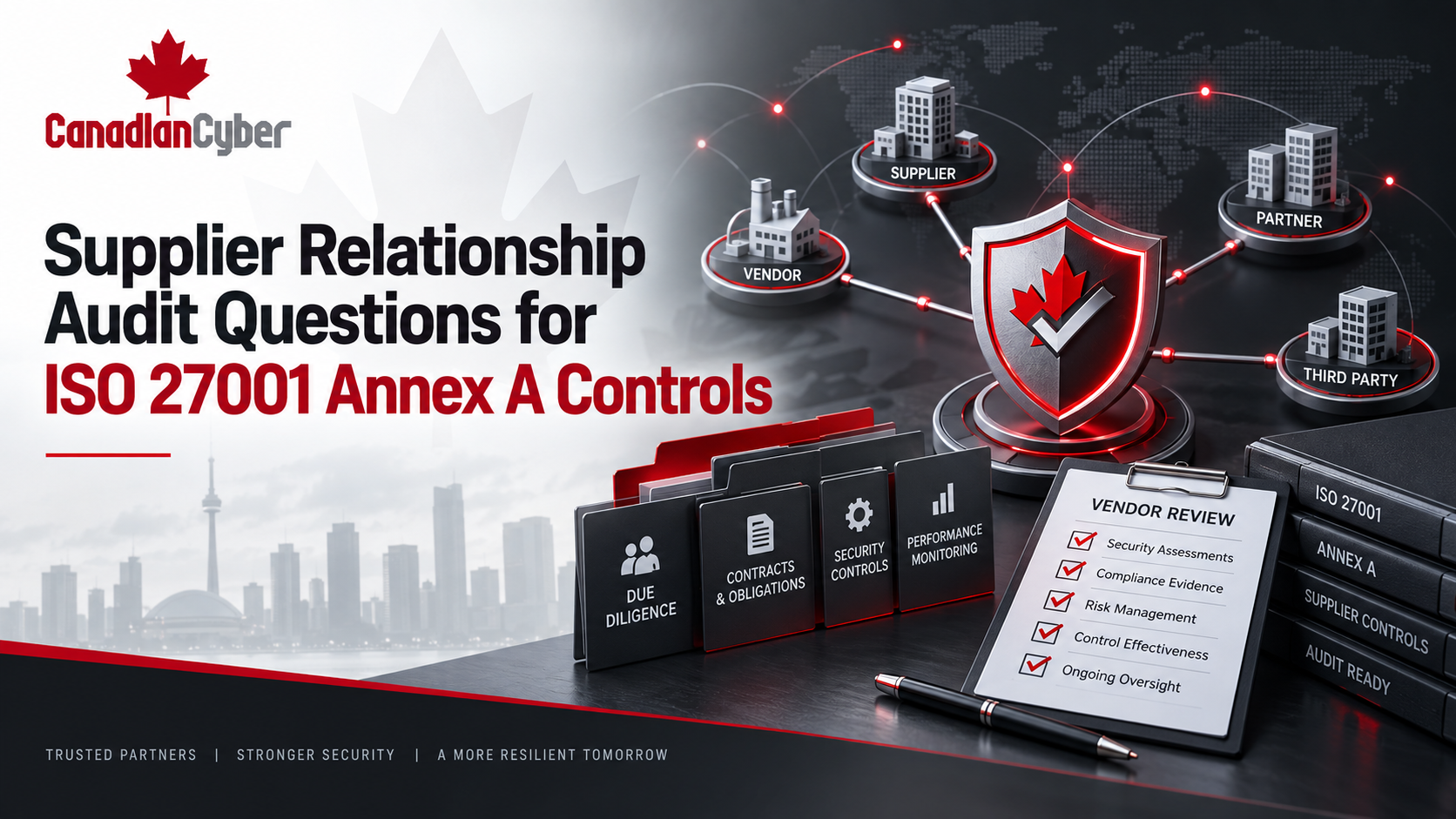
- Vendor security
- Audit readiness
- Customer trust
Instead of reacting to issues, organizations gain a system for managing security proactively.
A Fictional Example: From Informal Security to Structured Trust
This scenario is fictional, but reflects common Canadian business patterns.
A mid-sized Canadian services firm handled sensitive client data but relied on informal security practices.
Policies existed, but they were outdated. Risk assessments were ad hoc. Security decisions were reactive.
When a large enterprise client asked for proof of security governance, the firm struggled to respond.
After adopting ISO 27001, the organization:
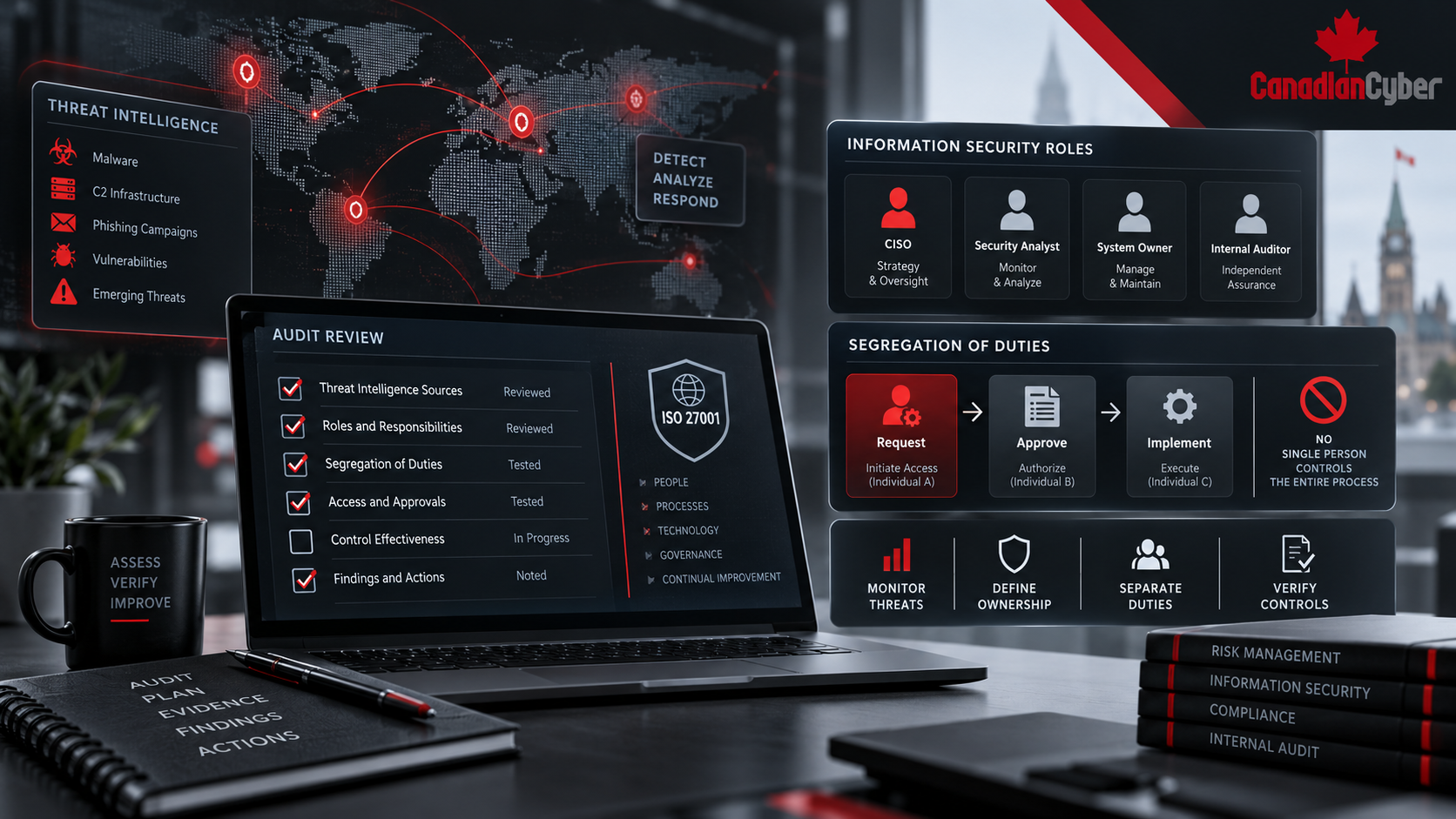
- Defined clear security roles and responsibilities
- Identified and documented information risks
- Implemented consistent access controls
- Established incident response processes
- Created management review and audit cycles
The result was not just a certificate. It was confidence internally and externally.
How an ISMS Actually Protects Your Business
An ISO 27001-aligned ISMS helps organizations move from “best effort” security to intentional security. Here’s how it works in practice.
1) Risk-Based Decision Making
ISO 27001 requires formal risk assessments. Instead of guessing, organizations:
- Identify information assets
- Evaluate threats and vulnerabilities
- Assess likelihood and impact
- Prioritize controls based on real risk
This ensures resources are spent where they matter most.
2) Clear Policies That Reflect Reality
ISO 27001 requires documented policies but not generic ones. Strong ISMS programs ensure policies:
- Match how the business actually operates
- Are reviewed regularly
- Are understood by staff
- Are enforced consistently
3) Built-In Accountability
ISO 27001 requires governance. That means:
- Defined ownership for security activities
- Management involvement
- Regular reviews of performance
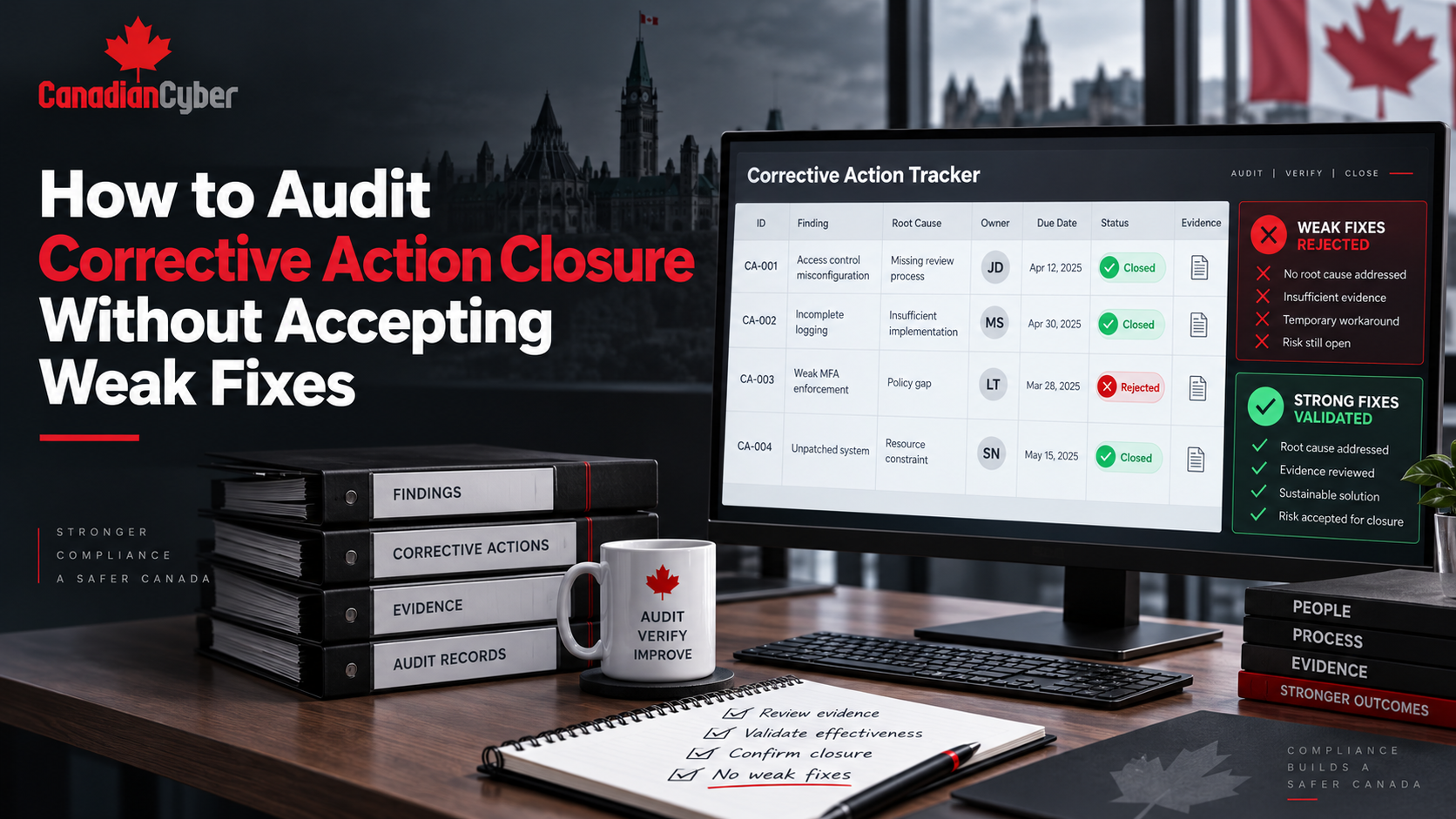
- Corrective actions when controls fail
4) Continuous Improvement
ISO 27001 is not static. Organizations must:
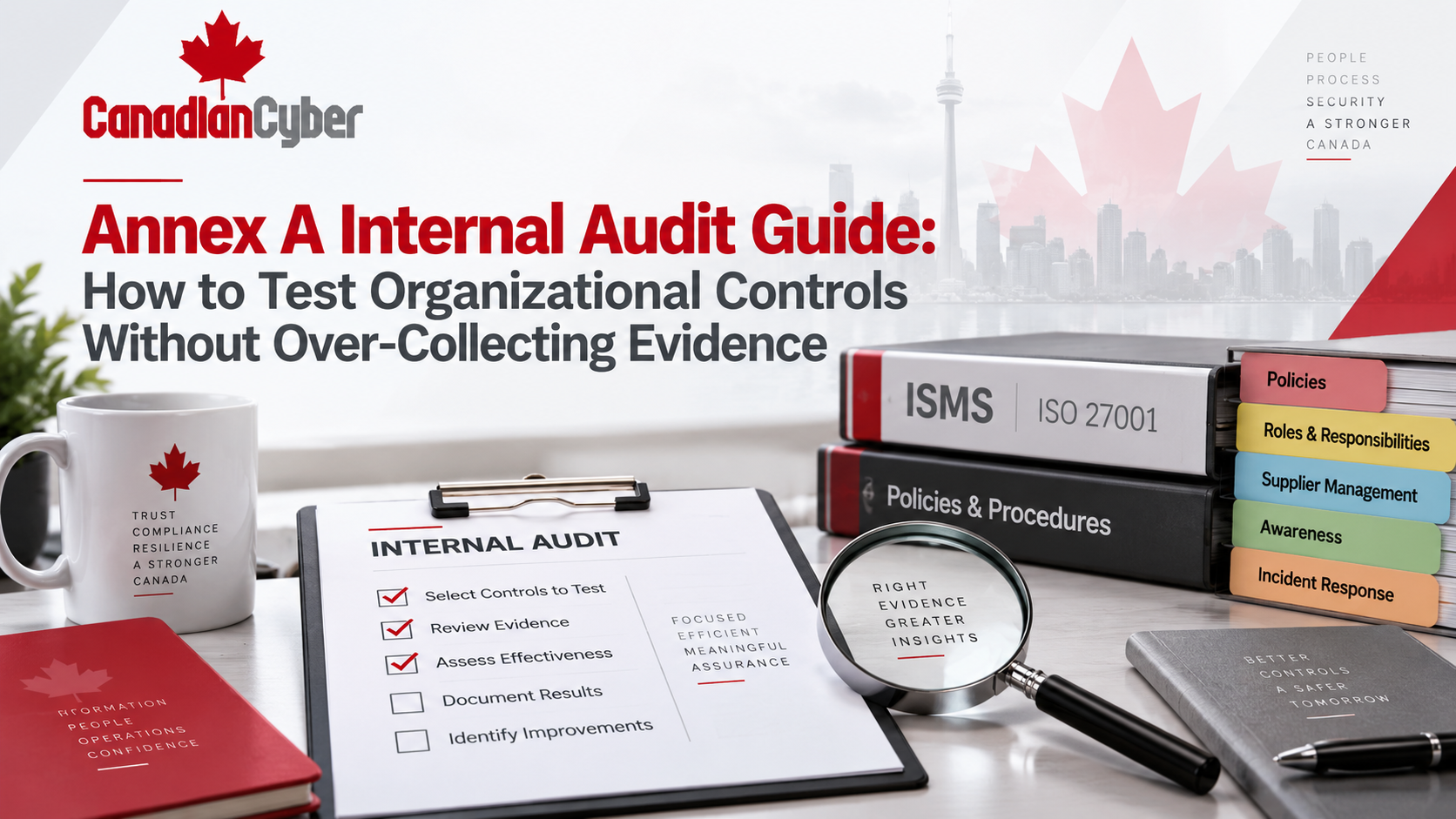
- Perform internal audits
- Review incidents and near misses
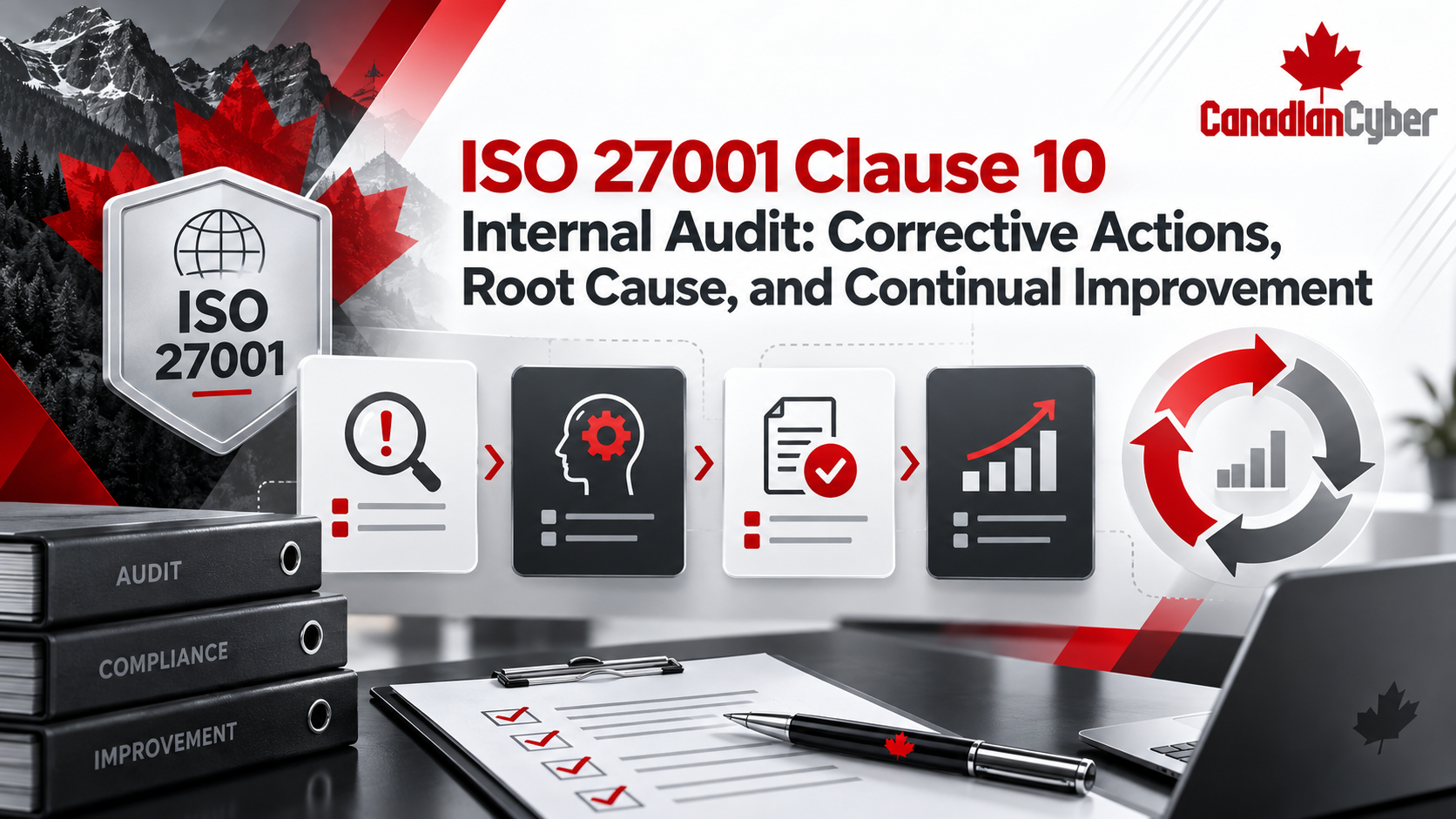
- Track corrective actions
- Adapt controls as the business changes
The outcome: a security program that is resilient, evidence-driven, and easier to maintain over time.
Why ISO 27001 Builds Trust With Clients and Partners
From an external perspective, ISO 27001 sends a simple message:
“We manage information security systematically.”
Because ISO 27001 is internationally recognized, it is trusted across borders, industries, and supply chains.
For Canadian organizations working with enterprise customers, government agencies, healthcare institutions,
and financial partners, ISO 27001 can shorten security reviews and reduce friction.
ISO 27001 and Canadian Privacy Expectations
Canadian privacy expectations require organizations to demonstrate reasonable safeguards and accountability.
ISO 27001 supports this by:
- Establishing governance and leadership oversight
- Enforcing access controls and encryption practices
- Supporting incident detection and response readiness
- Requiring documentation and evidence over time
Want ISO 27001 Guidance That Actually Fits Your Business?
Canadian Cyber helps Canadian organizations build practical ISMS programs that protect data, support compliance, and stay sustainable after certification.
How Canadian Cyber Helps Organizations Succeed With ISO 27001
At Canadian Cyber, ISO 27001 is never treated as a paperwork exercise.
We help organizations build real, working ISMS programs that fit their size, industry, and risk profile.
🔹 ISO 27001 Consulting & Certification Support
- Gap assessments
- Risk assessments
- ISMS design
- Policy and control development
- Certification readiness
🔹 vCISO Services (Strategic Leadership)
- Acting as ISMS owners
- Guiding risk decisions
- Aligning ISO 27001 with business goals
- Reporting to leadership and boards
🔹 Internal Audits & Audit Simulations
- Internal ISMS audits
- Pre-certification audit simulations
- Evidence reviews
- Continuous improvement support
🔹 Privacy & Regulatory Alignment
- PIPEDA alignment support
- PHIPA alignment support
- Quebec Law 25 alignment support
- Industry-specific requirement mapping
What ISO 27001 Gives You (In Practical Terms)
| Business Need | ISO 27001 Advantage |
|---|---|
| Clear accountability | Defined roles, governance, and management reviews |
| Better risk decisions | Formal risk assessments tied to real priorities |
| Audit readiness | Evidence-driven controls and repeatable processes |
| Customer trust | Internationally recognized assurance |
| Program that lasts | Continuous improvement through audits and corrective actions |
ISO 27001 Is a Long-Term Investment
Organizations that succeed with ISO 27001 do not ask, “Will this help us pass an audit?”
They ask, “Will this help us manage risk as we grow?”
That mindset is what turns ISO 27001 into a competitive advantage.
Ready to Build a Secure Foundation for Your Business?
If you want more than ad-hoc security and need a structured, trusted approach ISO 27001 is the right place to start.
Stay Connected With Canadian Cyber
Follow Canadian Cyber for insights on ISO 27001, cybersecurity governance, and compliance in Canada: