Get in touch
info@canadiancyber.ca


Rafia Rizwan

April 2, 2026
Learn how a multi-location restaurant group improved security across POS, reservations, and third-party apps using a practical vCISO approach without slowing operations.
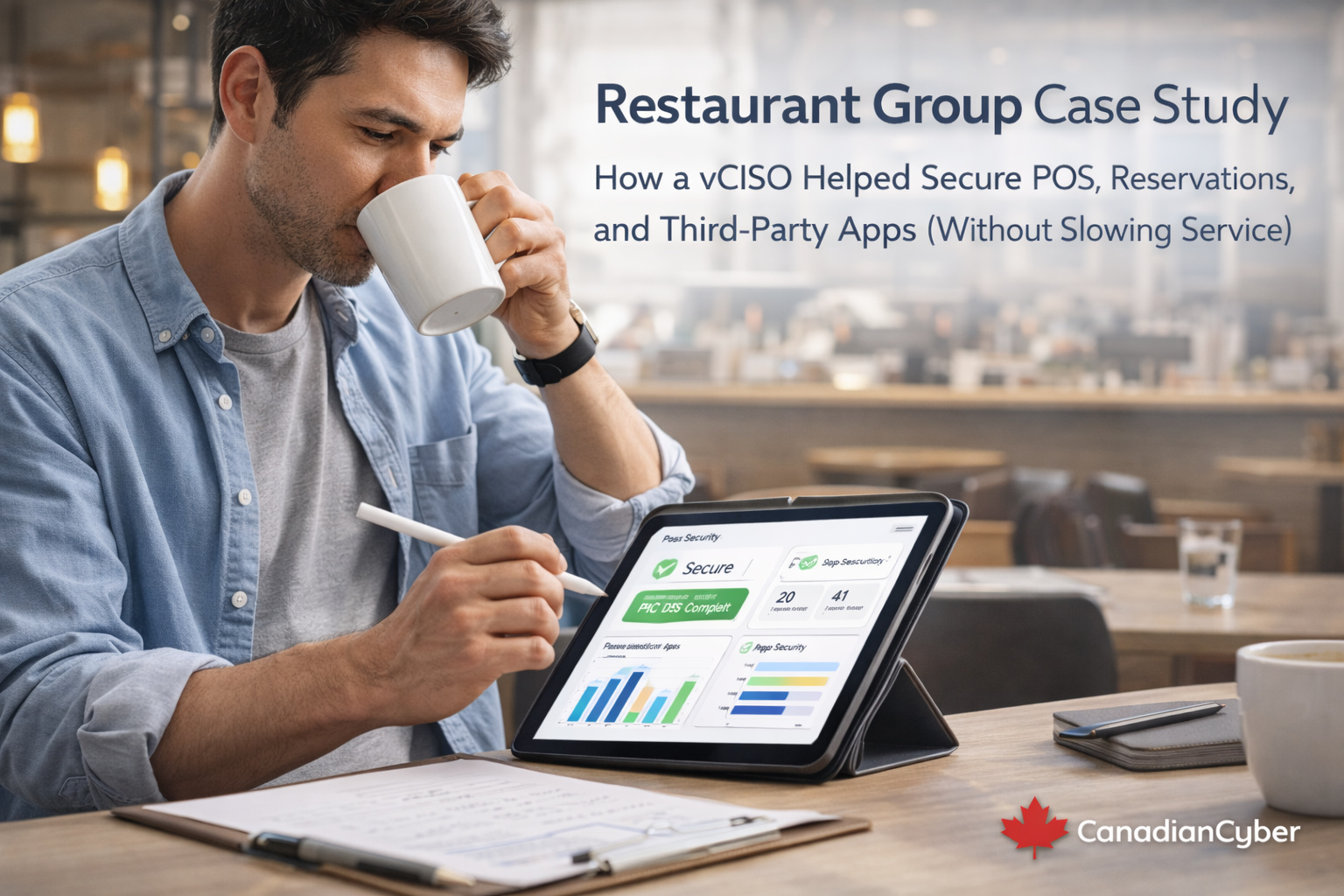
Restaurant groups depend on connected systems now. Cloud POS terminals, iPads, reservation platforms, delivery apps, loyalty tools, payroll systems, managed Wi-Fi, and vendor support paths all play a role in daily operations.
That same connectivity creates very specific security problems. Third-party access grows quietly. Shared admin accounts stay active too long. Integrations remain connected after the business has stopped using them. A single weak login can touch far more than one system.
This case study shows how a vCISO helped a multi-location restaurant group stabilize those risks, create practical controls, and organize the evidence in a way that worked for both day-to-day operations and audit review.
The organization was a multi-location restaurant group with dine-in, takeout, and delivery operations. Like many restaurant groups, the business depended on a mix of systems that had grown over time rather than through a single architecture plan.
The trigger was practical, not theoretical. A buyer partnership opportunity and an insurance renewal both required the group to answer security questions more clearly than before. Leadership needed to explain who had admin access, how third-party apps were approved, whether POS devices were segmented, and how an incident involving customer information would be handled.
The group had some controls in place. The issue was not total absence. The issue was that they could not show those controls in a clean, defensible way.
The vCISO did not approach the environment like a generic enterprise security project. The focus stayed on the risk paths that mattered most in a restaurant setting.
If a POS back-office admin account is compromised, the impact can spread quickly. Bank settlement details may be changed. New users or API keys may be created. Reports with operational or sales data may be exported. In some setups, integrated systems can also be affected.
Reservation systems often hold names, contact details, visit history, guest notes, and in some environments tokenized payment-linked details. That makes them a meaningful privacy and client-trust risk if admin access is too loose.
Delivery, analytics, loyalty, and marketing tools often connect through OAuth, API keys, shared admin credentials, or long-lived tokens. Some integrations stay active long after the business has stopped using them.
Common issues included guest Wi-Fi overlapping too closely with operational devices, shared iPads with weak device controls, vendor access with no clear expiry, and temporary firewall rules that never got removed.
The goal was not to turn the restaurant group into an enterprise SOC. The goal was to create a short, repeatable control system with evidence that could stand up to operational review and outside scrutiny.
Instead of trying to secure everything at once, the vCISO defined a narrow operational scope around the systems that would create the fastest business pain if they were compromised. That included POS admin and settlement paths, reservation platform administration, third-party app connections, network segmentation, and Microsoft 365 identity controls for management accounts.
The result was a one-page systems boundary that leadership could review and understand. That made decisions faster and kept the project from expanding into a general IT cleanup exercise.
The quickest control wins were identity-related. Shared admin accounts were removed or locked. Named roles were created for store managers versus head office admins. MFA was enabled on POS, reservations, and Microsoft 365 admin paths. Vendor access accounts were also moved toward stronger authentication.
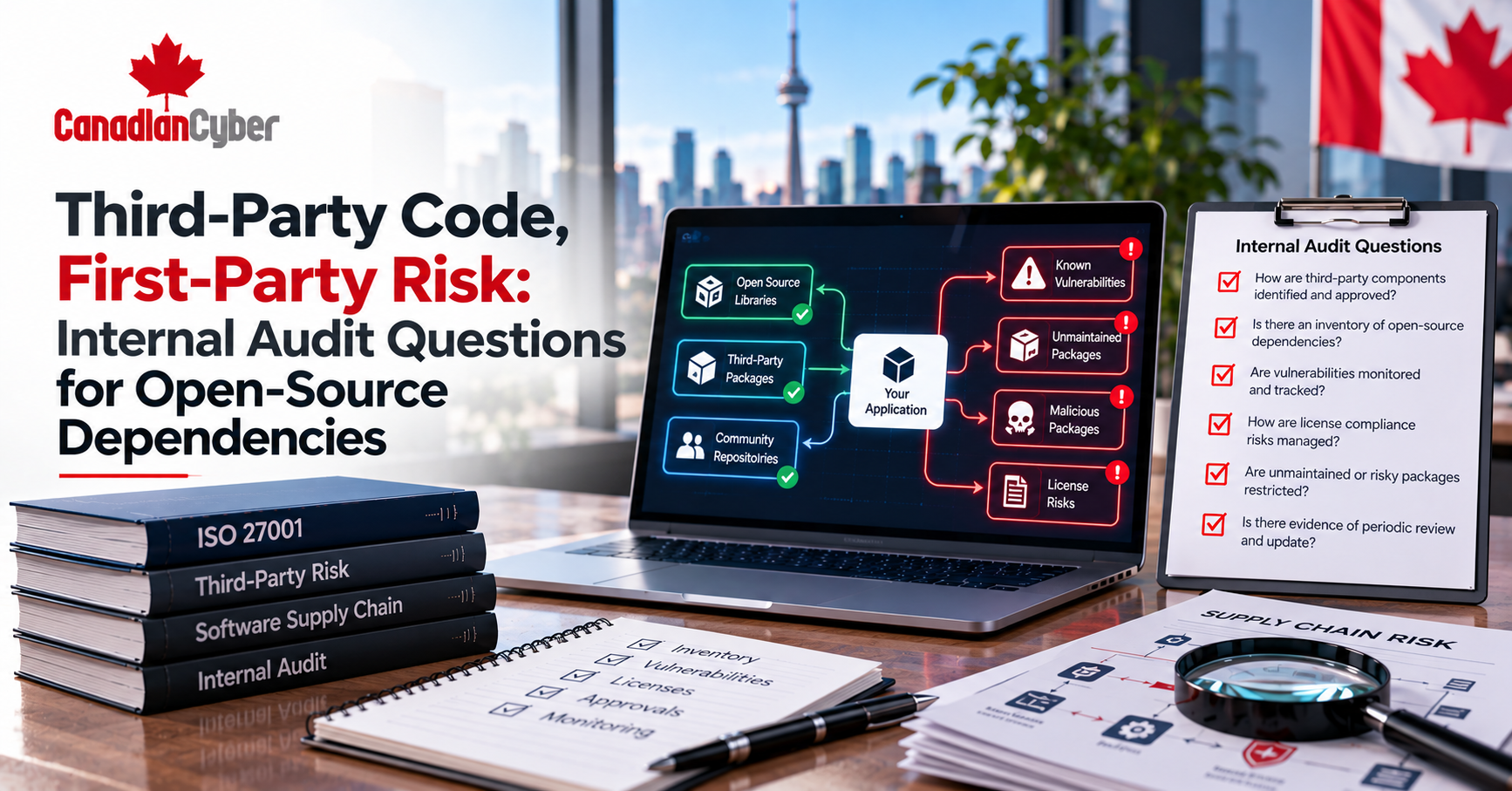
This was one of the biggest trust gains. The vCISO created a simple register showing each app or vendor, what it connected to, what data it could access, who approved it, when it was last reviewed, and what evidence supported that decision.
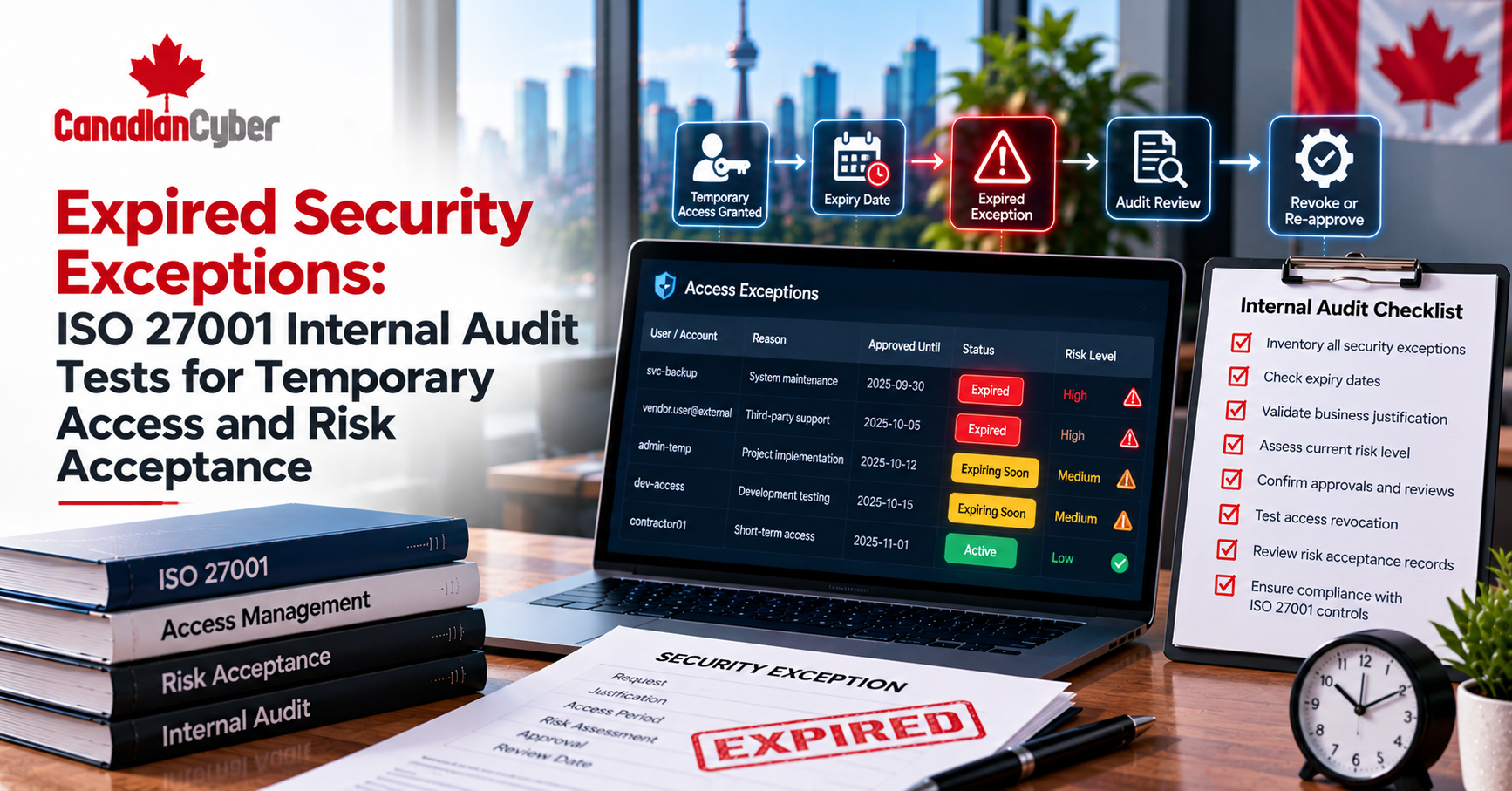
Then a cleanup followed. Unused integrations were removed. API keys were rotated where possible. Export permissions were tightened. Exceptions were documented with expiry dates. This is where leadership started to feel that the third-party risk was finally becoming visible and manageable.
The vCISO did not ask for a complete network re-architecture. Instead, the work focused on practical outcomes. POS and payment-adjacent devices were separated from guest Wi-Fi. Admin access to network gear was restricted. Vendor remote access was documented and moved toward time-bound approvals with regular review.
This improved the security posture without forcing a high-disruption infrastructure project.
The group did not need a giant incident manual. It needed a usable runbook. The vCISO created a short response guide that answered practical questions: who declares the incident, who calls the POS provider, when third-party connections are disabled, how evidence is preserved, and who communicates externally if needed.
Then they tested it with tabletop scenarios involving POS admin compromise, suspicious reservation exports, and vendor remote access misuse.
The group already used Microsoft 365. But security evidence was spread across inboxes, screenshots, old folders, vendor portals, and people’s memory. The controls existed in places, but the evidence chain did not.
To fix that, the vCISO implemented a lightweight ISMS portal in SharePoint. The point was not complexity. The point was to create one place where policies, evidence, corrective actions, and third-party records could be owned, version-controlled, searchable, and ready for review.
This changed the compliance experience immediately. Security conversations shifted from explanation to demonstration.
The program did not try to solve every long-term security issue in two months. It focused on practical outcomes that leadership, auditors, insurers, and commercial partners would care about first.
| Area | What Changed | Why It Mattered |
|---|---|---|
| Admin access | Reduced, named, reviewed, and protected with MFA | Lowered takeover and misuse risk |
| Third-party integrations | Inventoried, cleaned up, and governed | Made third-party exposure visible and controllable |
| Vendor access | Time-bound and reviewable | Improved oversight without blocking support |
| Store segmentation | Documented and tightened | Reduced cross-network exposure risk |
| Incident response | Runnable, tested, and stored in SharePoint | Improved readiness and audit confidence |
The trust outcomes were just as important as the control outcomes. Partner questionnaires became easier to complete. Internal audit readiness improved. Leadership could see risks and exceptions clearly. And the group moved away from “we think we did that” controls toward controls that could actually be shown.
This case was specific, but the lessons are widely usable. Most restaurant groups do not need a heavy enterprise security program to make meaningful progress. They need a small number of practical controls, clear ownership, and a place to store evidence.
Restaurant groups may not think of themselves as technology businesses first, but they depend on technology constantly. POS, reservations, Wi-Fi, delivery tools, admin portals, and cloud apps now shape daily service as much as staffing and food operations do.
That is exactly why security needs to be practical. It has to reduce risk without slowing the floor. It has to make third-party exposure visible. And it has to give leadership a way to show that controls are real.
In this case, the vCISO did not add complexity for its own sake. The value came from clear scope, strong admin controls, better third-party governance, tighter segmentation, and one place to prove what had been done.