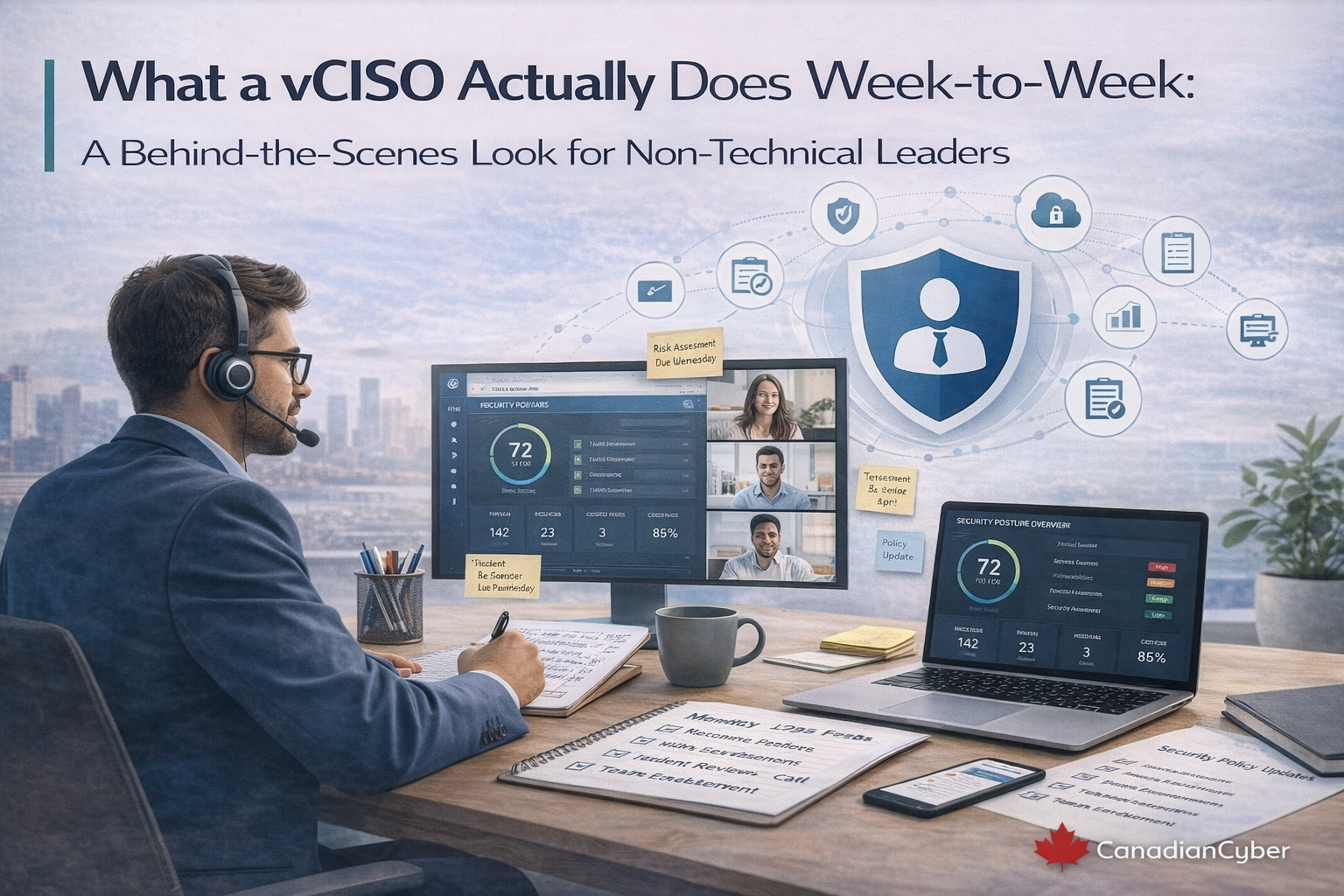
The simple truth: a vCISO runs a security operating system
The value of a vCISO is not that they know security terms. The value is that they make the business run with more structure and less guessing.
A real vCISO should produce:
- clear risks with owners and deadlines
- repeatable controls that operate monthly or quarterly
- evidence customers and auditors can actually review
- incident readiness that is runnable, not theoretical
- board-ready reporting that helps leadership make decisions
If those outcomes are not showing up, you are usually paying for advice instead of protection.
The week-to-week rhythm: what it looks like in real life
Week 1: Reset priorities and close drift
The first week is about clarity. What changed, what drifted, and what needs action now.
1) What changed check
Major releases, new vendors, admin access changes, incidents, near misses, audits, and renewals are reviewed in a short leadership check-in.
2) Risk register update
Top risks are refreshed so leadership sees what is new, what improved, what got worse, and what needs a decision.
3) Evidence due check
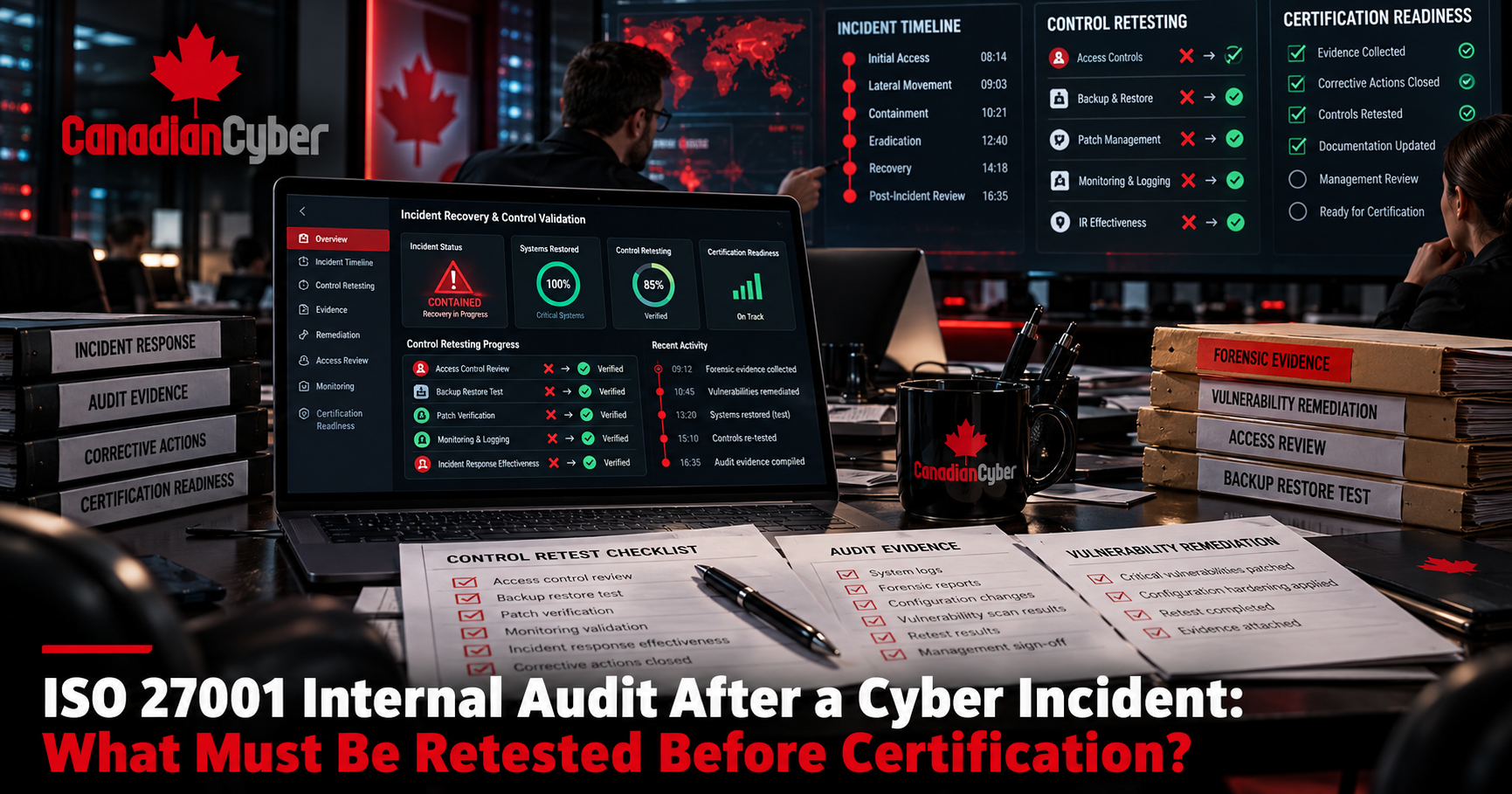
Access reviews, log reviews, vendor reviews, restore tests, change samples, and tabletops are checked before they become late.
What leadership sees:
a short current list of top 5 to 10 risks with owners and due dates, not a giant spreadsheet nobody wants to read.
Week 2: Access and vendor control
This is often the highest ROI week because it targets the most common breach paths: privileged access and critical vendors.
| Work area |
Typical tasks |
What you get |
| Privileged access governance |
Review admin lists, confirm reviews happened, remove stale access, enforce MFA, document exceptions with expiry. |
A short admin access pack with proof and sign-off. |
| Vendor risk triage |
Focus on critical vendors, check assurance evidence, review renewals, and record decisions such as approve, conditional approve, or replace. |
A vendor register that supports real decisions instead of just listing names. |
Week 3: Operational proof
This week is about making security provable. That matters because enterprise buyers and auditors care about evidence, not good intentions.
6) Evidence packs and sampling
Instead of random screenshots, the vCISO curates evidence by period, control area, results, exceptions, and linked proof.
7) Micro-audits
Some vCISOs test 6 to 10 controls a month so the business stays ready without one giant audit panic later.
What you see:
clean evidence folders, faster audits, fewer repeat findings, and much less last-minute scrambling.
The most important idea
A good vCISO does not create busywork. They create a repeatable rhythm so leadership gets clarity, engineering gets fewer surprise requests, and evidence is ready before anyone asks for it.
Week 4: Incident readiness and board reporting
The final week usually focuses on the bad-day plan and on giving leadership a clear view of posture and decisions needed.
8) Incident readiness work
Update runbooks, review alert-to-ticket proof, check logging retention, and run or schedule tabletop exercises.
9) Monthly board pack
Summarize overall posture, top risks, key metrics, incidents or near misses, vendor issues, and decisions leadership needs to make.
What leadership gets:
clarity, not noise. A good board pack is short, decision-oriented, and useful.
What a vCISO does in the background that you might not notice
Some of the most valuable work is invisible unless you know where to look. This is where experienced vCISOs create a lot of leverage.
Translate technical work into business decisions
They turn tool and control details into budget, timing, and risk conversations leadership can actually act on.
Keep scope tight
They prevent ISO 27001 and similar work from becoming a monster by limiting scope to what the business can control and evidence.
Create repeatable templates
Access review packs, vendor review templates, incident memos, management review minutes, and evidence structures all make future work faster.
What you should expect as deliverables
If you want to judge vCISO value, do not look only at meetings. Look for the operating artifacts that show the system is actually running.
- a living risk register with current owned risks
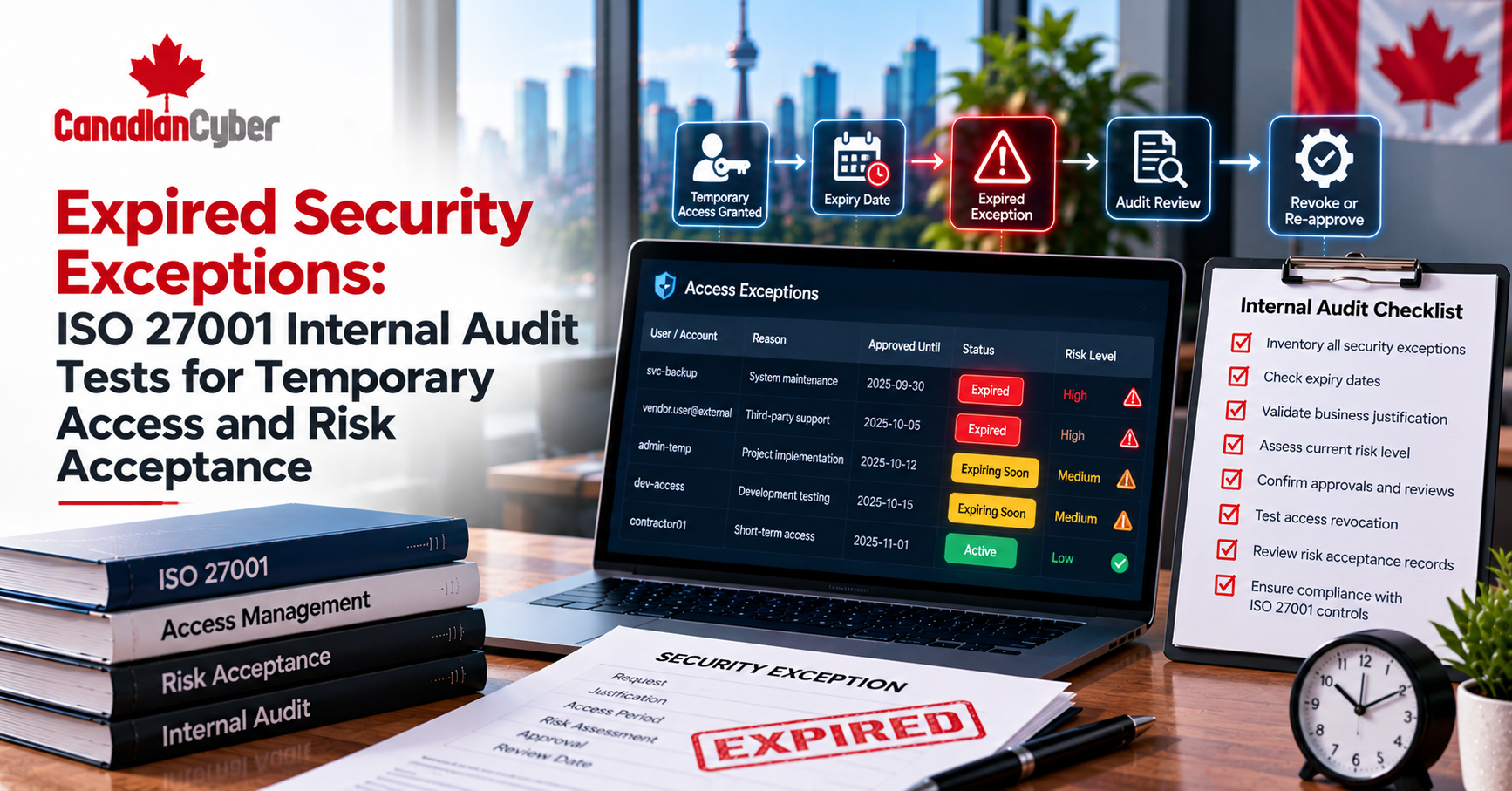
- an exception register with expiry dates
- a vendor register with tiering and review decisions
- evidence packs by quarter
- incident response runbooks and tabletop records
- corrective actions that close with proof and verification
- a monthly board pack that drives decisions
Simple rule:
no deliverables means no operating system.
How much time this should take from your team
A good vCISO model should be low drag. It should not bury your team in compliance busywork.
| Typical monthly time ask |
What that usually means |
| 1 to 2 leadership meetings |
Usually 30 to 60 minutes each |
| 2 to 4 short sessions with control owners |
Usually 15 to 30 minutes each |
| Occasional tabletop exercise |
Usually 60 to 90 minutes quarterly |
If your team is spending more than about 10 hours a week on compliance-style work, the problem is usually scope or evidence structure, not lack of effort.
Red flags that your vCISO is not really operating like a vCISO
Lots of slide decks, little evidence
No risk register with owners and due dates
No exception expiry discipline
No vendor calendar or decision log
No restore tests or tabletop evidence
Everything sounds like we recommend, not we implemented and verified
That is usually consulting. Not week-to-week protection.
If you want a vCISO who runs a real operating system, not just advice
The right engagement should give you visible operating outputs, cleaner evidence, lower drag on your team, and leadership reporting that actually helps decisions get made.
Final thought
The best vCISO relationships do not feel like extra noise. They feel like the business got a clearer operating rhythm: risks are current, evidence is ready, access is tighter, vendors are managed, incidents are easier to face, and leadership has a better view of what matters.
That is what week-to-week value should look like.
Follow Canadian Cyber
Practical cybersecurity and compliance guidance: