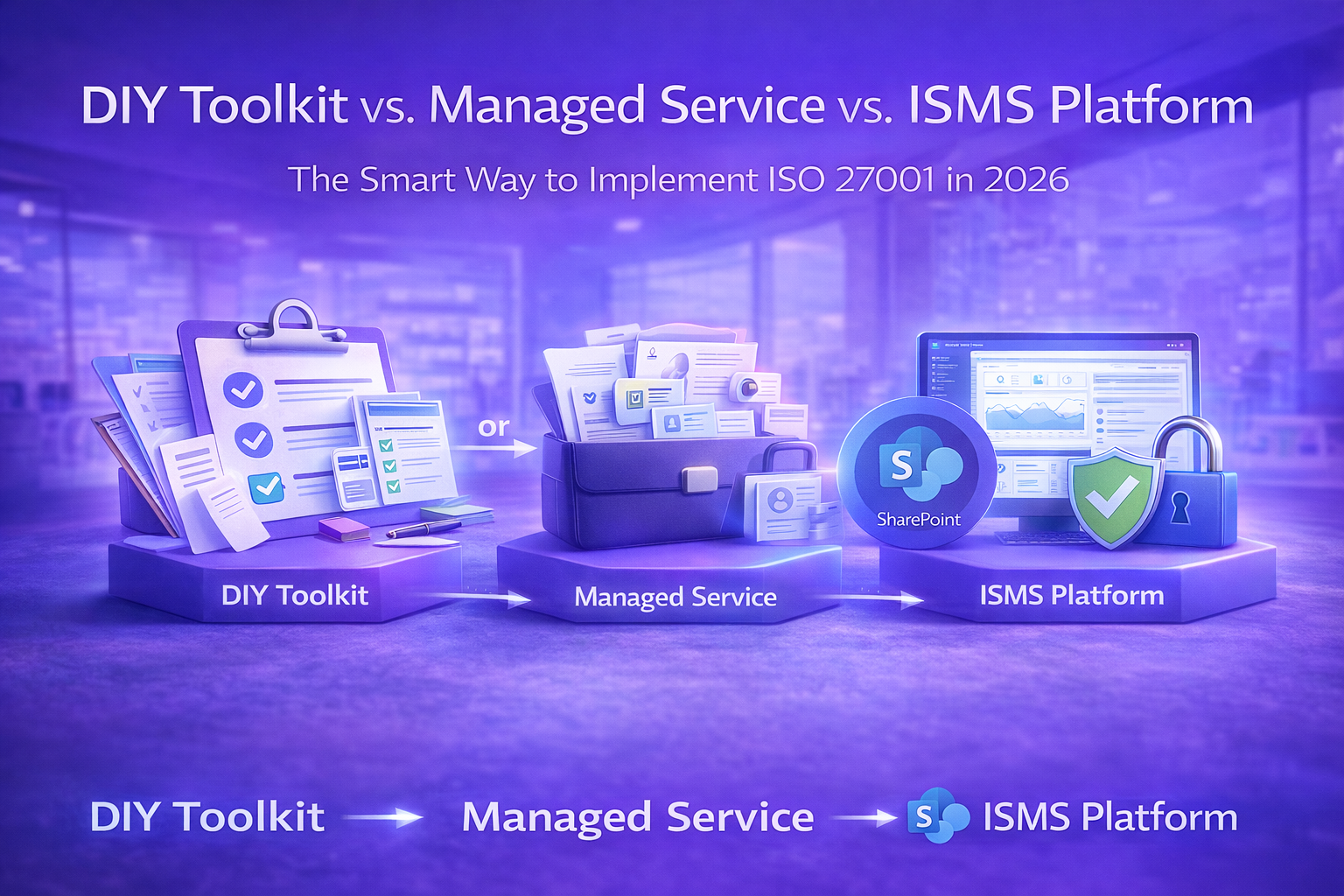
DIY Toolkit vs. Managed Service vs. ISMS Platform: The Smart Way to Implement ISO 27001 in 2026
Every organization pursuing ISO 27001 eventually faces the same question:
How should we actually implement this?
In 2026, there are three common paths:
DIY templates, managed services/consultants, or an
ISMS platform.
Each can work—in the right context.
Want to choose the right ISO 27001 implementation path in one call?
We’ll show you what auditors actually expect, what breaks most ISMS programs, and what fits your organization size and timeline.
Best for: CTOs, CISOs, IT Managers, and Compliance Managers planning certification or surveillance audits.
Why this matters:
ISO 27001 doesn’t fail because companies don’t care about security.
It fails because ownership is unclear, reviews are missed, documentation drifts, and knowledge leaves with people.
Your implementation method determines whether the ISMS becomes a system or a scramble.
Why ISO 27001 implementation fails more than it should
The ISO 27001 standard is achievable. The hard part is operationalizing it.
Most failures happen when the ISMS becomes a one-time project instead of a repeatable system:
- Policies exist, but nobody knows which version is current
- Risk assessments are done once and never revisited
- Evidence collection happens only right before the audit
- Reminders live in someone’s calendar (until they leave)
Option 1: DIY toolkit (templates & spreadsheets)
This is where many organizations start. It can work until the ISMS grows.
What it looks like
- Download ISO 27001 templates
- Use Excel for risks and controls
- Track actions over email
- Learn as you go
Pros
- Lowest upfront cost
- Builds internal knowledge
- Full control
Best for: very small teams with low urgency and time to iterate.
Cons (what breaks in real audits)
- High effort and slow progress
- Easy to miss clause requirements and “expected” evidence
- No automation for reviews, ownership, or reminders
- Hard to maintain after certification (drift begins)
Option 2: Managed service or consultants
This approach outsources most of the work. It’s fast—but can create dependency.
What it looks like
- Consultants design your ISMS
- Policies and procedures are written for you
- Audits are guided (sometimes managed)
Pros
- Fast initial progress
- Expert interpretation of ISO 27001
- Reduced learning curve
Best for: heavy time pressure and low internal capacity.
Cons (the “after certification” problem)
- Expensive over time
- Knowledge stays external (your team doesn’t absorb the system)
- Dependency risk—ISMS weakens when support stops
- Sustainability suffers if ownership isn’t embedded internally
Option 3: ISMS platform (software-driven approach)
This is the modern middle ground: structure + automation + visibility—without building everything from scratch.
What it looks like
- Centralized ISMS portal
- Automated workflows and reminders
- Structured documentation and evidence
- Continuous audit readiness
Pros
- Built-in structure and repeatability
- Reduces human error (missed reviews, lost approvals)
- Scales with teams and standards
- Strong audit readiness over time
Best for: organizations serious about long-term compliance and growth.
Cons (honest trade-offs)
- Requires an initial setup and structure decision
- Teams still need guidance on “what good looks like”
Quick comparison snapshot
| Factor | DIY toolkit | Managed service | ISMS platform |
|---|---|---|---|
| Upfront cost | Low | High | Medium |
| Speed | Slow | Fast | Moderate |
| Internal learning | High | Low | Medium–High |
| Sustainability | Low | Medium | High |
| Audit readiness | Risky | Strong | Strong |
| Long-term ROI | Low | Low–Medium | High |
The real problem: extremes don’t work well
DIY often fails after certification. Managed services often stall after the consultant leaves.
What organizations actually need is a system with:
- Structure that’s easy to navigate
- Automation that prevents missed reviews
- Ownership that survives staff turnover
- Expert support when risk is high (internal audits, certification prep)
Best-of-both-worlds approach (recommended):
A platform for automation + optional expert support for high-stakes moments.
You stay in control without being alone.
Torn between DIY and hiring consultants?
Use a platform designed for ISO 27001 and add expert support only where it matters (readiness, internal audits, certification prep).
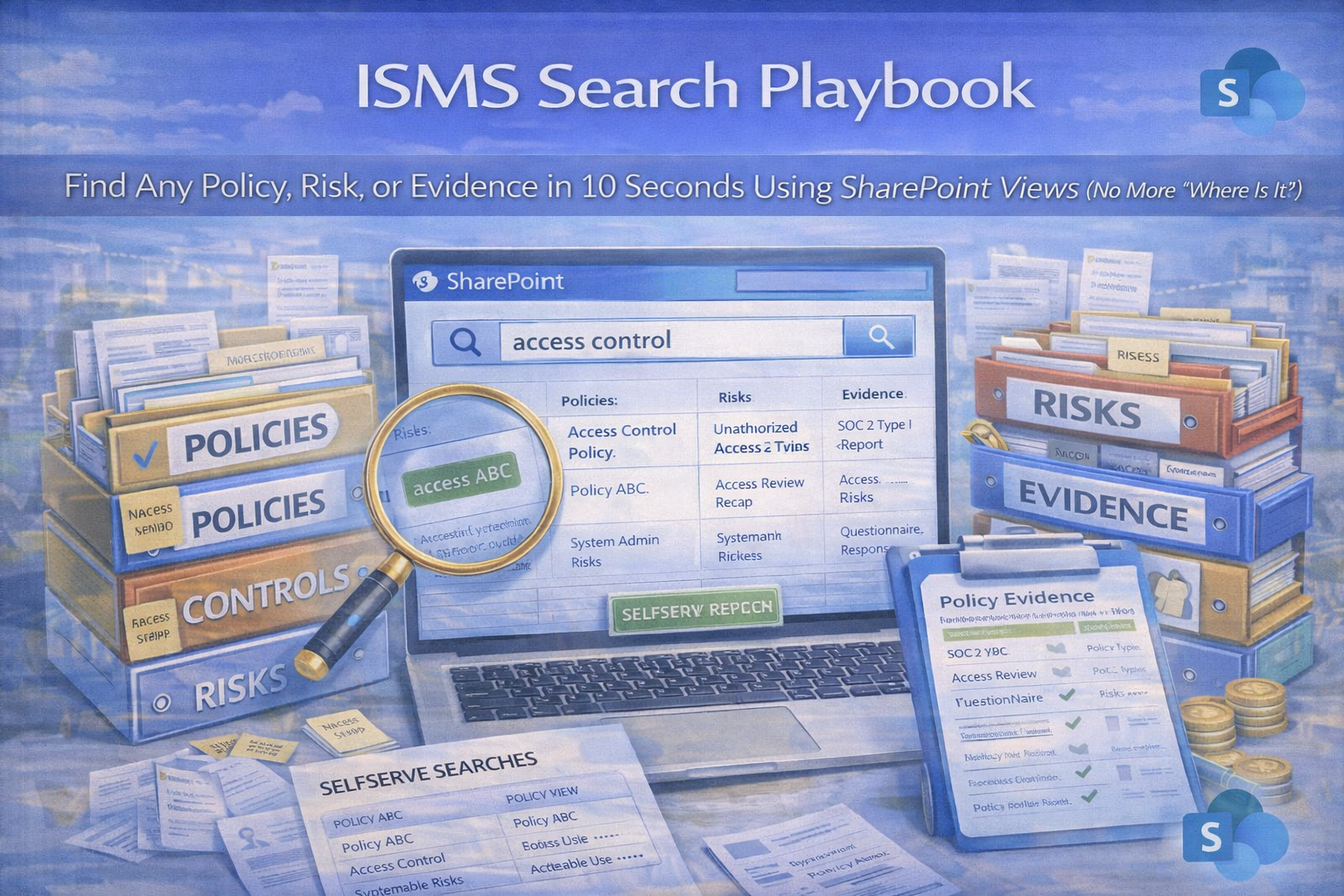
Why SharePoint ISMS works especially well in Microsoft 365
For Microsoft-centric organizations, a SharePoint-based ISMS is a natural fit because it provides:
- Native Microsoft 365 integration (Teams, Outlook, Power Automate)
- Familiar user experience (higher adoption)
- Data ownership inside your tenant (reduced SaaS exposure)
- Built-in versioning, permissions, and approvals (audit-friendly)
What auditors actually care about
Auditors don’t care how you implemented ISO 27001. They care about:
- Consistency (controls operate over time)
- Ownership (someone is accountable)
- Evidence (proof exists and is current)
- Continuous improvement (audits, reviews, corrective actions)
Build your ISMS once. Maintain it with confidence.
ISO 27001 isn’t a project. It’s a system.
A platform with optional expert support gives you control, sustainability, and audit confidence in 2026.
If you’re 90–180 days from audit, don’t guess. Move to a system that holds up under scrutiny.
Stay Connected With Canadian Cyber
Follow us for practical insights on ISO 27001, ISMS strategy, and compliance automation: