What “Govern” is in plain English
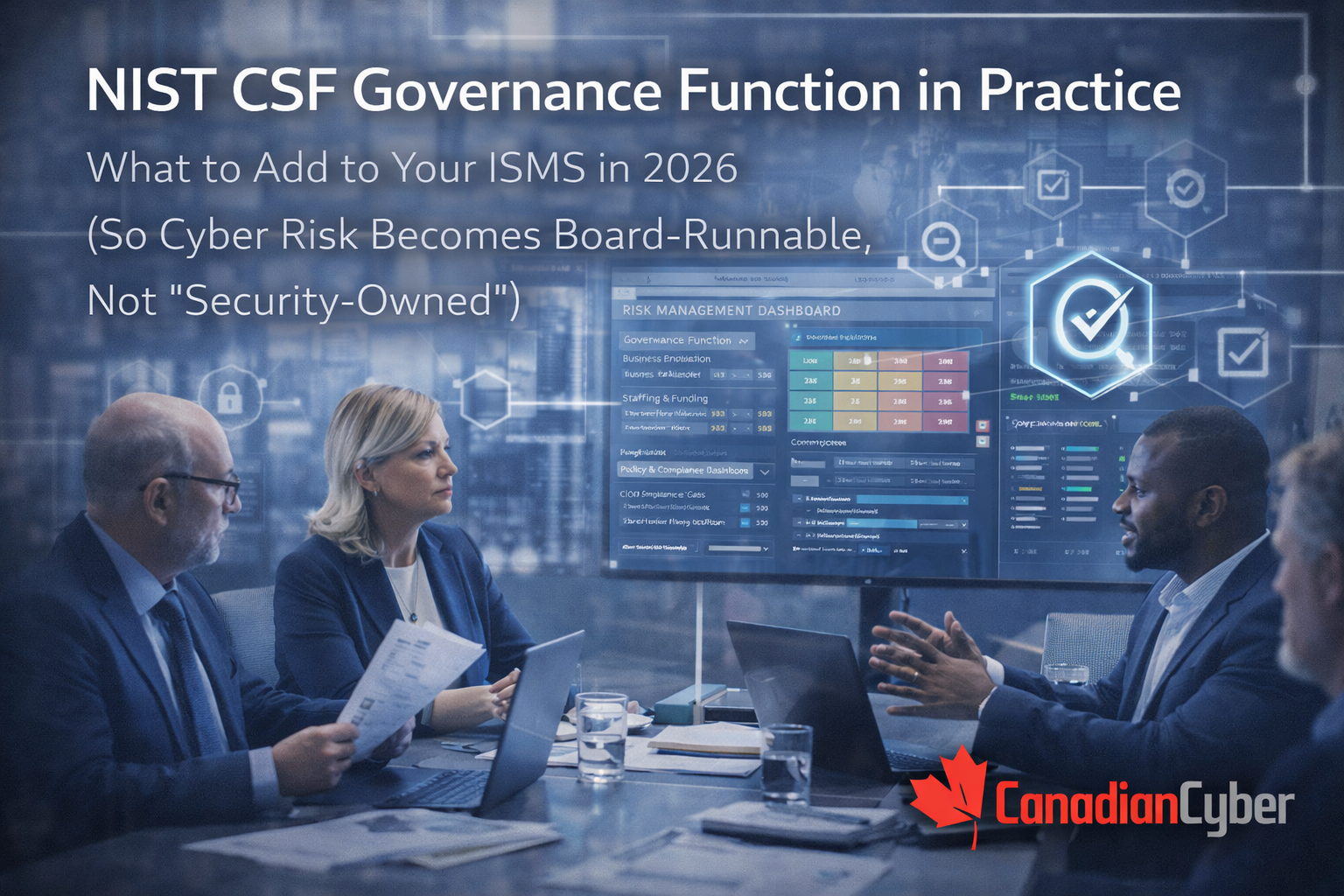
In CSF 2.0, the Govern function is about establishing and monitoring the organization’s cybersecurity risk management strategy, expectations, and policy.
Govern is not a technical control set.
It is the operating model that makes all the technical controls stick.
NIST CSF 2.0 breaks Govern into categories including:
GV.OC — Organizational Context
GV.RM — Risk Management Strategy
GV.RR — Roles, Responsibilities, Authorities
GV.PO — Policy
GV.OV — Oversight
GV.SC — Supply Chain Risk
The 2026 problem: many ISMS programs are compliance-complete but governance-light
This is the pattern many teams fall into:
What exists
- Policies exist
- Evidence exists
- Internal audits happen
What leadership still cannot answer
- What is our cyber risk appetite?
- What do we accept vs. must fix?
- Which vendor risks are board-level?
- Are we trending safer or riskier?
- What decisions do you need from us this quarter?
This is exactly what Govern fixes:
it turns your ISMS from a documentation system into a leadership system.
What to add to your ISMS in 2026: a vCISO blueprint
The highest-impact additions below map directly to the Govern categories and can be implemented without bloating your documentation set.
1) GV.OC: Organizational context that is actually usable
NIST expects you to understand the mission, stakeholders, and legal or contractual drivers around cybersecurity decisions.
Cyber Context Sheet (1 page)
- top business objectives and critical services
- key stakeholders such as customers, regulators, and partners
- major legal and contract drivers
- top external dependencies such as cloud providers, MSPs, and payment processors
Evidence that it’s real: updated at least annually and referenced in management review and risk scoring discussions.
2) GV.RM: Risk appetite and tolerance people can actually use
Govern includes priorities, constraints, and cyber risk tolerance integrated into enterprise decision-making. Most teams talk about risk, but few define tolerances in a way that changes behavior.
Add this to your ISMS
A short risk appetite statement plus practical tolerance thresholds.
| Example tolerance statement |
Why it works |
| No internet-facing system may remain unpatched for critical exploited vulnerabilities beyond X days. |
It is measurable and escalation-ready. |
| Privileged access must be reviewed quarterly; exceptions require executive approval and expiry. |
It defines operating cadence and approval threshold. |
| Critical vendor assurance must be current annually; gaps require conditional approval or exit plan. |
It forces clear third-party risk decisions. |
Evidence to look for:
the risk register references appetite or tolerance, and risk acceptances state which threshold is being exceeded and why.
If leadership can review your risk register but still cannot tell what must be fixed, what can be tolerated, and where decisions are needed, your ISMS is still governance-light.
3) GV.RR: A real RACI for cyber decisions
NIST emphasizes roles, responsibilities, and authorities. The important shift is this: move from task ownership to decision ownership.
Add a decision RACI for:
- risk acceptance
- emergency changes
- incident communications
- vendor onboarding exceptions
- budget and priority calls
Evidence: management review minutes reference the right decision owners, and risk acceptance records show the correct approver level.
4) GV.PO: Policy-to-procedure linkage
Leadership and auditors both want to see that policy is implemented, not just published.
Add a Policy-to-Procedure Linkage Register
Policy → Implementing procedure(s) → Evidence produced → Frequency → Owner
This is one of the highest ROI governance artifacts you can build because it connects policy, execution, and evidence in one view.
5) GV.OV: Oversight cadence that forces issues to surface early
Oversight is where your ISMS stops being static and becomes continuously ready.
Add a quarterly cyber governance pack (5 pages max)
- risk posture with top 5 risks
- exceptions or risk acceptances expiring in the next 60–90 days
- trend-based control health metrics
- critical vendor risk snapshot
- decisions needed from leadership
Evidence: management review minutes should capture inputs reviewed, decisions made, actions assigned, and follow-up dates.
6) GV.SC: Cyber supply chain governance that is calendarized
CSF 2.0 explicitly includes cybersecurity supply chain risk under Govern. That means vendor governance should be visible, recurring, and decision-ready.
Add this to your ISMS
A 12-month third-party security calendar and a critical vendor register containing:
- vendor tiering
- renewal dates
- last assurance received
- next review due date
- evidence links
- decision notes
Evidence: review notes and decisions recorded, not just PDFs stored; exceptions must have expiry dates and compensating controls.
The 2026 Govern Add-On Pack
If you want the smallest set of changes with the biggest governance impact, start here.
| Govern add-on |
Format |
Why it matters |
| Cyber Context Sheet |
1 page |
Makes business context visible |
| Risk appetite + tolerance |
1 page |
Turns cyber risk into decision criteria |
| Decision RACI |
1 page |
Clarifies who decides what |
| Policy-to-Procedure Register |
Table |
Shows policy implementation clearly |
| Risk acceptance workflow |
Workflow + expiry |
Makes exceptions controlled and reviewable |
| Vendor tiering + review calendar |
Register + calendar |
Makes supply chain risk visible and recurring |
| Quarterly governance pack |
5-page pack |
Gives leadership the right inputs and decisions |
This is enough to make your ISMS board-runnable.
How to operationalize this in SharePoint
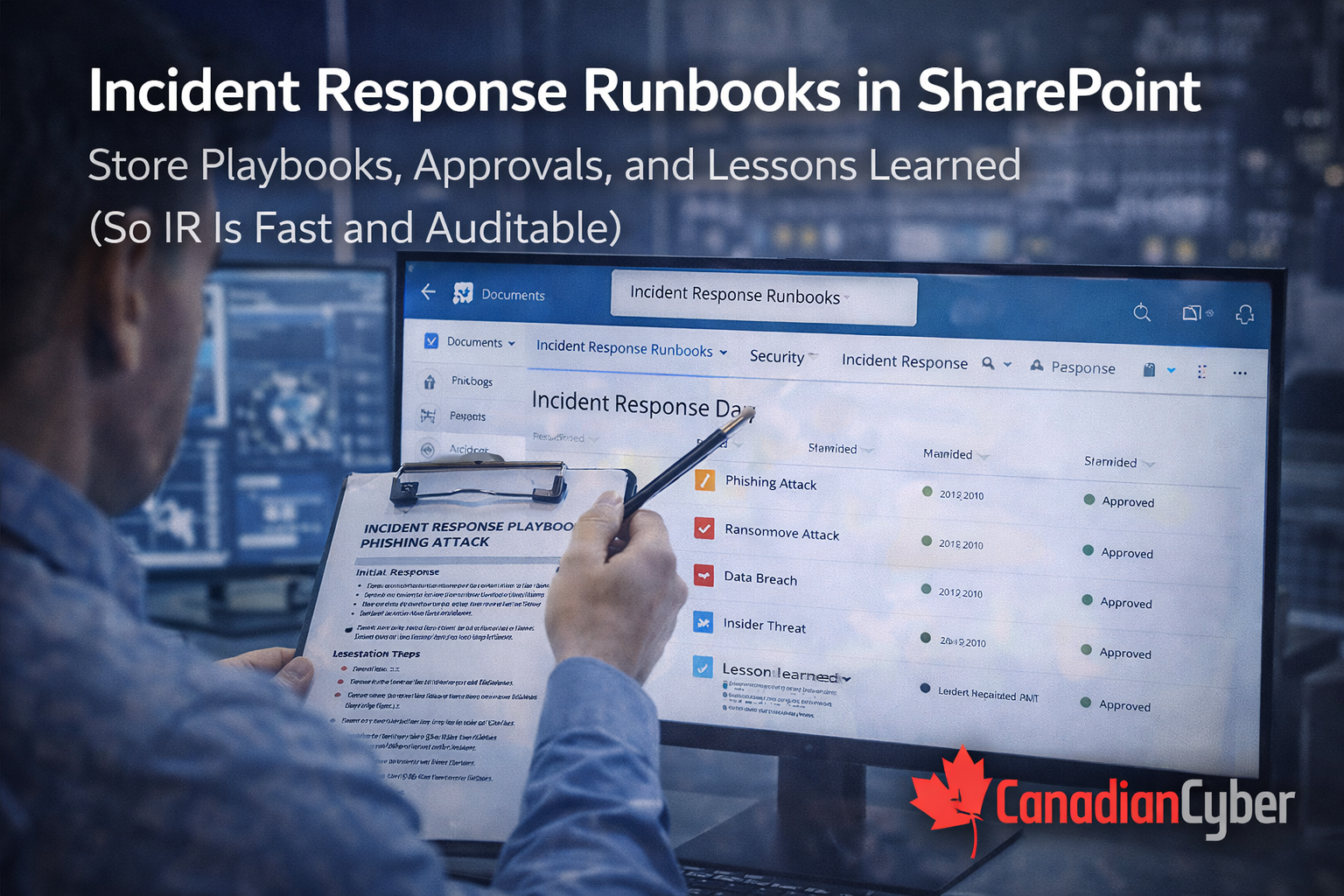
If your ISMS lives in SharePoint, Govern becomes much easier because governance can be made visible through lists, libraries, reminders, and saved views.
Useful SharePoint lists
- Risk Register with appetite/tolerance fields
- Risk Acceptances with expiry required
- Vendor Register with tier, renewal, and evidence links
- Governance Actions with owners and due dates
Useful libraries and views
- Policies
- Procedures
- Evidence Packs by period
- Board or Governance Packs
- Expiring acceptances in 60 days
- Overdue vendor reviews
- Controls missing evidence this quarter
- Top residual risks
That is how you make Govern auditable without adding more meetings.
Next steps
If your ISMS is strong on documentation but weak on governance outcomes, the fastest win is to add the small number of artifacts that make cyber risk visible, decision-ready, and reviewable.
Final takeaway
NIST CSF 2.0 made Govern explicit because cyber risk cannot stay trapped inside the security team. If your ISMS already does a good job producing policy evidence and control records, Govern is the layer that connects those activities to executive oversight, enterprise risk management, and accountable third-party decisions.
In practice, that does not require a giant new bureaucracy. It requires a small set of usable governance artifacts: context, appetite, decision rights, policy linkage, oversight packs, and a real vendor governance calendar.
In one line
The Govern function turns your ISMS from “security-owned” into something leadership can actually run, review, and decide with.
Follow Canadian Cyber
Practical cybersecurity + compliance guidance: