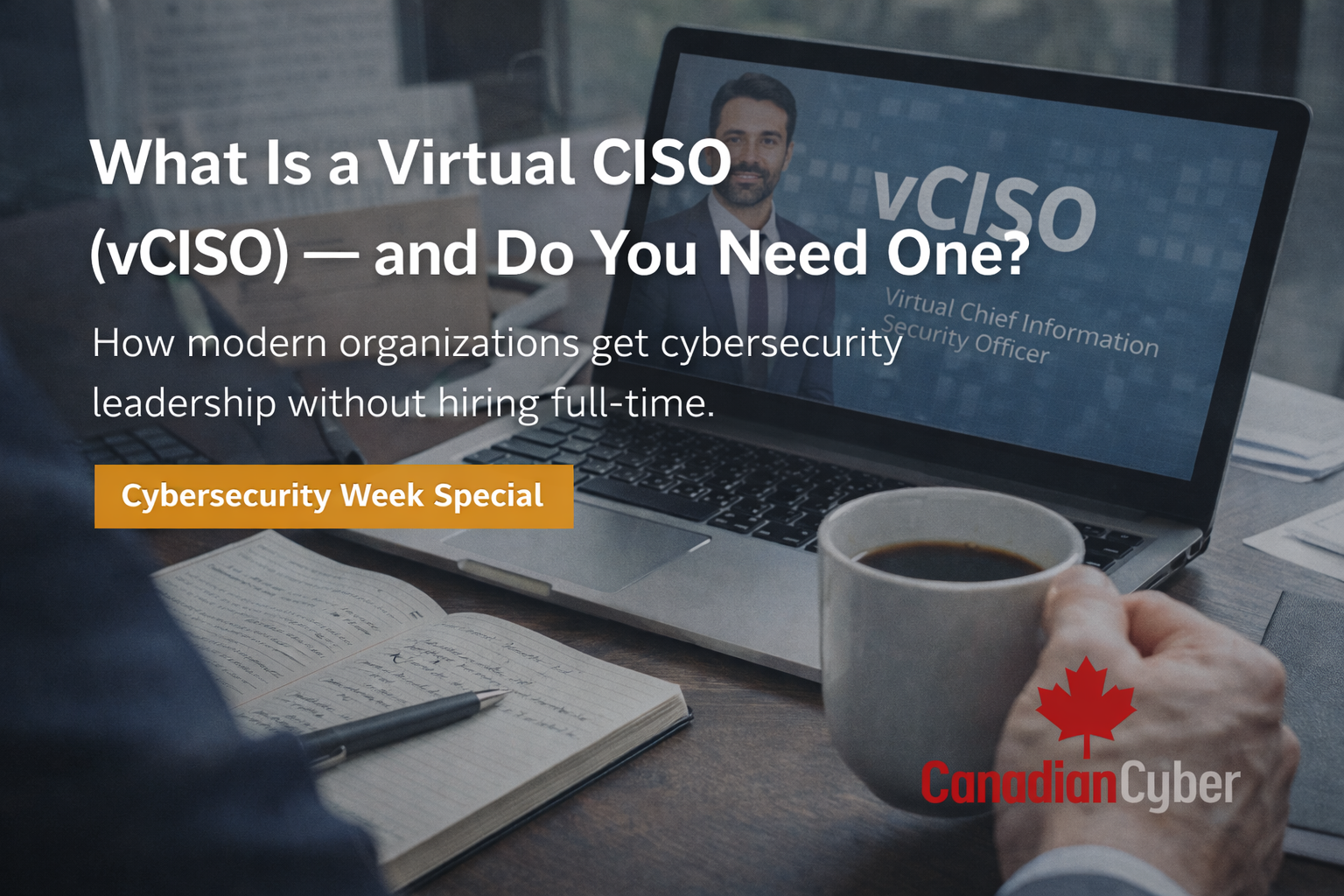
What Is a Virtual CISO (vCISO) and Do You Need One?
How modern organizations get cybersecurity leadership without hiring full-time. Cybersecurity has changed.
It’s no longer just about firewalls, antivirus software, or IT tickets.
Today, cybersecurity is about risk, accountability, trust, and leadership.
Customers ask about security before signing contracts. Regulators expect governance and proof. Boards want to know who owns cyber risk.
Many organizations face a hard reality: they need cybersecurity leadership but they’re not ready for a full-time CISO.
That’s where the Virtual CISO (vCISO) comes in.
Quick Snapshot
| Category | Detail |
|---|---|
| Topic | Fractional cybersecurity leadership (vCISO) |
| Best for | SMBs, growing companies, regulated orgs, and teams without a CISO |
| Core value | Strategy + risk + compliance + reporting without full-time headcount |
| Key takeaway | A vCISO provides leadership and structure, not just advice |
What Is a Virtual CISO (vCISO)?
A Virtual Chief Information Security Officer (vCISO) is an experienced cybersecurity executive who works with an organization on a fractional or outsourced basis.
Instead of hiring a full-time CISO, organizations engage a vCISO to provide:
- Strategic security leadership
- Risk management oversight
- Compliance guidance
- Executive and board-level reporting
- Incident response leadership
In short, a vCISO plays the role of a CISO without being a permanent employee.
Why the vCISO Model Exists
Hiring a full-time CISO is not simple. It often means:
- Six-figure salary
- Benefits and bonuses
- Long recruitment timelines
- Onboarding challenges
- Risk of hiring the wrong fit
For many small and mid-sized organizations, that level of investment doesn’t match their current needs. But the need for leadership still exists.
A vCISO fills that gap by offering senior experience on demand scaled to your organization’s size and risk profile.
What a vCISO Actually Does (Day to Day)
One common misconception is that a vCISO is just a security advisor. In reality, a vCISO acts as the organization’s security leader.
1) Building a cybersecurity strategy
A vCISO helps define:
- Security goals aligned with business objectives
- Risk appetite and priorities
- Short-term and long-term security roadmaps
This ensures security investments support growth not slow it down.
2) Managing cyber risk
Risk management is at the core of the vCISO role. This includes:
- Identifying key risks
- Assessing likelihood and impact
- Prioritizing mitigation
- Helping leadership make informed risk decisions
Cybersecurity becomes measurable and manageable instead of reactive and chaotic.
3) Supporting compliance and frameworks
Many organizations pursue standards and requirements such as:
- ISO 27001
- SOC 2
- Privacy regulations (PIPEDA, Law 25, PHIPA)
A vCISO helps:
- Interpret requirements
- Design controls
- Align compliance with real operations
- Prepare for audits
This avoids “paper compliance” that looks good on documents but fails in practice.
4) Leading incident response
When incidents happen, leadership matters. A vCISO:
- Guides response decisions
- Coordinates technical and executive teams
- Supports communication and escalation
- Helps learn from incidents
This prevents panic and confusion during high-pressure moments.
5) Reporting to executives and boards
One of the most valuable vCISO functions is translation.
They turn technical security issues into:
- Business risk
- Clear metrics
- Actionable insights
Leadership stays informed, confident, and audit-ready without drowning in technical noise.
✅ Want a vCISO Who Builds a Program (Not Just a Slide Deck)?
If you need clear ownership of cyber risk, audit readiness, and leadership-level reporting, we’ll help you build a practical roadmap that fits your business.
Who Typically Needs a vCISO?
vCISO services are especially valuable for organizations that:
- Are growing quickly
- Handle sensitive data
- Face regulatory or customer pressure
- Lack in-house security leadership
- Are preparing for audits or certifications
- Have experienced a security incident
This includes many:
- SMBs
- SaaS and technology companies
- Healthcare and healthtech firms
- Financial and professional services
- Legal and regulated organizations
A Fictional Example: When Security Became a Business Issue
This example is fictional but reflects real-world situations.
A Canadian company had strong IT staff but no security leadership. Security decisions were reactive. Compliance requests were stressful. No one owned risk end to end.
After engaging a vCISO:
- Security strategy became clear
- Risks were documented and prioritized
- Audits became manageable
- Leadership gained confidence
Nothing about the company’s size changed. Its security maturity did.
vCISO vs. Full-Time CISO: What’s the Difference?
| Area | vCISO (Fractional) | Full-Time CISO |
|---|---|---|
| Best fit | SMBs, growing orgs, teams without leadership | Large and/or highly regulated enterprises |
| Cost model | Flexible engagement | Salary + benefits + long-term overhead |
| Speed to start | Fast onboarding | Recruiting timelines can be long |
| Leadership value | Senior guidance when you need it most | Full-time presence and deep internal ownership |
Both roles provide leadership the difference is how and when.
Why vCISOs Are Gaining Popularity in Canada
Canadian organizations face unique pressures:
- Strong privacy laws
- Increasing vendor security demands
- Growing cyber insurance requirements
- Board-level accountability
At the same time, there is a cybersecurity talent shortage. The vCISO model allows organizations to access senior expertise without competing in an already tight hiring market.
How Canadian Cyber Delivers vCISO Services
At Canadian Cyber, vCISO services are not one-size-fits-all. They are tailored to your industry, risk profile, regulatory environment, and business goals.
| Service Layer | What you get |
|---|---|
| vCISO Services (Core) | Security strategy ownership, risk and compliance management, audit support, leadership/board reporting, coordination of security activities. |
| Integration With Other Services | ISO 27001 implementation, SOC 2 readiness and maintenance, internal audits, risk assessments, incident response planning. |
| Program Cohesion | A single roadmap that aligns tools, controls, people, evidence, and reporting so security doesn’t become fragmented. |
Do You Actually Need a vCISO? Ask Yourself This.
If you can’t confidently answer these questions, a vCISO may be the right next step:
- Who owns cybersecurity risk in our organization?
- How do we know our controls work?
- Are we ready for a security audit or customer review?
- How would we handle a serious incident?
- Can leadership clearly explain our security posture?
A vCISO exists to make those answers clear and to build the program behind them.
Cybersecurity Leadership Is No Longer Optional
Cybersecurity is now a leadership responsibility not just an IT task.
A vCISO provides the structure, experience, and guidance organizations need to manage risk responsibly and confidently without the cost and complexity of a full-time hire.
Ready to Elevate Your Security Leadership?
If your organization needs clarity, confidence, and senior cybersecurity guidance, a vCISO may be the right solution.
👉 Explore Our vCISO Services
👉 Learn How Canadian Cyber Supports Security Leadership
Stay Connected With Canadian Cyber
Follow Canadian Cyber for insights on cybersecurity leadership, compliance, and risk management in Canada: