The Ultimate Guide to ISO 27001 Certification for SMBs
A detailed, step-by-step roadmap for small and mid-sized businesses
ISO 27001 is no longer an “enterprise-only” standard.
Across Canada and globally, small and mid-sized businesses (SMBs) are now being asked to prove that they can protect information properly. Customers want assurance. Vendors want confidence. Regulators want accountability.
For many SMBs, ISO 27001 becomes the turning point where security moves from informal practices to a structured, defensible program.
This guide walks you through every stage of ISO 27001 certification what to do, why it matters, and how SMBs can approach it without unnecessary complexity.
What You’ll Learn
- What ISO 27001 is (and what it isn’t)
- The step-by-step certification roadmap (scope → audit)
- What evidence auditors expect
- A realistic SMB timeline and effort estimate
- How to avoid the most common ISO 27001 mistakes
What ISO 27001 Really Is (and What It Is Not)
ISO/IEC 27001 is an international standard for building an Information Security Management System (ISMS).
ISO 27001 is NOT
- A checklist of tools
- A one-time audit
- A purely technical framework
ISO 27001 is about how security is managed, not just what controls exist. It requires organizations to:
- Identify information security risks
- Decide how those risks are treated
- Implement appropriate controls
- Review and improve security continuously
Compliance vs. Management System
| Approach | What it looks like | Result |
|---|---|---|
| Checklist mindset | Policies written, controls “assumed,” evidence inconsistent | Audit stress, fragile security |
| ISMS mindset | Risks tracked, controls owned, evidence repeatable, reviews scheduled | Predictable audits, real improvement |
Why SMBs Are Increasingly Pursuing ISO 27001
SMBs face unique pressures:
- They handle sensitive client data
- They rely heavily on cloud services
- They are frequent cyberattack targets
- They lack dedicated security leadership
What ISO 27001 gives SMBs
- Customer and vendor assurance (stronger trust signal)
- Defensible “reasonable safeguards” posture
- Lower breach likelihood and impact through structured risk treatment
- A repeatable security program that scales with growth
ISO 27001 Certification Roadmap (At a Glance)
| Stage | Outcome | Typical Deliverables |
|---|---|---|
| Scope + ownership | Clear boundaries and accountability | Scope statement, roles, ISMS charter |
| Risk assessment | Real risk visibility + priorities | Risk method, asset list, risk register |
| Risk treatment | Decisions documented, controls selected | Treatment plan, SoA |
| Implementation | Controls operational + evidence generated | Procedures, logs, tickets, reviews |
| Internal audit | Gaps identified before the auditor does | Audit report, corrective actions |
| Stage 1 + Stage 2 | Certification readiness + evidence validation | Audit results, certificate (if passed) |
Step 1: Define Scope the Right Way
Scope is the most critical decision in ISO 27001. Poor scoping is the #1 reason SMBs struggle.
Your scope should clearly define
- Which business units are included
- Which systems and applications are in scope
- Which data types are covered
- Which locations apply
SMB tip: A focused scope is often best. Trying to certify everything at once increases cost, effort, and audit risk.
Step 2: Assign ISMS Ownership
ISO 27001 requires clear accountability. Someone must own the ISMS end-to-end.
ISMS Owner Responsibilities
- Maintain ISMS documentation
- Track risks and controls
- Coordinate evidence and audit readiness
- Drive corrective actions and continuous improvement
In SMBs, this role is often a senior IT leader, operations manager, compliance lead, or a vCISO. Without ownership, the ISMS becomes shelfware.
Step 3: Perform a Meaningful Risk Assessment
ISO 27001 is risk-driven, not control-driven. A practical risk assessment includes:
- Identify information assets (systems, data, services)
- Identify threats and vulnerabilities
- Evaluate likelihood and impact
- Decide what needs treatment first
Avoid these common SMB mistakes
- Generic templates that don’t reflect your business
- Overly complex scoring that no one uses
- Marking everything “low risk” to feel safe
Step 4: Decide How Risks Will Be Treated
Once risks are identified, ISO 27001 requires clear, justified decisions:
| Option | Meaning | Example |
|---|---|---|
| Accept | You acknowledge the risk and monitor it | Low-impact system with limited exposure |
| Mitigate | You reduce likelihood and/or impact with controls | Enforce MFA and access reviews for admin accounts |
| Transfer | You shift some risk via contracts or insurance | Cyber insurance + vendor security clauses |
| Avoid | You change the process to remove the risk | Stop storing sensitive data in unmanaged tools |
These decisions feed directly into your Statement of Applicability (SoA).
Step 5: Select Practical Annex A Controls
ISO 27001 includes Annex A controls, but not all are mandatory. Controls must:
- Address identified risks
- Fit your size and operations
- Be realistically maintainable
Common, high-value controls for SMBs
| Control Area | What “good” looks like | Evidence examples |
|---|---|---|
| Access control + MFA | MFA enforced, least privilege, periodic access reviews | SSO/MFA settings, access review records |
| Secure configuration | Hardened endpoints/servers, baseline configs, change control | Configuration standards, patch reports |
| Incident response | Plan exists, roles defined, exercises performed | IR plan, tabletop notes, incident tickets |
| Backup + recovery | Backups tested, RTO/RPO understood, restore drills completed | Backup logs, restore test evidence |
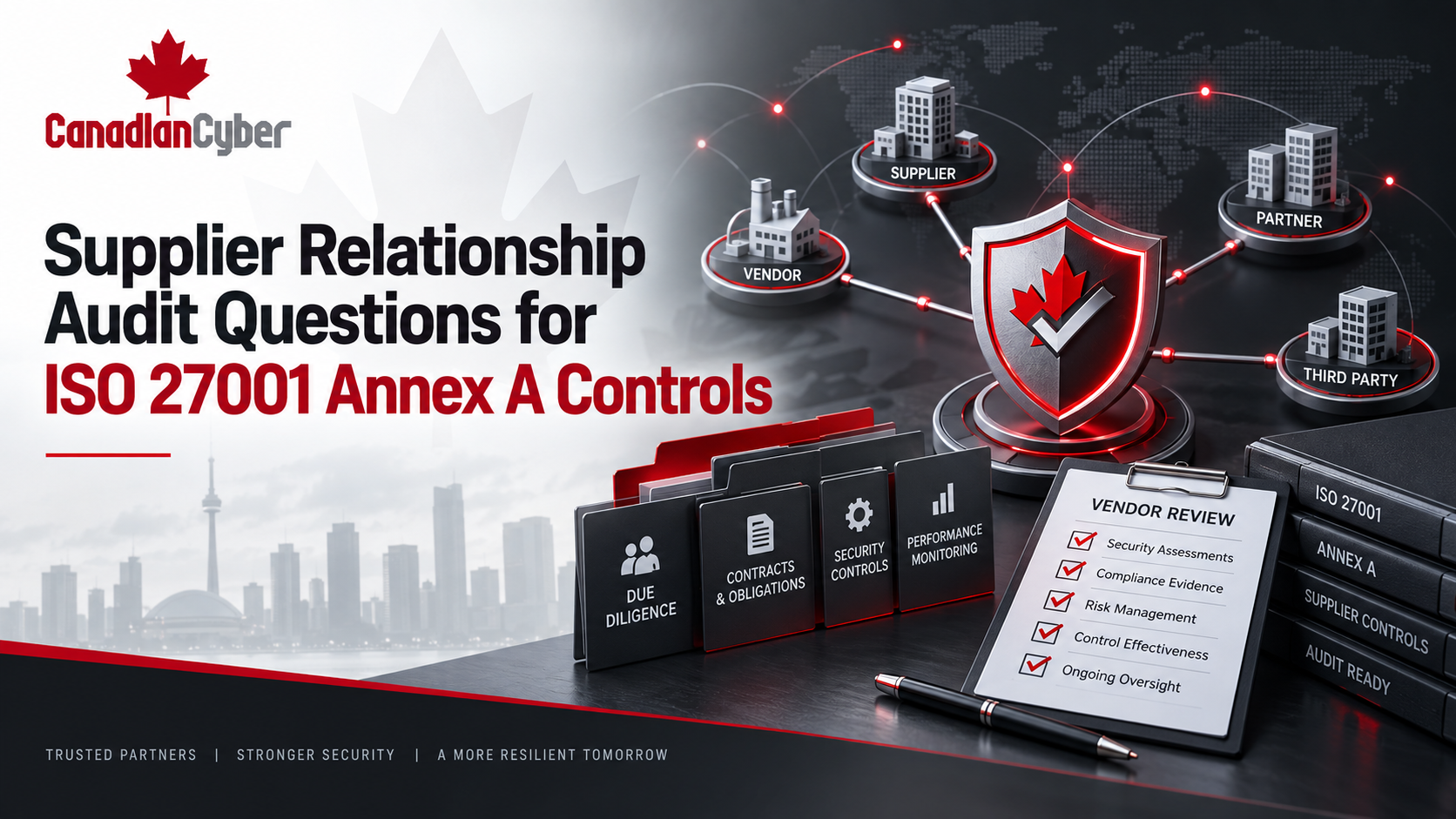
| Supplier security | Vendor reviews and contracts define security expectations | Vendor risk records, SOC 2/ISO reports |
Avoid overengineering: controls should reduce risk and survive real operations. If a control is too complex to maintain, it will fail during surveillance audits.
Step 6: Build ISMS Documentation That Actually Works
ISO 27001 requires documentation, but not bureaucracy. Auditors look for consistency not length.
Core ISMS documentation (SMB-friendly)
- Information Security Policy
- Risk Assessment Methodology
- Risk Register + Risk Treatment Plan
- Statement of Applicability (SoA)
- Incident Response Plan
- Access Control Procedures
Step 7: Implement Controls and Evidence Collection
Controls must be operational, not theoretical. Auditors don’t accept “we do this” they want proof.
Operational proof (examples)
- MFA is enforced (not optional)
- Access reviews are performed and recorded
- Backups are tested (restore evidence exists)
- Logs are reviewed (tickets/alerts show follow-through)
- Incidents and near-misses are documented
✅ Want a ready-to-run ISO 27001 roadmap for your SMB?
We help SMBs scope smarter, build evidence faster, and walk into Stage 1 & Stage 2 with confidence.
Step 8: Train Employees and Build Awareness
People are part of the ISMS. ISO 27001 expects security awareness training and evidence of participation.
Training that works for SMBs
- Short, role-relevant sessions (not 60-minute lectures)
- Simple language tied to real workflows
- Leadership participation to set the tone
- Proof: attendance records, LMS reports, acknowledgements
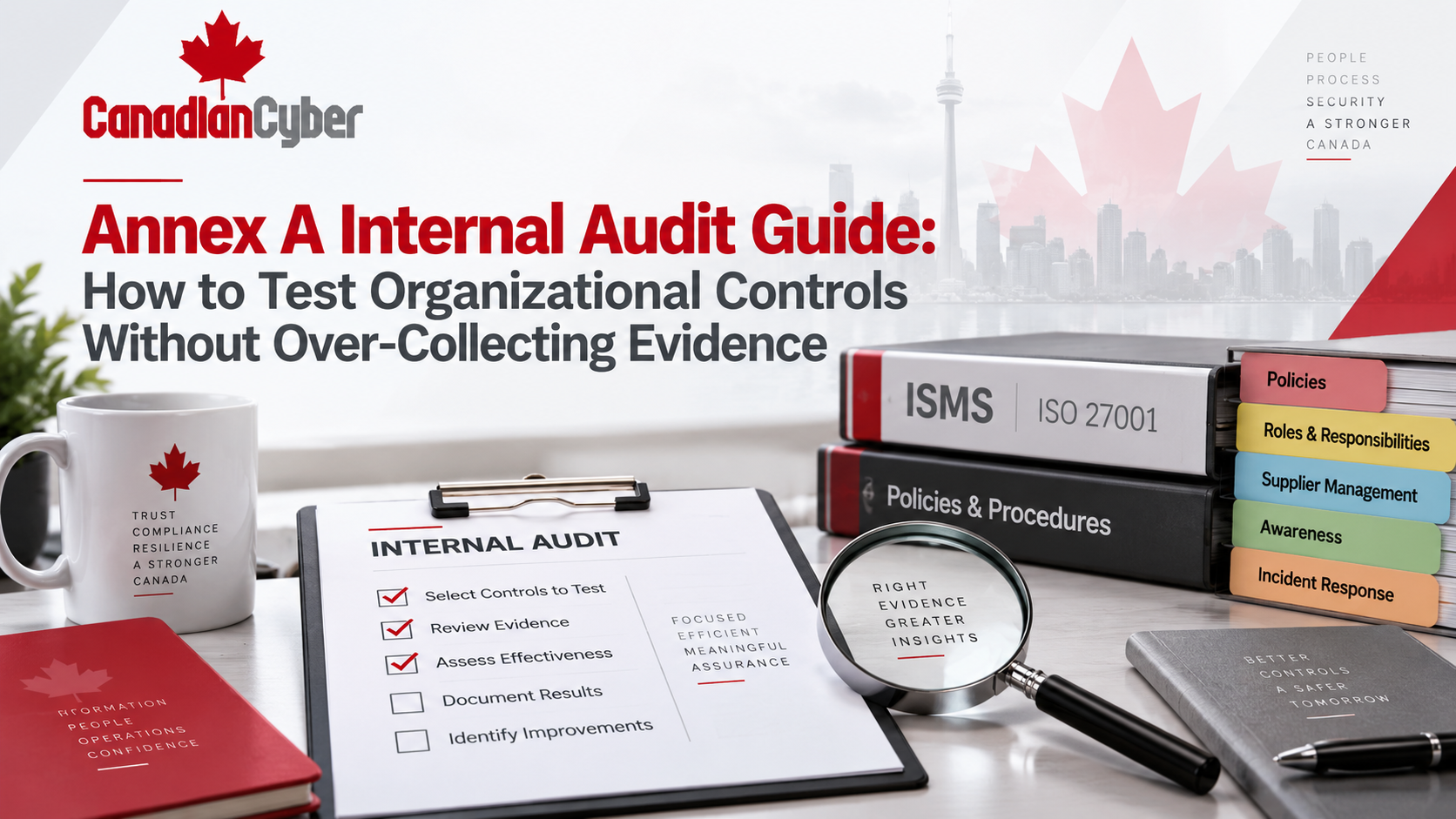
Step 9: Conduct an Internal Audit
Before certification, an internal audit is required. Its purpose is to verify controls are working and reduce certification risk.
Internal audits are about improvement, not blame.
Many SMBs outsource this step to ensure objectivity and avoid self-auditing blind spots.
Step 10: Management Review
ISO 27001 is a management system. Leadership must review ISMS performance, key risks, and approve improvements.
What to cover in Management Review
- Top risks and risk treatment progress
- Security objectives and KPI/KRIs
- Incidents, near-misses, and lessons learned
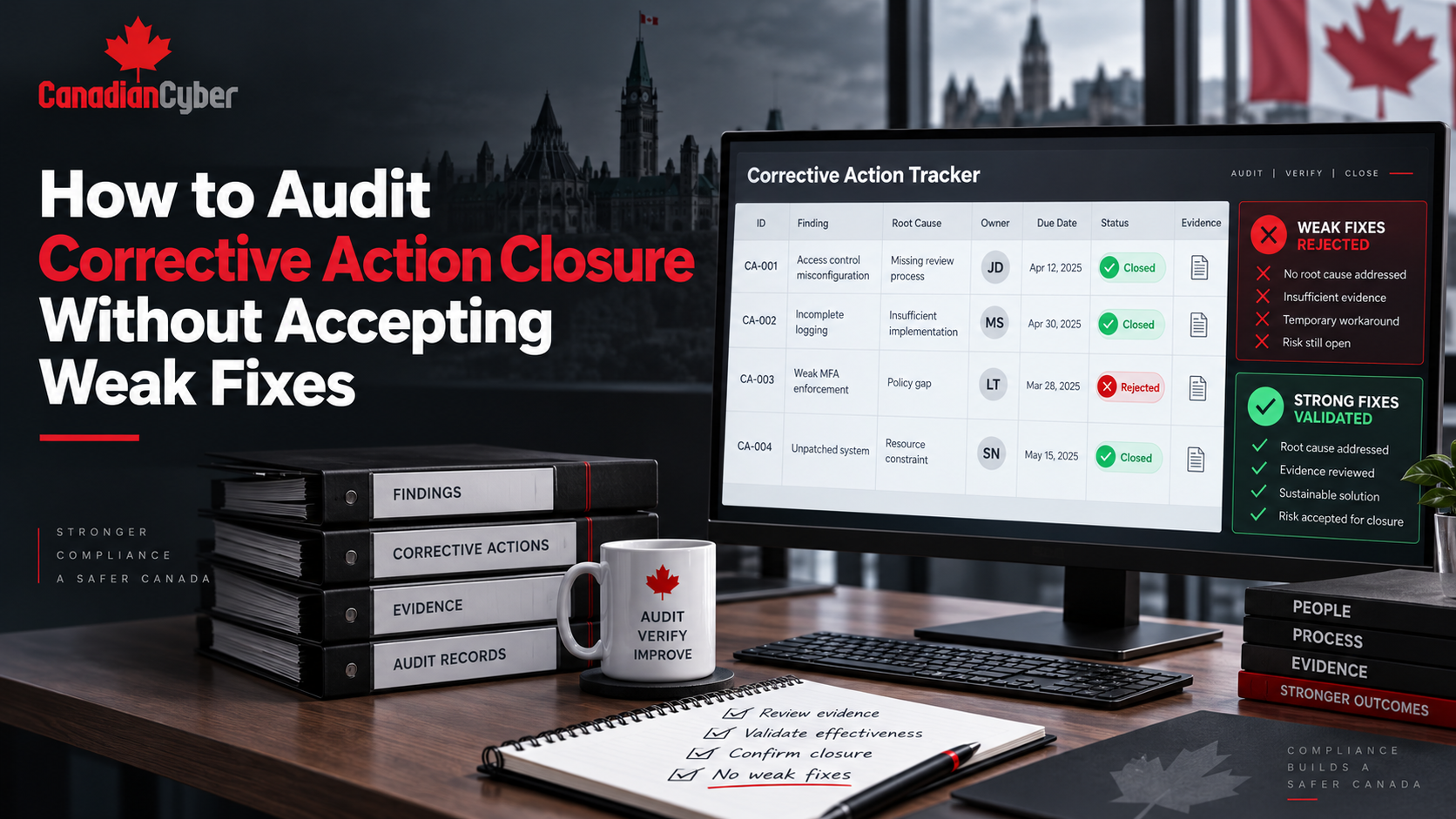
- Audit results and corrective actions
- Resource needs and improvement opportunities
Auditors pay close attention here because it proves security decisions happen at the business level.
Step 11: Certification Audit (Stage 1 & Stage 2)
The certification audit happens in two stages:
| Audit Stage | Focus | What you must have ready |
|---|---|---|
| Stage 1 | Documentation review + readiness confirmation | Scope, SoA, risk method, policies, key procedures |
| Stage 2 | Implementation + evidence testing + staff interviews | Evidence trail: access reviews, training, backups, logs, IR, vendor reviews |
ISO 27001 Timeline for SMBs (Realistic Estimate)
Your timeline depends on scope, current maturity, and available time from your team. For most SMBs, a realistic range is 8–20 weeks for first certification.
Typical SMB Implementation Timeline
| Phase | What happens | Typical duration |
|---|---|---|
| Week 1–2 | Scope + ownership + ISMS setup | 1–2 weeks |
| Week 2–4 | Risk assessment + risk treatment decisions | 1–2 weeks |
| Week 4–10 | Control implementation + evidence collection | 4–6 weeks |
| Week 10–12 | Internal audit + corrective actions | 1–2 weeks |
| Week 12+ | Management review + Stage 1 & Stage 2 audits | Varies by auditor |
Effort Estimator (Per Week)
| Team role | Low maturity | Moderate maturity | High maturity |
|---|---|---|---|
| ISMS Owner | 6–10 hrs | 4–8 hrs | 2–5 hrs |
| IT / Cloud Admin | 6–12 hrs | 4–8 hrs | 2–6 hrs |
| Leadership | 1–2 hrs | 1–2 hrs | 1–2 hrs |
| Business Owners | 1–3 hrs | 1–2 hrs | 0.5–1 hr |
Note: “Low maturity” typically means controls and evidence processes are starting from scratch.
“High maturity” typically means strong baseline controls already exist (MFA, patching, backups, logging, onboarding/offboarding).
What Happens After Certification?
Certification is not the end. ISO 27001 requires:
- Continuous improvement
- Ongoing risk management
- Annual surveillance audits
This is where many SMBs struggle without support not because they fail the standard, but because they lack ongoing ISMS ownership
and evidence routines.
Why SMBs Use a vCISO for ISO 27001
Most SMBs do not need a full-time CISO but they do need consistent leadership for:
- Strategic guidance and prioritization
- Risk decision support
- Audit coordination
- Ongoing ISMS oversight and reporting
A Virtual CISO (vCISO) provides this leadership without the cost of a full-time hire keeping ISO 27001 sustainable after certification.
How Canadian Cyber Helps SMBs Succeed
At Canadian Cyber, ISO 27001 is implemented as a business-enabling framework not a paperwork project.
ISO 27001 Consulting
- Scoping and planning
- Risk assessment and risk treatment
- Control implementation and evidence design
- Stage 1 & Stage 2 audit preparation
vCISO Services
- ISMS ownership and ongoing governance
- Leadership reporting and risk visibility
- Continuous improvement planning
- Long-term ISO 27001 maintenance support
Internal Audit & Health Checks
- Independent internal audits
- Gap identification and corrective action support
- Audit readiness reviews before surveillance audits
ISO 27001 Is Achievable for SMBs
With the right structure, leadership, and guidance, ISO 27001 does not have to be overwhelming. It becomes:
- A trust signal
- A sales enabler
- A risk management foundation
- A competitive advantage
Ready to Start ISO 27001 the Right Way?
If your business is considering ISO 27001, we can help you avoid common mistakes and succeed confidently.
👉 Explore Our ISO 27001 Services
👉 Learn About Our vCISO Services
👉 Book a Free Consultation
Stay Connected With Canadian Cyber
Follow Canadian Cyber for practical ISO 27001 guidance, governance insights, and SMB-friendly security leadership: