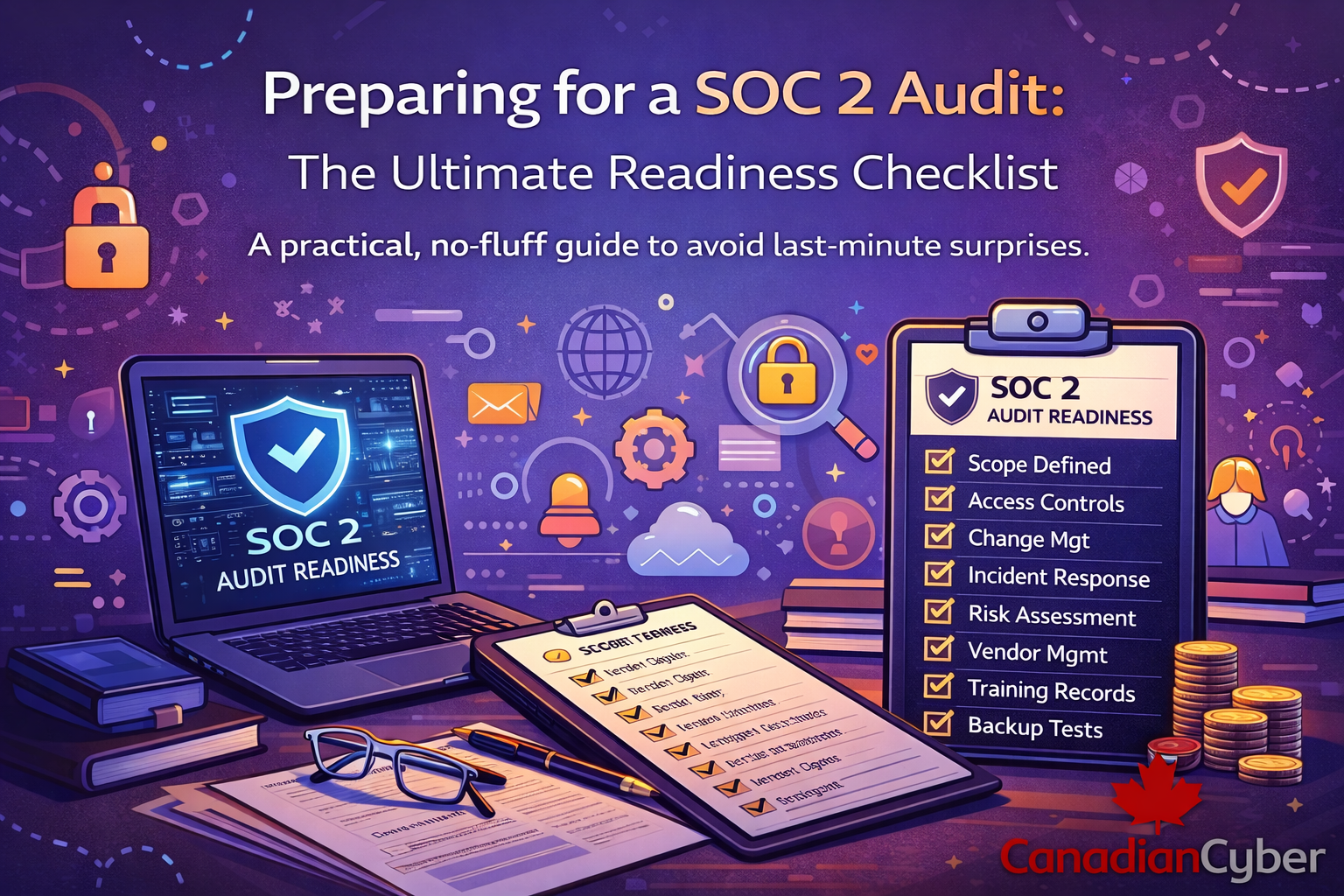
Preparing for a SOC 2 Audit: The Ultimate Readiness Checklist
A practical, no-fluff guide to avoid last-minute surprises.
SOC 2 audits rarely fail because of missing tools.
They fail because of missing evidence, unclear ownership, and poor preparation. Many organizations believe they’re “almost ready” until the auditor starts asking for proof.
This checklist breaks down exactly what auditors expect to see, so you can prepare with confidence,
reduce audit stress, and keep your team focused.
Whether you’re preparing for SOC 2 Type I or Type II, this guide helps you validate readiness before the auditor arrives.
Before You Start: What Auditors Really Want
Auditors are not trying to trap you.
They want to confirm three things:
- Controls are designed appropriately
- Controls are operating consistently
- Evidence supports what you claim
This checklist focuses on all three.
1. Governance & Program Foundations
These items set the tone for the entire audit.
| Required Documentation | Auditor Will Check |
|---|---|
| SOC 2 scope definition System description Trust Services Criteria selection Risk methodology & register Statement of Applicability (if ISO-aligned) |
Scope reflects reality Risks match the business Leadership approval exists |
💡 Common gap: Scope that excludes key systems or vendors.
2. Access Control & Identity Management
One of the most scrutinized SOC 2 areas.
- Access control & MFA policies
- User provisioning & deprovisioning procedures
- Privileged access management
Evidence auditors expect:
- User access lists
- Approval records
- Termination access removal proof
- Periodic access reviews
💡 Auditor tip: Policies without enforcement evidence will fail.
3. Change Management Controls
- Change management policy
- Emergency change procedures
Evidence to prepare:
- Change tickets or pull requests
- Approvals
- Testing evidence
- Deployment logs
💡 Common gap: Informal changes with no documented approval.
4. Incident Response & Security Events
- Incident response policy & plan
- Breach notification procedures
Evidence auditors look for:
- Incident logs (even “no incident”)
- Tabletop exercise records
- Lessons learned
- Roles & escalation paths
💡 Best practice: At least one tabletop exercise per year.
5. Risk Management & Monitoring
SOC 2 is risk-based not checklist-based.
- Risk assessment results
- Risk treatment decisions
- Ongoing monitoring procedures
💡 Auditor focus: Do risks actually drive controls?
6. Vendor & Third-Party Management
- Vendor inventory
- Risk assessments
- Due diligence records
- Security clauses & SOC reports
💡 Common finding: Vendors exist but aren’t assessed.
7. Security Awareness & Training
- Security awareness policy
- Training content & attendance
- New hire onboarding proof
💡 Training must be ongoing not one-time.
8. Logging, Monitoring & Detection
- Logging & monitoring policies
- SIEM or alert evidence
- Incident correlation records
💡 Logs must be reviewed not just collected.
9. Data Protection & Confidentiality
- Data classification & encryption policies
- Backup & retention records
- Data disposal logs
10. Business Continuity & Availability (If Applicable)
- BCP & DR plans
- Backup testing evidence
- RTO / RPO definitions
11. Management Oversight & Ownership
Key signal auditors look for: SOC 2 is owned by leadership not just IT.
A Fictional Example: Audit Day Surprise
(Fictional, but common.)
A mid-sized SaaS company believed they were SOC 2 ready.
On audit day, access reviews were undocumented, vendor assessments incomplete, and incident response untested.
The result: findings, delays, and frustrated leadership.
Preparation not technology was the missing piece.
Ready to Validate Your SOC 2 Readiness?
Don’t let the auditor be the first reviewer.