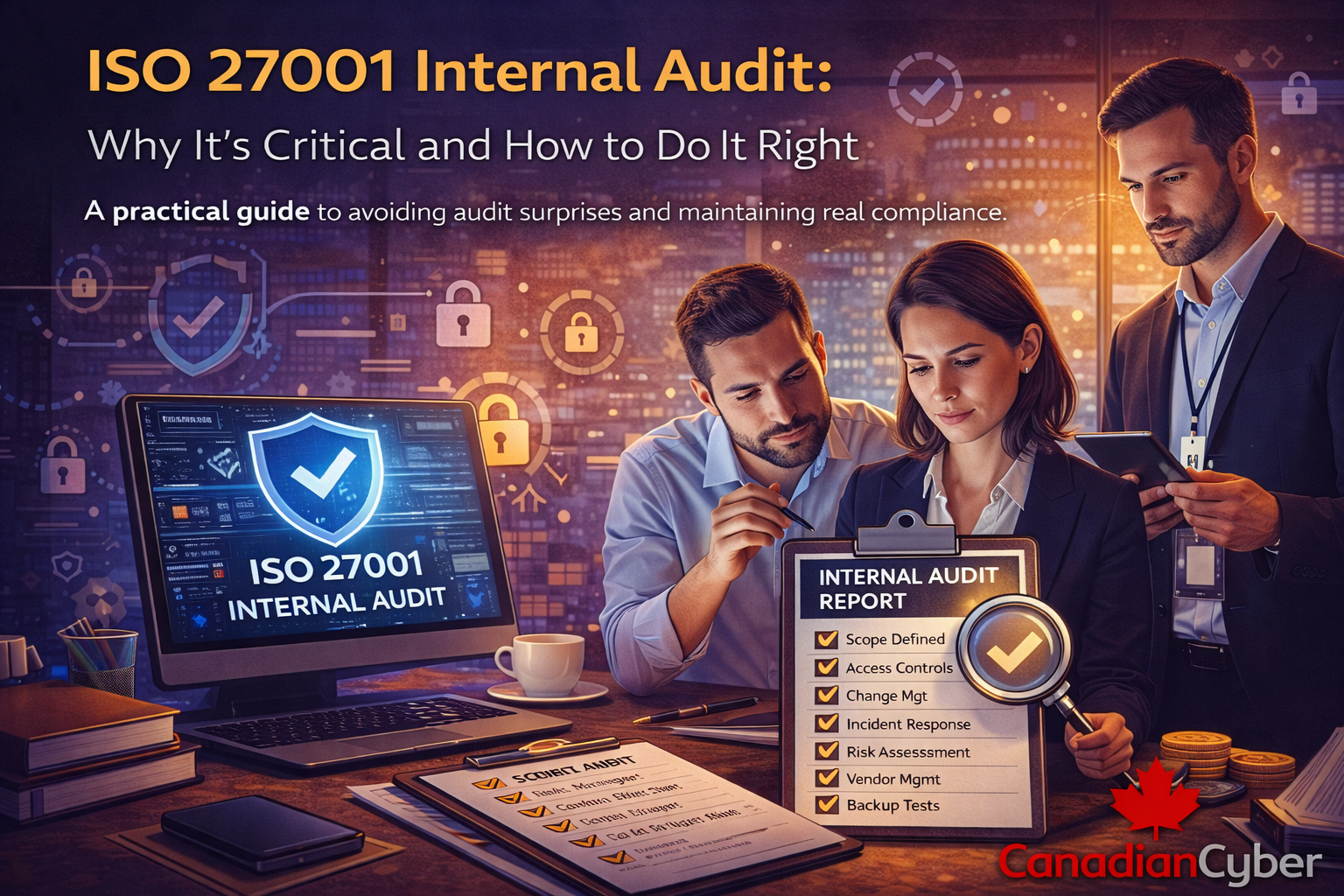
ISO 27001 Internal Audit: Why It’s Critical and How to Do It Right
A practical guide to avoiding audit surprises and maintaining real compliance.
Most ISO 27001 issues are not discovered by certification auditors. They are discovered too late during surveillance audits, customer reviews, or after an incident.
That’s why ISO 27001 places such a strong emphasis on internal audits.
An internal audit is not a formality it’s the mechanism that keeps your ISMS accurate, effective, and defensible over time.
This guide explains why internal audits matter, what auditors actually expect, and how to run an internal audit that strengthens your ISO 27001 program instead of just checking a box.
What You’ll Learn
- What an ISO 27001 internal audit really is (and what it isn’t)
- Why ISO 27001 requires internal audits (Clause 9.2)
- How to plan a risk-based audit scope
- How to run the audit step-by-step (planning → reporting)
- How to classify findings and close corrective actions
- How often to audit (without overloading your team)
What Is an ISO 27001 Internal Audit (Really)?
An ISO 27001 internal audit is an independent review of your Information Security Management System (ISMS) to confirm that:
- Controls are implemented as intended
- Processes operate consistently
- Risks are being managed effectively
- The ISMS aligns with ISO 27001 requirements
Unlike the certification audit, an internal audit is for you.
Its purpose is to find weaknesses early before external auditors or customers do.
Why ISO 27001 Requires Internal Audits
ISO 27001 treats information security as a management system, not a static project.
Clause 9.2 exists because:
- Controls degrade over time
- Processes drift from documentation
- Business changes introduce new risks
- Staff turnover weakens consistency
Without internal audits, compliance slowly erodes even in well-intentioned organizations.
The Real Business Value of Internal Audits
When done correctly, internal audits deliver more than compliance. They help organizations:
- Reduce audit findings and surprises
- Identify control gaps early (before incidents)
- Strengthen governance and accountability
- Improve security maturity over time
- Build confidence with customers and regulators
Strong internal audits turn ISO 27001 into a business asset not an annual headache.
Why Internal Audits Often Fail
Common reasons include:
- Audits rushed right before certification or surveillance
- Unclear or unrealistic audit scope
- Lack of auditor independence
- Findings ignored, delayed, or never closed
- No leadership visibility or accountability
Rule of thumb: An internal audit that no one acts on adds no value.
How to Plan an Effective ISO 27001 Internal Audit
1) Define an Objective Audit Scope
Your audit scope should match your ISMS scope and reflect real operations.
- Match the ISO 27001 ISMS scope
- Include people, processes, and technology
- Focus on risk-critical areas (not equal coverage)
- Include recent changes and known pain points
2) Ensure Auditor Independence
ISO 27001 requires objectivity. That means:
- Auditors do not assess their own work
- Control owners are not auditors
- Management influence is avoided
💡 Independent internal audits often deliver better outcomes (and fewer blind spots).
3) Use a Risk-Based Audit Approach
Focus more effort on:
- High-risk processes and critical systems
- Areas with recent changes (cloud migrations, new vendors, new tools)
- Past findings and recurring issues
- Controls with heavy evidence requirements (access reviews, backups, vendor due diligence)
ISO 27001 values risk-driven audits not equal coverage for everything.
Internal Audit Program (What “Good” Looks Like)
| Element | What to implement | Evidence auditors like |
|---|---|---|
| Audit schedule | Annual plan + risk-based adjustments | Approved audit plan, dates, scope |
| Audit criteria | ISO clauses + Annex A controls + internal policies | Checklists mapped to clauses |
| Independence | No self-auditing, clear roles | Auditor assignment record |
| Findings workflow | Owner, due date, root cause, verification | CAPA log, closure evidence |
| Management visibility | Reporting into management review | Meeting notes, actions approved |
How to Conduct the Internal Audit
Step 1: Audit Planning
- Define objectives and audit criteria (ISO clauses + internal policies + Annex A)
- Confirm scope boundaries (systems, locations, teams, vendors)
- Schedule interviews and walkthroughs
- Prepare a targeted evidence request list (risk-based)
Step 2: Audit Execution
- Interview control owners (confirm how processes actually work)
- Review documentation (policies, procedures, registers, SoA)
- Validate evidence (tickets, logs, approvals, screenshots, reports)
- Observe practices (joiner/mover/leaver, access reviews, change approvals)
Audit tip: If the documentation says “monthly,” ask to see at least the last 3 monthly records. Evidence patterns matter more than one perfect screenshot.
Step 3: Findings & Reporting
- Document clear, specific findings (what, where, impact)
- Map findings to ISO clauses and/or Annex A controls
- Assign ownership and target dates
- Summarize risk impact in plain language for leadership
How to Classify Audit Findings
| Category | Meaning | Example |
|---|---|---|
| Nonconformity | Requirement not met; corrective action required | No evidence of access review as defined |
| Observation | Not a failure, but improvement opportunity | Vendor review exists but lacks risk rating |
| Conformity | Control/process operating effectively | Monthly patch reporting consistent and approved |
Clarity improves remediation. If people don’t understand the finding, it won’t get fixed.
Corrective Actions & Continuous Improvement
An internal audit is only valuable if findings are resolved.
Best practices for closing findings
- Assign an owner for each action
- Identify root cause (not just symptoms)
- Track actions and due dates (a simple CAPA log works)
- Verify completion with evidence
- Update documentation and training where needed
This feeds directly into management review and helps keep your ISMS current.
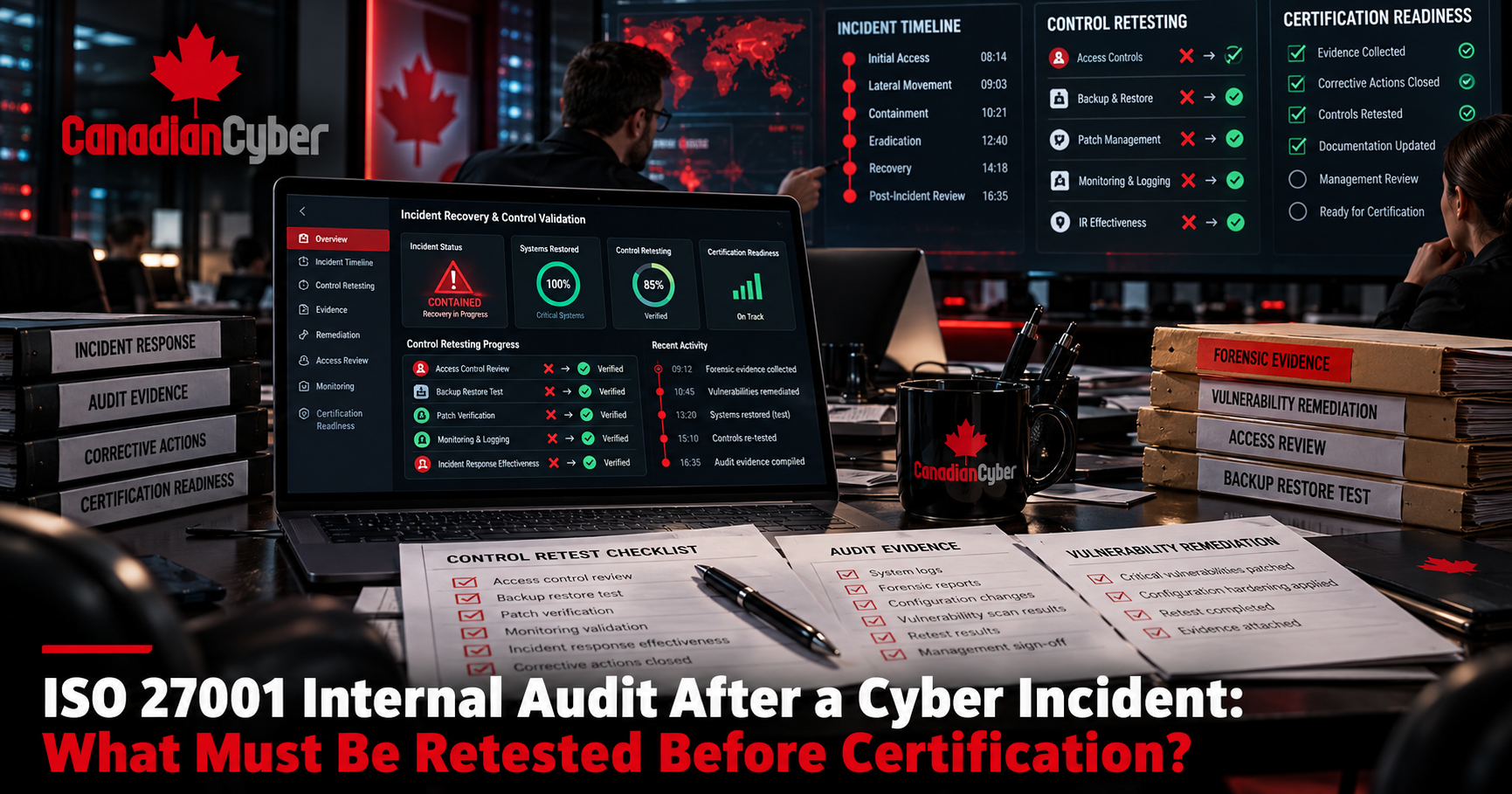
A Fictional Example: When Internal Audits Are Skipped
This example is fictional but reflects real-world patterns.
A company passed ISO 27001 certification successfully but postponed internal audits.
Six months later:
- Access reviews were missed
- Vendor assessments were outdated
- Incident response had never been tested
Surveillance audit findings followed. ISO 27001 didn’t fail internal oversight did.
How Often Should Internal Audits Be Performed?
Best practice:
- At least annually (full ISMS coverage over the cycle)
- More frequently for high-risk areas (access, vendors, incident response, backups)
- After major changes (new cloud stack, new vendors, M&A, restructuring)
- Before surveillance audits (to reduce surprises)
Consistency matters more than timing.
A predictable audit rhythm prevents “audit season panic.”
How Canadian Cyber Helps
At Canadian Cyber, internal audits are practical, independent, and business-focused.
ISO 27001 Internal Audit Services
- Independent assessments and objective reporting
- Risk-based scope targeting what matters most
- Clear findings mapped to ISO clauses and Annex A
ISMS Health Checks
- Drift detection and surveillance readiness
- Evidence quality reviews (before auditors ask)
- No-surprise audits
vCISO Support
- Corrective action oversight and closure verification
- Leadership reporting and risk visibility
- Continuous improvement planning
Internal Audits Keep ISO 27001 Alive
ISO 27001 compliance is sustained through:
- Honest internal audits
- Clear ownership
- Leadership involvement
- Continuous improvement
Do this well and audits stop being stressful.
Ready to Strengthen Your ISO 27001 Program?
If you want internal audits that reduce findings, catch drift early, and keep surveillance audits smooth we can help.
👉 Explore Our ISO 27001 Internal Audit Services
👉 Learn About Our vCISO Services
👉 Book a Free Consultation
Stay Connected With Canadian Cyber
Follow Canadian Cyber for practical ISO 27001 guidance, audit readiness insights, and governance best practices: