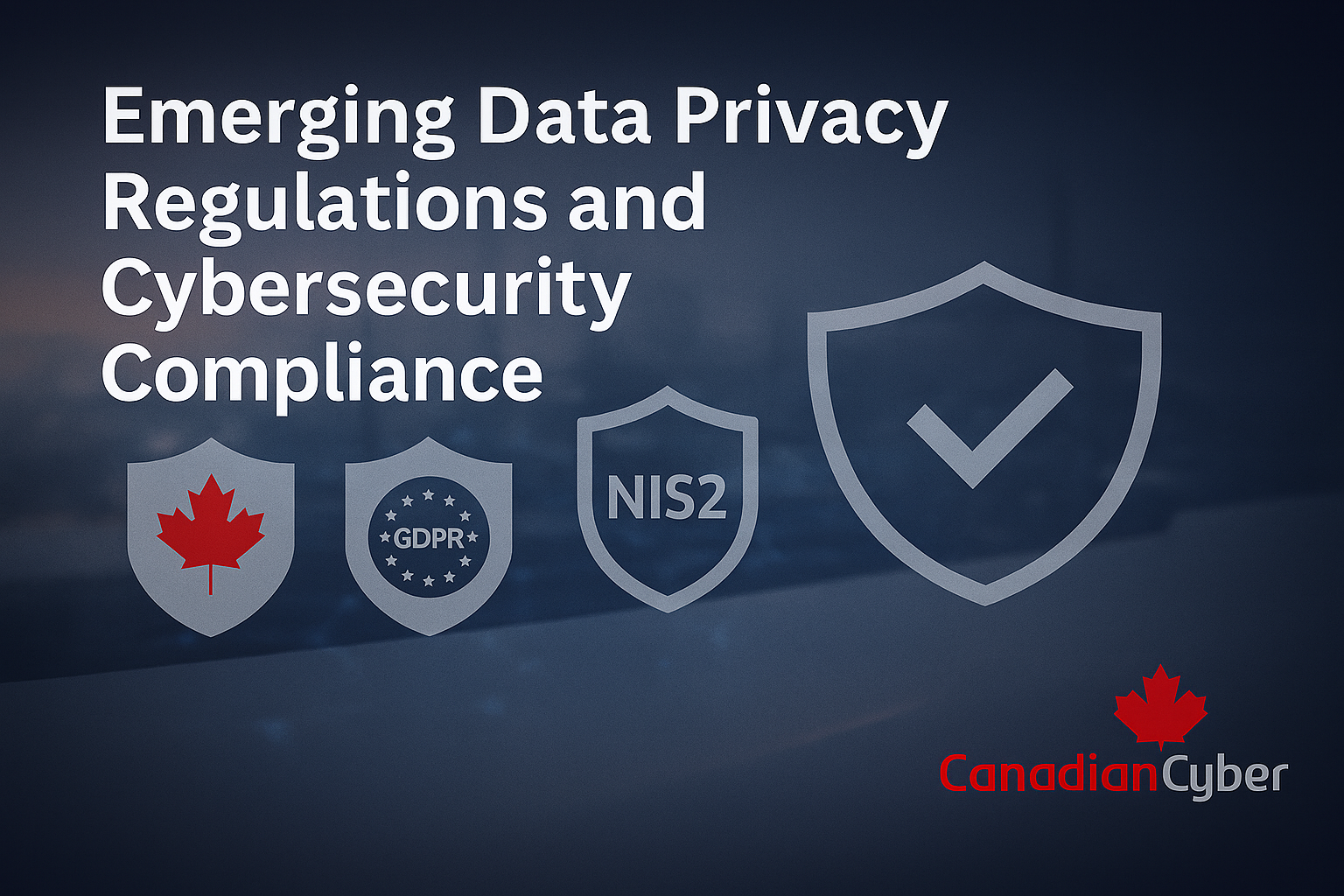
Emerging Data Privacy Regulations and Cybersecurity Compliance: What Businesses Must Prepare for Now
Why cybersecurity compliance is no longer just about ISO and SOC and what new laws mean for your organization.
Cybersecurity compliance is entering a new phase.
For years, many organizations focused on:
• ISO 27001
• SOC 2
• Basic privacy obligations
That is no longer enough.
Governments around the world are introducing stronger, more enforceable cybersecurity and data privacy laws.
These regulations are not theoretical. They come with:
• Mandatory security controls
• Reporting obligations
• Executive accountability
• Financial penalties
For business leaders, the challenge is clear:
How do you keep up with fast-changing regulations without drowning in legal complexity?
This blog breaks down the most important emerging data privacy and cybersecurity regulations in plain language and explains how they will impact real world security programs.
Why Governments Are Tightening Cybersecurity and Privacy Laws
The regulatory shift is driven by three realities:
• Cyberattacks now disrupt essential services
• Data breaches affect millions of individuals at once
• Voluntary security guidance is no longer working
From hospitals to energy providers to cloud platforms, cyber incidents are now seen as national and economic risks, not just IT problems.
As a result, regulators are moving from “best practice” to mandatory standards.
Canada: Bill C-26 and the Push for Critical Infrastructure Security
One of the most significant developments in Canada is Bill C-26.
What Is Bill C-26?
Bill C-26 aims to strengthen cybersecurity requirements for critical infrastructure sectors, such as:
• Telecommunications
• Energy
• Transportation
• Financial services
It introduces:
• Mandatory cybersecurity programs
• Incident reporting obligations
• Government oversight and enforcement
Why This Matters to Businesses
Even if your organization is not directly classified as “critical infrastructure,” Bill C-26 affects:
• Suppliers
• Service providers
• Technology vendors
Security expectations will flow down the supply chain.
Want a simple way to prepare for new regulations?
Our vCISO and compliance services help you map laws to real controls, so you stay ready without confusion.
European Union: NIS2 Directive Explained Simply
The EU’s NIS2 Directive significantly expands cybersecurity obligations.
What NIS2 Changes
Compared to earlier regulations, NIS2:
• Covers more industries
• Applies to more organizations
• Introduces stricter enforcement
It requires organizations to:
• Implement risk-based security controls
• Maintain incident response capabilities
• Report cyber incidents quickly
Why Non-EU Companies Should Care
NIS2 applies to organizations that:
• Operate in the EU
• Provide services to EU entities
• Support EU-based critical services
Many Canadian and North American companies are impacted indirectly through customers or partners.
Privacy Law Evolution: CPPA, GDPR, and Beyond
Privacy regulations are also becoming more demanding.
Canada’s CPPA (Consumer Privacy Protection Act)
The CPPA proposes:
• Stronger individual privacy rights
• Higher penalties for non-compliance
• Clear expectations for data protection
GDPR Continues to Raise the Bar
GDPR enforcement has shown that:
• Regulators expect demonstrable security controls
• “We didn’t know” is no longer an excuse
• Governance and documentation matter
Privacy compliance increasingly depends on strong cybersecurity foundations.
What These Regulations Have in Common
Despite different names and jurisdictions, emerging regulations share core expectations:
• Risk-based security programs
• Clear accountability at the leadership level
• Documented policies and procedures
• Incident detection and reporting
• Ongoing monitoring and improvement
In other words: cybersecurity must be managed, not improvised.
How Emerging Regulations Change Cybersecurity Programs
From Point-in-Time Compliance to Continuous Compliance
Annual assessments are no longer enough.
Organizations must show ongoing monitoring, regular reviews, and continuous improvement.
From IT Ownership to Executive Accountability
Many new laws explicitly require board awareness, executive involvement, and defined security leadership.
Cybersecurity is now a governance issue.
The Risk of Ignoring Emerging Regulations
Organizations that delay preparation face:
• Regulatory penalties
• Contractual issues
• Loss of customer trust
• Increased breach impact
Compliance failures increasingly become business failures, not just legal ones.
How ISO 27001 and SOC 2 Still Fit In
ISO 27001 and SOC 2 are not being replaced.
Instead, they:
• Provide structured foundations
• Align well with regulatory expectations
• Support defensible security programs
Organizations with mature ISO or SOC frameworks are better positioned to adapt to new regulations if they maintain them properly.
The Role of vCISO Services in Navigating New Regulations
Emerging regulations are complex.
A Virtual CISO (vCISO) helps organizations:
• Interpret regulatory requirements
• Translate laws into practical controls
• Align ISO, SOC, and privacy obligations
• Prepare leadership and boards
This prevents reactive, fragmented compliance efforts.
A Fictional Example: Regulatory Readiness in Action
(This example is fictional but reflects real-world patterns.)
A company focused only on ISO 27001 certification.
When a new customer raised NIS2-related concerns:
leadership was unprepared, documentation was incomplete, and timelines were tight.
With vCISO support:
✅ Regulatory gaps were identified
✅ Controls were aligned
✅ Confidence was restored
Preparation made the difference.
How Canadian Cyber Helps Organizations Stay Ahead
At Canadian Cyber, we help organizations move beyond checkbox compliance.
Our services support:
• ISO 27001 and SOC 2
• Emerging regulatory requirements
• Privacy and cybersecurity alignment
• Continuous compliance
We focus on clarity, leadership, and resilience not just frameworks.
The Compliance Landscape Will Keep Evolving
Regulations will continue to change.
The organizations that succeed will be those that:
• Build adaptable security programs
• Maintain strong governance
• Stay informed, not overwhelmed
Cybersecurity compliance is no longer optional but it doesn’t have to be chaotic.
Ready to Prepare for Emerging Cybersecurity Regulations?
Let us help you navigate today’s regulations and prepare for tomorrow’s.
Stay Connected With Canadian Cyber
Follow Canadian Cyber for practical compliance and regulatory readiness insights: