Cybersecurity in the Boardroom: How Directors Should Understand Cyber Risk
Why cybersecurity is no longer just an IT topic.
Cybersecurity is now a business risk.
That means it belongs in the boardroom.
A breach can impact revenue, operations, and trust.
Today, boards are expected to provide oversight.
So the goal is simple: help directors understand risk and act on it.
Why Cybersecurity Matters to Boards
Cyber incidents create business damage.
They often lead to:
• Financial loss
• Business downtime
• Legal and regulatory exposure
• Reputation damage
In some industries, the impact is even greater.
For example, healthcare and critical services can face:
• Patient safety risk
• Service disruption
• Loss of public trust
This is why directors must understand cyber risk.
Why Board Cyber Updates Often Miss the Mark
Many cyber reports fail because they focus on tools.
Boards do not need tool names.
They need outcomes.
Boards usually do not need:
• Log volume numbers
• Complex technical diagrams
• Detailed security architecture
Instead, boards need:
• Clear priorities
• Current risk level
• Decisions they can support
How to Explain Cybersecurity in Business Terms
1) Start with business impact
When you start with impact, the board stays engaged.
Instead of: “We deployed new security software.”
Say: “We reduced the risk of unauthorized access to customer data.”
2) Use simple risk categories
Boards already understand categories like finance and legal.
Use these:
• Financial risk
• Operational risk
• Legal and compliance risk
• Reputation risk
3) Track fewer metrics
Too many metrics overwhelm people.
Keep it simple.
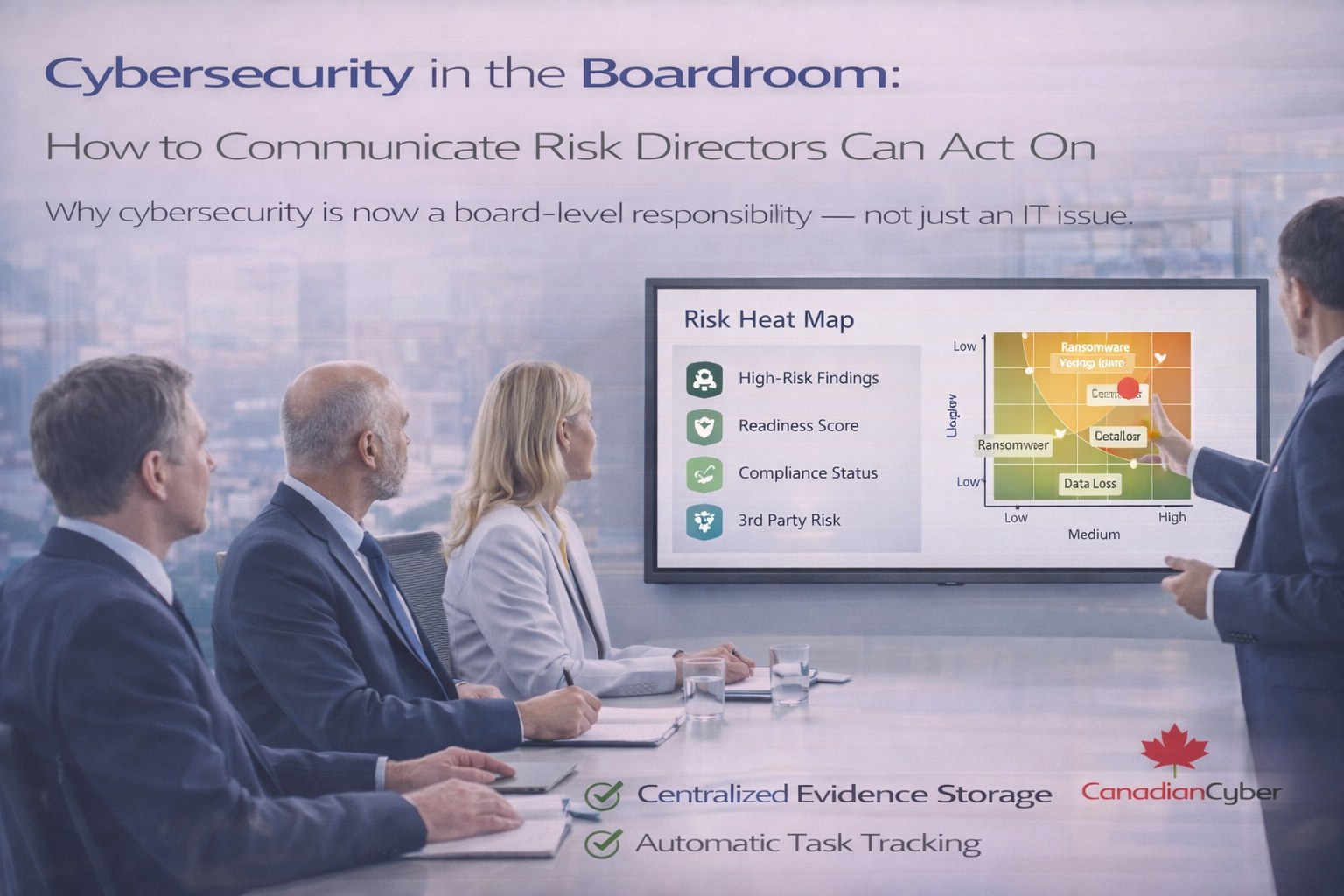
Good board-level metrics include:
• High-risk issues (open vs closed)
• Incident readiness status
• Compliance status (ISO 27001, SOC 2)
• Third-party risk exposure
Trends are more important than raw numbers.
Want board-ready cyber reporting?
Canadian Cyber helps you translate risk into updates directors can act on.
What Directors Should Ask
Directors do not need technical depth.
They need the right questions.
1) What are our top cyber risks right now?
This forces focus and prioritization.
2) Are we ready for a cyber incident?
Ask about plans, testing, and leadership roles.
3) How does cyber risk affect business strategy?
Cyber impacts growth, transformation, and M&A.
4) Are we meeting regulatory and client expectations?
This reduces future surprises.
5) Who owns cyber risk?
Clear ownership prevents drift.
How a vCISO Supports Board-Level Oversight
Many organizations do not have a full-time CISO.
A vCISO fills that gap.
A vCISO helps by:
• Translating risk into business language
• Preparing board-ready reporting
• Building repeatable governance
• Supporting leadership decisions
This improves confidence without adding full-time cost.
Cybersecurity Is a Leadership Responsibility
Cyber risk is business risk.
Boards that understand cyber risk:
✅ Ask better questions
✅ Make faster decisions
✅ Reduce surprises
The biggest risk is not lack of tools.
The biggest risk is lack of clarity.
Want Better Cybersecurity Reporting for Your Board?
We help leaders communicate risk clearly and confidently.
Stay Connected With Canadian Cyber
Follow Canadian Cyber for practical cybersecurity and governance insights: