Executive Accountability: Why Cybersecurity Governance Starts at the Top
This is no longer a technical story. It’s a leadership one.
The call came early.
A breach had happened overnight.
Systems were down.
Customers were asking questions.
Lawyers were already involved.
Then came the hardest question in the room:
“Who owns this?”
Not the firewall.
Not the software.
The leadership.
Cybersecurity Has Reached the Boardroom
For years, cybersecurity lived with IT.
That era is over.
Today, cyber incidents affect:
• Revenue
• Operations
• Reputation
• Trust
Regulators know this.
Insurers know this.
Customers know this.
Now boards and executives are expected to know it too.
Why Executive Accountability Is Increasing
After major breaches, reviews often say the same thing:
“Cyber risk was not properly governed.”
That statement now has weight.
In several regions, regulators are:
• Increasing fines
• Expanding reporting duties
• Exploring personal accountability for executives
The message is clear.
Cybersecurity governance is a leadership responsibility.
What Accountability Really Means
Accountability does not mean executives must be technical.
It means they must be involved.
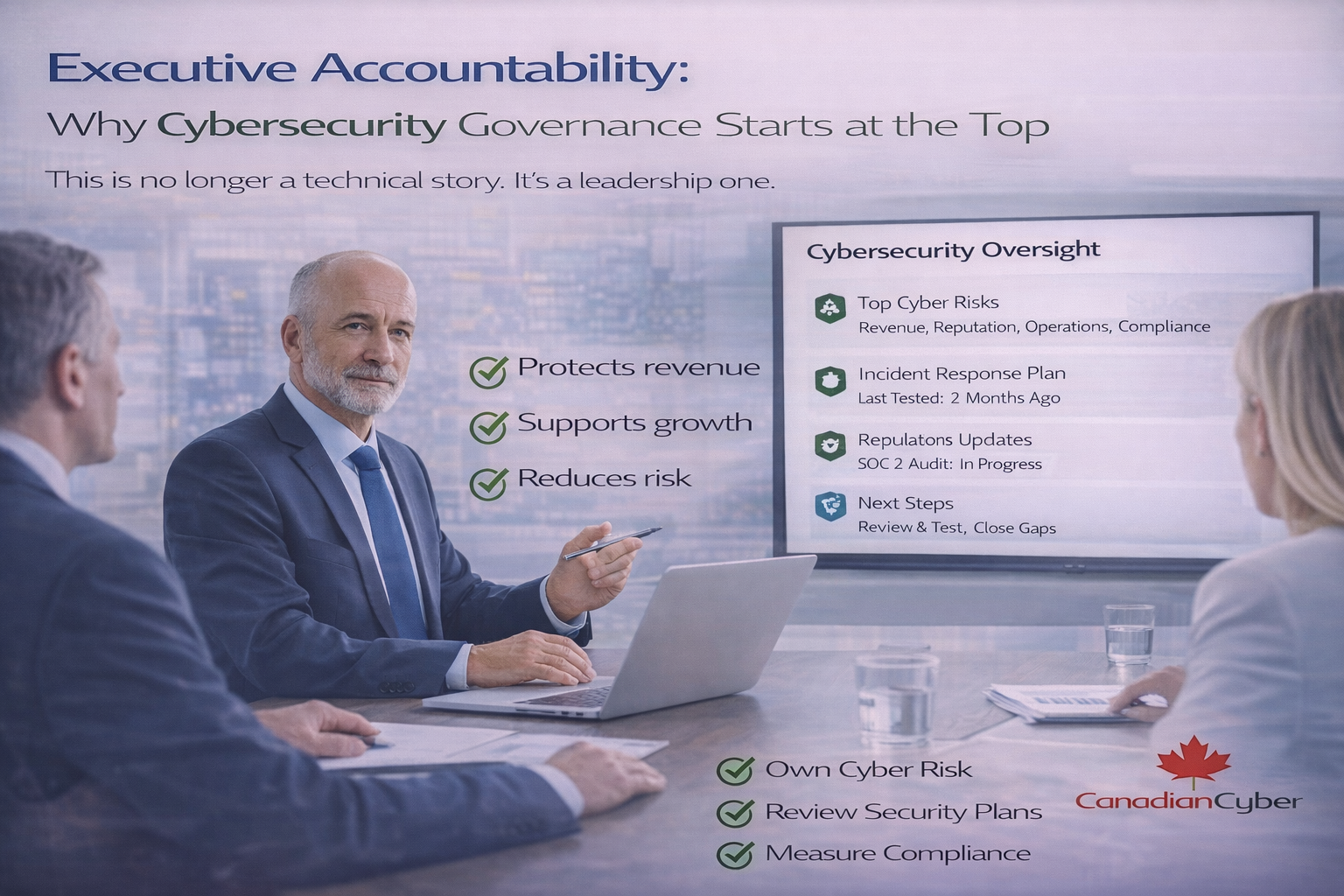
Strong leadership means:
• Setting the tone for security
• Asking clear questions
• Funding real priorities
• Ensuring policies exist and work
Doing nothing is no longer neutral.
It is seen as risk.
The Moment Many Leaders Realize the Shift
It usually happens during one of these moments:
• A breach notification
• A regulator inquiry
• A customer security review
• A board-level question
Suddenly, cybersecurity feels personal.
That is not a failure.
That is awareness.
What Proactive Cyber Leadership Looks Like
Organizations with strong governance do a few things well.
They:
• Assign clear ownership of cyber risk
• Review cyber risk at the board level
• Test incident response plans
• Track compliance and gaps
They don’t wait for incidents.
They prepare.
Why “We Didn’t Know” No Longer Works
After a breach, no one asks:
“Did you buy the right tools?”
They ask:
“Did leadership understand the risk?”
Executives are now expected to show:
• Awareness
• Oversight
• Action
Cyber ignorance is no longer a defence.
How vCISO Support Protects Executive Accountability
Many organizations do not have a full-time CISO.
That gap creates risk.
A Virtual CISO (vCISO) helps by:
• Translating cyber risk into business terms
• Preparing board-level reports
• Supporting governance and compliance
• Creating evidence of due diligence
This protects the organization.
It also protects leadership.
A Short Story of Two Outcomes
(This example is fictional.)
Two companies faced similar breaches.
One had no governance.
No reporting.
No ownership.
The other had:
• Regular board updates
• Clear risk tracking
• vCISO oversight
Both were breached.
Only one recovered with confidence.
Want governance clarity before a breach forces it?
Get a leadership-friendly snapshot of your cyber accountability gaps.
Cybersecurity Starts at the Top
Cyber risk is business risk.
Business risk belongs to leadership.
The strongest organizations are not the ones with the most tools.
They are the ones with clear accountability and visible governance.
How Canadian Cyber Helps Leaders Stay Ahead
At Canadian Cyber, we support executives and boards with:
• vCISO services
• Cyber governance frameworks
• Compliance leadership (ISO 27001, SOC 2)
• Board-level reporting
We focus on clarity.
Not fear.
Ready to Strengthen Executive Cyber Governance?
Let us help you show oversight, reduce risk, and prove due diligence.
Stay Connected With Canadian Cyber
Follow Canadian Cyber for governance and compliance insights: