

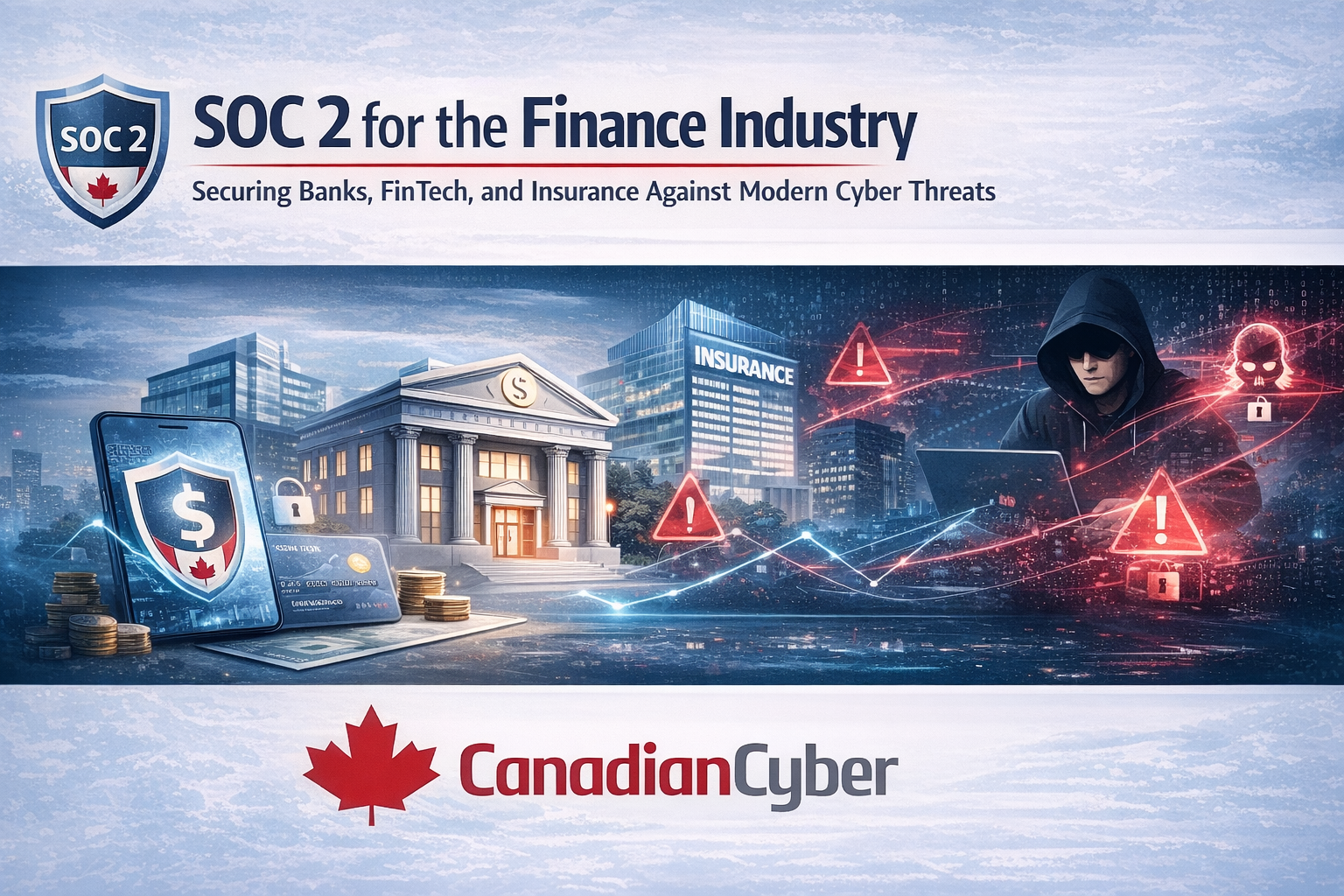
SOC 2 for the Finance Industry
Securing banks, FinTech, and insurance against modern cyber threats
In finance, trust is everything.
One breach can erase it overnight.
Accounts are frozen.
Transactions fail.
Customers panic.
Financial institutions remain one of the most targeted sectors globally.
Attackers follow the money.
SOC 2 helps financial organizations stay resilient, audit-ready, and trusted.
Why Financial Services Are Constantly Targeted
Banks, FinTechs, and insurers handle high-value data.
Customer identities.
Account credentials.
Payment information.
Transaction records.
Attackers focus on finance because:
- Breaches are profitable
- Disruption creates urgency
- Systems are highly interconnected
From global banks to fast-growing FinTechs, no organization is too large or too new.
What Is SOC 2 and Why It Matters in Finance
SOC 2 is a cybersecurity and privacy framework based on Trust Services Criteria.
It evaluates how organizations protect data across:
- Security
- Availability
- Confidentiality
- Processing integrity
- Privacy
For financial institutions, SOC 2 provides independent assurance that controls protecting customer data are properly designed and operating.
This is critical for:
- Customer trust
- Partner relationships
- Regulatory scrutiny
Quick Snapshot: SOC 2 for Financial Services
| Category | Details |
|---|---|
| Best for | Banks, credit unions, FinTechs, and insurance companies |
| Primary goal | Protect financial and customer data |
| Key benefit | Independent validation of security controls |
| Works with | Cloud, on-prem, and hybrid environments |
| Aligns with | PCI-DSS, regulatory expectations, and risk frameworks |
Common Cyber Threats in the Finance Sector
The threat landscape is evolving fast.
Financial organizations face risks such as:
- Account takeover fraud
- Banking malware
- Credential stuffing attacks
- Insider threats
- Third-party and API abuse
SOC 2 helps address these risks systematically with controls, evidence, and oversight.
Securing Accounts With Multi-Factor Authentication (MFA)
Account takeover remains one of the most damaging threats.
SOC 2 strongly supports:
- Multi-factor authentication
- Strong password policies
- Access monitoring
For financial systems, MFA is no longer optional.
Encryption: Protecting Data in Motion and at Rest
Financial data must be protected everywhere.
SOC 2 requires encryption to:
- Secure customer data at rest
- Protect data in transit
- Reduce exposure during breaches
Encryption is a foundational control for banks and FinTech platforms.
Open Banking APIs: New Opportunities, New Risks
Open banking enables innovation.
It also expands the attack surface.
APIs can expose:
- Account data
- Payment initiation
- Third-party integrations
SOC 2 helps manage API risk by enforcing:
- Access controls
- Authentication and authorization
- Monitoring and logging
- Vendor oversight
APIs must be treated as critical assets.
Using APIs or third-party integrations?
Understand your SOC 2 exposure before issues arise.
Learning From Cryptocurrency Exchange Breaches
Cryptocurrency exchange hacks offer hard lessons.
Common failures include:
- Weak access controls
- Poor key management
- Limited monitoring
- Inadequate incident response
Traditional financial institutions can learn from these incidents.
SOC 2 emphasizes:
- Strong governance
- Continuous monitoring
- Incident preparedness
Security failures are rarely sudden. They build over time.
Aligning SOC 2 With PCI-DSS and Financial Regulations
Financial organizations often juggle multiple frameworks.
SOC 2 works alongside:
- PCI-DSS for payment card security
- Internal risk and compliance programs
- Regulatory oversight
SOC 2 provides a common control baseline that supports audits, due diligence, and vendor reviews.
Reducing Third-Party and Vendor Risk
Finance relies heavily on vendors.
Cloud providers.
Payment processors.
Technology partners.
SOC 2 requires organizations to:
- Vet vendors
- Define security expectations
- Monitor third-party access
Subtle highlight: This reduces supply chain risk and strengthens accountability.
Managing complex vendor ecosystems?
Build a SOC 2-aligned risk framework and reduce third-party exposure.
How Canadian Cyber Supports Financial Organizations
We understand financial sector pressure.
High expectations.
Low tolerance for failure.
Constant scrutiny.
Our SOC 2 services include:
- Readiness and gap assessments
- Control design and implementation
- Mapping SOC 2 to PCI-DSS and regulatory needs
- Audit preparation and support
Subtle highlight: Security built for real financial environments.
Strengthen Financial Cybersecurity With SOC 2
If your organization is:
- Handling sensitive financial data
- Operating in a regulated environment
- Scaling digital services
SOC 2 provides confidence and credibility.
Build audit-ready controls, reduce risk, and show assurance to customers and partners.
👉 Start Your SOC 2 Journey Today
👉 Speak With a Financial Cybersecurity Expert
Stay Connected With Canadian Cyber
Follow us for practical insights on compliance, risk, and cybersecurity: