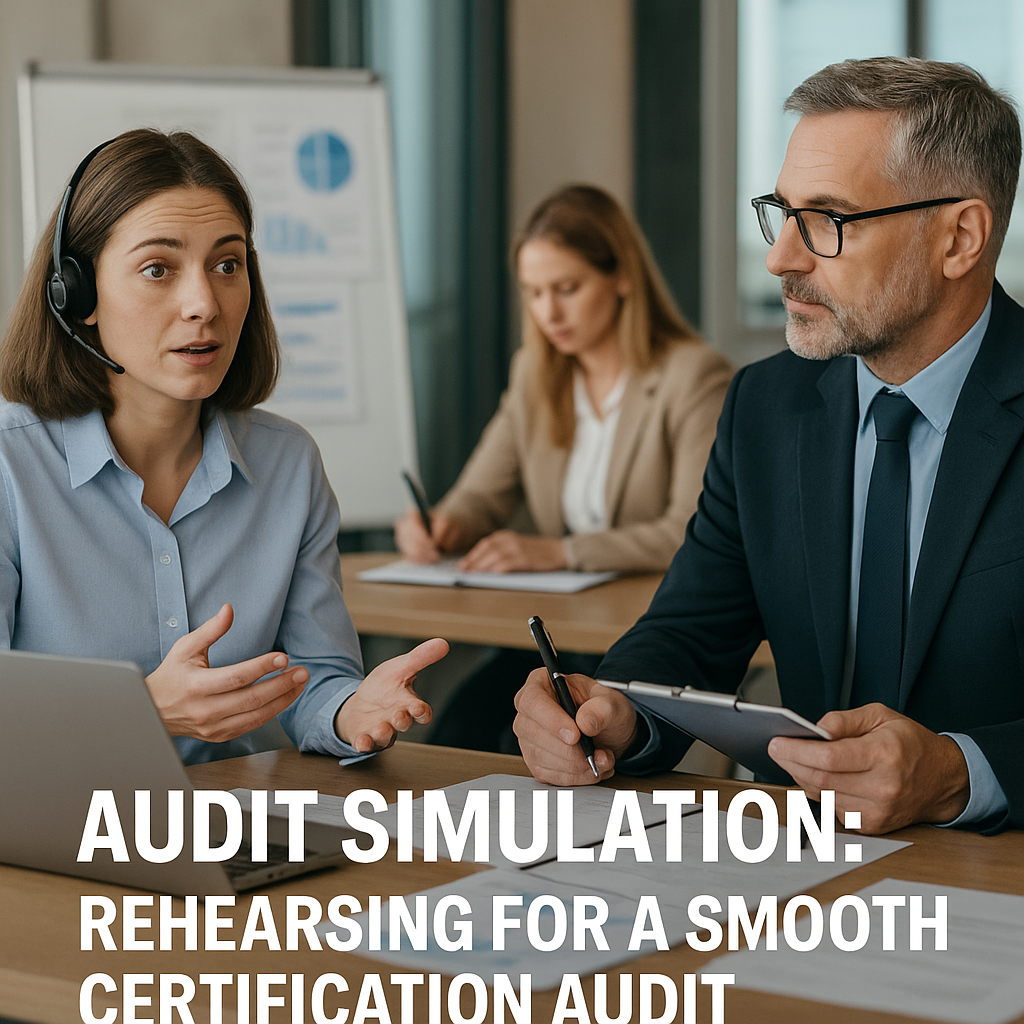
Audit Simulation: Rehearsing for a Smooth Certification Audit
Why the most prepared organizations never “wing it” on audit day.
No one walks into an important meeting without preparation. No one launches a product without testing.
And no smart organization goes into a certification audit cold.
Yet many companies still treat ISO 27001 or SOC 2 audits like a one-time performance.
- They prepare documents.
- They hope for the best.
- They wait for the auditor to point out what went wrong.
There is a better way: run an audit simulation. It’s one of the fastest ways to build confidence and improve first-pass success.
Quick Snapshot
| Category | Detail |
|---|---|
| Topic | Audit simulation (mock audit) for ISO 27001 and SOC 2 |
| Purpose | Rehearse the audit, find gaps early, and reduce stress |
| Best timing | 4–8 weeks before the certification audit |
| Key insight | The simulation is a low-risk way to strengthen evidence, interviews, and readiness |
What Is an Audit Simulation (In Simple Terms)?
An audit simulation (often called a mock audit) is a practice run before your real certification audit.
It mirrors what an external auditor will do:
- Review policies and procedures
- Test controls
- Ask questions
- Request evidence
- Interview staff
- Identify gaps or weaknesses
The key difference: there is no penalty. The goal is to learn, improve, and prepare not to judge.
Why Certification Audits Feel Stressful Without a Rehearsal
Many teams run into the same problems during their first audit:
- Staff don’t know how to answer audit questions
- Evidence is scattered across tools and folders
- Controls exist, but aren’t documented properly
- Policies don’t match how teams actually work
- Last-minute gaps appear under pressure
These issues are rarely about “bad security.” They’re usually about lack of rehearsal. Audit simulations solve that.
Think of an Audit Simulation Like a Dress Rehearsal
A good audit simulation answers one question: If the auditor walked in tomorrow, would we be ready?
It tests your:
- Systems
- Documentation
- People
- Processes
Instead of discovering issues during the real audit, you discover them early when they are easy to fix.
A Fictional Example: Almost Ready Isn’t Ready
This scenario is fictional but reflects common audit experiences.
A Canadian technology firm planned to certify against ISO 27001. Leadership felt confident.
Policies were written. Controls were implemented. Tools were in place.
They ran an audit simulation two months before certification. The results were eye-opening:
- Access reviews were happening, but not documented
- Incident response procedures existed, but had never been tested
- Risk assessments were outdated
- Evidence was stored in multiple locations
- Staff were unsure how to explain their roles
None of these were deal-breakers but they would have caused findings in the real audit.
The simulation gave time to fix everything calmly, and the certification audit passed on the first attempt.
What an Audit Simulation Actually Tests
A proper audit simulation is not a checklist review. It feels like a real audit.
1) Control Effectiveness
- Are security controls actually working?
- Are they followed consistently?
2) Evidence Readiness
- Can evidence be produced quickly?
- Is it complete and accurate?
3) Policy and Process Alignment
- Do policies reflect reality?
- Do teams follow documented processes?
4) Staff Awareness
- Do employees understand their security responsibilities?
- Can they explain what they do when asked?
5) Risk and Governance
- Are risks documented and reviewed?
- Is management involved and informed?
In short: the simulation checks whether your program is audit-ready not just “documented.”
Why Audit Simulations Improve First-Pass Success
Organizations that run audit simulations typically see:
- Fewer surprises during the real audit
- Shorter audit timelines
- Reduced stress for staff
- Clear remediation plans
- Higher confidence in leadership discussions
- Stronger chance of passing on the first attempt
Audit Simulation vs. Gap Assessment: What’s the Difference?
| Gap Assessment | Audit Simulation |
|---|---|
| High-level review | Realistic audit-style testing |
| Focuses on missing items | Focuses on how controls operate |
| Often document-based | Evidence and interview-based |
| Early-stage readiness | Pre-audit confidence check |
Many organizations do both but the simulation is what builds confidence before audit day.
When Should You Run an Audit Simulation?
The best time is before your certification audit not right before.
Ideal timing:
- 4–8 weeks before your ISO 27001 or SOC 2 audit
- After controls are implemented
- Before evidence collection is finalized
- While there is still time to fix issues
Why Audit Simulations Are Especially Valuable for ISO 27001
ISO 27001 is not just technical. It evaluates governance, risk management, and continuous improvement.
Audit simulations help validate:
- ISMS structure
- Risk assessments
- Management reviews
- Internal audit processes
- Corrective actions
In other words, it tests the health of your ISMS not just individual controls.
How Canadian Cyber Runs Audit Simulations
Our simulations are designed to feel realistic but supportive. We simulate to prepare, not to “audit to fail.”
| Service Layer | What you get |
|---|---|
| ISO 27001 Audit Simulation Workshops | Full mock audit experience, evidence sampling, staff interviews, control testing, gap identification, practical remediation guidance |
| vCISO Oversight | Translate findings into business risk, prioritize remediation, guide leadership decisions, prep teams for auditor conversations |
| Post-Simulation Action Plans | Fix gaps, strengthen controls, organize evidence, and build confidence before audit day |
👉 Explore Our ISO 27001 Audit Simulation Services
👉 Prepare Confidently for Your Certification Audit
The Real Benefit: Confidence
The biggest benefit of an audit simulation is not fewer findings. It’s confidence.
- Teams know what to expect
- Leadership knows where risks are
- Audits become structured conversations not stressful interrogations
That confidence shows during the real audit and it often makes the difference between a smooth first pass and a stressful remediation cycle.
Want Fewer Surprises During Your Certification Audit?
If you’re preparing for ISO 27001 or SOC 2, an audit simulation is one of the smartest steps you can take.
👉 Explore Audit Simulation Services
👉 Book a Free Consultation
Stay Connected With Canadian Cyber
Follow Canadian Cyber for practical guidance on audits, compliance, and cybersecurity leadership: