


Boardroom Cyber Risk: How vCISOs Help CEOs and Boards Sleep at Night
Why cyber risk is now a leadership issue not just an IT one.
Cybersecurity no longer lives in the server room. It lives in the boardroom. Today, CEOs and board members are expected to:
- Understand cyber risk at a high level
- Oversee security strategy and priorities
- Ask the right questions at the right time
- Defend decisions after incidents
Leadership reality: In Canada and the United States, regulators and stakeholders are paying closer attention to how cyber risk is governed, not just how it is delegated.
This creates a practical challenge for leadership:
How do we get clear, honest answers about cyber risk without becoming security experts?
That’s where a Virtual CISO (vCISO) changes the conversation.
Quick Snapshot
| Board concern | What a vCISO provides |
|---|---|
| Unclear exposure | Prioritized risks in business terms |
| Weak oversight proof | Repeatable reporting and documented decisions |
| Incident panic | Leadership-ready incident playbooks and tabletop exercises |
| Too much jargon | Clear translation without tool talk |
Why Cyber Risk Keeps Executives Awake
Most executives don’t worry about firewalls. They worry about outcomes.
Reputational damage
Brand trust can drop overnight.
Regulatory penalties
Privacy and reporting obligations add pressure.
Operational disruption
Downtime hits revenue and customer confidence.
Personal liability
Oversight questions often follow major incidents.
The boardroom question is not “Do we have security tools?”
It’s “Are we exposed and would we know before it’s too late?”
The Growing Expectation of Board Oversight
After major breaches, investigations rarely stop at IT. They often ask:
- Who owned cyber risk?
- What did leadership know, and when?
- Were risks discussed and documented?
- Were decisions reasonable and defensible?
Silence or confusion is no longer defensible. Boards need proof of oversight and governance.
Why Traditional Security Reporting Fails Boards
Many boards receive cyber updates that are too technical, too vague, or too optimistic. Tool names and threat acronyms do not help leaders make decisions.
Boards need reporting that answers:
- What are our top risks right now?
- What business impact could they cause?
- What are we doing about them?
- What decisions do you need from leadership?
The vCISO’s Role at the Board Level
A vCISO acts as the translator and owner of cyber risk. They sit between technical teams, leadership, and the board.
A vCISO’s job is not to scare the board or reassure them blindly.
It is to tell the truth in business terms.
What a vCISO Brings to the Boardroom
1) Clear cyber risk translation
A vCISO explains what risks matter most, how likely they are, what impact they could have, and what is being done. No jargon. No tool talk. Just risk and consequence.
2) Structured, repeatable reporting
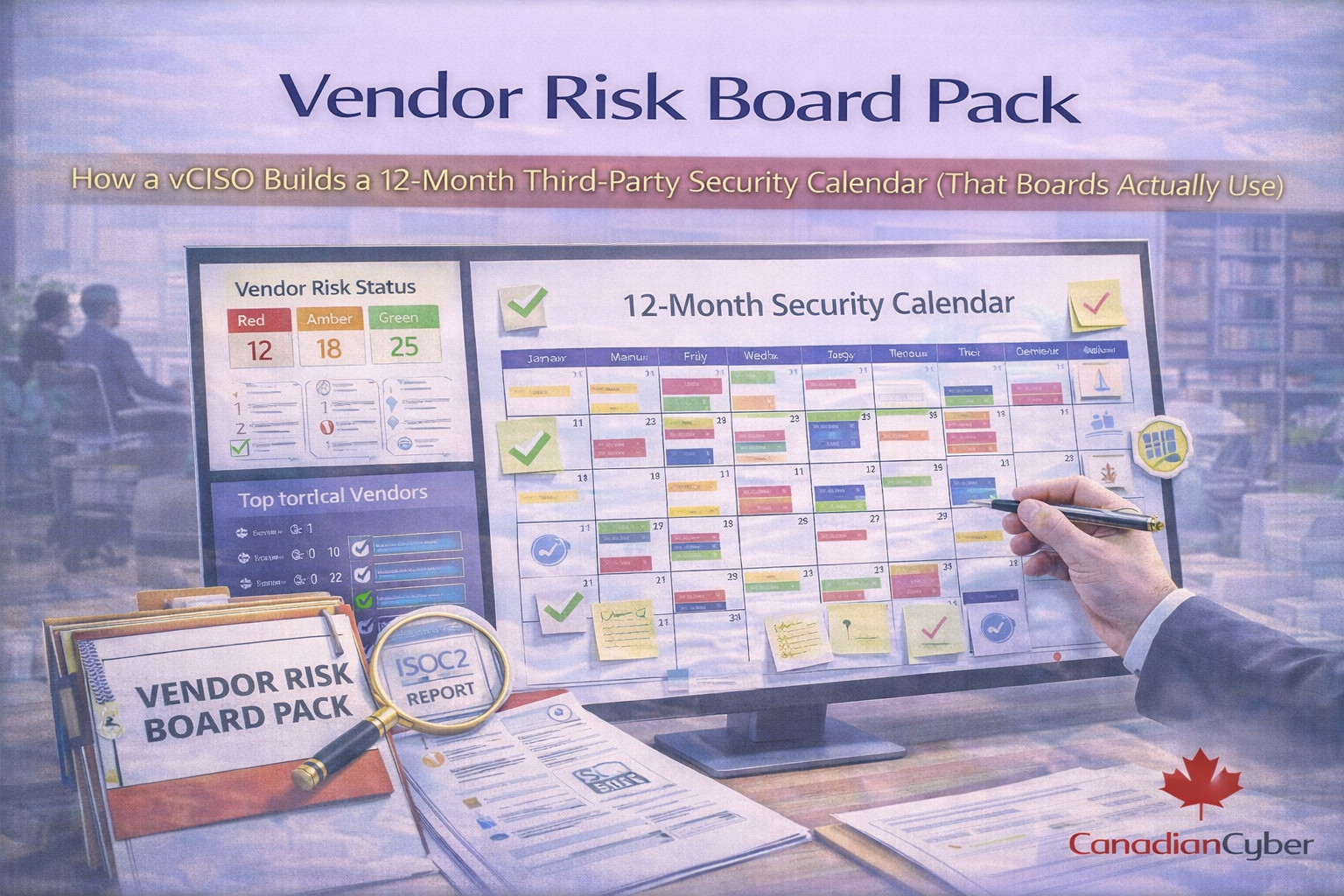
Boards receive regular risk summaries, trends over time, and clear progress updates. This builds confidence because oversight becomes consistent.
3) Defined accountability and defensible decisions
A vCISO makes sure cyber risk has an owner, decisions are documented, and trade-offs are explicit. This protects leadership if scrutiny follows an incident.
4) Incident readiness for leadership
Boards don’t need technical playbooks. They need clarity on who is informed first, what decisions leadership must make, how communication is handled, and what regulators expect.
What Boards Should Be Asking (But Often Don’t)
A strong vCISO helps leaders answer questions like:
- What are our top cyber risks today?
- How have those risks changed in the last year?
- Which risks are accepted and why?
- How do we know controls are working?
- Are we prepared for a major incident?
- How do we compare to peers?
If these questions feel uncomfortable, that’s normal. It’s also a useful signal: the program needs clearer governance.
A Fictional Example: Confidence Through Clarity
(This example is fictional but reflects real-world board dynamics.)
A board received quarterly cyber updates from IT. They were technical, optimistic, and brief. The board left meetings unsure of exposure and unsure of priorities.
After engaging a vCISO, cyber risk was reframed in business terms, reporting became consistent, and decisions were documented. Nothing dramatic changed overnight. What changed was confidence.
Why vCISOs Work for Executive Leadership
A full-time CISO can be hard to hire and may be pulled into day-to-day operations. A vCISO provides an independent, executive-level perspective without adding permanent headcount.
A vCISO gives leadership:
- Board-facing credibility
- Strategic oversight and prioritization
- Clear reporting with fewer surprises
- Independent risk perspective
How Canadian Cyber Supports CEOs and Boards
At Canadian Cyber, our vCISO services are designed for leadership not just compliance. We help boards ask the right questions and receive honest answers.
🔹 Board-Level Cyber Risk Reporting
- Clear, business-focused updates
- Risk prioritization and trend views
- Governance alignment and accountability
🔹 Executive Cyber Strategy
- Risk ownership models
- Security roadmaps leaders can defend
- Decision support with clear trade-offs
🔹 Incident & Regulatory Readiness
- Leadership playbooks and escalation paths
- Tabletop exercises for decision-makers
- Post-incident governance support
Cyber Confidence Is a Leadership Asset
Boards don’t need to know everything about cybersecurity. They need to know that risks are understood, decisions are intentional, and oversight exists.
A vCISO provides assurance by making cyber risk visible, managed, and defensible.
Not by eliminating risk but by governing it responsibly.
Ready for Board-Level Cyber Confidence?
Let’s align cyber risk reporting with leadership needs so your board can make clear decisions and defend them.
We’ll help your leadership team sleep better knowing cyber risk is governed, not guessed.
Stay Connected With Canadian Cyber
Follow Canadian Cyber for ISO 27001, SOC 2, and board-level cybersecurity insights: