

vCISO Strategies for Cloud Security & Data Sovereignty in 2026
How Canadian organizations stay in control as cloud risk gets sharper
Cloud is everywhere. So are the questions.
In 2026, Canadian leaders are asking whether their cloud is truly under their control.
This guide shows how vCISO leadership, ISO 27017, and ISO 27018 build a defensible cloud posture.
Read time: 6–8 minutes
Keywords: vCISO, cloud security, data sovereignty, ISO 27017, ISO 27018, Canada, data residency, vendor risk
In 2026, sovereignty is about control, not geography.
A vCISO helps define accountability, apply ISO 27017/27018 controls, and keep evidence audit-ready inside Microsoft 365.
2026 reality:
“Hosted in Canada” is not the same as “controlled by Canada.”
Cloud adoption isn’t a strategy anymore
In Canada, cloud adoption is no longer optional.
It is a fact of life.
Every workload.
Every collaboration tool.
Every AI feature.
All in the cloud.
And in 2026, Canadian organizations are asking a sharper question:
Is our cloud actually under our control?
The new cloud anxiety: sovereignty, not storage
Cloud conversations used to focus on uptime and cost.
Now they focus on what happens when pressure shows up.
- Data sovereignty and cross-border access
- Regulatory exposure and reporting expectations
- Vendor accountability and third-party chains
- Proving controls work over time, not once
Hosting data in Canada does not automatically mean it is protected by Canadian control.
Foreign laws and opaque provider chains complicate the picture.
When cloud risk becomes a leadership issue
A common scenario looks like this:
a Canadian organization migrates to the cloud.
The data residency boxes are checked.
Everything seems fine.
Then a regulator, or an enterprise buyer, asks questions that require proof.
The questions that trigger urgency:
- Who can access the data?
- Which providers and sub-processors are involved?
- How are privacy and security controls enforced?
- Can you prove ongoing compliance?
This is where cloud governance becomes a leadership responsibility.
It cannot be an IT afterthought.
Quick snapshot: what changes in 2026
Why vCISOs are central to cloud strategy in 2026
Cloud security and sovereignty do not manage themselves.
A Virtual CISO (vCISO) brings what many cloud programs lack.
- Executive accountability
- Security strategy tied to business risk
- Continuous oversight and measurable controls
- A clear path from “cloud use” to “cloud governance”
Instead of reacting to cloud issues, organizations govern them.
vCISO playbook: secure the cloud without slowing it down
A vCISO does not block cloud adoption.
They make it safer and easier to defend.
Here is how.
1) Design cloud security with ISO 27017
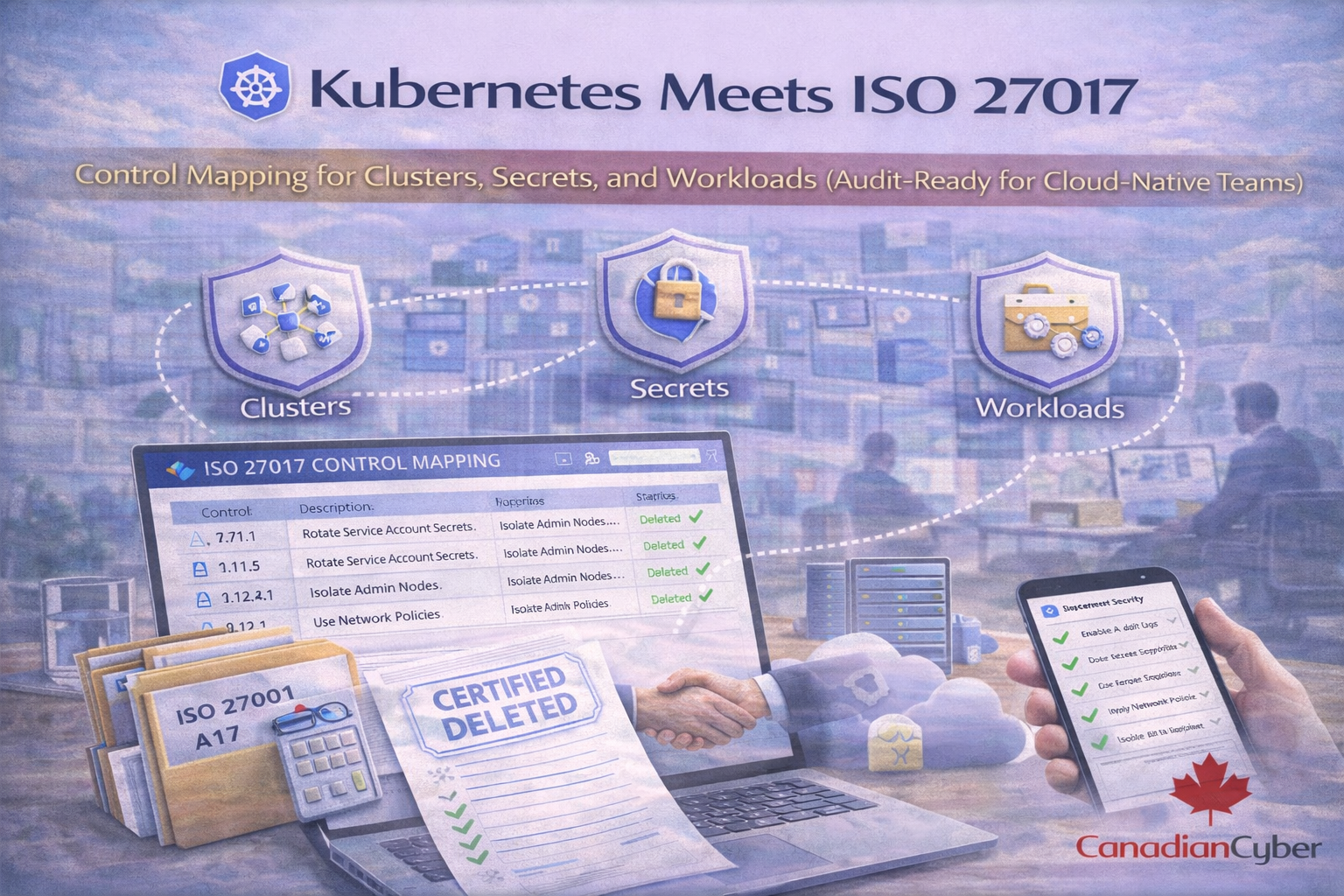
ISO 27017 focuses on cloud-specific controls.
A vCISO uses it to turn cloud security into something measurable and auditable.
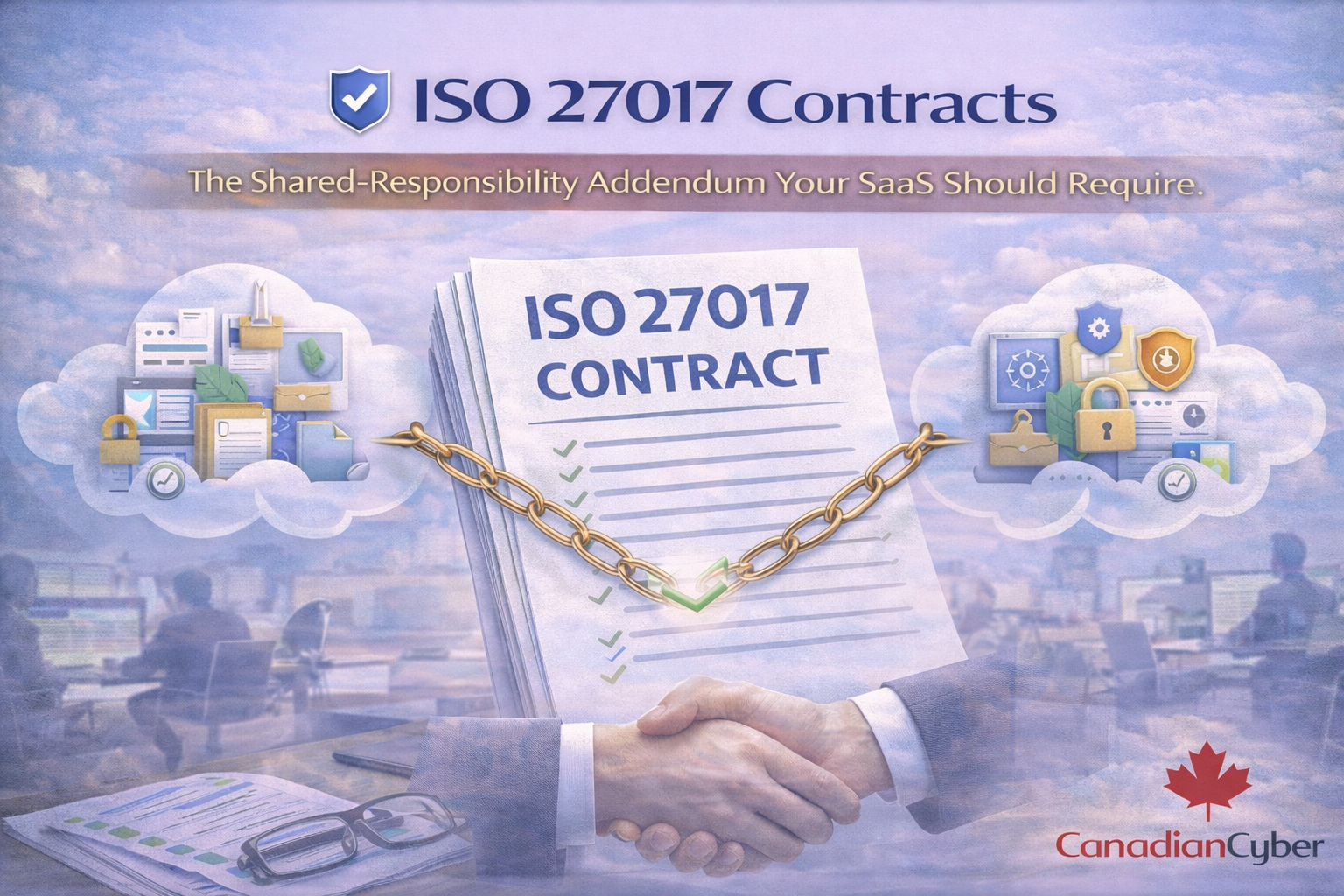
- Clarify shared responsibility models
- Define secure baseline configurations
- Reduce misconfiguration and access risk
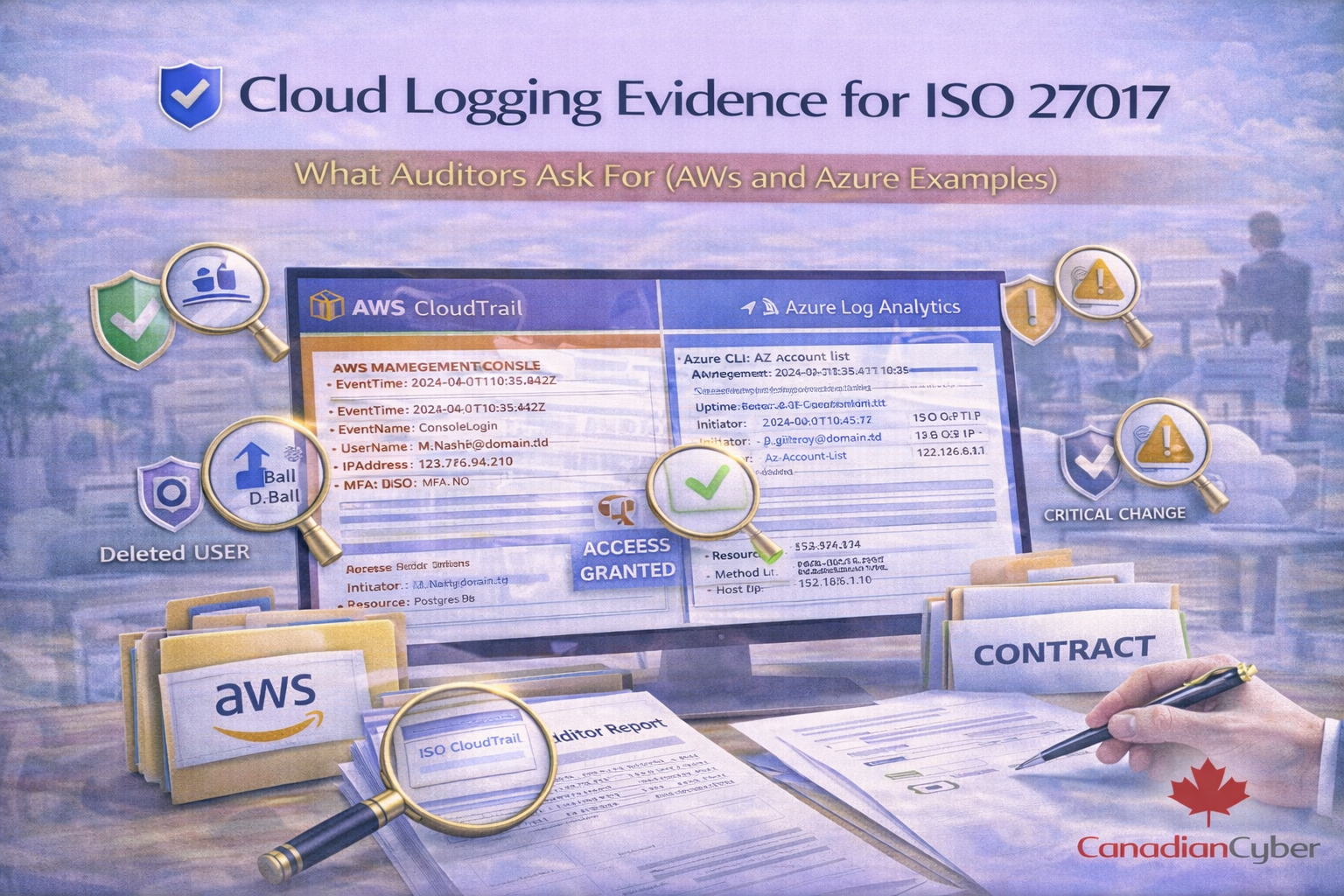
- Improve logging, monitoring, and evidence
2) Protect privacy with ISO 27018
ISO 27018 adds privacy governance on top of cloud security.
It helps organizations prove that personal data is handled with intention.
- Handle personal data transparently
- Restrict and log access to PII
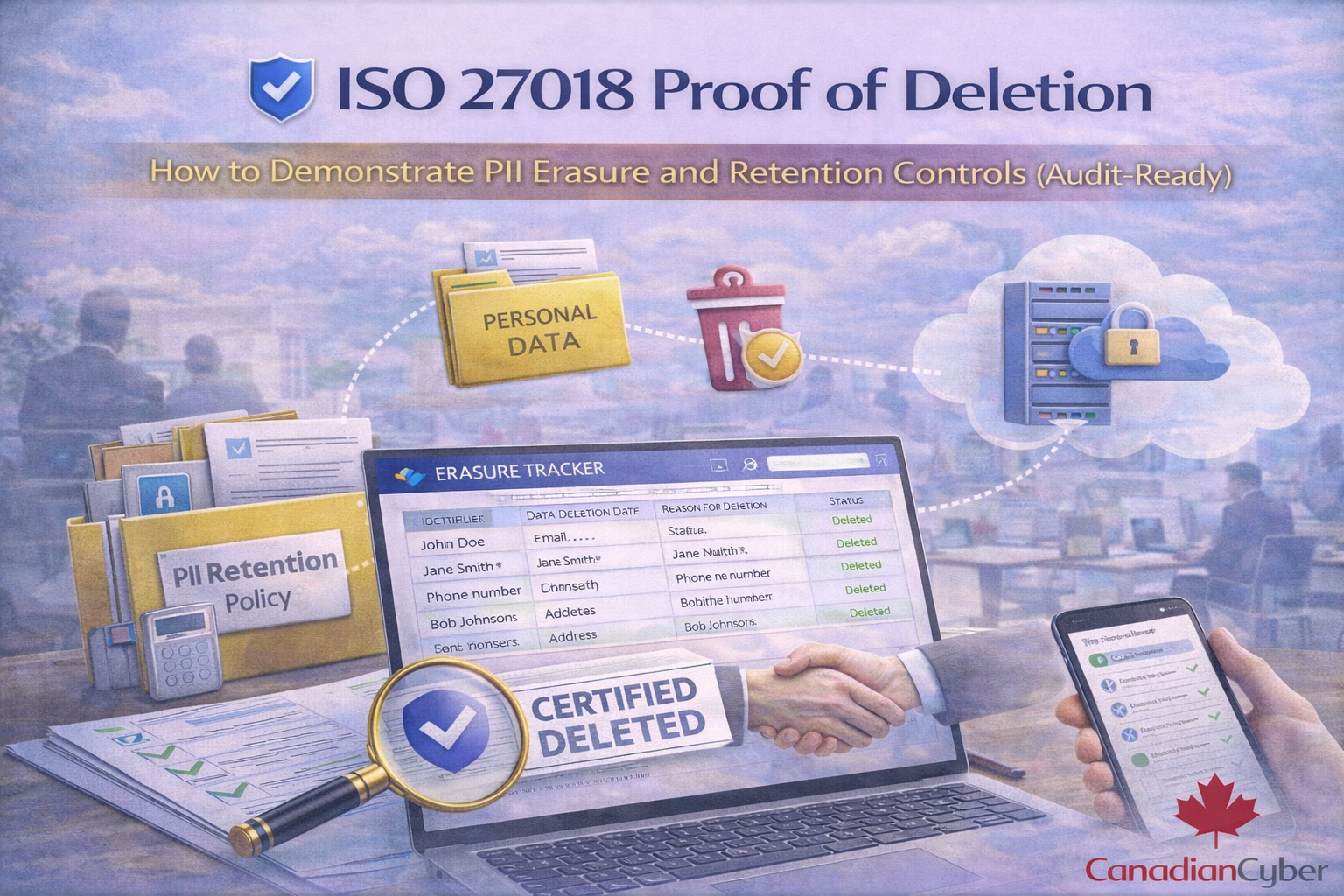
- Enforce retention and deletion rules
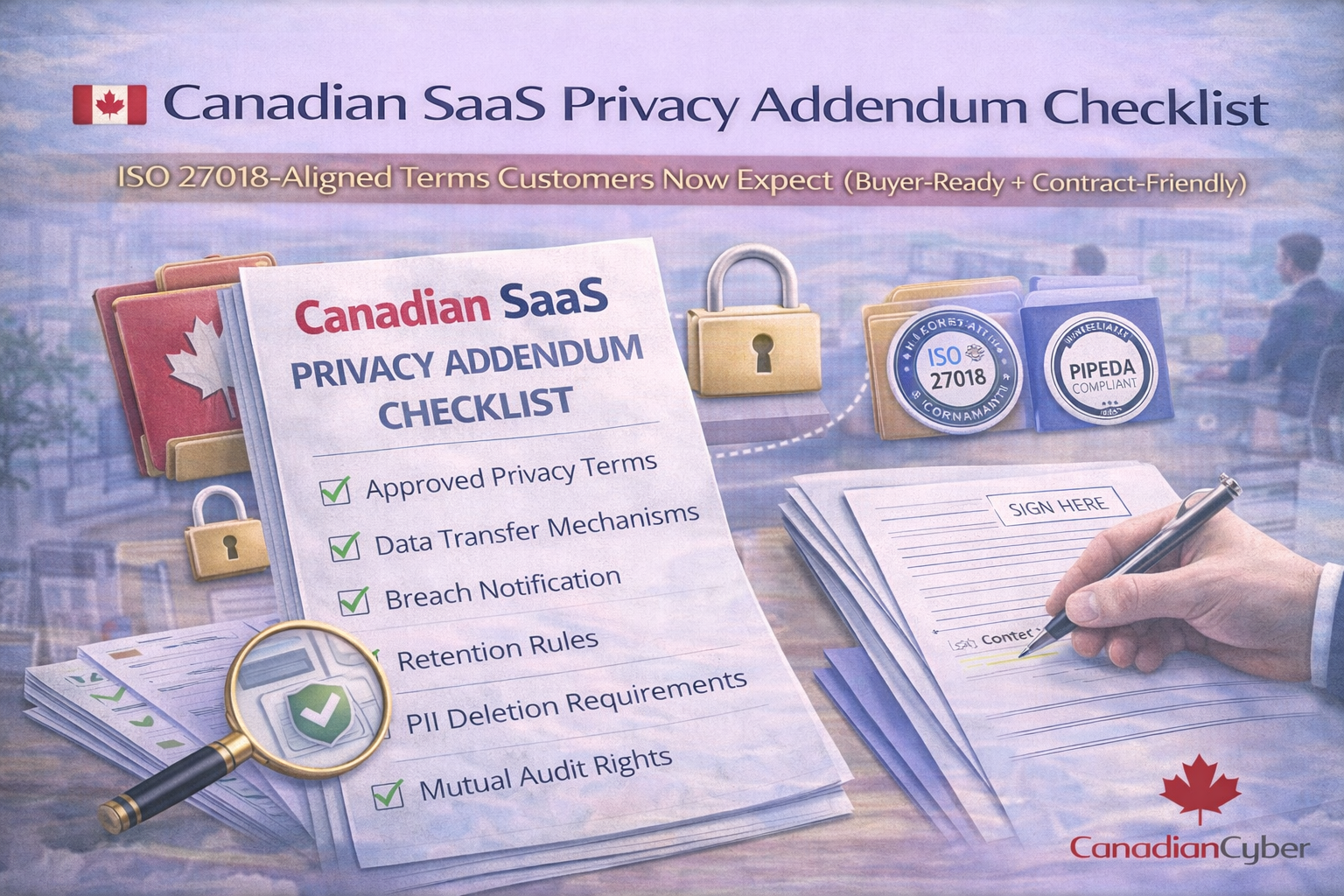
- Support Canadian privacy expectations
3) Build a data sovereignty strategy (not just residency)
True sovereignty is about control, not geography.
A vCISO helps create a defensible posture that stands up to scrutiny.
Sovereignty questions your organization should answer:
- Who administers cloud services?
- Which third parties can access systems or data?
- What jurisdictions may apply to providers and sub-processors?
- How do we prove controls are operating continuously?
The role of an ISMS platform in cloud governance
Strategy without structure does not scale.
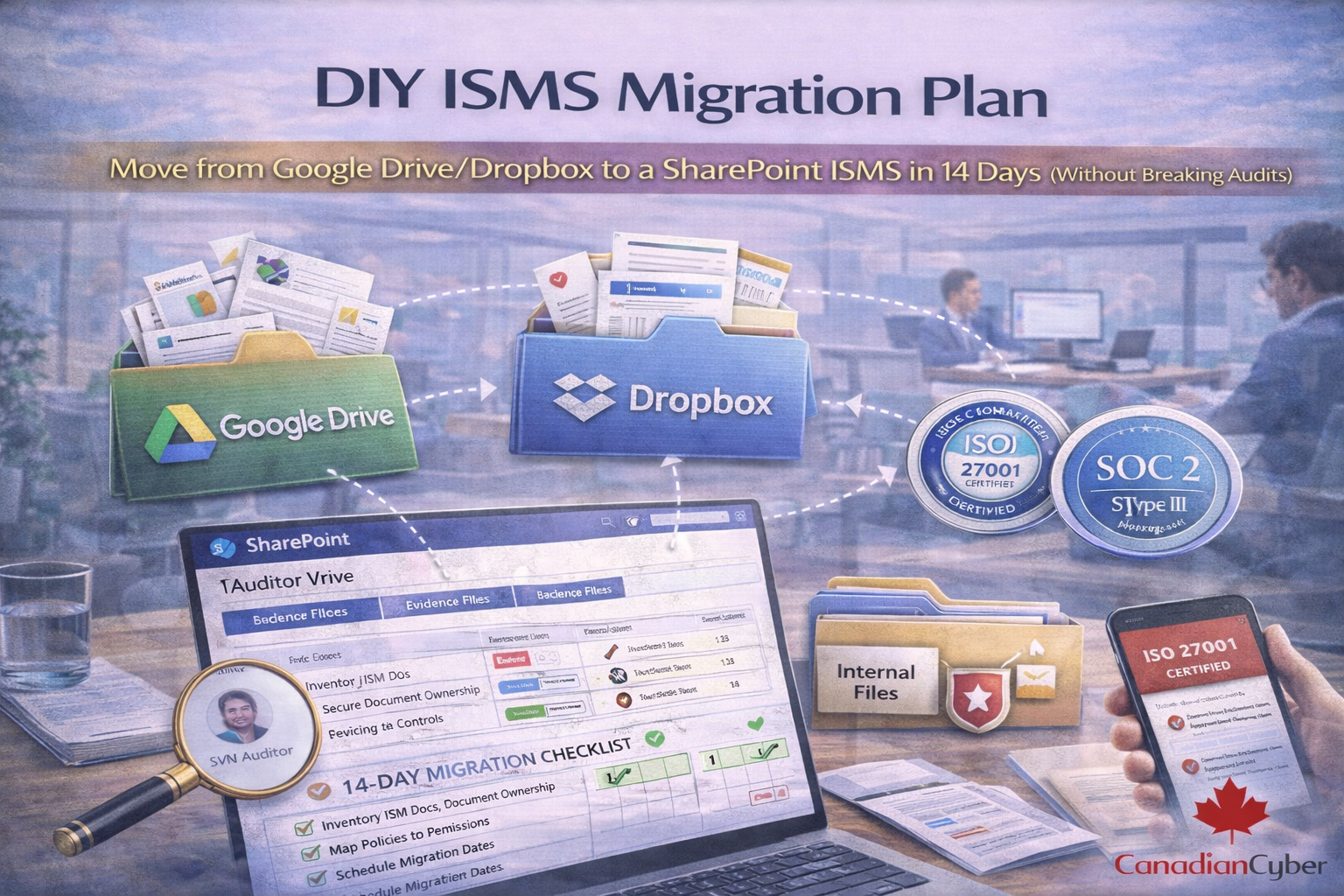
That is why Canadian Cyber pairs vCISO services with a SharePoint-based ISMS platform.
Inside Microsoft 365, organizations can:
- Manage cloud security and privacy policies
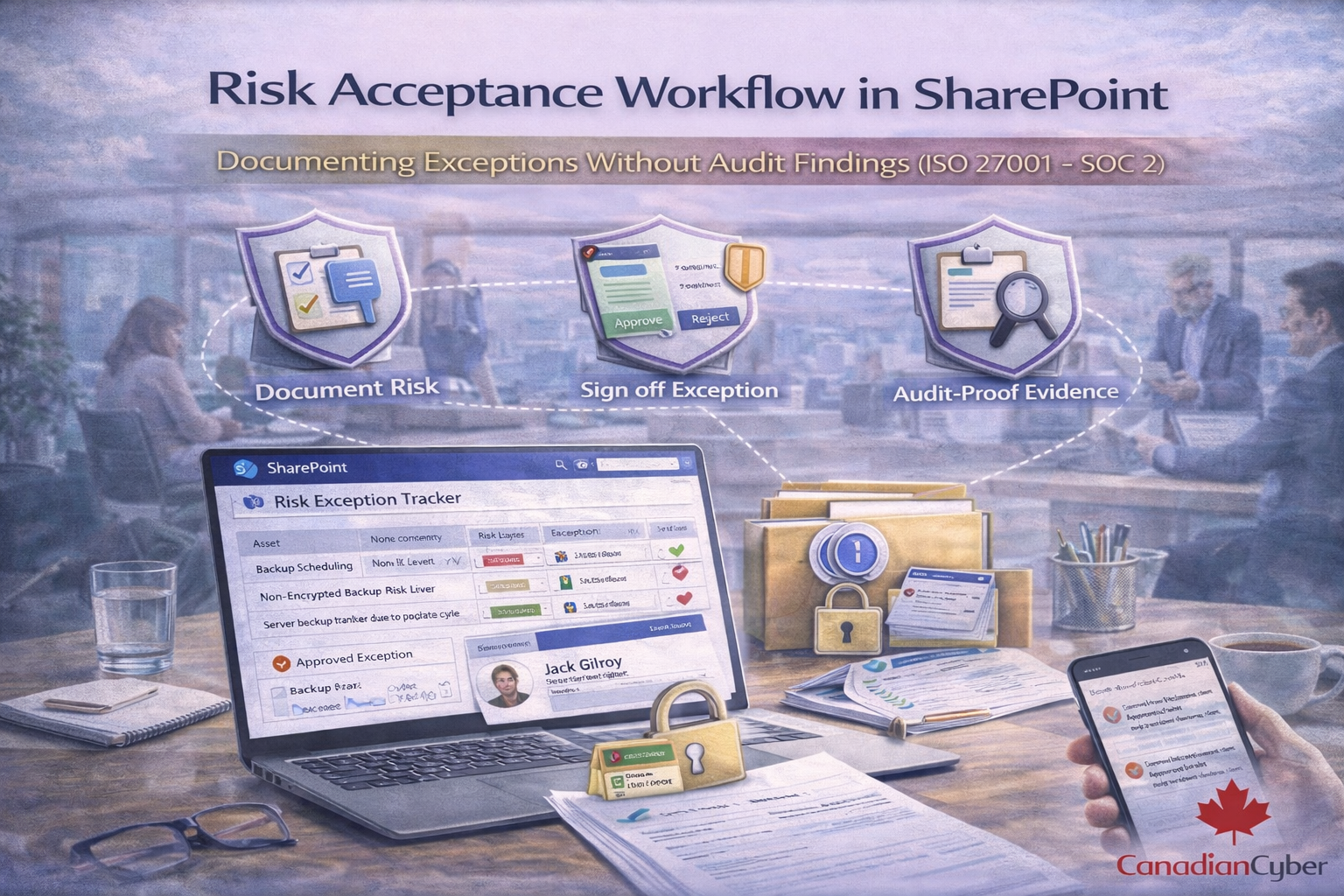
- Track cloud risks, controls, and owners
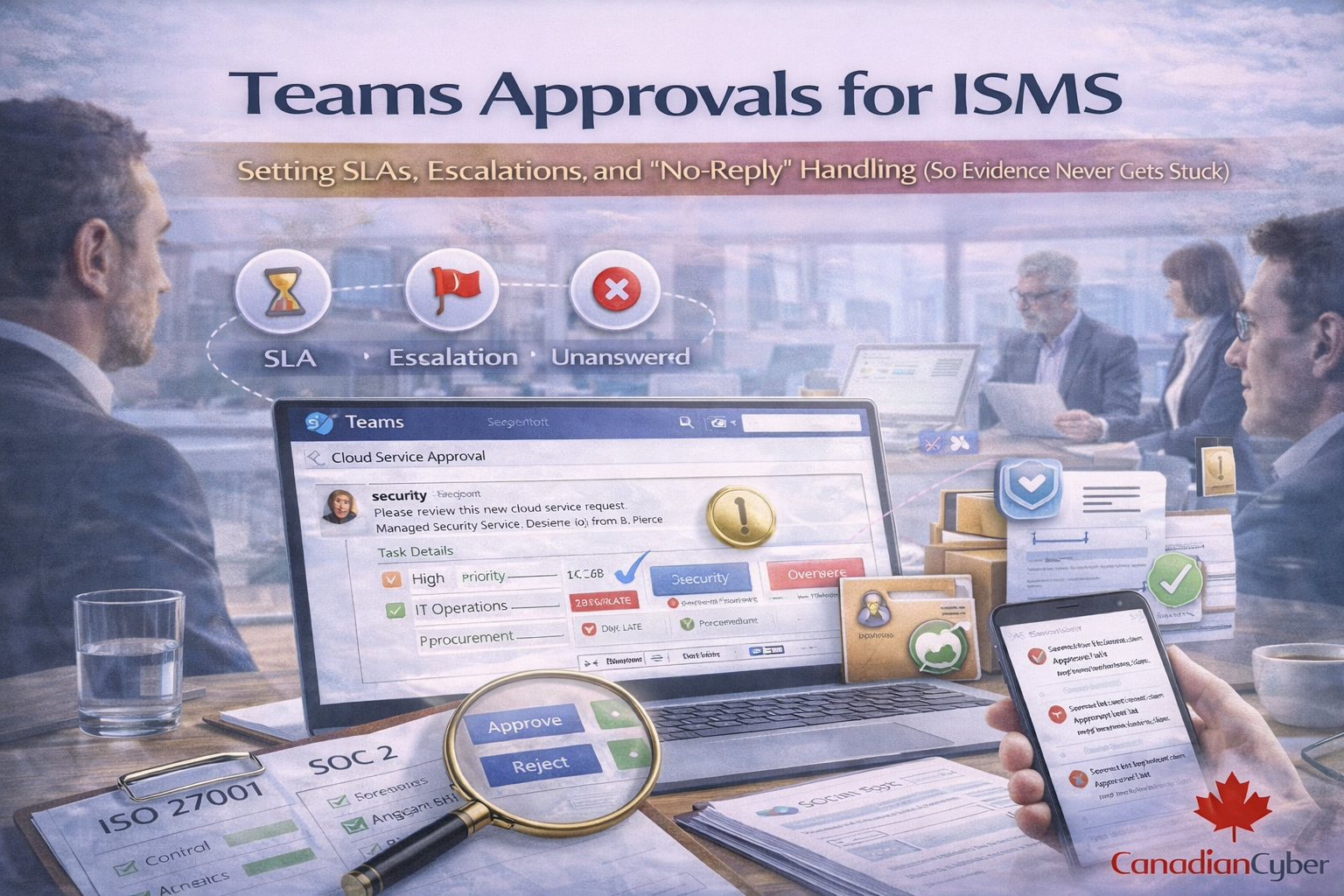
- Monitor third-party cloud services and evidence
- Store audit-ready documentation and approvals
Result:
No scattered tools. No lost context. No last-minute evidence scramble.
Worried about cloud control and sovereignty?
Put cloud risk under executive leadership and keep evidence audit-ready inside Microsoft 365.
Why this matters in the Canadian market
Canadian organizations face unique pressure.
Sovereignty expectations are stronger in public sector and regulated industries.
Enterprise buyers scrutinize vendors.
Privacy regulators expect accountability.
Cloud agility without governance becomes a liability.
Cloud agility with governance becomes a competitive advantage.
Continuous compliance beats one-time audits
Cloud environments change daily.
Manual reviews cannot keep up.
With vCISO guidance and an ISMS platform:
- Configurations are reviewed consistently
- Access changes are tracked
- Evidence stays current
- Compliance is maintained, not rebuilt
This is how organizations stay audit-ready without slowing innovation.
The cloud leaders of 2026 think differently
They do not ask, “Is the cloud secure?”
They ask, “Who is accountable for our cloud risk?”
And they put that answer at the executive level.
Final thought
Cloud adoption is inevitable.
Loss of control is not.
In 2026, the most trusted organizations secure the cloud intelligently,
govern sovereignty deliberately, and embed compliance into daily operations.
Next step:
Stay agile. Stay compliant. Stay in control.
Want a defensible cloud posture in 2026?
Get vCISO-led cloud security strategy and an ISMS platform that keeps evidence ready all year.
Stay Connected With Canadian Cyber
Follow us for insights on cloud security, data sovereignty, and modern cybersecurity leadership: