Cloud Security • Privacy • ISO Standards
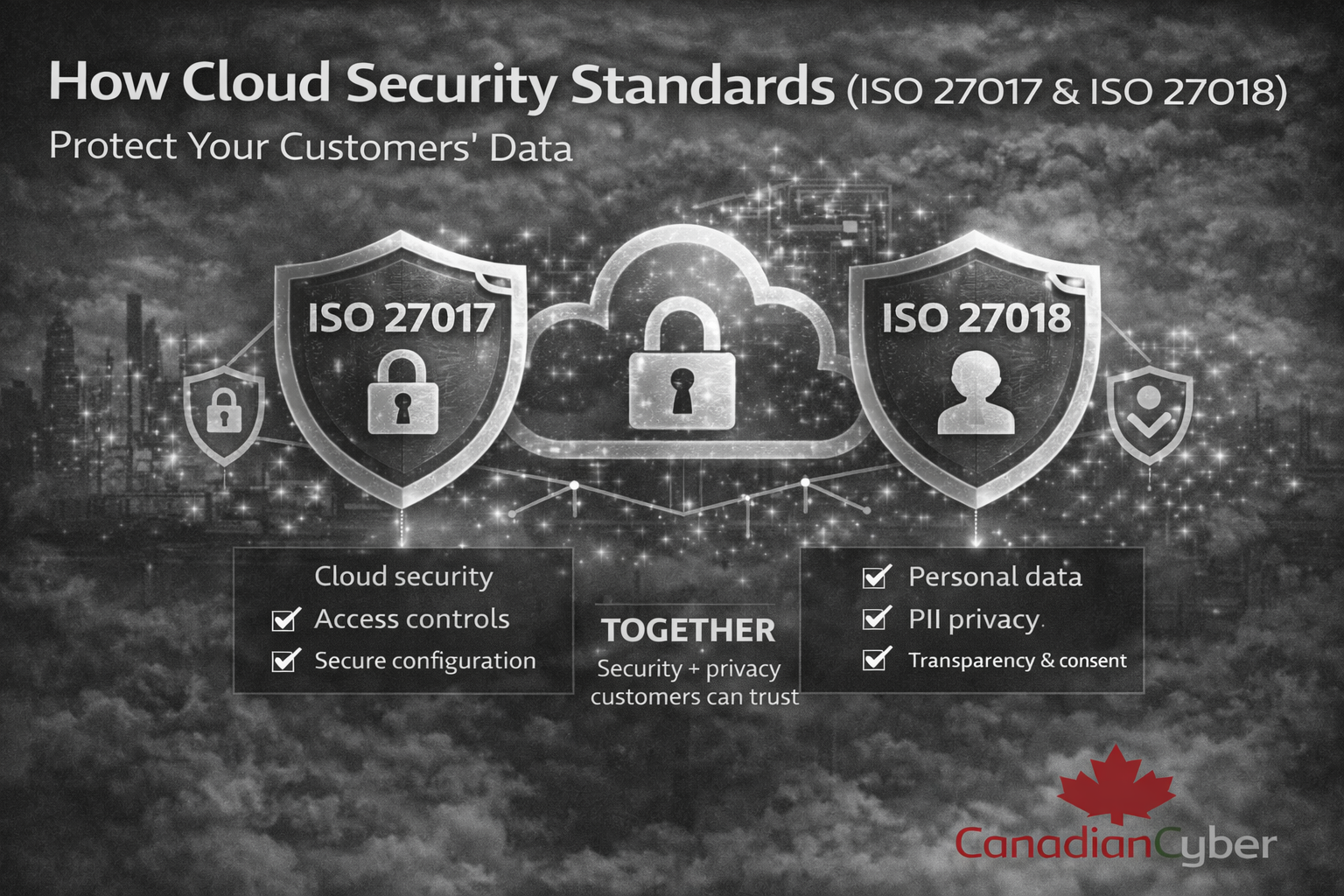
How Cloud Security Standards (ISO 27017 & ISO 27018) Protect Your Customers’ Data
In the cloud, trust isn’t promised. It’s proven.
Your customers trust you with their data.
Personal data.
Business data.
Sometimes sensitive data.
And they expect one thing in return:
Proof that it’s protected.
In cloud environments, promises are not enough.
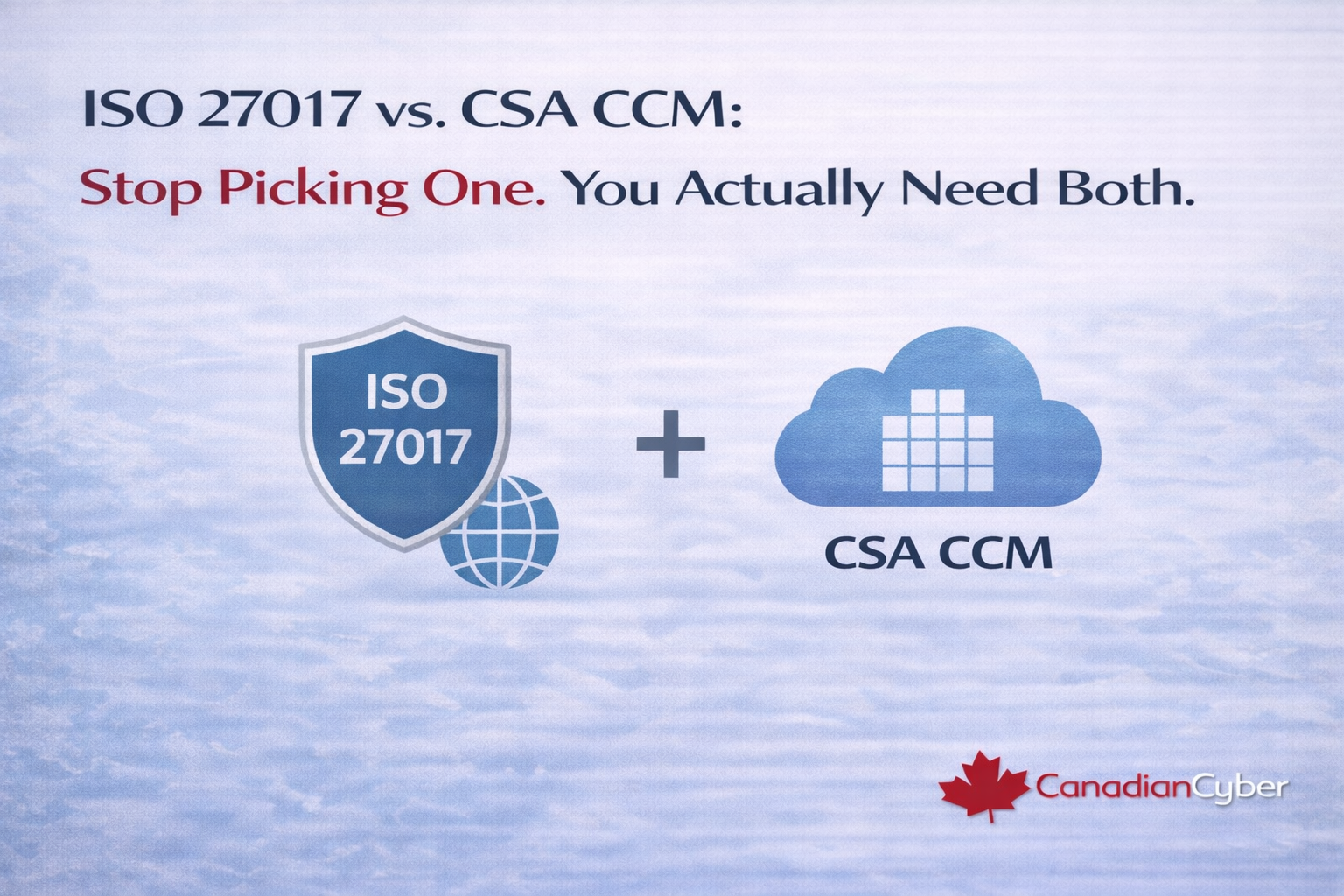
This is where ISO 27017 and ISO 27018 matter.
Why Cloud Trust Is Harder Than Ever
Most modern companies are cloud-first.
- Infrastructure is shared.
- Data moves constantly.
- AI and automation add complexity.
Customers know this.
That’s why they ask harder questions:
Cloud security standards exist to answer these questions clearly.
ISO 27017 and ISO 27018: What They Really Do
These standards extend ISO 27001 for the cloud.
But each has a specific role.
ISO 27017: Cloud Security Clarity
ISO 27017 focuses on secure use of cloud services.
It reduces the “grey areas” customers worry about.
It clarifies:
- Shared responsibility between you and your cloud provider
- Secure configuration of cloud environments
- Access controls and monitoring
- Protection against misconfiguration
ISO 27018: Cloud Privacy Protection
ISO 27018 focuses on protecting personal data (PII) in the cloud.
It’s the privacy proof customers look for.
It enforces:
- Purpose limitation for data use
- Strong access controls
- Breach notification responsibilities
- Data deletion and return guarantees
Quick Snapshot: How These Standards Protect Data
| Standard | Protects | Focus |
|---|---|---|
| ISO 27017 | Cloud infrastructure and configuration | Security controls and responsibilities |
| ISO 27018 | Personal and sensitive data (PII) | Privacy, transparency, accountability |
| Together: Security + privacy customers can trust. | ||
Why ISO 27001 Still Matters
ISO 27017 and ISO 27018 do not stand alone.
They build on ISO 27001, the core information security standard.
ISO 27001 provides:
- Risk management
- Governance and leadership oversight
- Policies and processes
- Continuous improvement
Think of it as the foundation.
ISO 27017 and ISO 27018 build the cloud-specific floors on top.
How These Standards Reduce Real Cloud Risks
Cloud breaches rarely happen because of hackers alone.
They happen because of gaps.
Common risks include:
- Over-permissive access
- Misconfigured storage
- Unclear ownership
- Weak monitoring
ISO 27017 and ISO 27018 reduce these risks by design.
Responsibilities are clear
Evidence is required
Why Customers Care (Even If They Don’t Say It)
Customers may not know the standard names.
But they care about the outcomes.
They want:
- Confidence in how data is handled
- Transparency during incidents
- Assurance that privacy is respected
These standards provide that assurance without marketing spin.
Customers asking tough questions about cloud security?
Build security and privacy into your cloud platform.
Privacy Is Now a Business Requirement
Privacy expectations are rising globally.
Customers expect:
- Data minimization
- Clear data handling rules
- Accountability
ISO 27018 aligns naturally with modern privacy expectations and regulations.
For SaaS companies, this is no longer optional.
It’s table stakes.
What This Means for SaaS and Cloud Providers
For cloud-native businesses, these standards help:
- Shorten sales cycles
- Reduce security questionnaires
- Build enterprise trust
- Stand out in competitive markets
Security becomes a differentiator.
Not a blocker.
How Canadian Cyber Helps Organizations Get This Right
We help organizations move beyond basic compliance.
Our services include:
- ISO 27017 implementation
- ISO 27018 privacy alignment
- Integration with ISO 27001
- Audit and readiness support
Practical standards. Real-world implementation. Clear outcomes.
Trust Is Built on Proof
Customers don’t just want reassurance.
They want evidence.
ISO 27017 and ISO 27018 provide a structured way to show that customer data is protected—
by design, not by accident.
Ready to protect customer data in the cloud?
Stay Connected With Canadian Cyber
Follow us for practical insights on cloud security, privacy, and compliance: