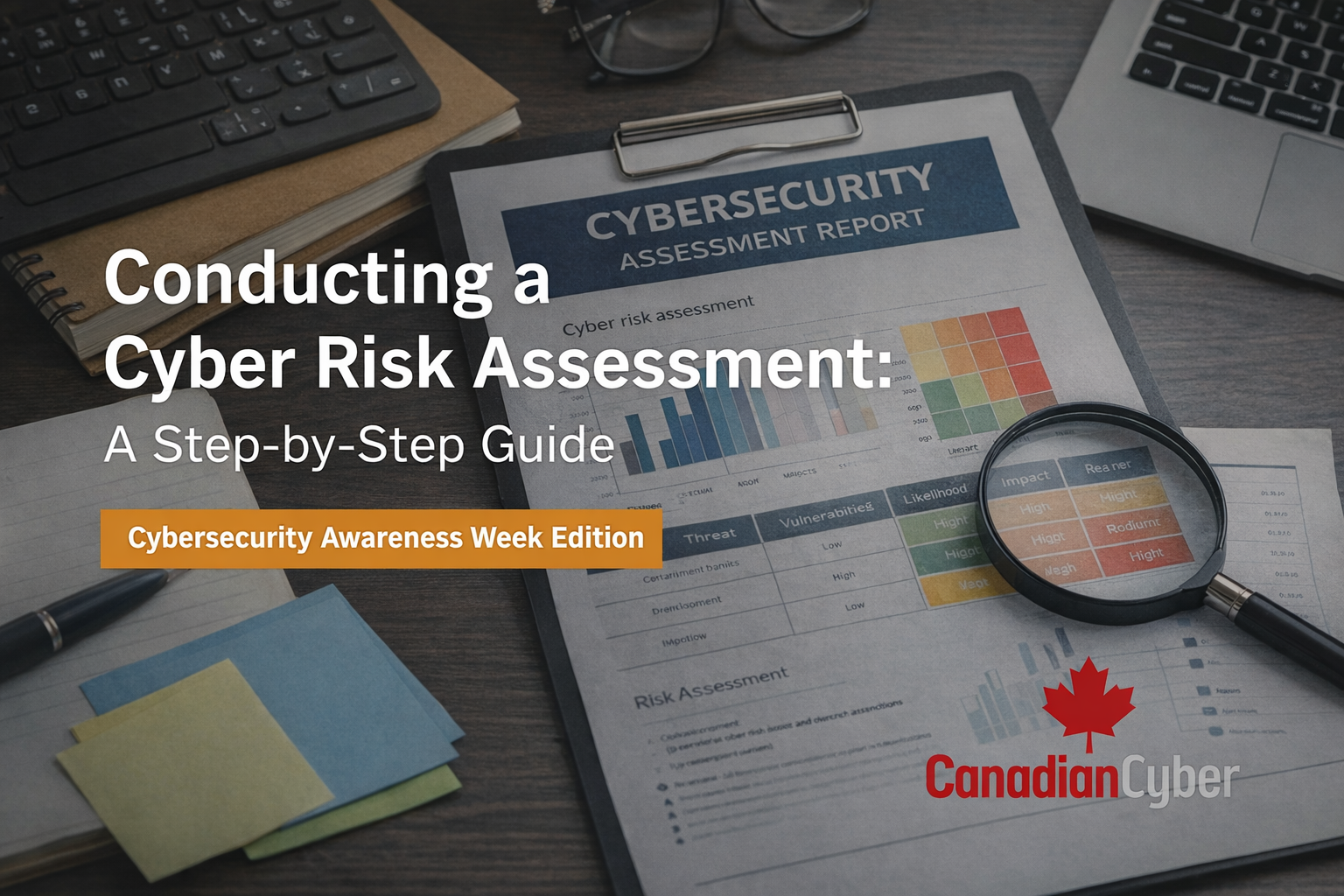
Conducting a Cyber Risk Assessment: A Step-by-Step Guide
How to understand your real cyber risks and focus on what actually matters.
Cybersecurity risk is no longer abstract. It affects operations, revenue, reputation, and customer trust.
Yet many businesses still struggle with a simple question:
What are our biggest cyber risks right now?
That is exactly what a cyber risk assessment is designed to answer.
A proper risk assessment gives organizations clarity. It shows where they are exposed, what could go wrong, and what should be fixed first.
This guide walks you through how to conduct a cyber risk assessment step by step, using a structured and repeatable approach that works for SMBs and growing organizations.
Quick Snapshot
| Category | Detail |
|---|---|
| Topic | Cyber risk assessment (step-by-step) |
| Audience | SMBs, growing orgs, IT/security leads, executives, compliance owners |
| Why it matters | Turns cyber risk into prioritized business actions |
| Key insight | Risk assessments help you fix the right things first not everything at once |
What Is a Cyber Risk Assessment?
A cyber risk assessment is a formal process used to:
- Identify critical assets
- Understand threats and vulnerabilities
- Evaluate the likelihood and impact of cyber incidents
- Prioritize risks based on business impact
In simple terms: a cyber risk assessment helps you focus on the risks that matter most, instead of trying to fix everything at once.
Why Cyber Risk Assessments Matter More Than Ever
Cyber threats continue to grow, but resources remain limited.
Without a risk-based approach, organizations often:
- Spend money on the wrong controls
- Ignore high-impact risks
- React only after incidents happen
- Struggle to explain risk to leadership or boards
Risk assessments solve this by connecting technical issues to business impact. They also support:
- ISO 27001 risk management
- SOC 2 readiness
- NIST-based security programs
- Board and executive reporting
- Insurance and regulatory discussions
A Quick Note on Frameworks
Risk assessments can be done informally but following a recognized framework adds structure and consistency.
Framework logic (like NIST-aligned approaches) is straightforward: identify what matters, understand what can go wrong, measure impact, and prioritize action.
You don’t need to memorize a framework. You just need to follow its repeatable logic.
Step-by-Step: How to Conduct a Cyber Risk Assessment
Step 1: Identify Your Critical Assets
You cannot protect what you don’t know exists.
Start by identifying what matters most to the business. Assets typically include:
- Business-critical systems
- Applications and databases
- Cloud environments
- Sensitive data (customer, employee, financial, health)
- Infrastructure and networks
- Key vendors or third-party services
Ask: If this asset was unavailable, compromised, or altered how badly would it hurt the business?
Step 2: Identify Threats to Those Assets
Once assets are identified, the next step is understanding what could go wrong.
Common threats include:
- Phishing and credential theft
- Ransomware
- Insider misuse (intentional or accidental)
- System misconfigurations
- Vendor or supply-chain compromise
- Data leakage through shadow IT
- Denial-of-service attacks
Not every threat applies to every asset. Good assessments match threats to the real business environment.
Step 3: Identify Vulnerabilities
Threats become risks only when vulnerabilities exist.
Vulnerabilities are weaknesses that threats can exploit.
Examples include:
- Weak or missing access controls
- No multi-factor authentication (MFA)
- Unpatched systems
- Poor monitoring and logging
- Lack of backups (or untested backups)
- Outdated policies
- Inadequate vendor oversight
This step answers: Where are we actually exposed today?
Step 4: Assess Likelihood and Impact
Not all risks are equal. This step evaluates likelihood and impact.
| Factor | What to Consider |
|---|---|
| Likelihood | Exposure to the internet, past incidents, industry targeting, existing controls, attacker effort required |
| Impact | Financial loss, downtime, legal exposure, regulatory penalties, customer trust, reputational damage |
This is where cyber risk becomes business risk.
Step 5: Calculate and Prioritize Risk
A simple and widely used model is:
Risk = Likelihood × Impact
You don’t need complex math many organizations use High / Medium / Low categories.
The goal is prioritization. A strong assessment helps leadership see:
- Which risks must be addressed immediately
- Which risks can be reduced over time
- Which risks are acceptable
Step 6: Decide on Risk Treatment
Once risks are prioritized, decide how to handle each one.
| Treatment | Meaning |
|---|---|
| Mitigate | Reduce the risk with controls (MFA, logging, segmentation, training, etc.) |
| Transfer | Shift risk via insurance, contracts, or vendor obligations |
| Accept | Acknowledge and monitor the risk (with documented rationale) |
| Avoid | Change processes to remove the risk entirely (stop the activity, replace the tool, redesign workflow) |
This step ensures decisions are intentional not accidental.
Step 7: Document and Review Regularly
A risk assessment is not a one-time exercise. Businesses change. Technology evolves. Threats shift.
That’s why assessments should be:
- Documented
- Reviewed regularly
- Updated after major changes or incidents
Regular reviews maintain a clear understanding of risk over time aligning directly with ISO 27001 and NIST-style guidance.
A Fictional Example: From Guesswork to Clarity
This example is fictional but reflects real-world patterns.
A growing Canadian company believed ransomware was its biggest risk.
After a formal risk assessment, they discovered:
- Vendor access was poorly controlled
- Admin accounts were shared
- Backups were not tested
- Phishing risk was higher than expected
The assessment helped leadership redirect effort and budget to the most critical risks, not the loudest ones.
That clarity prevented future incidents.
Why Risk Assessments Enable Better Decisions
Cyber risk assessments help organizations:
- Focus on real threats
- Avoid unnecessary spending
- Explain risk clearly to leadership and boards
- Support compliance initiatives (ISO 27001, SOC 2)
- Prepare for audits and insurance reviews
They turn cybersecurity from a guessing game into a managed process.
✅ Want a Clear, Repeatable Risk Assessment (Without Jargon)?
If you need clarity on your biggest risks and a practical plan to address them Canadian Cyber can help.
👉 Explore Our Cyber Risk Assessment Services
👉 Book a Free Consultation
How Canadian Cyber Supports Cyber Risk Assessments
At Canadian Cyber, risk assessments are designed to be practical, clear, and actionable especially for SMBs and growing organizations.
| Service Layer | What you get |
|---|---|
| Comprehensive Cyber Risk Assessments | Asset and risk identification, threat & vulnerability analysis, likelihood & impact evaluation, clear prioritization, practical remediation guidance. |
| vCISO-Led Risk Management | Business-risk translation, leadership decision support, risk governance, and alignment with strategy and operations. |
| Framework-Aligned Approach | Alignment with ISO 27001 risk requirements, NIST-style risk logic, and industry best practices for consistency and repeatability. |
Cyber Risk Assessments Are the Foundation of Strong Security
Every effective security program starts with understanding risk.
Without that understanding:
- Controls are misaligned
- Budgets are wasted
- Risks are missed
A cyber risk assessment provides the foundation for everything that follows governance, controls, audits, and resilient decision-making.
🚀 Ready to Understand Your Real Cyber Risks?
If your organization wants clarity, focus, and confidence in cybersecurity decisions, a formal risk assessment is the right place to start.
Stay Connected With Canadian Cyber
Follow Canadian Cyber for practical guidance on risk management, compliance, and cybersecurity leadership: