Secure Cloud for Machine Learning: Implementing ISO 27017 in AI environments
Machine learning has moved to the cloud.
Models train faster.
Pipelines scale automatically.
Innovation accelerates.
But so do risks.
Data exposure.
Misconfigured storage.
Unauthorized access to models.
The question leaders keep asking is simple:
“Is our data safe in the cloud?”
ISO 27017 provides a real answer.
It turns cloud security from assumptions into evidence.
Why Cloud Security Matters More for AI and ML
AI workloads are different.
They rely on:
- Large datasets
- Shared cloud infrastructure
- Automated pipelines
- Continuous experimentation
One misconfiguration can expose:
- Training data
- Proprietary models
- Customer information
Attackers know this.
AI environments are now high-value targets.
Security must scale with innovation.
What Is ISO 27017 (And Why It Matters for AI)
ISO 27017 is a cloud-specific security standard.
It extends ISO 27001 with controls designed for cloud environments.
It focuses on:
- Shared responsibility between cloud provider and customer
- Secure configuration of cloud services
- Clear roles for data ownership and access
- Protection of workloads in multi-tenant environments
For AI teams, ISO 27017 turns cloud security into proof.
Not a promise.
Quick Snapshot: ISO 27017 for Machine Learning
| Category | Details |
|---|---|
| Best for | Cloud-hosted AI and ML workloads |
| Primary focus | Secure use of cloud services |
| Key risk addressed | Misconfiguration and shared-responsibility gaps |
| Works with | AWS, Azure, Google Cloud |
| Outcome | Proven cloud security for AI environments |
Understanding the Shared Responsibility Model
This is where most AI teams struggle.
Cloud providers secure:
- Physical data centers
- Core infrastructure
- Underlying platforms
You are responsible for:
- Data protection
- Access control
- Configuration
- Model security
ISO 27017 makes the division explicit.
No grey areas. No assumptions.
Auditors expect clarity here.
Common Cloud Risks in AI Environments
AI systems introduce unique risks.
Including:
- Over-permissive storage buckets
- Exposed APIs for model inference
- Weak access controls on training pipelines
- Shadow environments created by DevOps teams
- Insecure integrations with third-party data sources
ISO 27017 addresses these risks directly.
Securing Cloud Configuration for ML Workloads
Configuration is the frontline.
ISO 27017 emphasizes:
- Secure default configurations
- Least-privilege access
- Strong identity and access management
- Segmentation of environments
For ML teams, this typically means:
- Separate training, testing, and production
- Restricted access to model artifacts
- Controlled API endpoints
Security must be built into the environment.
Not added later.
Unsure who is responsible for what in your cloud setup?
Get clarity before a misconfiguration becomes an incident.
Protecting Data Used in Machine Learning
Data is the fuel for AI.
And the biggest risk.
ISO 27017 supports:
- Encryption at rest and in transit
- Clear data ownership rules
- Secure deletion of temporary datasets
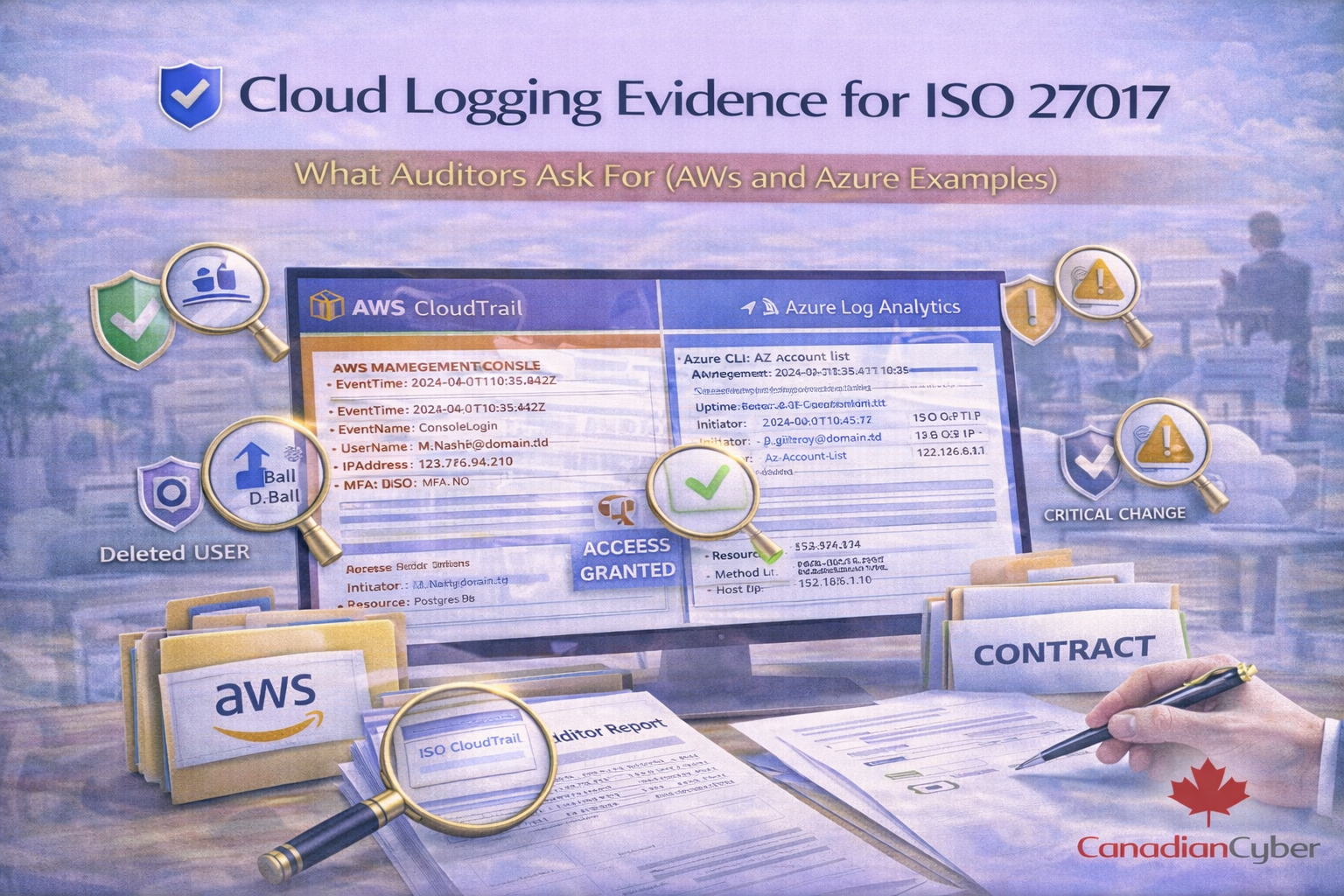
- Logging and monitoring of data access
This is critical for:
- Training datasets
- Feature stores
- Model outputs
Without controls, AI systems leak value.
Integrating ISO 27017 into DevOps and MLOps
Security cannot slow delivery.
ISO 27017 fits naturally into modern pipelines.
Practical steps include:
- Secure infrastructure-as-code templates
- Automated configuration checks
- Role-based access for pipeline stages
- Continuous monitoring of cloud resources
Security becomes part of deployment.
Not a blocker.
Defending Against AI-Powered Attacks
Attackers are using AI too.
Including:
- Automated credential attacks
- Model probing
- Data poisoning attempts
ISO 27017 strengthens defenses by enforcing:
- Strong authentication
- Continuous monitoring
- Incident response readiness
- Clear responsibility during incidents
AI systems must be protected like critical assets.
Because they are.
Deploying AI in the cloud without a security framework?
Build trust with ISO 27017.
How ISO 27017 Builds Trust in AI Services
Customers and partners ask tough questions.
- Where is our data stored?
- Who can access it?
- How is it protected?
ISO 27017 provides proof.
Not marketing claims.
Not assumptions.
Documented controls. Auditable processes. Clear accountability.
How Canadian Cyber Helps Secure AI in the Cloud
We understand cloud.
We understand AI.
We understand audits.
Our services include:
- ISO 27017 implementation and mapping
- Cloud security responsibility assessments
- AI and ML risk reviews
- Integration with ISO 27001 and SOC 2
Security that supports innovation.
Not slows it down.
Build a Secure Cloud Foundation for AI
If your organization is:
- Running ML workloads in the cloud
- Handling sensitive training data
- Scaling AI services
ISO 27017 is no longer optional.
Stay Connected With Canadian Cyber
Follow us for practical insights on compliance, risk, and cybersecurity: