Post-Certification: How to Maintain SOC 2 Compliance Year-Round
Why passing the audit is only the beginning and how to stay compliant every single day.
Quick Snapshot
Framework: SOC 2 (Security, Availability, Confidentiality)
Challenge: Controls must operate all year not just during the audit window
Goal: Stay audit-ready, reduce risk, and maintain consistent evidence
Achieving SOC 2 certification is a major accomplishment. It signals to clients, partners, and auditors that your organization takes security seriously. But while the certification feels like the finish line, the reality is far different:
SOC 2 is not a one-time milestone.
SOC 2 is a continuous commitment.
A SOC 2 report is valid for 12 months. Your next audit depends entirely on how well you maintain controls between audits. If controls slip, evidence disappears, or documentation becomes outdated, your next SOC 2 review becomes difficult or worse, results in exceptions.
This blog explains how to maintain SOC 2 compliance all year long and why structured processes (or a vCISO partner) keep you audit-ready every single day.
Why Maintaining SOC 2 Is Harder Than Getting It
After certification, many organizations fall into what we call the post-audit drop-off pattern:
| Common Post-Audit Issue | Impact on SOC 2 Compliance |
|---|---|
| Controls not performed consistently | Auditors may find operational gaps or missing activity logs. |
| Evidence not stored properly | Teams scramble to recreate evidence — often unsuccessfully. |
| Policies drift away from reality | Auditors identify mismatches during interviews and testing. |
| Lack of clear ownership | Critical tasks like access reviews or vendor assessments get forgotten. |
The 6 Pillars of Year-Round SOC 2 Compliance
To stay compliant, you need predictable processes not last‑minute scrambling. These six pillars keep your organization audit-ready.
1. Continuous Evidence Collection
SOC 2 Type II requires evidence over time. Collecting it at the end of the year is nearly impossible. Key evidence to capture monthly or quarterly:
- Access review logs
- Backup verification reports
- Change management tickets
- Incident response exercises
- Monitoring and alert dashboards
Tip: Store evidence in a central SOC 2 folder auditors love consistency.
2. Quarterly Access Reviews
Access control failures are one of the top causes of SOC 2 exceptions. Quarterly reviews must confirm:
- Leavers are fully removed
- Admins are justified and documented
- Permissions match job duties
- MFA is active on all accounts
3. Vendor Security Monitoring
Your SOC 2 scope includes your third-party ecosystem.
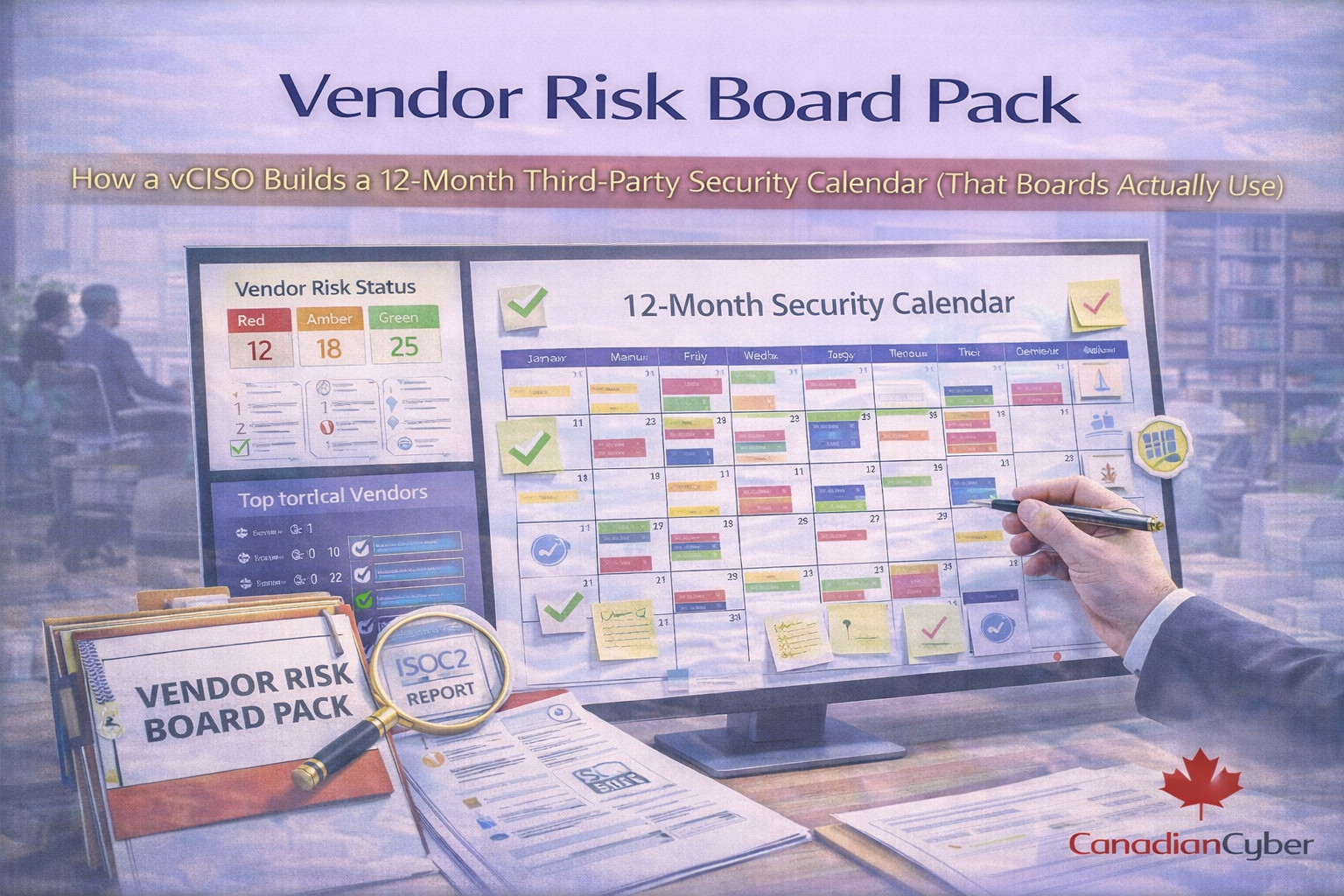
| Vendor Task | Frequency |
|---|---|
| Review vendor risk questionnaires | Annually |
| Collect SOC 2 reports from key vendors | Annually |
| Review contract security clauses | During renewal or onboarding |
4. Annual Risk Assessment
Your risk register must stay alive. SOC 2 auditors check that risks are updated as systems, teams, and vendors change.
5. Policy Reviews & Updates
Policies must be reviewed at least once per year and updated when operations change.
6. Internal Audit & Management Review
These two activities prove governance maturity. Internal audit checks:
- Control performance
- Evidence consistency
- Operational gaps
Management review validates:
- Metrics
- Risks
- Incidents
- Resource needs
Together, these activities keep your SOC 2 program healthy and audit-ready all year.
How Canadian Cyber Helps You Maintain SOC 2 Year‑Round
Canadian Cyber supports organizations with:
- Continuous evidence monitoring
- Policy and procedure updates
- Risk assessment support
- Quarterly access reviews
- Vendor risk management
- Internal audit and gap analysis
- Annual SOC 2 readiness refresh
Ready to Stay Audit‑Ready Every Day?
We help Canadian organizations maintain SOC 2 without overwhelm or last‑minute chaos.
Stay Connected with Canadian Cyber
Follow Canadian Cyber for more SOC 2 guidance, case studies, and Canadian cybersecurity insights: