

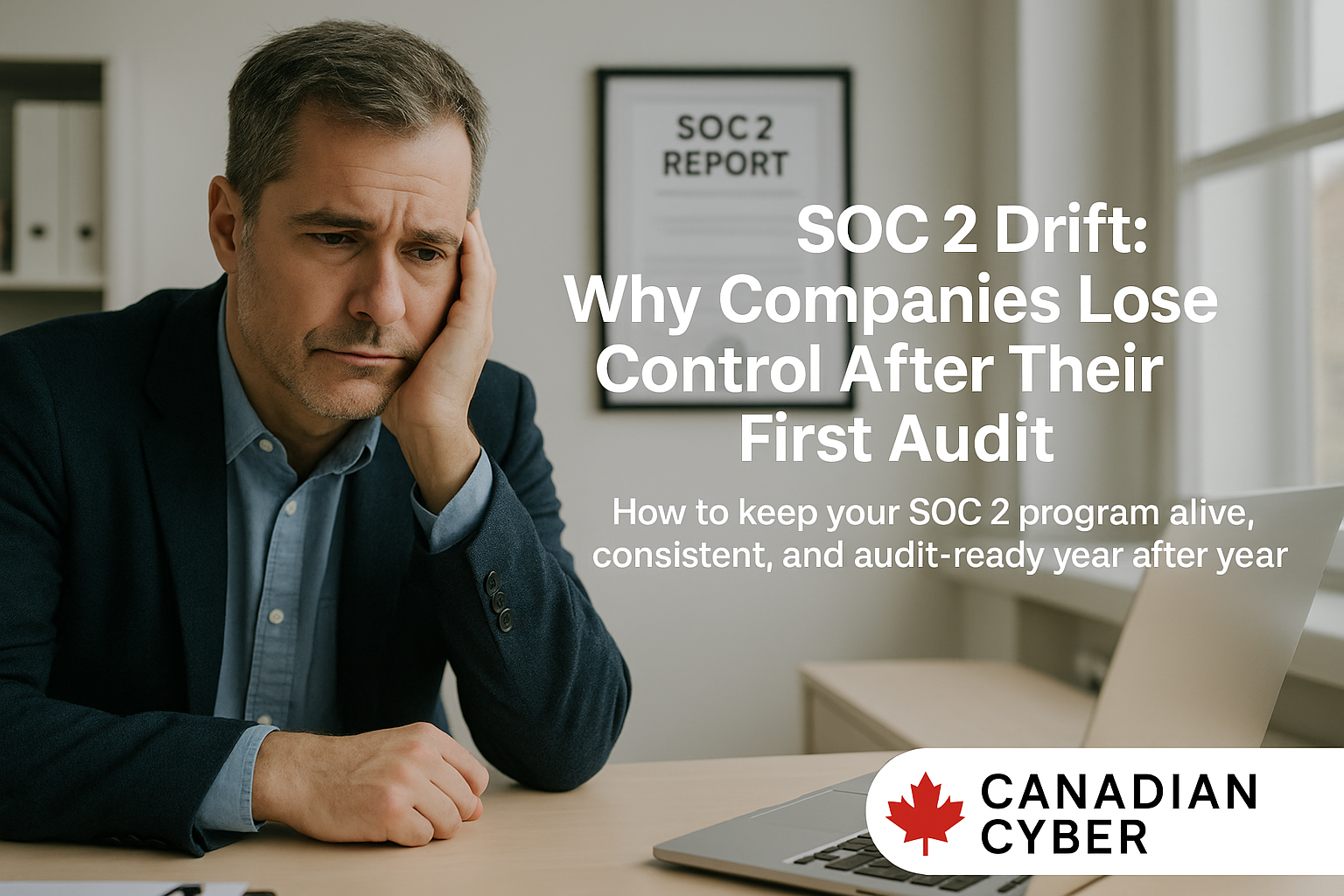
SOC 2 Drift: Why Companies Lose Control After Their First Audit
How to keep your SOC 2 program alive, consistent, and audit-ready year after year
Most companies celebrate their first SOC 2 audit like it’s the end of the race.
They pop champagne, post the report on LinkedIn, and let sales teams brag about it on every call.
But there’s a reality most teams discover later:
SOC 2 isn’t the finish line. It’s the starting line.
Maintaining SOC 2 is often harder than achieving it. Controls slip, evidence disappears, staff forget
processes, vendors change, and engineers bypass approvals “just this once.”
This slow decay has a name: SOC 2 Drift.
It happens quietly and gradually until the next audit arrives and suddenly:
controls don’t match documentation, evidence is missing, and findings start piling up.
Let’s break down why companies lose control after their first SOC 2 audit and how to stop drift before it becomes a business and reputational risk.
A Fictional Example: “We Haven’t Changed Anything… Right?”
This scenario is fictional, but inspired by real SOC 2 issues Canadian Cyber sees often.
FlowPeak, a growing SaaS startup in Vancouver, passed their first SOC 2 Type II with flying colours.
Everyone felt proud. The CEO even framed the report.
But by the time the second audit rolled around, the auditor asked a simple question:
Auditor:
“Can you show evidence of quarterly access reviews?”
The room went quiet.
Nobody had done one in nine months. Half the team assumed “someone else” was doing it.
Permissions had grown, former employees still had accounts, and new systems weren’t logged anywhere.
CTO:
“We thought passing the audit meant we were fine for a year.”
That misunderstanding is the root of SOC 2 drift.
Why SOC 2 Drift Happens: The Real Reasons No One Talks About
SOC 2 drift doesn’t happen because companies don’t care.
It happens because SOC 2 requires ongoing discipline, and most teams underestimate that.
1. Controls Get Ignored When Pressure Increases
When teams are busy with:
- New product features
- Client projects and renewals
- Bug fixes and production issues
- Onboarding and internal requests
…security tasks feel “non-urgent.”
But SOC 2 evidence needs consistent upkeep. When teams push security to “later,” drift quietly begins.
2. Ownership Is Unclear (“Who’s Actually Doing This?”)
Many SOC 2 tasks fall into grey zones:
- Who performs access reviews?
- Who updates the risk register?
- Who documents incidents?
- Who checks vendor compliance?
- Who maintains and updates policies?
If one person assumes another is handling it… no one does.
3. New Tools and Systems Don’t Get Added to Scope
A new CRM, data platform, API, cloud service, ML tool, or ticketing system gets introduced but the SOC 2 program stays frozen in last year’s reality.
This leads to:
- Missing logging and monitoring
- Uncontrolled access permissions
- No vendor reviews or security due diligence
- Data flows that were never risk-assessed
Drift happens every time the tech stack evolves without compliance catching up.
4. People Change Roles but Controls Don’t
Engineers leave, managers shift teams, new staff join — but SOC 2 controls require continuity.
If knowledge isn’t transferred and responsibilities aren’t reassigned, controls simply stop happening,
even if they’re still written in the policy.
5. Documentation Ages Fast
SOC 2 documentation often becomes outdated within months:
- New processes not reflected in procedures
- Policies never revised after major changes
- Org charts no longer accurate
- Architecture diagrams missing new components
- Risk assessments that no longer reflect current threats
Documents that once matched reality slowly drift away from how the company actually operates.
The Warning Signs of SOC 2 Drift
If you notice any of these, drift has already started:
- ❌ Missing or incomplete access review evidence
- ❌ No centralized change logs or approvals
- ❌ Security training overdue or not tracked
- ❌ Incidents and tickets not documented
- ❌ New vendors not evaluated or documented
- ❌ Policies untouched for 12+ months
- ❌ Monitoring alerts ignored or not reviewed
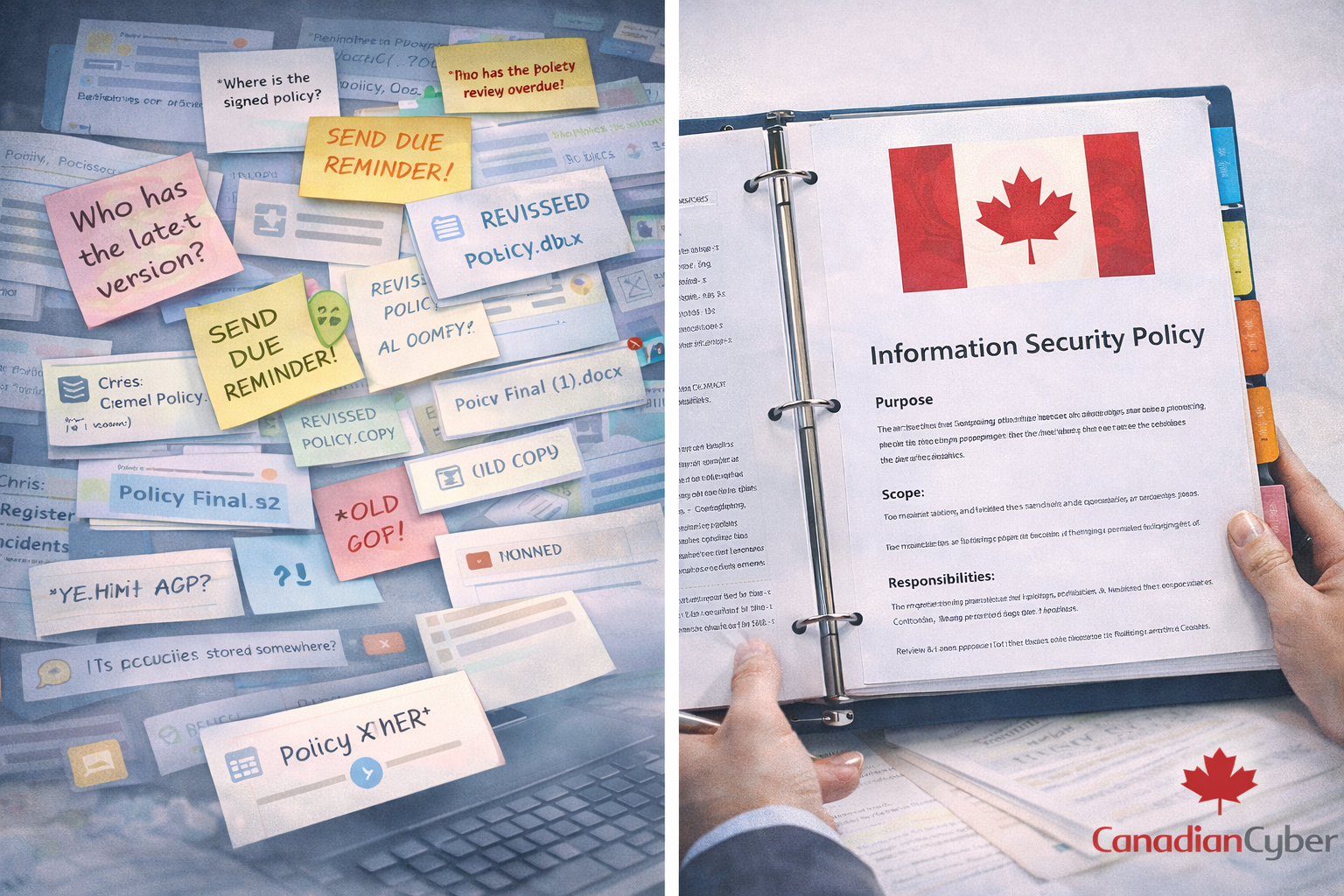
- ❌ Evidence stored “somewhere” but no one knows where
The next SOC 2 audit will surface all of these usually in the form of findings.
⭐ Want to Stop SOC 2 Drift Before Your Next Audit?
Canadian Cyber helps SaaS and service organizations keep SOC 2 programs alive year-round not just the month before the auditor arrives.
How to Stop SOC 2 Drift: A Simple, Practical Approach
The good news: SOC 2 drift is preventable.
The solution is not complex it just requires consistency and ownership.
1. Assign Clear Owners for Each Control
Every control in your SOC 2 matrix needs a name beside it.
- Not just a team.
- Not just a department.
- A specific person.
This eliminates confusion and creates accountability when something isn’t done.
2. Run Quarterly Internal Reviews
Quarterly SOC 2 health checks catch drift early, long before the external audit.
A simple quarterly review might include:
- Access reviews for key systems
- Verification that monitoring and alerting are active
- Vendor review and contract checks
- Policy and procedure updates
- Incident log and ticket review
- Evidence collection and centralization
- Change management sampling
Think of it like cleaning your house once a week instead of once a year.
3. Treat New Tools as New Risks
Any time a new tool, vendor, or system is added, your SOC 2 program should:
- Log the system or vendor
- Assess security and data impact
- Update data flows and architecture diagrams
- Add controls, logging, and access management
- Include it in your evidence and audit scope
This prevents “orphan systems” tools that hold sensitive data but have no controls around them.
4. Automate Evidence Collection Where Possible
The more your SOC 2 relies on humans remembering to download logs or take screenshots,
the higher the drift risk.
Wherever possible, automate:
- Access logs and activity reports
- Change history in CI/CD
- Monitoring and alert exports
- Configuration baselines
Automation doesn’t replace governance it makes governance sustainable.
A Simple View: Why Drift Happens vs. How to Fix It
| Cause of SOC 2 Drift | Practical Fix |
|---|---|
| No ownership for controls | Assign named control owners with clear responsibilities. |
| Busy teams deprioritize security | Run quarterly reviews and bake SOC 2 tasks into regular workflows. |
| New tools added with no oversight | Use a formal SOC 2 change process for all new systems and vendors. |
| Staff turnover and role changes | Document handoffs and responsibilities in a living RACI or control register. |
| Outdated policies and diagrams | Schedule annual (or semi-annual) reviews and version control all documents. |
| Missing or scattered evidence | Centralize evidence and automate collection where possible. |
Easy to understand. Easy to implement. The challenge is simply doing it consistently.
What Happened to FlowPeak? (Fictional Summary)
After their near-failed second audit, FlowPeak partnered with Canadian Cyber.
Within three months:
- ✔ Control owners were assigned and documented
- ✔ Quarterly internal SOC 2 audits were introduced
- ✔ Evidence was centralized in a dedicated repository
- ✔ Drift alerts and reminders were implemented
- ✔ A vCISO reviewed changes and risks monthly
- ✔ Their second SOC 2 passed with zero major findings
FlowPeak didn’t just become “more compliant” they became more organized, predictable, and trustworthy.
How Canadian Cyber Helps Stop SOC 2 Drift Permanently
SOC 2 drift happens when teams are left to manage everything alone on top of product, customers, and daily operations. We prevent that through structured, ongoing support.
🔹 vCISO Services
Your vCISO helps ensure:
- Controls stay active and relevant all year
- Security decisions align with SOC 2 obligations
- Evidence is consistent and easy to present
- Drift is detected early, not at audit time
- Leadership stays informed with clear reports
🔹 Internal SOC 2 Audits
We run quarterly or annual internal SOC 2 checks to keep you on track:
- Control testing and sampling
- Evidence verification and gaps
- Vendor and third-party reviews
- Policy and procedure refreshes
- Risk register and issue tracking updates
Internal audits remove surprises long before external auditors arrive.
🔹 SOC 2 Maintenance Programs
We help companies:
- Track controls and responsibilities
- Update documentation as environments change
- Monitor workflows and evidence collection
- Keep policies and diagrams fresh
- Onboard new tools and vendors without breaking SOC 2
- Prepare calmly for next-year audits
SOC 2 becomes a habit not a last-minute scramble.
SOC 2 Isn’t Hard. Staying SOC 2-Compliant Is What Matters.
Passing your first SOC 2 audit is a milestone. Keeping your controls alive is what builds long-term trust with customers, partners, and investors.
👉 Explore Our SOC 2 Services
👉 Book a Free Consultation
👉 Ask About vCISO & Internal Audit Support
Stay Connected With Canadian Cyber
Follow Canadian Cyber for practical insights on SOC 2, vCISO programs, and modern security governance: