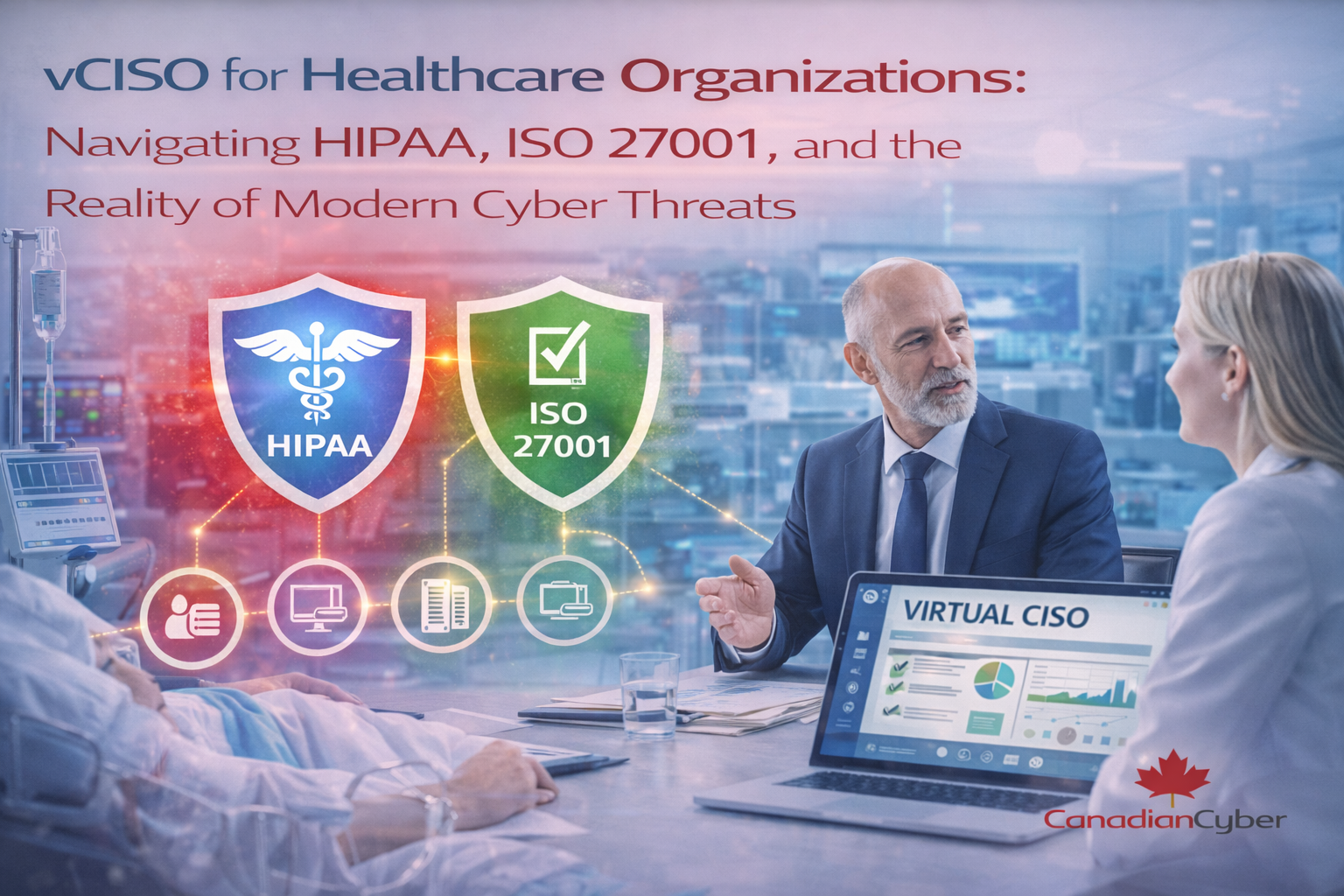
vCISO for Healthcare Organizations: Navigating HIPAA, ISO 27001, and the Reality of Modern Cyber Threats
Why healthcare cybersecurity now requires leadership, not just IT support.
Healthcare organizations sit at the crossroads of trust, regulation, and urgency.
Hospitals, clinics, and digital health providers manage some of the most sensitive data in existence:
• Patient health records
• Diagnostic results
• Insurance and billing data
• Clinical and operational systems
This data is not only personal it is highly valuable to attackers.
As a result, healthcare has become one of the most targeted industries globally, facing ransomware, data breaches, and system disruptions that can directly impact patient safety.
Yet many healthcare organizations lack one critical role: Dedicated cybersecurity leadership.
This is where a Virtual CISO (vCISO) becomes essential.
Why Healthcare Is a Prime Target for Cyberattacks
Healthcare faces a unique combination of risks:
• Patient records fetch high prices on the dark web
• Ransomware can halt critical services
• Legacy systems are hard to patch
• Medical devices often run outdated software
• Third-party vendors are deeply integrated
Attackers know that downtime in healthcare creates pressure to pay.
Cyber risk in healthcare is not just about data loss.
It’s about continuity of care and patient safety.
The Compliance Pressure Facing Healthcare Organizations
Healthcare organizations must navigate multiple compliance frameworks at once, including:
• HIPAA (and related privacy/security rules)
• ISO 27001 for information security management
• Regional privacy laws (PHIPA, PIPEDA, etc.)
• Client and partner security requirements
Each framework has different language but similar expectations:
• Risk management
• Access controls
• Incident response
• Vendor oversight
• Leadership accountability
Without centralized leadership, compliance efforts often become fragmented.
Why IT Teams Alone Cannot Carry Cybersecurity in Healthcare
IT teams in healthcare are already stretched thin.
They manage clinical systems, uptime, device availability, and user support.
Adding governance, compliance, and incident leadership on top is unrealistic.
Cybersecurity in healthcare is no longer just technical.
It’s a risk management and leadership function.
What a vCISO Does for Healthcare Organizations
A vCISO acts as the security leader healthcare organizations need without the cost of a full-time CISO.
They bridge the gap between IT teams, clinical leadership, compliance officers, and executive management.
Their role spans:
• Strategy and security planning
• Compliance oversight
• Vendor and device governance
• Incident readiness and response leadership
How a vCISO Supports HIPAA and ISO 27001 Compliance
1) Translating Regulations into Practical Action
HIPAA and ISO 27001 are often misunderstood.
A vCISO:
• Interprets regulatory requirements
• Aligns them with real workflows
• Avoids over-complication
This ensures compliance efforts are realistic, defensible, and actually improve security.
2) Conducting Risk Assessments That Reflect Clinical Reality
Healthcare risk assessments must consider patient safety impact, system availability, and clinical dependencies.
A vCISO helps identify:
• Critical systems
• High-risk workflows
• Realistic threat scenarios
This prevents checkbox compliance and focuses on what truly matters.
3) Developing Policies That Staff Can Follow
Healthcare staff are focused on patient care. Policies must be clear, practical, and easy to understand.
A vCISO ensures policies:
• Support clinicians, not slow them down
• Align with HIPAA and ISO 27001
• Are reinforced through training
Good policy design reduces resistance and lowers risk.
Need healthcare-ready security leadership without hiring a full-time CISO?
We help clinics, hospitals, and digital health providers build practical compliance and incident readiness.
Managing Third-Party and Medical Device Risk
Healthcare environments depend heavily on vendors:
• EHR platforms
• Cloud providers
• Medical devices
• Managed service providers
Each introduces risk.
A vCISO helps:
• Identify critical vendors
• Define security expectations
• Review access and data handling
• Document shared responsibility
This is essential for both HIPAA and ISO 27001 compliance.
Incident Response in a Healthcare Context
In healthcare, incidents escalate fast.
A vCISO ensures:
• Incident response plans are healthcare-specific
• Roles are clearly defined
• Clinical leadership is involved appropriately
• Regulatory and legal obligations are understood
During a live incident, a vCISO coordinates response, supports leadership decisions, and keeps focus on patient safety.
Preparation saves lives — not just data.
Why Tabletop Exercises Matter in Healthcare
Many healthcare organizations have never practiced a cyber incident.
A vCISO runs tabletop exercises that:
• Simulate ransomware or data breaches
• Involve executives and clinical leaders
• Reveal decision-making gaps
This builds confidence and reduces panic during real events.
A Fictional Example: Cyber Leadership in Action
(This example is fictional but reflects real-world patterns.)
A regional clinic network relied on IT alone for security. They faced vendor risk gaps, unclear incident response, and growing audit pressure.
After engaging a vCISO:
✅ HIPAA and ISO 27001 controls were aligned
✅ Medical device access was reviewed
✅ Incident response plans were tested
When a ransomware attempt occurred, it was contained quickly.
Care continued. Trust was preserved.
Why a vCISO Is Ideal for Budget-Constrained Healthcare Organizations
Healthcare budgets are tight. Hiring a full-time CISO is often unrealistic.
A vCISO offers:
• Senior expertise
• Flexible engagement
• Experience across healthcare environments
• Immediate impact
This provides leadership without adding permanent overhead.
How Canadian Cyber Supports Healthcare Organizations
At Canadian Cyber, we understand healthcare risk is different.
Our vCISO services for healthcare focus on:
• HIPAA and ISO 27001 alignment
• Practical, patient-safe security controls
• Vendor and medical device risk
• Incident readiness and calm response
We prioritize resilience, clarity, and continuity of care.
Cybersecurity Is Now Part of Patient Safety
In modern healthcare, cybersecurity failures can delay treatment, disrupt diagnostics, and erode patient trust.
Security is no longer separate from care delivery.
A vCISO helps healthcare leaders manage this reality, responsibly and affordably.
Ready to Strengthen Healthcare Cybersecurity Leadership?
Let us help you protect patient data, maintain compliance, and prepare for incidents without overburdening your teams.
Stay Connected With Canadian Cyber
Follow Canadian Cyber for practical healthcare security, compliance, and governance insights: