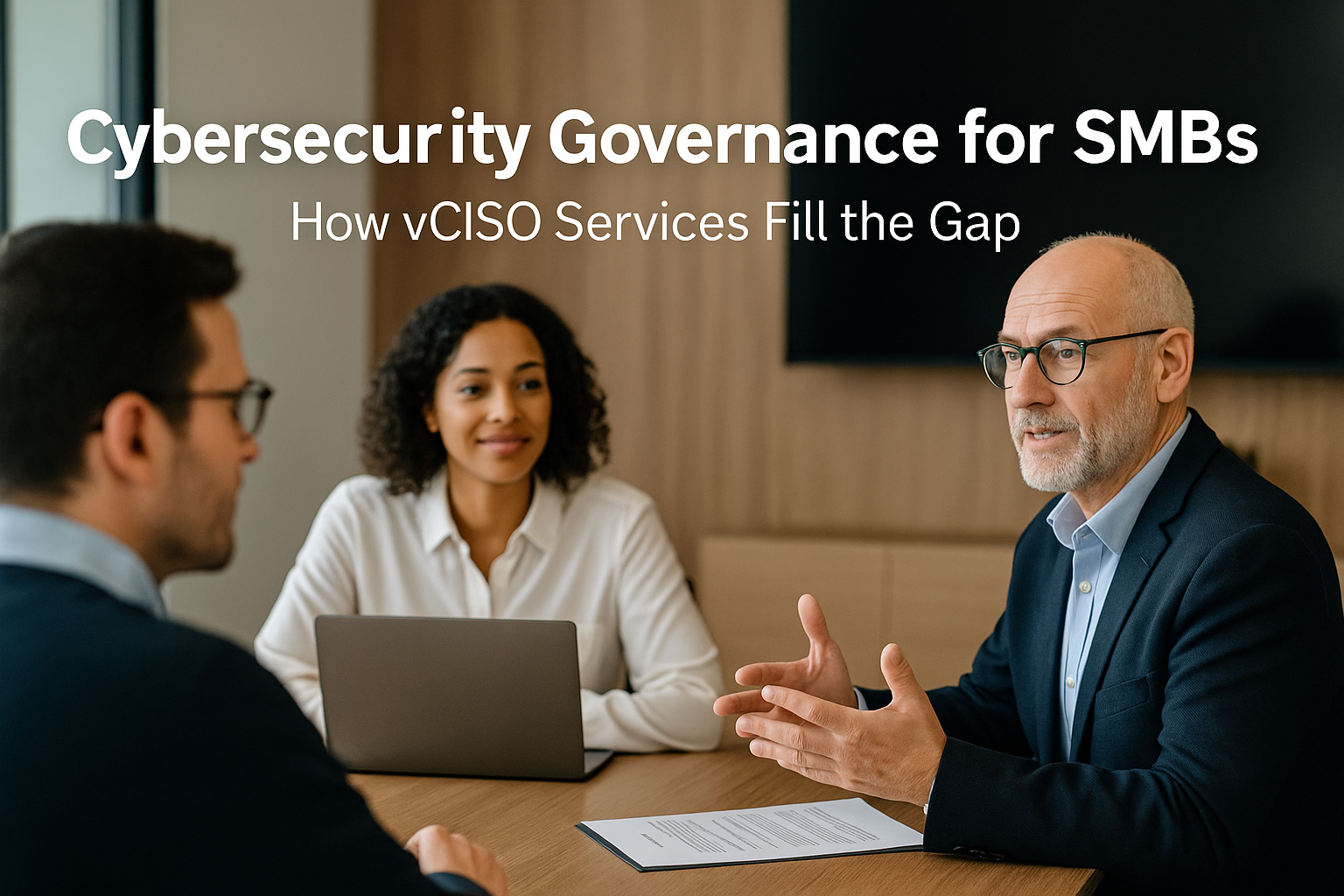
Cybersecurity Governance for SMBs: How vCISO Services Fill the Gap
Why governance is no longer optional even for small and mid-sized Canadian businesses
Cybersecurity governance used to be something only large enterprises worried about. Today, that has changed dramatically. Canadian SMBs face stronger expectations from clients, insurers, regulators, and even their own boards.
Several Canadian regulators including OSFI, provincial privacy commissioners, and industry bodies have emphasized that cybersecurity must be part of executive and board-level oversight. And yet, most SMBs operate without:
- A security strategy
- A governance framework
- A risk register
- Metrics for leadership
- A reporting structure
- A formal security owner
A Virtual Chief Information Security Officer (vCISO) gives SMBs the leadership, structure, and oversight they never had at a fraction of the cost of hiring a full-time CISO.
This blog explains how vCISO services create meaningful governance for SMBs, strengthen accountability, and help
organizations stay resilient in a rapidly evolving threat landscape.
At a Glance: How vCISO Services Fill Governance Gaps
| Governance Gap | How a vCISO Solves It |
|---|---|
| No security strategy | Creates a roadmap, objectives, and measurable priorities. |
| No risk visibility | Builds a risk register and conducts regular risk assessments. |
| No reporting to leadership | Introduces governance meetings and executive/board reporting. |
| Unstructured compliance work | Aligns governance with SOC 2, ISO 27001, Law 25, insurance, and privacy. |
| No formal security owner | Acts as your senior cybersecurity leader on a fractional basis. |
Why SMBs Struggle With Cybersecurity Governance
Small and mid-sized Canadian businesses often have capable IT teams but governance is more than IT tasks.
Governance includes:
- Strategy
- Risk management
- Oversight
- Reporting
- Policy alignment
- Leadership accountability
Most SMBs struggle because they lack:
- ❌ A security leader — The IT manager becomes the “default security person,” even when governance is outside their role.
- ❌ Executive-level reporting — Boards and CEOs often receive no cyber updates unless something goes wrong.
- ❌ Cyber risk visibility — SMBs don’t always understand the risk their data, operations, and systems carry.
- ❌ A structured plan — Security becomes reactive, not strategic.
- ❌ Time — Internal teams are overwhelmed with day-to-day tasks and cannot build a full governance program.
This is where a vCISO fills the gap.
How vCISO Services Establish Strong Governance for SMBs
A vCISO acts as your senior cybersecurity leader. They create a strategic, accountable, measurable governance model tailored for SMB budgets and realities.
Here are the core governance functions your vCISO brings to the table.
1. Creating a Cybersecurity Strategy and Roadmap
A vCISO builds a practical, prioritized security strategy that aligns with business goals instead of competing with them. This usually includes:
- A 12-month improvement roadmap
- Defined security objectives
- Priority risk areas
- Budget recommendations
- Compliance milestones (SOC 2, ISO 27001, Law 25, etc.)
Instead of reacting to problems, SMBs get a clear plan that supports growth and reduces surprises.
2. Building a Risk Management Program
Governance starts with understanding risk. Your vCISO will:
- Create a formal risk register
- Conduct annual and quarterly risk assessments
- Evaluate vendor and supply-chain risk
- Identify internal and external threats
- Link risks to required controls and remediation
This gives leadership visibility into what matters most not just a list of tools.
Example (Fictional for illustration)
A growing accounting firm discovered through their vCISO’s risk analysis that former contractors still had access to hosted files. This risk was fixed immediately, long before it could become an incident.
3. Establishing a Governance Committee or Reporting Structure
Most SMBs have never had a security committee. A vCISO helps create one with a simple structure that works, such as:
- Quarterly governance meetings
- Leadership reviews of risk and incidents
- Documentation and policy updates
- Control monitoring updates and KPIs
- Internal audit and remediation follow-ups
This transforms cybersecurity from an “IT issue” into a shared business responsibility.
4. Reporting to Executives or the Board
Boards across Canada are now expected to oversee cybersecurity. Some regulators have explicitly stated that
cybersecurity should appear on the board agenda regularly. A vCISO provides:
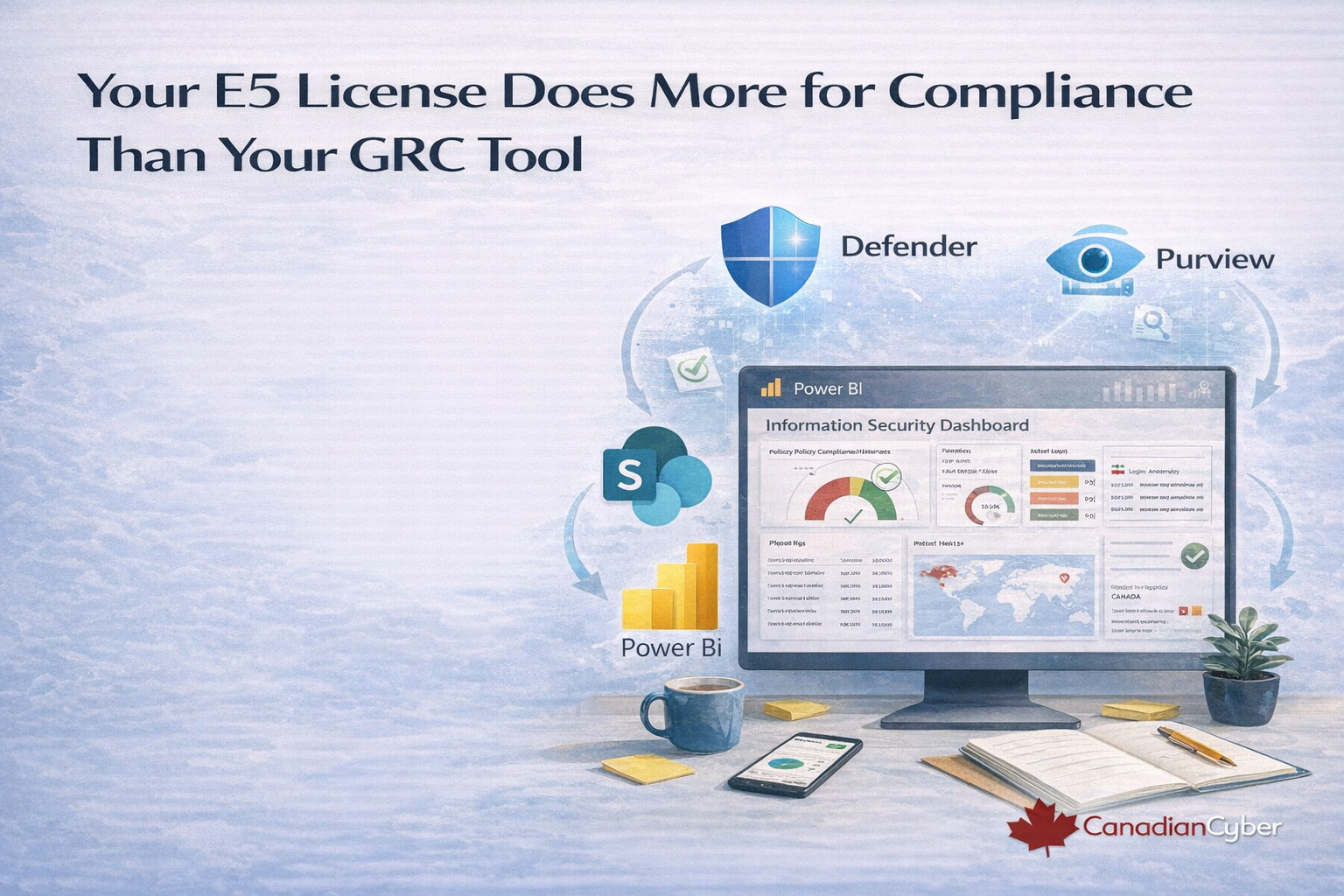
- Board-ready dashboards and summaries
- Cyber risk metrics and trends
- Incident summaries and lessons learned
- Program updates and maturity progress
- Compliance progress (SOC 2, ISO, Law 25, etc.)
- Actionable executive recommendations
This translates technical information into business language. Executives gain clarity. Boards gain confidence. Security becomes visible and measurable.
5. Ensuring Ongoing Compliance and Audit Readiness
Whether your organization needs:
- SOC 2
- ISO 27001
- Cyber insurance questionnaires
- Law 25 compliance
- Vendor security reviews
Your vCISO ensures governance supports compliance instead of scrambling at the last minute.
This includes:
- Policy updates and ownership
- Evidence collection throughout the year
- Internal audits and readiness reviews
- Risk and control documentation
- Control monitoring and reporting
- Incident response planning and testing
Compliance becomes structured not chaotic. Audits become a confirmation of good practice, not a source of panic.
Why Governance Matters More Than Ever for Canadian SMBs
Canadian SMBs face increasing pressure from:
- ✔ Large clients demanding SOC 2 or equivalent assurance
- ✔ Privacy regulators expecting accountability and documentation
- ✔ Cyber insurers raising security and control requirements
- ✔ Supply-chain partners requiring proof of controls
- ✔ Employees working remotely and from multiple locations
- ✔ Attackers targeting SMBs at record rates
Strong governance is what keeps organizations safe, accountable, and trusted. A vCISO brings governance maturity that SMBs cannot easily build alone.
How Canadian Cyber Helps SMBs Build Real Governance
Canadian Cyber’s vCISO services provide SMBs with a complete, structured governance model rather than scattered, ad-hoc activities.
Our vCISO engagements typically include:
- A complete governance program and roadmap
- Formal reporting structures for leadership and boards
- Security dashboards and KPIs for executives
- Policies, procedures, and supporting documentation
- Ongoing risk assessments and reviews
- Vendor and supply-chain security oversight
- Support for audits and certifications (SOC 2, ISO 27001, etc.)
- Quarterly or monthly security briefings
- Incident response planning and leadership
Ready to Strengthen Governance in Your Organization?
Whether you’re preparing for growth, facing client pressure, or building internal maturity, Canadian Cyber can help you establish strong governance with expert vCISO support.
Stay Connected with Canadian Cyber
Follow Canadian Cyber for more practical guidance on vCISO services, governance, and Canadian cybersecurity.