email-svg
Get in touch
info@canadiancyber.ca

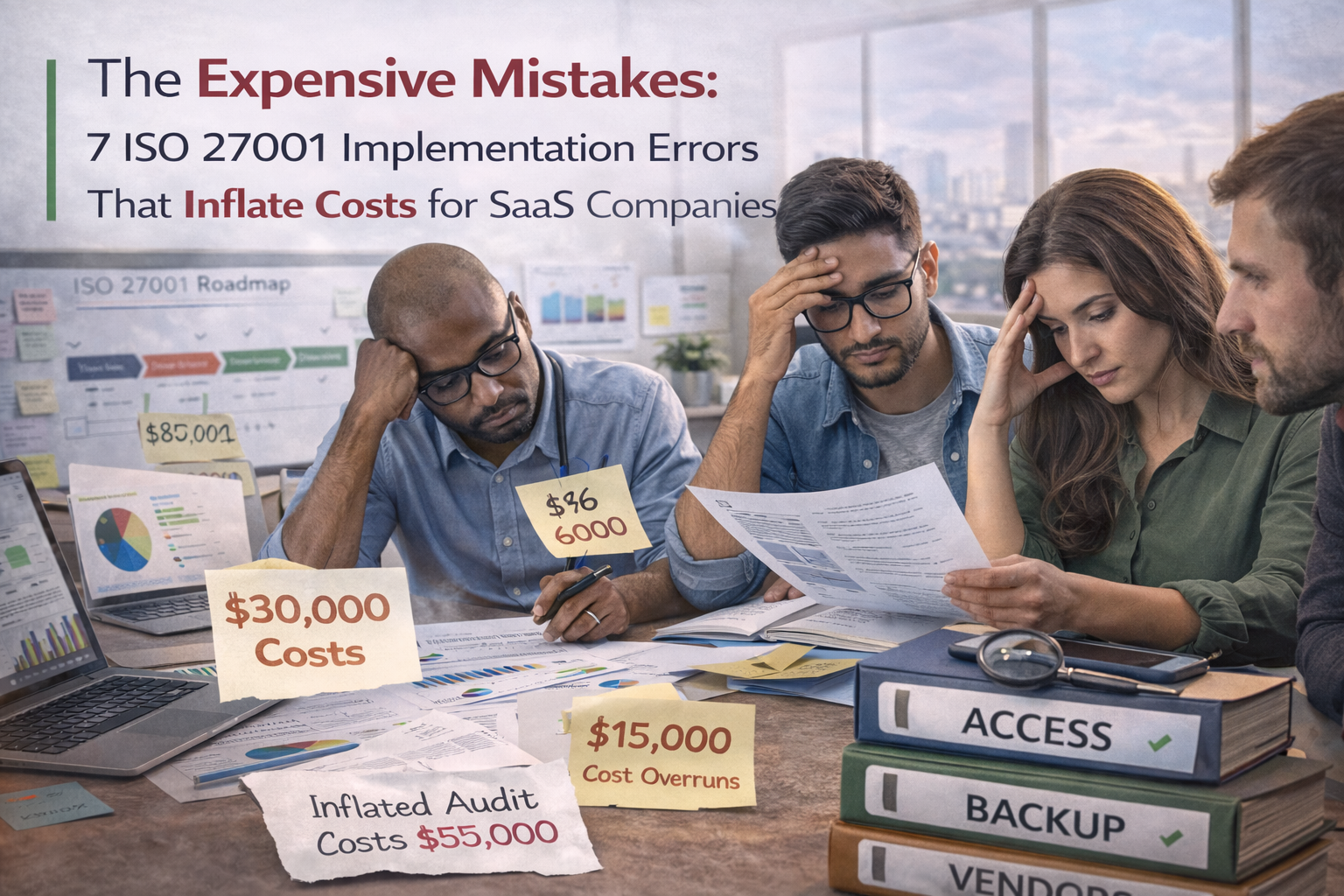
The Expensive Mistakes

Avoid the most expensive ISO 27001 implementation mistakes in SaaS. Learn how to control scope, structure evidence, and pass audits without overspending.
Main Hero Image

SaaS Compliance • ISO 27001 Implementation • Cost Reduction • Evidence Design

The Expensive Mistakes

7 ISO 27001 implementation errors that inflate costs for SaaS companies and how to avoid them
ISO 27001 is supposed to reduce friction. It should make security reviews faster, enterprise deals easier, and questionnaires less painful. But for many SaaS companies, the opposite happens because a few implementation mistakes quietly drive cost up.

Timelines slip, consulting bills grow, teams burn out, and audits become recurring fire drills. Usually that is not because ISO 27001 is too hard. It is because the implementation model is bloated, reactive, and poorly structured.

Here are the seven most expensive ISO 27001 implementation errors we see in SaaS environments, plus the fixes that keep scope tight, evidence clean, and certification achievable.

Why ISO 27001 gets expensive faster than teams expect

The cost problem usually does not start at the certification audit. It starts much earlier, when the ISMS is built around too much scope, too much documentation, weak evidence discipline, and no clear operating rhythm.

The pattern looks like this:
  • teams try to include everything too early
  • documents get written before controls are operating
  • evidence becomes screenshot chaos
  • exceptions stay open forever
  • vendor governance stays superficial
  • testing is skipped until an auditor asks for it
  • findings are marked closed without real verification

Each one adds time, rework, and avoidable audit pain. Together, they create a very expensive compliance program.

The 7 most expensive ISO 27001 implementation mistakes

Mistake 1: Over-scoping the ISMS

This is the number one cost multiplier. SaaS teams often scope every product, every cloud account, every internal tool, corporate IT, and sometimes even customer environments. That turns one audit program into five at once.

What it causes
Too many systems to evidence, too many owners to chase, too many gaps to close, and repeated scope debates with auditors.
Fix
Scope around the revenue product or service, the systems that deliver it, and the controls you can actually operate and prove.
Cost-saver rule:
If you cannot operate controls on it monthly or quarterly, do not put it in scope yet.

Mistake 2: Building policies before building operations

Some teams begin by writing a big policy set. They end up with beautiful documentation and weak evidence. Auditors are rarely impressed by that combination.

What this causes Practical fix
Paper compliance that auditors challenge Start with operational proof first
Months spent writing instead of operating Capture admin access reviews, change samples, logging reviews, restore tests, and vendor decisions before polishing policy language
Last-minute evidence scrambling Write policies that match what already operates
Cost-saver rule:
If a policy cannot produce evidence, it is not done.

Mistake 3: No evidence model

Without an evidence structure, everything becomes screenshots, exports named final_v3, and scattered artifacts in chats and inboxes. That is where audit time disappears.

Use quarterly evidence packs
  • Access Reviews
  • Logging and Monitoring
  • Vulnerability and Patch
  • Change Samples
  • Backup and Restore
  • Incident Response and Tabletops
  • Vendor Reviews
  • Internal Audit and CAPA
  • Management Review

Inside each pack, include a short summary that explains what was tested, what period it covers, the result, and links to supporting artifacts. That is what makes evidence usable.

Fastest cost reduction move
Most SaaS teams lower ISO effort fastest by tightening scope and standardizing evidence packs. Those two changes cut a surprising amount of audit rework.

Mistake 4: Ignoring exceptions or accepting them forever

SaaS teams always have real constraints: legacy services, patch delays, vendor gaps, logging limitations, and temporary admin access. The expensive part is not having them. The expensive part is failing to govern them.

A usable exception register should include
  • owner
  • compensating controls
  • approver
  • required expiry date
  • closure plan and evidence
Cost-saver rule:
Every exception must expire or it becomes permanent technical debt.

Mistake 5: Treating vendor risk like paperwork

Most SaaS incidents now involve third parties somewhere in the chain. But many teams still treat vendor risk like document collection. They gather SOC reports and call it done.

What it causes
Endless customer follow-ups, vendor review rushes right before audits, and renewals with no real decision trail.
Fix
Tier vendors, review only what matters most, track renewals 60 to 90 days ahead, and record the actual decision: approve, conditional approval, or exit.
Cost-saver rule:
Vendor governance is about decisions, not PDFs.

Mistake 6: Skipping restore tests and tabletop exercises

Backups and incident response plans are common. Proof of testing is not. That gap is expensive because it creates findings that are very hard to argue with.

Test type Lean minimum cadence
Restore test Quarterly for Tier 1 systems, or at least semi-annually
Disaster recovery tabletop One to two per year minimum
Incident tabletop At least one per year, more if the company is growing fast
Cost-saver rule:
A 90-minute tabletop can save months of audit pain.

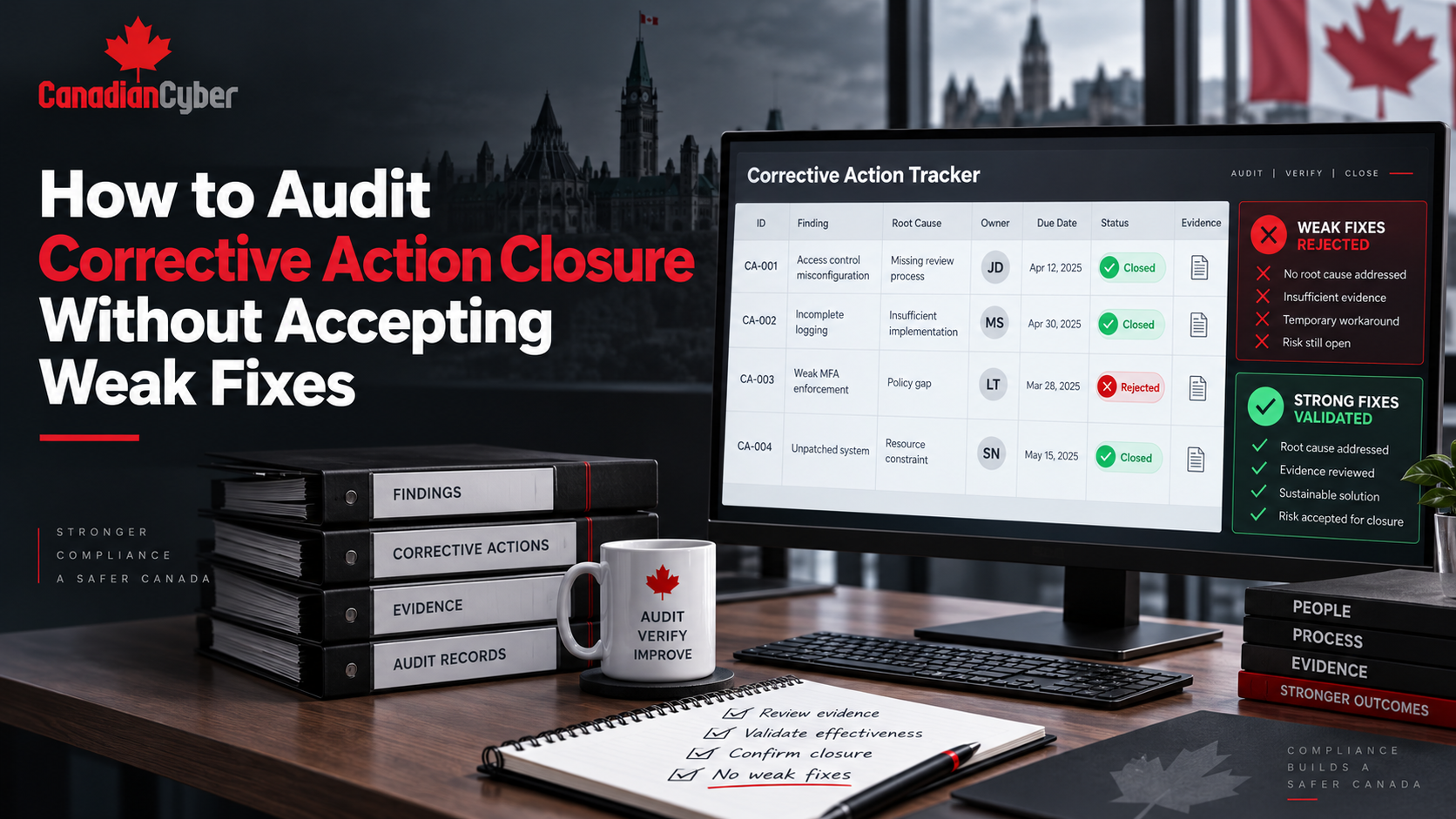
Mistake 7: No corrective action closure discipline

The hidden cost killer is open loops. Findings get logged but never truly closed. Or they get marked closed without proof. Then the same issue returns in the next review.

Make closure provable
  • finding
  • corrective action
  • closure evidence
  • verification step

Each item should have an owner, a due date, an exact closure artifact, and a re-sampling plan for the next quarter.

Cost-saver rule:
“Closed” is not a real finish line. “Verified” is.

The low-cost ISO 27001 implementation approach that works for SaaS

If you want to keep ISO 27001 costs under control, build the program in a practical sequence instead of trying to mature everything at once.

1. Right-size scope
Keep the ISMS tied to the revenue service and the systems that deliver it.
2. Establish owners and cadence
Give recurring work clear owners and regular review points.
3. Set up evidence packs
Quarterly packs stop evidence from turning into chaos.
4. Implement the top operating controls first
Focus on the controls that buyers and auditors test earliest.
5. Track exceptions with expiry
Temporary issues need time-bound decisions.
6. Run micro-audits monthly
Test around 10 controls a month instead of one giant review.
7. Use management review to drive decisions
Leadership should fund and clear issues before they become audit blockers.

That is how SaaS teams create an ISMS that runs continuously without seasonal panic.

If ISO 27001 is getting expensive for your SaaS company
The fastest fix is usually not more paperwork. It is better scope, better evidence design, and a cadence your team can actually sustain.

Final thought

The most expensive ISO 27001 programs are not usually the most ambitious. They are the least disciplined. They try to include too much, prove too little, and fix too slowly.

When scope is right-sized, evidence is curated, exceptions expire, and corrective actions are verified, ISO becomes much cheaper to run and much easier to trust.

Follow Canadian Cyber
Practical cybersecurity and compliance guidance:

Related Post