ISO 27001 Internal Audit • Healthcare SaaS • PHI-Adjacent Data • Compliance Readiness
ISO 27001 Internal Audit for Healthcare SaaS: Protecting PHI-Adjacent Data Without Overcomplicating Scope
Healthcare SaaS companies may not be hospitals or clinical care providers, but their platforms can still touch sensitive healthcare-related data through appointments, support tickets, logs, analytics, screenshots, API payloads, and AI summaries.
Canadian Cyber Healthcare SaaS Audit Support
Protect Sensitive Healthcare Data Without Overcomplicating ISO 27001 Scope
Canadian Cyber helps Healthcare SaaS companies perform practical ISO 27001 internal audits that test scope, PHI-adjacent data flows, access controls, support workflows, vendors, incident response, AI governance, cloud controls, and audit-ready evidence.
Quick Answer
An ISO 27001 internal audit for Healthcare SaaS should test whether the company has properly scoped its ISMS, identified PHI-adjacent data, assessed risks, implemented access controls, reviewed vendors, protected support workflows, tested incident response, managed backups, controlled logs, and collected audit-ready evidence.
The goal is not to include every possible healthcare scenario. The goal is to clearly define what data, systems, users, vendors, and processes are in scope and prove that the controls are operating.
Practical takeaway: Healthcare SaaS companies should protect sensitive data without making ISO 27001 scope too narrow or too complex to manage.
Quick Snapshot
| Healthcare SaaS Internal Audit Question | Why It Matters |
|---|---|
| Is PHI-adjacent data identified? | Sensitive data may exist in logs, tickets, messages, analytics, or support records. |
| Is the ISO 27001 scope clear? | Poor scope creates audit confusion and customer trust issues. |
| Are access controls tested? | Healthcare customers expect least privilege and strong access reviews. |
| Are support workflows reviewed? | Support teams often see sensitive screenshots or customer records. |
| Are vendors assessed? | Cloud, AI, analytics, support, and monitoring tools may process sensitive data. |
| Is evidence audit-ready? | Enterprise healthcare buyers want proof, not policy statements only. |
Why Healthcare SaaS Needs a Strong ISO 27001 Internal Audit
Healthcare SaaS companies operate in a trust-heavy market. They may not directly provide clinical care or store full medical records, but their platforms can still support workflows involving patients, providers, appointments, care coordination, claims, billing, analytics, and customer support.
That means healthcare customers, insurers, procurement teams, privacy teams, and auditors may treat the data environment as sensitive. They may ask detailed questions about ISO 27001 certification, internal audits, support tickets, screenshots, AI tools, access reviews, vendors, subprocessors, incident response, backups, recovery, and audit evidence.
A strong internal audit helps the company find scope and evidence gaps before the healthcare customer, certification auditor, or enterprise buyer finds them.
Healthcare SaaS companies should not wait for the external auditor or customer questionnaire to discover scope and evidence problems.
Who This Blog Is For
- Healthcare SaaS companies preparing for ISO 27001 certification.
- HealthTech platforms selling to clinics, hospitals, insurers, labs, or healthcare networks.
- SaaS companies handling PHI-adjacent data.
- Patient engagement, remote care, healthcare workflow, and appointment platforms.
- AI-enabled healthcare SaaS companies.
- CTOs, founders, compliance leads, and security leaders preparing audit evidence.
- Organizations using Microsoft 365 or SharePoint for ISMS evidence.
- Sales teams answering healthcare security questionnaires.
The Lead-Generating Problem: Healthcare SaaS Companies Often Do Not Know Their Real Scope
Many Healthcare SaaS companies struggle with ISO 27001 scope. Some under-scope the ISMS and miss sensitive data risks. Others over-scope everything and make ISO 27001 harder, more expensive, and more difficult to maintain.
| Scope Mistake | What Happens |
|---|---|
| Under-scoping | Sensitive workflows may be missed, such as support tickets, logs, screenshots, AI summaries, appointment metadata, and integrations. |
| Over-scoping | The ISMS becomes too large, hard to audit, expensive to maintain, and difficult for control owners to operate. |
| Accurate scope | The ISMS reflects actual services, systems, data, users, vendors, customer commitments, and risks. |
Practical rule: The best ISO 27001 scope is not the smallest or the biggest. It is the most accurate.
What Is PHI-Adjacent Data?
PHI-adjacent data is not always classified the same way as formal protected health information, but it can still create healthcare privacy, security, contractual, and customer trust concerns.
It may include information connected to healthcare workflows, patients, providers, appointments, support activities, or medical service operations.
| Data Type | Where It May Appear |
|---|---|
| Patient names or identifiers | Appointment fields, support tickets, exports. |
| Provider names and schedules | User profiles, calendars, workflow records. |
| Support screenshots | Customer support tickets and troubleshooting records. |
| API payloads | Integration logs, error reports, debugging records. |
| AI prompts and outputs | AI support tools, summarization features, chatbots. |
| Audit logs | User activity, access records, system events. |
If data can reveal something about a person’s healthcare-related interaction, workflow, provider relationship, or service context, treat it carefully during internal audit.
Why ISO 27001 Internal Audit Is Different for Healthcare SaaS
A general SaaS internal audit may focus on security controls, access, vendors, incidents, and evidence. A Healthcare SaaS internal audit must go deeper into sensitive data workflows.
Practical rule: Healthcare SaaS internal audit should follow the data, not only the policy list.
What to Test in an ISO 27001 Internal Audit for Healthcare SaaS
1. ISMS Scope
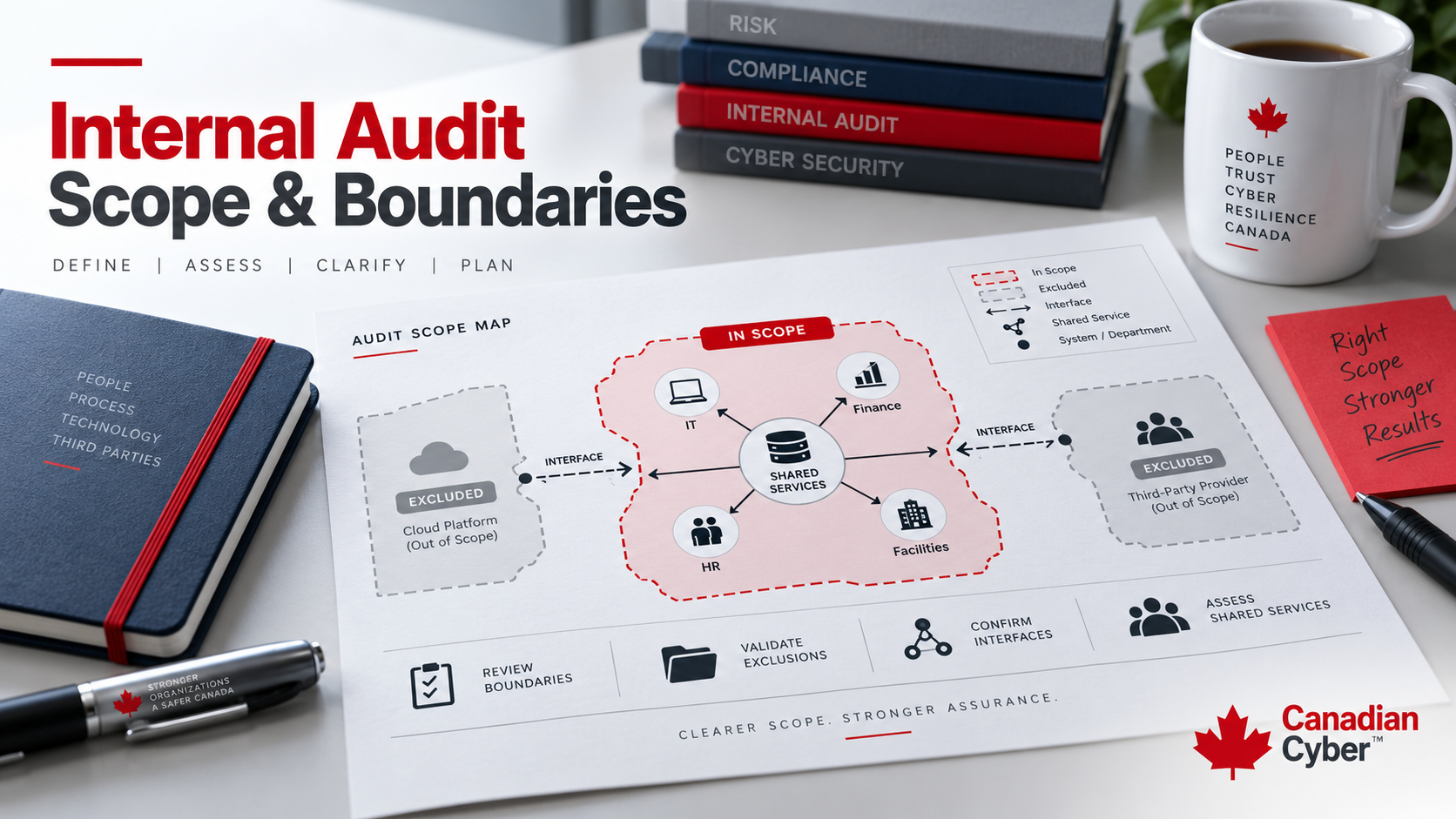
Test whether the scope includes the SaaS product, production cloud infrastructure, customer support workflows, healthcare customer data handling, Microsoft 365 or collaboration tools where sensitive data may appear, and vendors that process customer or PHI-adjacent data.
2. Data Flow and Data Classification
Review whether PHI-adjacent data types are identified, data flows are documented, integrations are mapped, logs are reviewed for sensitive fields, exports are controlled, and retention or deletion rules are defined.
3. Access Control and Least Privilege
Test MFA, SSO, admin access reviews, support user access, production access, access request approvals, offboarding, contractor access, emergency accounts, and recurring access reviews.
4. Support Ticket and Screenshot Handling
Support workflows are often overlooked. Support tickets may contain customer screenshots, patient names, appointment details, provider information, error logs, or other sensitive records. Review support procedures, redaction guidance, ticket retention, training records, and support tool vendor reviews.
Need an ISO 27001 Internal Audit for Healthcare SaaS?
Canadian Cyber helps Healthcare SaaS companies test real risks, not just generic checklist items. We review scope, PHI-adjacent data flows, access controls, support workflows, vendor risk, incident response, backup evidence, AI governance, cloud controls, internal audit evidence, and certification readiness. For senior advisory support, you can also view Waqar Mehboob’s profile.
5. Vendor and Subprocessor Risk
Healthcare SaaS companies often rely on cloud hosting providers, database platforms, support ticketing tools, analytics tools, monitoring tools, AI vendors, payment processors, backup providers, identity providers, development tools, and customer communication tools. If a vendor can access, process, store, support, or analyze healthcare-related data, it belongs in the audit.
6. Cloud Security and ISO 27017 Alignment
Test cloud admin access, approved cloud changes, logging, backups, restore tests, encryption, cloud security alerts, environment separation, secrets management, and shared responsibility documentation.
7. Privacy and ISO 27018 Alignment
Review personal data handling rules, support ticket privacy review, screenshots, metadata, logs, customer deletion requests, retention schedules, subprocessor disclosures, and privacy incident tracking.
8. Incident Response and Tabletop Testing
Healthcare customers want to know how quickly the vendor can respond if something goes wrong. Review the incident response plan, severity matrix, escalation list, breach notification process, tabletop exercise report, incident register, lessons learned, and corrective action tracker.
9. AI Governance for Healthcare SaaS
Healthcare SaaS companies increasingly add AI features or use AI internally. Review AI tools, AI vendors, AI risk assessments, prompt and output handling, customer data training terms, human oversight, AI-generated support summaries, AI incidents, and ISO 42001 alignment.
10. Internal Audit Findings and Corrective Actions
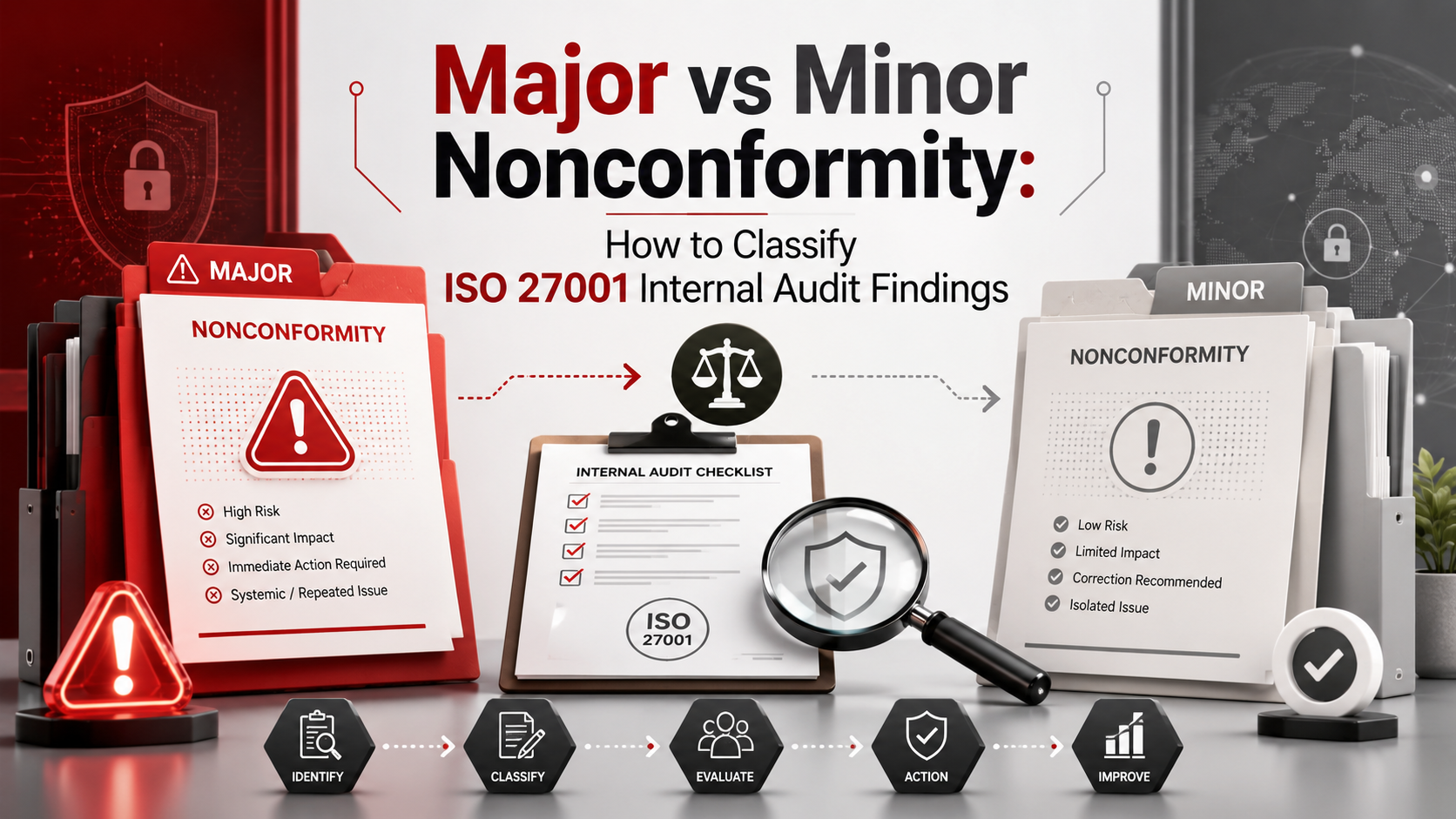
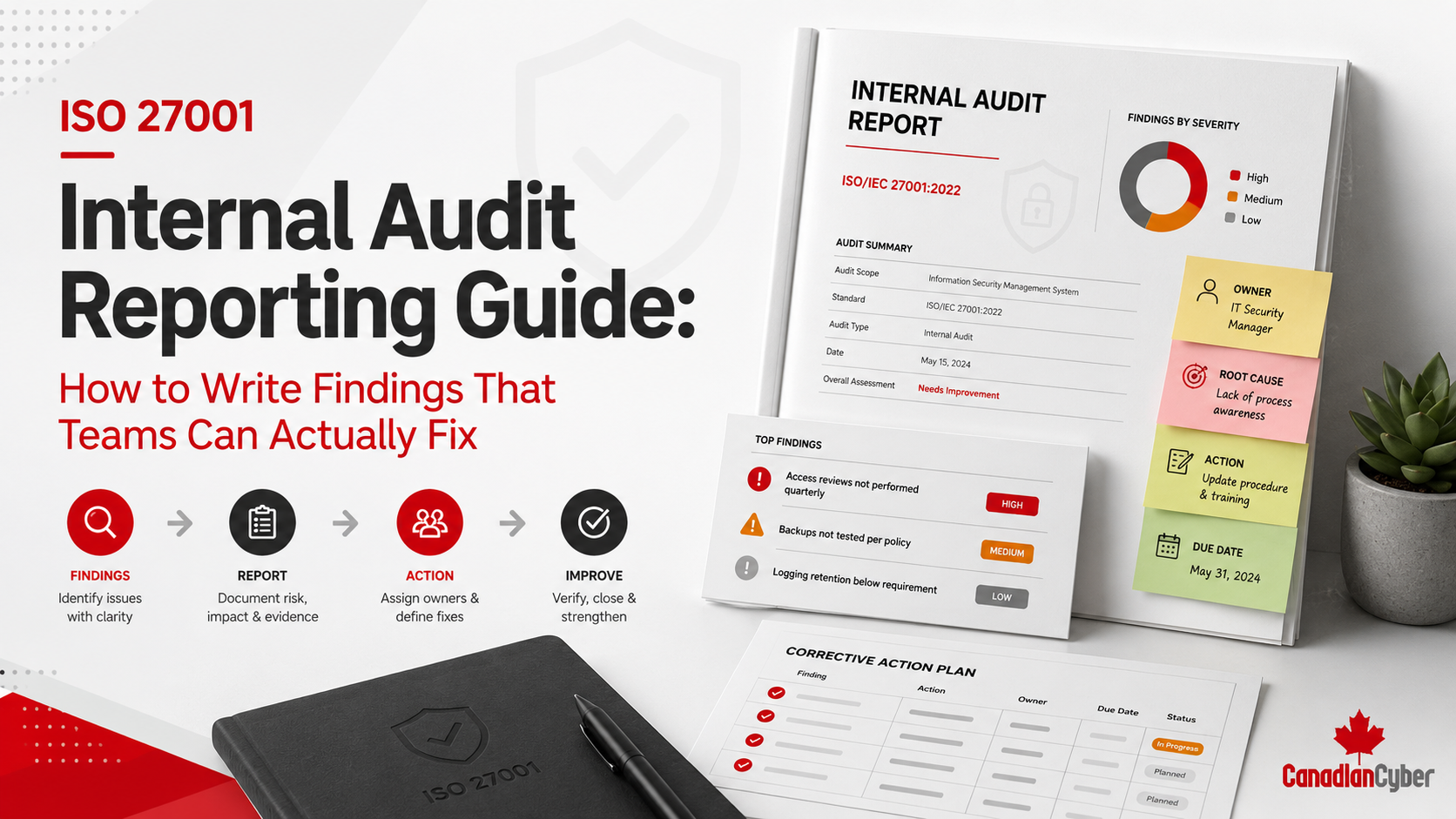
The internal audit should identify findings before external audit or customer review. Review whether findings are documented, NCRs and OFIs are classified, root causes are identified, corrective actions are assigned, target dates are defined, closure evidence is collected, and unresolved findings are escalated.
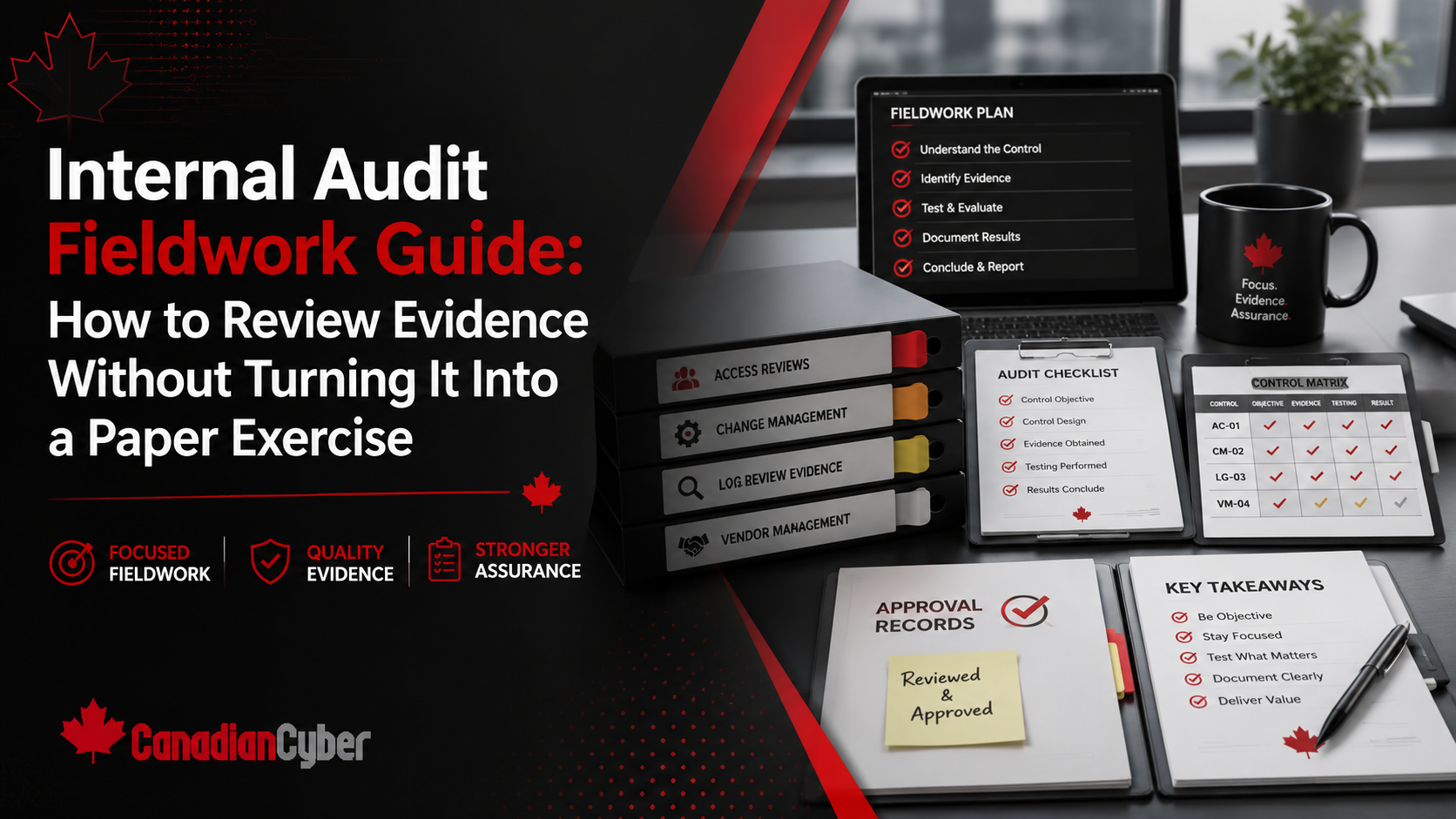
Key Evidence to Review During the Internal Audit
| Audit Area | Evidence Examples |
|---|---|
| Scope | ISMS scope statement, service description, system inventory, data flow diagram, vendor register. |
| Data Flow | Data classification policy, API integration list, log review records, retention schedule, deletion request evidence. |
| Access Control | MFA reports, access exports, privileged access reviews, offboarding tickets, contractor access lists. |
| Support Workflow | Support procedures, ticket examples, redaction guidance, support access reviews, training records. |
| Vendor Risk | Vendor register, SOC 2 reports, ISO certificates, DPAs, subprocessor list, AI vendor review evidence. |
| Incident Response | IR plan, tabletop report, incident register, lessons learned, corrective action tracker. |
Healthcare SaaS Internal Audit Checklist
| Internal Audit Area | Ready? |
|---|---|
| ISMS scope includes relevant product, cloud, support, and data workflows. | |
| PHI-adjacent data types are identified. | |
| Data flows are documented. | |
| Support ticket and screenshot handling is controlled. | |
| MFA and privileged access are tested. | |
| Access reviews are completed and evidenced. | |
| Vendor register includes cloud, support, analytics, AI, and monitoring vendors. | |
| Incident response plan is tested through tabletop exercise. | |
| AI tools and AI vendors are reviewed. | |
| Client-ready evidence pack is prepared for healthcare buyers. |
How Internal Audit Helps Healthcare SaaS Sales
An ISO 27001 internal audit can directly support sales. Healthcare buyers want proof. A strong internal audit helps the sales team answer with evidence, not promises.
Practical rule: Internal audit is not only for certification. It is also a sales readiness tool.
Common Mistakes Healthcare SaaS Companies Should Avoid
- Saying “we do not handle PHI” too quickly. PHI-adjacent data may still exist in tickets, logs, screenshots, messages, and integrations.
- Over-scoping everything. Scope should be accurate, risk-based, and manageable.
- Ignoring support workflows. Support teams often handle sensitive evidence during troubleshooting.
- No vendor review for AI or analytics tools. AI, analytics, monitoring, and support tools may process sensitive customer data.
- Weak access review evidence. Healthcare customers expect strong control over who can access sensitive systems and data.
- No tabletop exercise. Incident response should be tested, especially where healthcare-related data may be involved.
- No client-ready evidence pack. Healthcare buyers do not want promises. They want organized proof.
How Canadian Cyber Helps Healthcare SaaS Companies
Canadian Cyber helps Healthcare SaaS companies prepare for ISO 27001 certification, customer due diligence, internal audits, security questionnaires, and enterprise healthcare procurement.
Canadian Cyber can support:
Canadian Cyber’s ISMS SharePoint Solution
Canadian Cyber also has an ISMS SharePoint Solution that helps Healthcare SaaS companies manage the full audit and evidence process inside Microsoft 365.
The solution can help organize ISMS scope, policy libraries, risk registers, control registers, Statement of Applicability trackers, PHI-adjacent data evidence, vendor registers, AI vendor registers, access review trackers, support ticket privacy evidence, incident registers, internal audit workspaces, NCR and OFI findings registers, corrective action trackers, management review dashboards, client-ready evidence rooms, Power Automate evidence reminders, Teams notifications, and auditor-ready evidence views.
Practical rule: Canadian Cyber helps Healthcare SaaS companies protect sensitive data without overcomplicating ISO 27001 scope.
Senior Advisory Support
For organizations that need senior guidance around Healthcare SaaS security, ISO 27001 internal audits, PHI-adjacent data scope, SharePoint ISMS design, SOC 2 readiness, vCISO oversight, and cybersecurity governance, Canadian Cyber also provides advisory support.
Frequently Asked Questions
Why does Healthcare SaaS need an ISO 27001 internal audit?
Healthcare SaaS companies need an internal audit to test whether their ISMS scope, risks, controls, evidence, access reviews, vendors, incident response, and data protection practices are ready for certification and healthcare customer due diligence.
What is PHI-adjacent data?
PHI-adjacent data includes information that may not be a full medical record but still relates to healthcare workflows, patients, providers, appointments, support tickets, screenshots, logs, messages, analytics, or care-related operations.
Should support tickets be included in ISO 27001 internal audit scope?
If support tickets may contain customer data, patient identifiers, screenshots, logs, or healthcare-related details, they should be reviewed during the internal audit.
How can Healthcare SaaS avoid overcomplicating ISO 27001 scope?
Healthcare SaaS companies should define scope based on actual services, systems, data flows, vendors, users, and customer commitments. The scope should be accurate, risk-based, and manageable.
Can ISO 27001 internal audit help with healthcare customer questionnaires?
Yes. A strong internal audit helps create evidence for security questionnaires, healthcare vendor due diligence, procurement reviews, and enterprise customer trust.
Does Canadian Cyber provide ISO 27001 internal audits for Healthcare SaaS?
Yes. Canadian Cyber provides ISO 27001 internal audits, certification readiness reviews, scope reviews, control testing, evidence reviews, incident response tabletop exercises, vCISO support, and SharePoint ISMS implementation for Healthcare SaaS companies.
Takeaway
Healthcare SaaS companies need to protect sensitive and PHI-adjacent data without making ISO 27001 scope unnecessarily complex.
Under-scope the ISMS, and sensitive workflows may be missed. Over-scope the ISMS, and certification becomes harder to manage. A strong ISO 27001 internal audit helps find the right balance.
For Healthcare SaaS companies selling to clinics, hospitals, insurers, digital health platforms, and enterprise healthcare buyers, internal audit is not just a certification step. It is a trust-building sales asset.
Preparing for ISO 27001 Certification or Healthcare Customer Due Diligence?
Canadian Cyber can help. We provide ISO 27001 internal audits for Healthcare SaaS companies, certification readiness reviews, PHI-adjacent data workflow reviews, cybersecurity assessments, vCISO support, SOC 2 alignment, incident response tabletop exercises, ISO 27017 and ISO 27018 control support, ISO 42001 AI governance support, and SharePoint ISMS implementation. You can also learn more about senior advisory support through Waqar Mehboob’s profile.
Stay Connected With Canadian Cyber
Follow Canadian Cyber for practical guidance on ISO 27001 internal audits, Healthcare SaaS security, PHI-adjacent data, SOC 2, ISO 42001, ISO 27017, ISO 27018, SharePoint ISMS, audit evidence, cybersecurity assessments, and vCISO support.