ISO 27001 • Internal Audit • Scope Review
ISO 27001 Scope Boundaries: Audit Questions for Exclusions and Shared Services
Learn how to audit ISO 27001 scope boundaries, exclusions, interfaces, shared services, cloud tools, vendors, AI tools, and evidence ownership before certification.
Quick Answer
How should auditors test ISO 27001 scope boundaries?
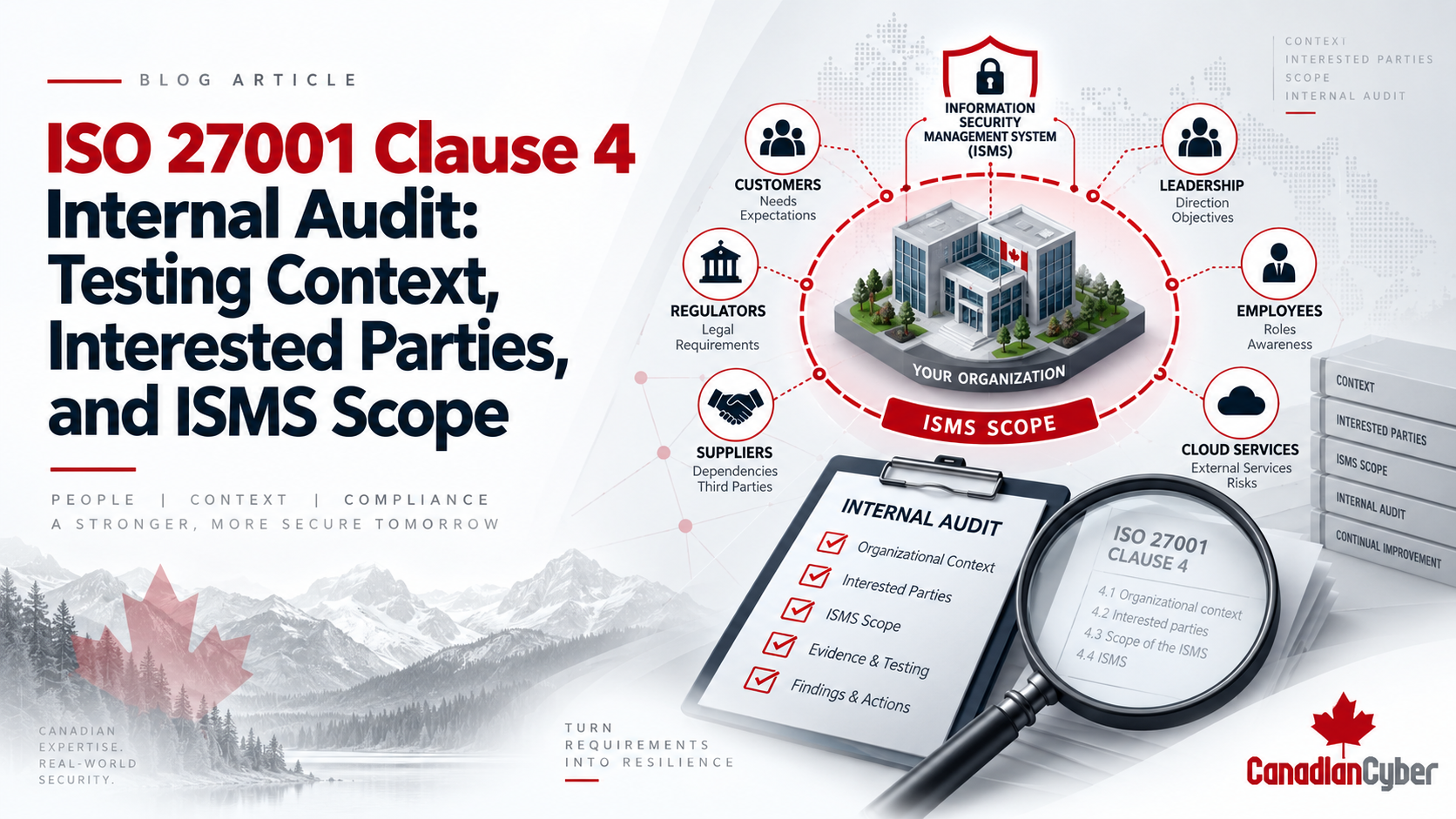
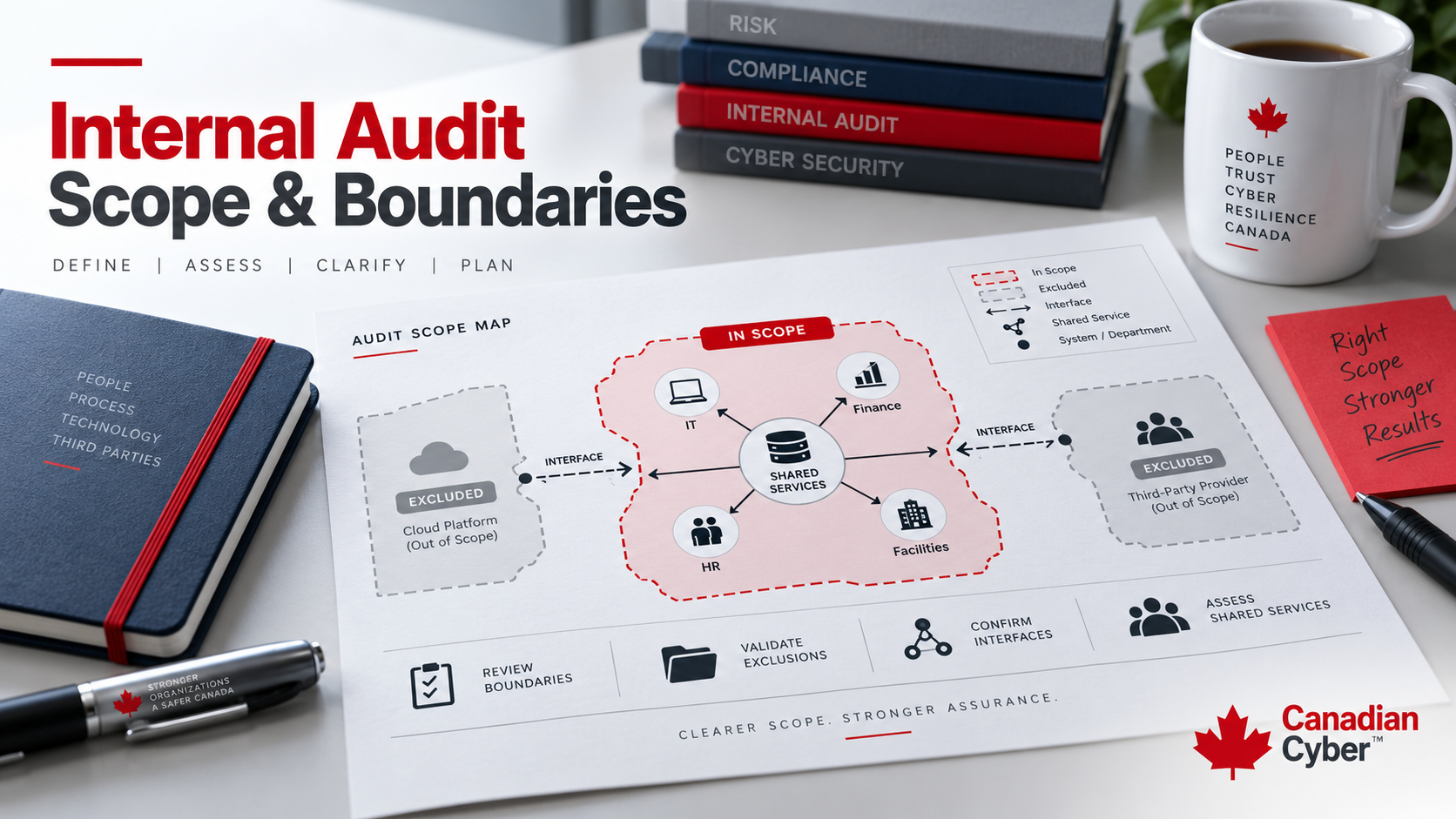
Auditors should test whether the documented ISMS scope matches the real business. This includes systems, teams, locations, vendors, cloud tools, AI tools, shared services, and outsourced processes.
They should also check whether exclusions are justified, interfaces are mapped, risks are updated, and evidence owners are assigned.
Scope Is Not Just a Document
ISO 27001 internal audits often fail at the boundary.
The organization may have policies, a risk register, and control evidence. However, the audit can still miss important risks if the ISMS scope is unclear.
A ticketing system may support the in-scope service. A shared HR process may control onboarding and offboarding. A finance workflow may approve vendors. A parent company may provide IT support.
These areas may sit near the edge of the ISMS. Therefore, internal audit must test them carefully.
Practical rule: before testing controls, confirm where the ISMS begins, where it ends, and what supports it.
The Main Audit Question
The strongest question is not, “What is the ISMS scope?”
A better question is:
Does the documented ISMS scope match the real systems, vendors, shared services, interfaces, and evidence dependencies that support the in-scope service?
Quick Audit Snapshot
| Area | What to Check |
|---|---|
| Scope boundaries | Services, systems, teams, data, locations, and remote work. |
| Exclusions | Rationale, approval, risk review, and impact on in-scope services. |
| Interfaces | Connections to tools, vendors, APIs, shared systems, and data flows. |
| Shared services | Central IT, HR, Legal, Finance, Procurement, Security, and evidence owners. |
| Alignment | Scope, risk register, SoA, vendor register, and evidence matrix. |
1. Audit Questions for Scope Boundaries
Scope boundaries show what is inside and outside the ISMS.
They should be clear enough for the auditor to know what evidence to request.
- What services are included in the ISMS?
- Which systems support those services?
- Which teams, locations, and remote workers are included?
- Which vendors support the in-scope service?
- Does the scope match the risk register and Statement of Applicability?
Common finding: the scope statement names the product or service, but it does not list supporting systems, shared services, vendors, or interfaces.
2. Audit Questions for Exclusions
Exclusions are not always wrong.
However, every exclusion should have a reason, approval, and risk-based explanation.
This is important because excluded areas may still support in-scope work.
- What is excluded from the ISMS?
- Why is it excluded?
- Who approved the exclusion?
- Does the excluded area process in-scope data?
- Is the exclusion reflected in the risk assessment and SoA?
Practical rule: an exclusion is only defensible when it does not weaken the ISMS, customer commitments, control evidence, or risk treatment.
Need to Clean Up ISO 27001 Scope Before Certification?
Canadian Cyber helps organizations test ISO 27001 scope boundaries, exclusions, interfaces, shared services, evidence ownership, and SharePoint ISMS mapping.
We help you find hidden dependencies before the certification auditor does.
3. Audit Questions for Interfaces
Interfaces are connection points between the ISMS and other systems, vendors, tools, teams, or processes.
They may sit outside formal scope, but they can still affect security.
- Which systems connect to in-scope systems?
- Which vendors have system access?
- Which tools store customer or sensitive data?
- Which AI tools interact with tickets, code, or customer data?
- Are interfaces included in access reviews and incident response planning?
Common finding: technical teams know the interfaces, but the ISMS documents do not show them.
4. Audit Questions for Shared Services
Shared services often support the ISMS.
Examples include IT, HR, Legal, Finance, Procurement, Security Operations, Compliance, Privacy, and Microsoft 365 administration.
The audit should confirm who owns the control and who provides the evidence.
- Which shared services support the in-scope business?
- Are shared services included in the ISMS scope?
- Who owns shared service evidence?
- Who handles exceptions and findings?
- Are shared service responsibilities documented?
Practical rule: shared services need evidence responsibilities, not only operational responsibilities.
5. Audit Questions for Outsourced Processes
Outsourced processes can affect the ISMS, even when a third party performs the work.
Therefore, internal audit should test whether vendor responsibilities are clear.
- Which ISMS processes are outsourced?
- Are vendors risk assessed?
- Are security obligations documented in contracts?
- Are vendor access rights reviewed?
- Are outsourced processes included in internal audit planning?
Practical rule: outsourcing a process does not outsource accountability.
6. Audit Questions for Cloud, SaaS, and AI Tools
Cloud, SaaS, and AI tools often sit close to the ISMS boundary.
They may store data, create evidence, provide access, support operations, or affect customer-facing work.
- Which cloud platforms support the in-scope service?
- Which SaaS tools store customer or sensitive data?
- Are cloud admin roles reviewed?
- Which AI tools are used by employees or developers?
- Are AI tools included in the risk register and vendor review process?
Common finding: the certification scope mentions the cloud platform, but supporting SaaS or AI tools are not mapped to risks, access reviews, or vendor evidence.
7. Audit Questions for Evidence Ownership
Scope boundaries become difficult when evidence ownership is unclear.
Every scope dependency needs an evidence owner.
- Who owns evidence for each in-scope control?
- Who owns evidence for shared services?
- Who owns evidence for outsourced processes?
- Where is evidence stored?
- How are evidence gaps escalated?
8. Check Risk Register and SoA Alignment
Scope, risk, and the Statement of Applicability should tell the same story.
When they do not match, certification readiness becomes unclear.
- Are scope boundaries reflected in the risk register?
- Are exclusions reflected in risk decisions?
- Are interfaces included in risk assessment?
- Are shared services considered in control selection?
- Are scope changes reviewed during risk updates?
Practical rule: if the scope statement, risk register, and SoA do not match, the audit should investigate why.
Sample Finding Language
Weak Finding
Scope boundaries are unclear.
Stronger Finding
The ISMS scope identifies the customer-facing SaaS platform. However, it does not identify supporting systems and shared services such as Microsoft 365, the identity provider, customer support tickets, code repository, backup platform, HR onboarding, Legal contract review, or Finance vendor approval. These services support in-scope controls and evidence. Without clear boundary mapping, the organization may miss relevant risks, owners, and testing requirements.
How SharePoint Can Help
A SharePoint ISMS workspace can make scope boundaries visible.
It can also connect scope items to risks, controls, evidence owners, corrective actions, and management decisions.
Track services, systems, and approvals.
Track rationale and approval.
Track tools, APIs, vendors, and owners.
Track who provides proof.
How Canadian Cyber Helps
Canadian Cyber helps organizations review ISO 27001 scope boundaries before certification or surveillance audits.
We help define what is included, what is excluded, what supports the ISMS, who owns evidence, and what must be tested.
We can also build SharePoint ISMS dashboards for scope, exclusions, interfaces, vendors, AI tools, risks, SoA links, and corrective actions.
Senior Advisory Support
Canadian Cyber also provides senior advisory support for ISO 27001 scope reviews, internal audit planning, evidence ownership, SharePoint ISMS dashboards, corrective action tracking, and vCISO guidance.
Frequently Asked Questions
What are ISO 27001 scope boundaries?
ISO 27001 scope boundaries define what is included and excluded from the ISMS. They may include services, systems, locations, people, data, vendors, shared services, and support processes.
Why are exclusions important?
Exclusions matter because they can affect risk, evidence, and certification readiness. Each exclusion should be documented, justified, approved, and reviewed.
What are interfaces in ISO 27001 scope review?
Interfaces are connection points between the in-scope ISMS and other systems, vendors, tools, APIs, shared services, or business processes.
Can SharePoint help manage scope boundaries?
Yes. SharePoint can track scope boundaries, exclusions, interfaces, shared services, vendors, cloud tools, evidence owners, risks, SoA links, and dashboards.
Takeaway
ISO 27001 internal audit should not treat scope as a formality.
Scope is the audit boundary.
It defines what is included, what is excluded, what connects to the ISMS, and who owns the evidence.
When the boundary is clear, fieldwork becomes cleaner. When the boundary is unclear, evidence becomes scattered and certification readiness becomes uncertain.
Clarify Your ISO 27001 Scope Before Certification
Canadian Cyber can help your organization test scope boundaries, exclusions, interfaces, shared services, outsourced processes, evidence ownership, risk alignment, and SoA alignment.
We support ISO 27001 internal audits, SharePoint ISMS dashboards, corrective action tracking, vCISO support, SOC 2 readiness, ISO 42001, ISO 27017, ISO 27018, and cybersecurity assessments.
Stay Connected With Canadian Cyber
Follow Canadian Cyber for practical guidance on ISO 27001 internal audits, scope boundaries, exclusions, interfaces, shared services, certification readiness, SharePoint ISMS, SOC 2 readiness, AI governance, and vCISO services.