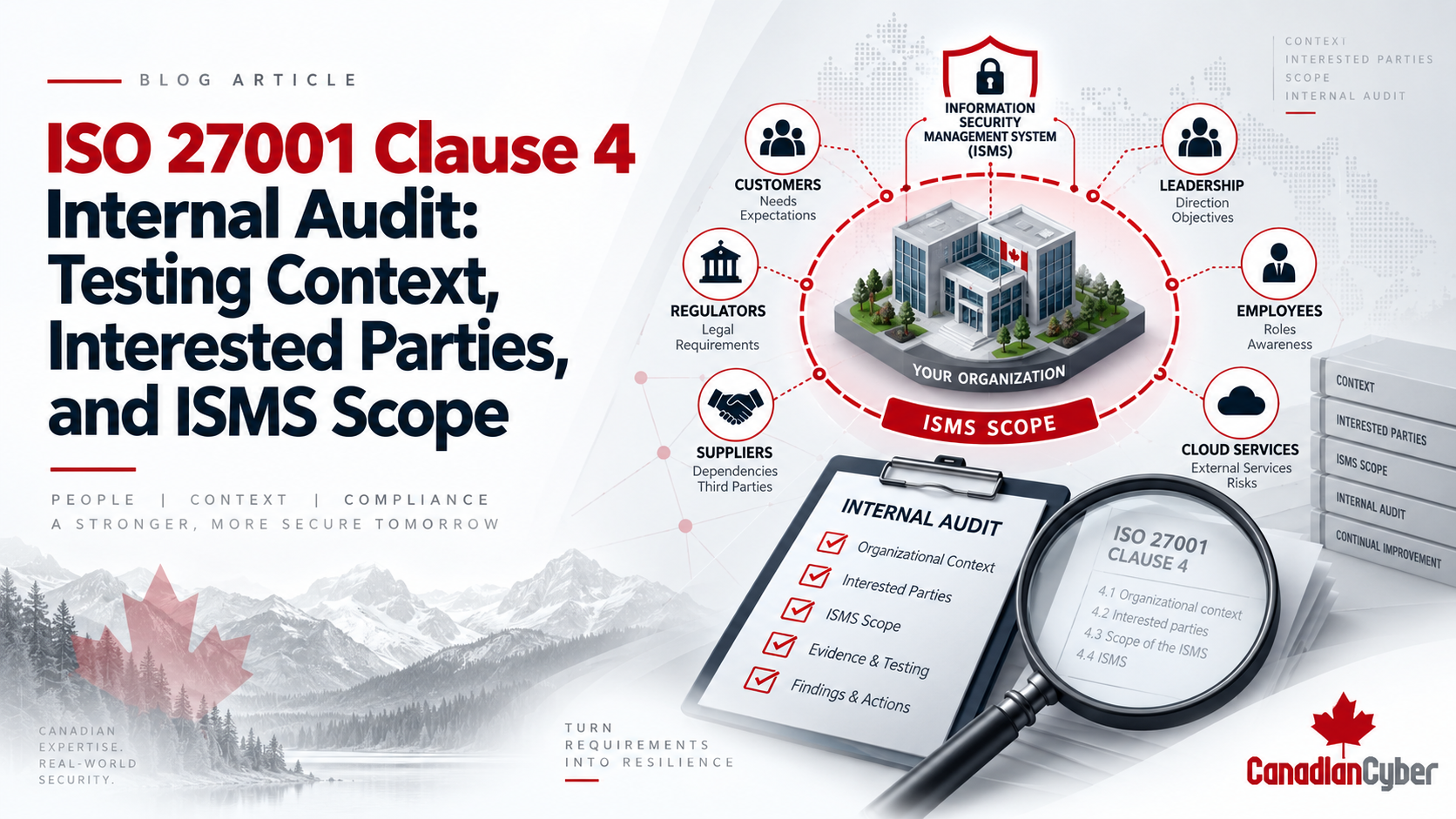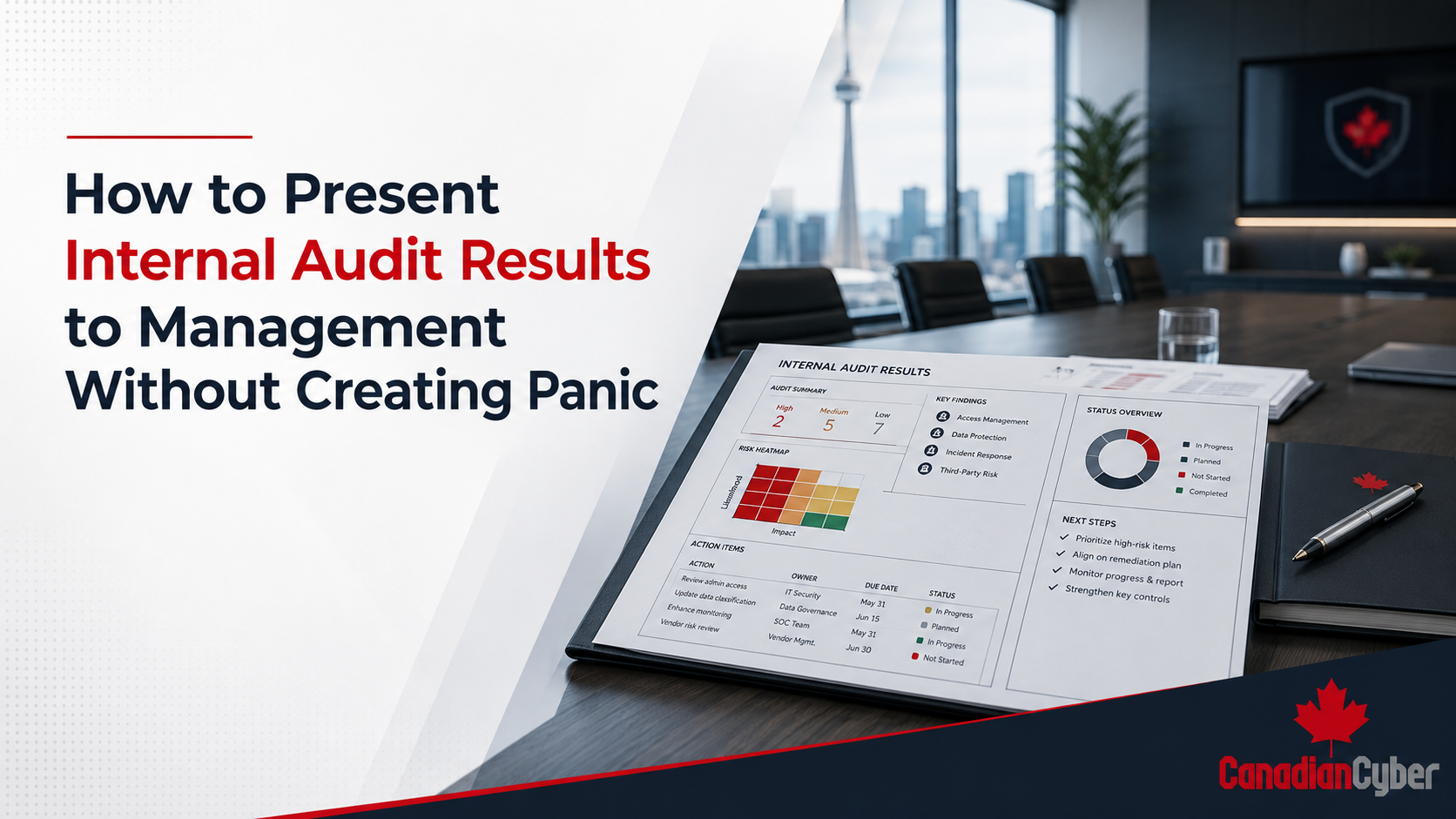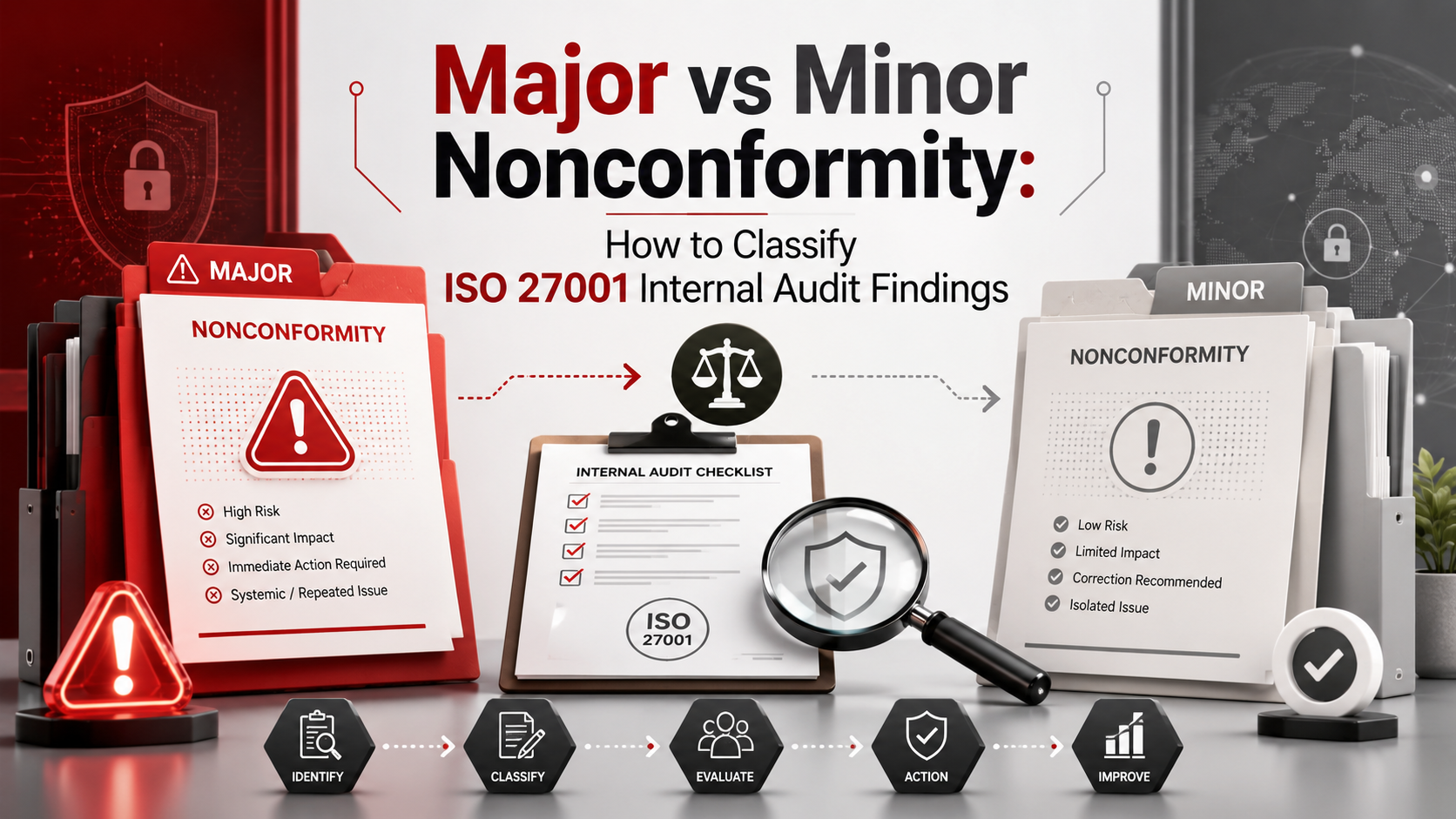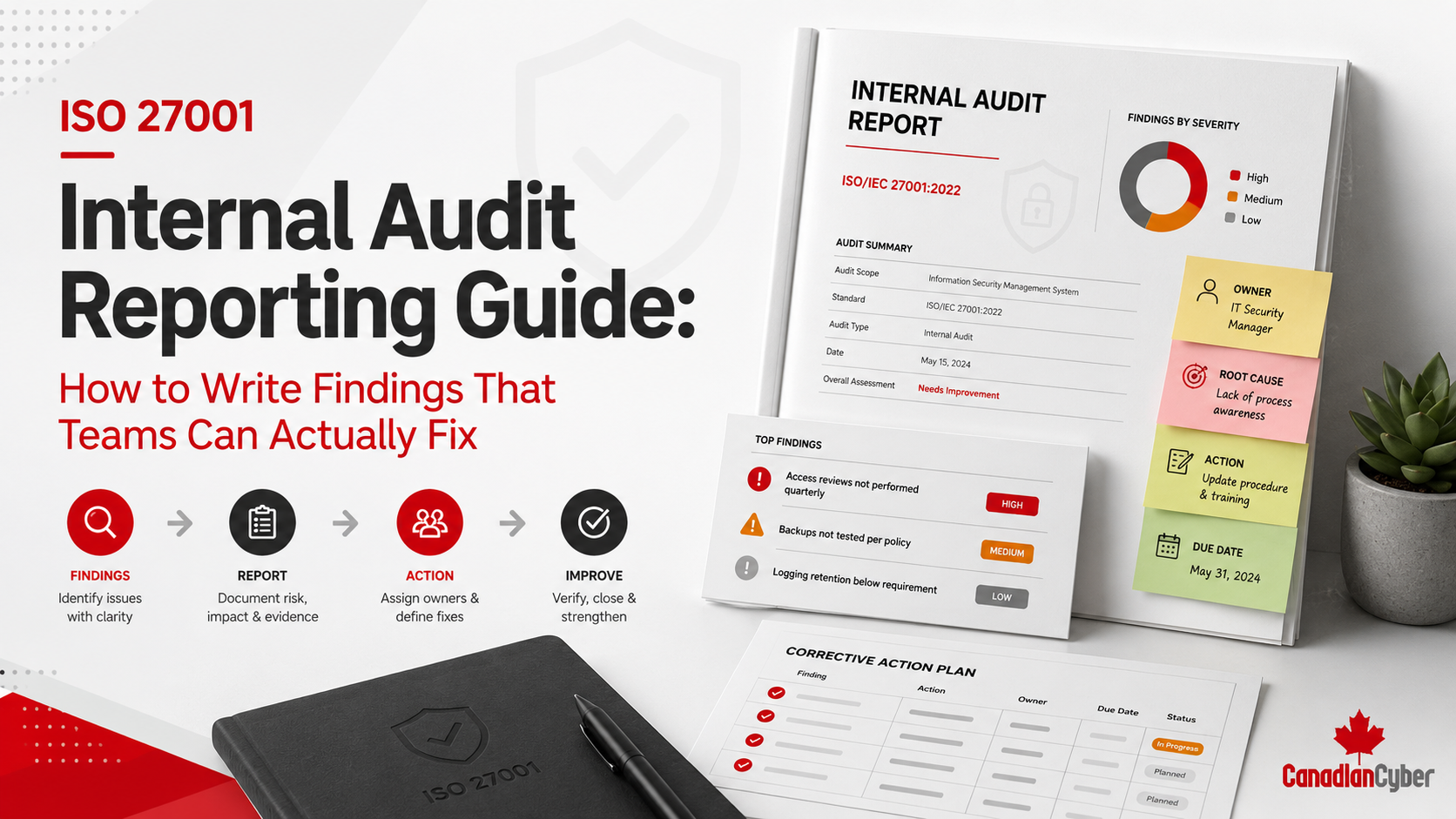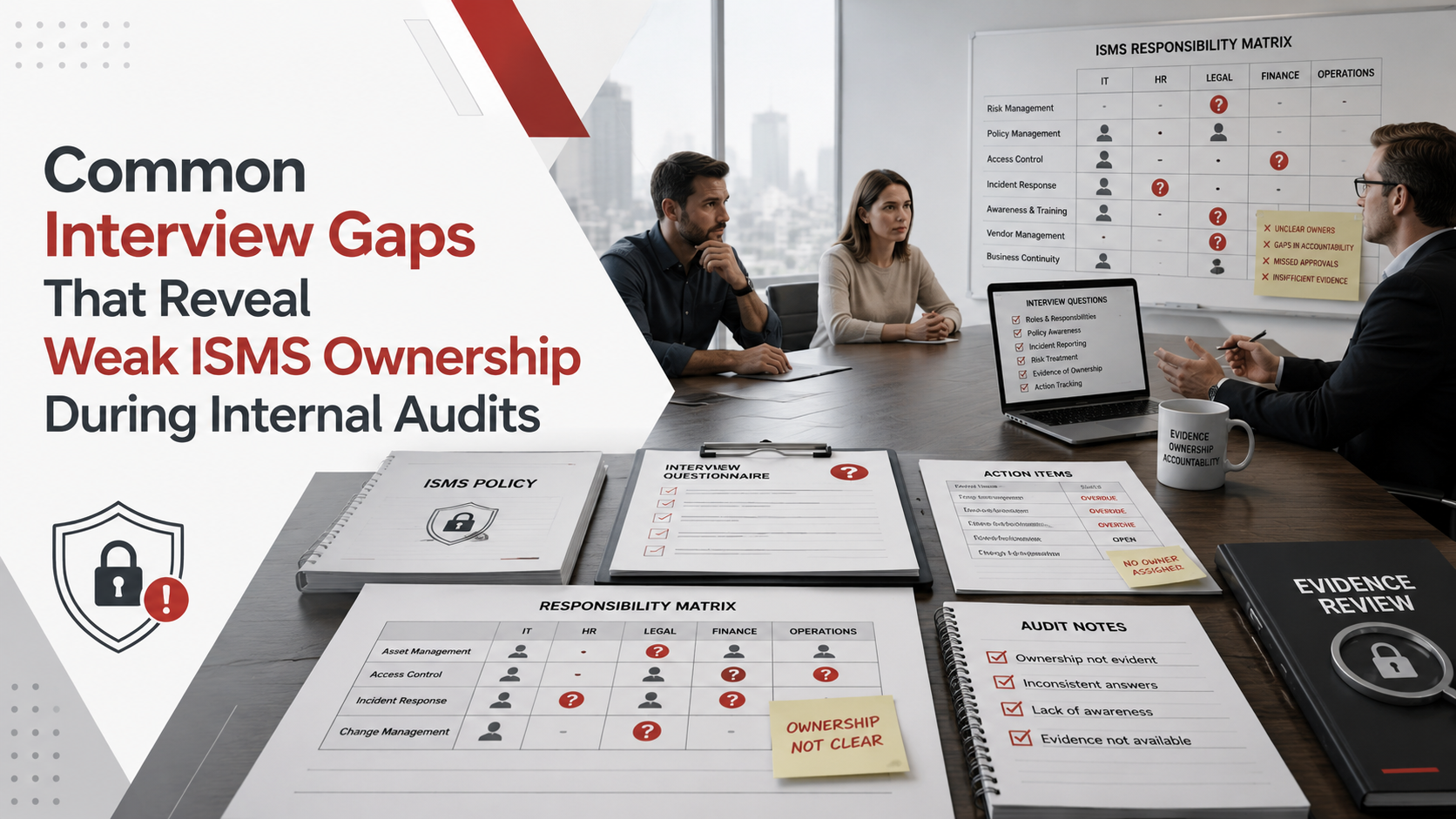
Internal Cybersecurity Audits 101: Keeping Your ISMS on Track
Why internal audits are the quiet engine behind a strong ISO 27001 program.
Most organizations focus heavily on the ISO 27001 certification audit.
They prepare policies. They collect evidence. They pass the audit.
Then something dangerous happens.
They relax. But ISO 27001 was never designed to be a one-time event. It was designed as a living management system and internal audits keep it alive.
Quick Snapshot
| Category | Detail |
|---|---|
| Topic | Internal ISMS audits for ISO 27001 programs |
| Who it’s for | ISMS owners, compliance leads, IT leaders, executives, audit teams |
| Purpose | Keep controls effective, evidence consistent, and risks current |
| Key insight | Internal audits prevent drift and reduce external audit surprises |
What an Internal Cybersecurity Audit Really Is (and What It Isn’t)
Internal audits are often misunderstood.
- It is not a mini external audit.
- It is not about finding fault.
- It is not about paperwork.
An internal ISMS audit exists for one reason: to verify that your security controls still work in real life.
In simple terms, an internal audit asks:
- Are we doing what we said we would do?
- Are controls still effective?
- Have risks changed?
- Are there gaps we haven’t noticed yet?
Why ISO 27001 Requires Internal Audits
ISO 27001 is built on continuous improvement. That means the standard expects organizations to:
- Monitor controls
- Review performance
- Identify weaknesses
- Fix issues early
Clause 9.2 of ISO 27001 specifically requires periodic internal audits of the ISMS.
Why? Because no organization stays static:
- Teams change
- Systems evolve
- Vendors are added
- Threats shift
Without internal audits, your ISMS slowly drifts away from reality.
A Modern Way to Think About Internal Audits
Instead of thinking of internal audits as “compliance work,” think of them as a health check for your security program.
Just like financial reviews catch accounting issues early, internal security audits catch:
- Outdated controls
- Broken processes
- Missing evidence
- Risk blind spots
- Policy vs. reality gaps
A Fictional Example: Certified, but Not Ready
This scenario is fictional but reflects common ISMS issues.
A Canadian professional services firm proudly achieved ISO 27001 certification.
Six months later:
- A new SaaS tool was introduced with no risk assessment
- Access reviews stopped happening
- Incident response procedures were never tested
- Policies were unchanged despite business growth
On paper, the company was “certified.” In practice, the ISMS was falling behind.
An internal audit revealed the gaps early and the organization fixed issues calmly, instead of failing the next external audit.
What an Effective Internal ISMS Audit Actually Covers
A strong internal audit does not try to audit everything at once. It focuses on what matters most.
1) Risk Management
- Are risk assessments current?
- Have new assets or threats been considered?
- Are risk treatments still valid?
2) Control Effectiveness
- Are controls operating as designed?
- Are they being followed consistently?
- Are there exceptions or workarounds?
3) Evidence and Records
- Is evidence being retained properly?
- Can controls be proven, not just described?
4) Policy Alignment
- Do policies reflect how teams actually work?
- Are staff aware of key requirements?
5) Incident and Change Handling
- Are incidents logged and reviewed?
- Are changes assessed for security impact?
The goal is a targeted audit that stays useful — not overwhelming.
Why Internal Audits Prevent External Audit Surprises
One of the biggest benefits of internal audits is predictability.
| Without internal audits | With internal audits |
|---|---|
| Last-minute panic | Fewer findings |
| Unexpected non-conformities | Faster external audits |
| Audit delays and higher costs | Cleaner evidence and confident conversations |
| Scrambling to fix drift | Issues caught early and handled calmly |
Internal Audits Support Continuous Improvement
ISO 27001 is not about perfection. It is about improvement.
Internal audits feed directly into:
- Corrective actions
- Management reviews
- Control updates
- Risk reassessments
Each audit cycle strengthens the ISMS. This is how certification becomes sustainable not fragile.
Why Many Organizations Struggle With Internal Audits
Internal audits often fail when:
- The auditor lacks independence
- The team audits their own work
- Audits are rushed or skipped
- Findings are ignored
- There is no follow-up
This is why many organizations choose outsourced or guided internal audits.
How Canadian Cyber Supports ISO 27001 Internal Audits
Our internal audits are constructive, practical, and risk-focused designed to keep your ISMS aligned with reality.
| Service | What it includes |
|---|---|
| ISO 27001 Internal Audit Services | Independent ISMS audits, control effectiveness testing, evidence reviews, non-conformity identification, practical remediation guidance |
| vCISO Oversight | Risk-based prioritization, realistic corrective actions, leadership reporting, and governance alignment |
| ISMS Maintenance & Continuous Improvement | Corrective action tracking, risk register updates, policy and control improvements, confident external audit preparation |
👉 Explore Our ISO 27001 Internal Audit Services
👉 Book a Free Consultation
👉 Learn How We Support Ongoing ISMS Compliance
Internal Audits Are a Sign of ISMS Maturity
Strong organizations do not fear internal audits. They rely on them.
Internal audits demonstrate:
- Accountability
- Discipline
- Transparency
- Commitment to security
They are one of the clearest indicators of a healthy ISMS.
Keep Your ISMS on Track Not Just Certified
ISO 27001 certification opens doors. Internal audits keep those doors open.
If your organization wants to maintain certification, reduce risk, and improve security year after year, internal audits are not optional. They are essential.
Ready to Strengthen Your ISMS With Internal Audits?
If you need independent insight into how your ISMS is really performing, we can help.
Stay Connected With Canadian Cyber
Follow Canadian Cyber for insights on ISO 27001, governance, and cybersecurity best practices: