

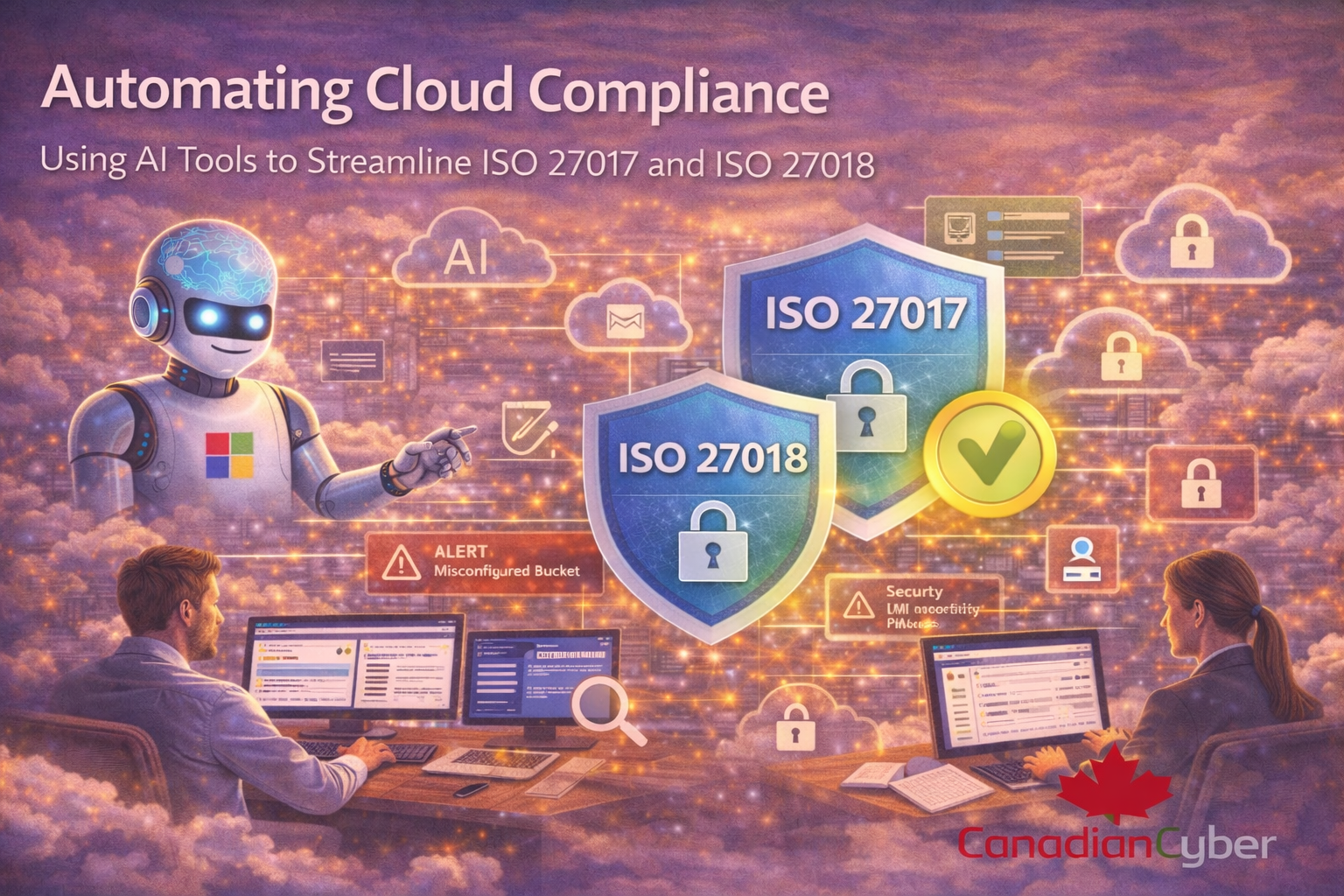
Automating Cloud Compliance: Using AI tools to streamline ISO 27017 and ISO 27018
Cloud compliance used to be manageable.
A few systems.
A few controls.
A few spreadsheets.
That era is over.
Today’s cloud environments are dynamic.
AI workloads spin up and down.
Data moves constantly.
Manual compliance cannot keep up.
Automation and AI-driven compliance tools change the pace.
Why Manual Cloud Compliance No Longer Works
Many organizations still manage compliance manually.
The pattern looks familiar:
- Spreadsheets for controls
- Folders for evidence
- Last-minute audit preparation
This creates real problems:
- Human error
- Missed misconfigurations
- Outdated evidence
- Audit panic
Cloud security and privacy standards like ISO 27017 and ISO 27018 demand consistency.
Automation delivers consistency.
What “Automating Compliance” Really Means
Compliance automation is not about replacing governance.
It is about supporting it.
Automated compliance means:
- Controls are monitored continuously
- Evidence is collected automatically
- Misconfigurations are flagged in real time
- Privacy risks are detected early
ISO 27017 and ISO 27018 become operational.
Not theoretical.
Quick Snapshot: Automated Cloud Compliance
| Category | Details |
|---|---|
| Primary goal | Reduce manual compliance workload |
| Standards supported | ISO 27017 (cloud security), ISO 27018 (cloud privacy) |
| Key enablers | AI tools, policy-as-code, continuous monitoring |
| Big win | Always audit-ready cloud environments |
| Outcome | Lower risk, faster audits, fewer surprises |
Automating ISO 27017: Cloud Security at Scale
ISO 27017 focuses on secure use of cloud services.
Automation makes these controls measurable.
Policy-as-Code for Secure Configuration
Cloud misconfigurations are one of the biggest risks.
Automation helps by:
- Defining secure baselines as code
- Continuously scanning cloud resources
- Flagging non-conformities instantly
Common examples
- Open storage buckets
- Missing encryption
- Over-permissive access roles
These checks directly support ISO 27017 cloud security controls.
Continuous Monitoring Instead of Periodic Reviews
ISO 27017 expects ongoing security.
AI-powered tools can:
- Monitor access patterns
- Detect anomalous behaviour
- Track configuration drift
Security teams stop reacting late.
They respond early.
Still discovering cloud issues during audits?
Automate ISO 27017 controls and catch problems earlier.
Automating ISO 27018: Privacy in the Cloud
ISO 27018 focuses on protecting personal data (PII) in cloud systems.
AI is especially powerful here.
AI-Assisted Data Classification
Many organizations do not fully know where PII lives.
AI tools can:
- Scan cloud storage and databases
- Identify personal and sensitive data
- Maintain live PII inventories
This supports ISO 27018 requirements around data visibility and control.
Automated Privacy Controls and Alerts
ISO 27018 requires strict control over PII use.
Automation enables:
- Alerts for unauthorized data access
- Monitoring of data sharing events
- Detection of policy violations
Privacy issues surface immediately.
Not months later.
Automated Evidence for Privacy Audits
Auditors expect proof.
Automation provides:
- Access logs
- Encryption status
- Data handling records
Evidence is generated as part of daily operations.
Not created under pressure.
Reducing Human Error and Audit Fatigue
Manual compliance depends on memory.
Automation depends on systems.
By automating ISO 27017 and ISO 27018 controls, organizations gain:
- Fewer mistakes
- Faster audits
- Consistent enforcement
- Clear accountability
Compliance shifts from effort to assurance.
AI Compliance Tools in Cloud and AI Environments
Modern compliance tools are smarter.
They use AI to:
- Correlate security and privacy signals
- Identify patterns and risks
- Prioritize remediation
For cloud-based AI systems, this is critical.
AI workloads generate complexity.
AI-powered compliance tools help teams manage complexity without slowing delivery.
Running AI workloads in the cloud without automation?
Streamline compliance and stay audit-ready year-round.
How Automation Supports Continuous Compliance
ISO standards are not point-in-time.
They require continuous assurance.
Automation ensures:
- Controls stay effective
- Evidence stays current
- Compliance keeps pace with change
This matters most in:
- Cloud-native environments
- DevOps and MLOps pipelines
- Rapidly scaling AI platforms
Common Automation Pitfalls to Avoid
Automation must be designed carefully.
Avoid:
- Automating broken processes
- Ignoring ownership and review
- Relying on tools without governance
Automation supports compliance.
It does not replace responsibility.
How Canadian Cyber Enables Compliance Automation
We help organizations move beyond spreadsheets.
Our services include:
- ISO 27017 and ISO 27018 automation design
- Cloud compliance tooling integration
- Policy-as-code and control mapping
- Continuous audit-readiness frameworks
Automation built for real audits.
Not demos.
Make Compliance Work Smarter, Not Harder
Cloud and AI environments will only get more complex.
Manual compliance will not scale.
Automation is no longer optional.
Stay Connected With Canadian Cyber
Follow us for practical insights on compliance, risk, and cybersecurity: