ISO 27001 • Internal Audit • Canada
ISO 27001 Internal Audit: A Step-by-Step Guide for Canadian Organizations
A Practical Playbook for First-Time ISMS Audits
No jargon. No panic. Just a clear process you can run with confidence.
For many organizations, the ISO 27001 internal audit feels intimidating.
Where do we start?
What do we check?
What if we miss something?
The good news is this:
An internal audit is not about catching people out.
It’s about making sure your ISMS actually works.
This guide walks you through the entire ISO 27001 internal audit process, step by step without jargon or panic.
Why Internal Audits Matter More Than You Think
ISO 27001 does not treat internal audits as optional.
Clause 9.2 requires them.
But beyond compliance, internal audits help you:
- Discover gaps early
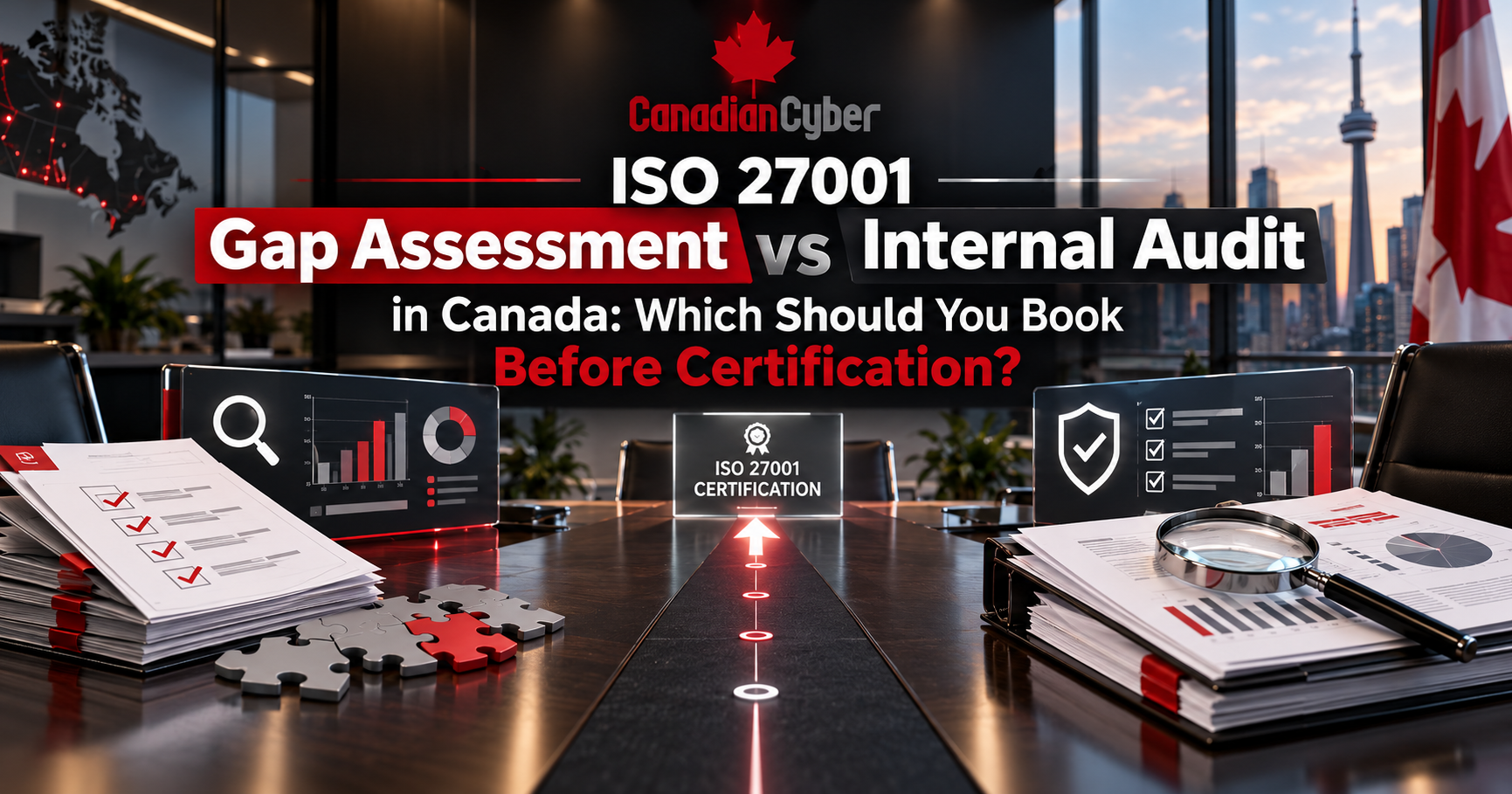
- Prepare for certification audits
- Improve how security actually operates
- Avoid last-minute surprises
For Canadian organizations, internal audits are often the difference between a smooth certification and a stressful one.
Quick Snapshot: ISO 27001 Internal Audit (Canada)
| Who it’s for | Organizations implementing or maintaining ISO 27001 |
| Purpose | Verify ISMS effectiveness before certification |
| Required by | ISO 27001 Clause 9.2 |
| Best timing | Before Stage 1 or Stage 2 audits |
| Outcome | Clear gaps, clear fixes, higher confidence |
Step 1: Plan the Internal Audit (Don’t Skip This)
Every strong audit starts with planning.
Before reviewing anything, define:
Audit Scope
What parts of the ISMS are being audited?
- Entire organization
- Specific departments
- Specific locations or systems
For Canadian SMEs, over-scoping is a common mistake.
Start realistic.
Audit Objectives
Ask clearly:
- Are controls implemented as planned?
- Are they effective?
- Are we meeting ISO 27001 requirements?
Audit Criteria
Typically includes:
- ISO 27001 clauses
- Annex A controls
- Your own policies and procedures
Planning prevents chaos later.
Step 2: Prepare Your Audit Checklist
This is where many first-timers struggle.
A good ISO 27001 audit checklist maps:
- ISO clauses
- Annex A controls
- Expected evidence
Your checklist should help you verify:
- Policies exist
- Controls are implemented
- Evidence proves they operate
This is where structured templates save time.
Step 3: Conduct the Audit (What Actually Happens)
This is the heart of the internal audit.
It usually includes three activities.
1) Interviews
Talk to control owners and staff.
Ask simple questions:
- “How does this process work?”
- “When was it last reviewed?”
- “What happens if it fails?”
You’re validating reality—not testing memory.
2) Evidence Review
Auditors don’t rely on statements.
They look for proof, such as:
- Logs
- Tickets
- Reports
- Meeting minutes
- Access reviews
If it’s not documented, it didn’t happen (in audit terms).
3) Control Testing
Confirm controls work as intended.
Examples include:
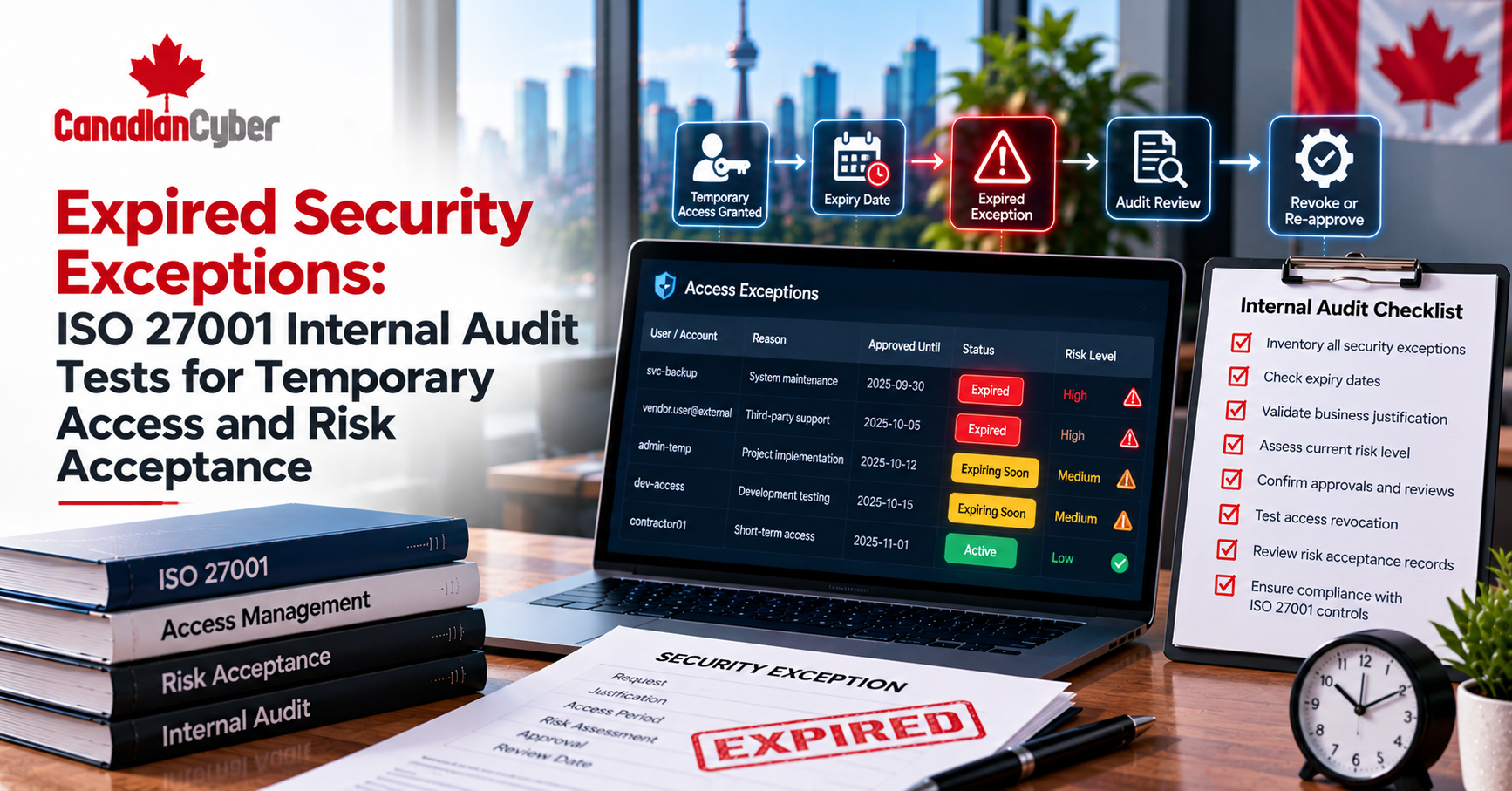
- Verifying access revocations
- Reviewing incident records
- Checking backup test results
This step often reveals gaps early—by design.
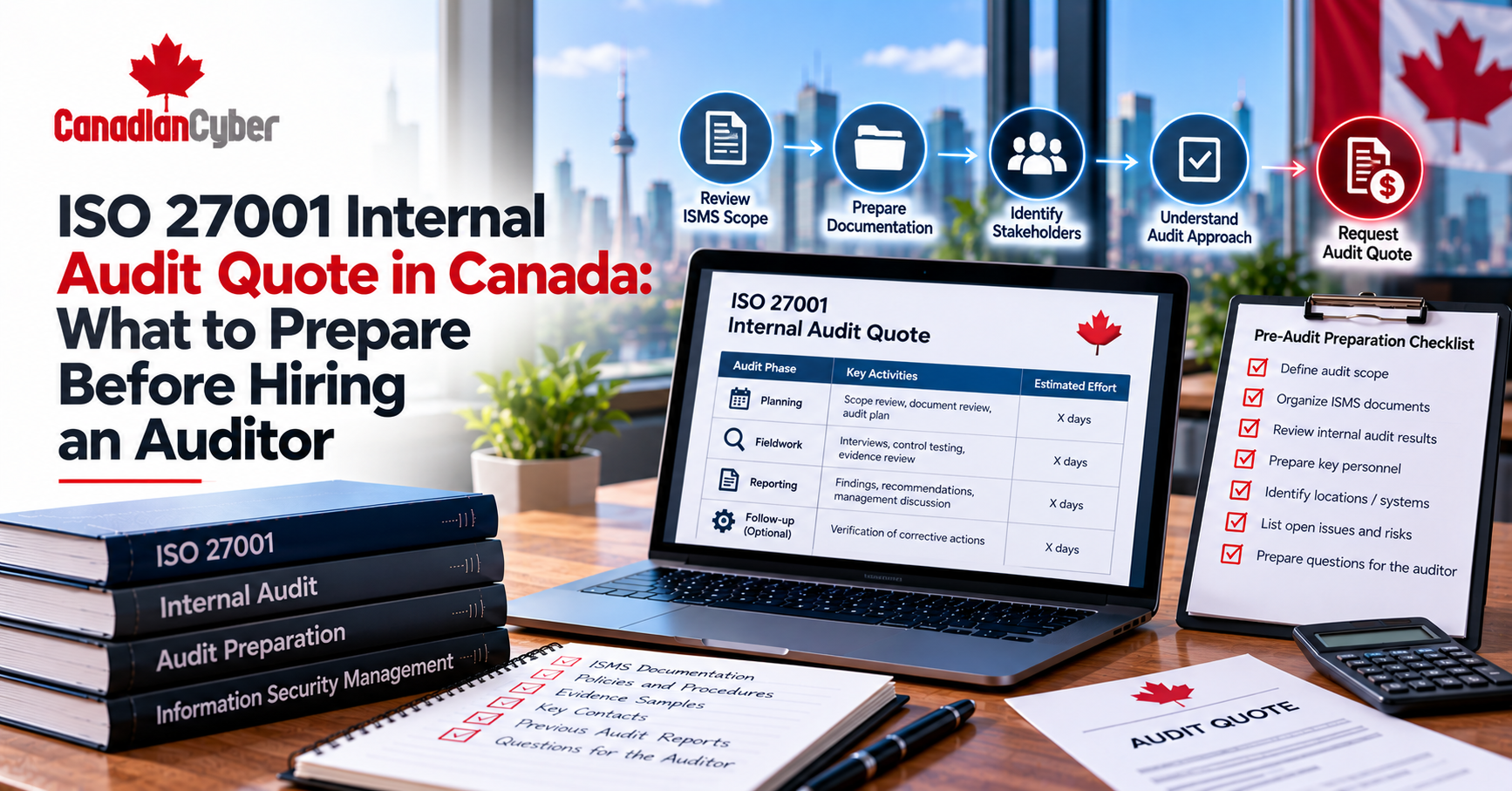
Not sure what evidence auditors expect?
Use a structured ISO 27001 internal audit checklist and simplify your audit with proven templates.
Step 4: Identify and Classify Findings
Not every issue is a failure.
Internal audit findings usually fall into:
- Nonconformities (requirements not met)
- Observations (weaknesses or improvement areas)
- Opportunities for improvement
For Canadian organizations, common findings include:
- Policies not reviewed annually
- Incomplete risk treatment records
- Weak supplier security documentation
Finding issues now is success not failure.
Step 5: Write a Clear Internal Audit Report
A good audit report is practical.
It should include:
- Audit scope and dates
- Summary of findings
- Evidence reviewed
- Clear references to ISO clauses
- Actionable recommendations
Avoid vague language.
Clarity helps leadership act.
Step 6: Corrective Actions and Follow-Up
This step is often rushed but it matters.
For each finding:
- Assign an owner
- Define corrective action
- Set a realistic deadline
- Track completion
ISO 27001 expects follow-up.
Auditors will ask for it.
Step 7: Management Review Integration
Your internal audit does not live in isolation.
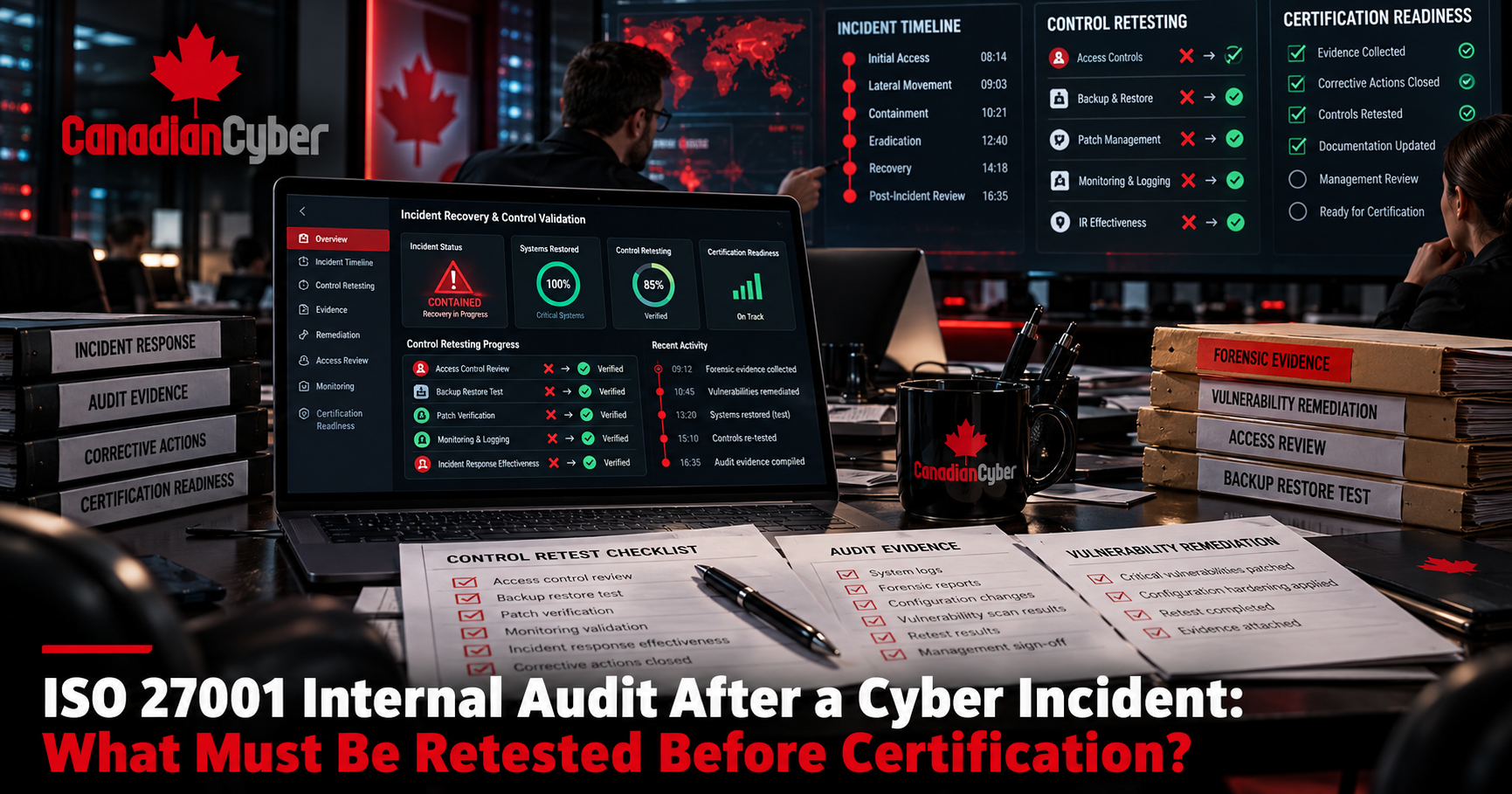
Its results must feed into:
- Management review meetings
- Risk updates
- ISMS improvement plans
This closes the loop.
And strengthens your ISMS maturity.
Preparing for certification or surveillance audits?
Run a structured ISO 27001 internal audit first and reduce risk before external auditors arrive.
Common ISO 27001 Internal Audit Mistakes (Canada)
Canadian organizations often struggle with:
- Auditing their own work without independence
- Treating the audit as a checklist exercise
- Waiting too close to the certification audit
- Underestimating documentation expectations
These mistakes are avoidable with the right approach.
How Canadian Cyber Supports ISO 27001 Internal Audits
We support organizations across Canada with:
- ISO 27001 internal audit playbooks
- Ready-to-use checklists and templates
- Independent internal audits
- Pre-certification readiness reviews
Our goal is simple:
Help you walk into certification confident.
Not guessing.
Final Thought
An ISO 27001 internal audit is not about passing.
It’s about understanding.
When done properly, it gives you control over your certification journey before someone else judges it.
That’s real audit readiness.
Ready to strengthen your ISMS with a structured internal audit?
Stay Connected With Canadian Cyber
Follow us for practical insights on ISO standards, audits, and cybersecurity: