

ISO 27001
ISMS Scope Change
Internal Audit
Canada
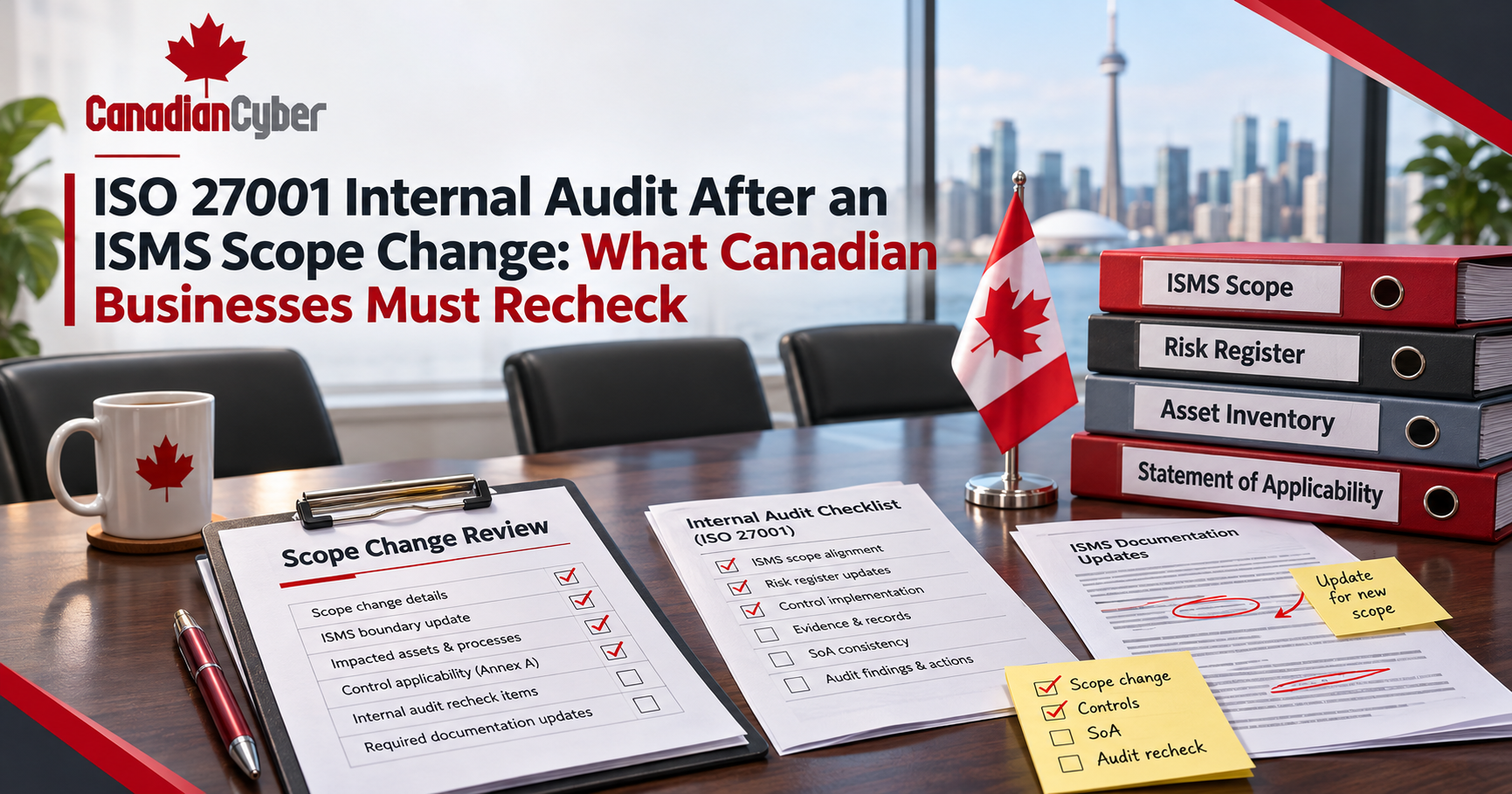
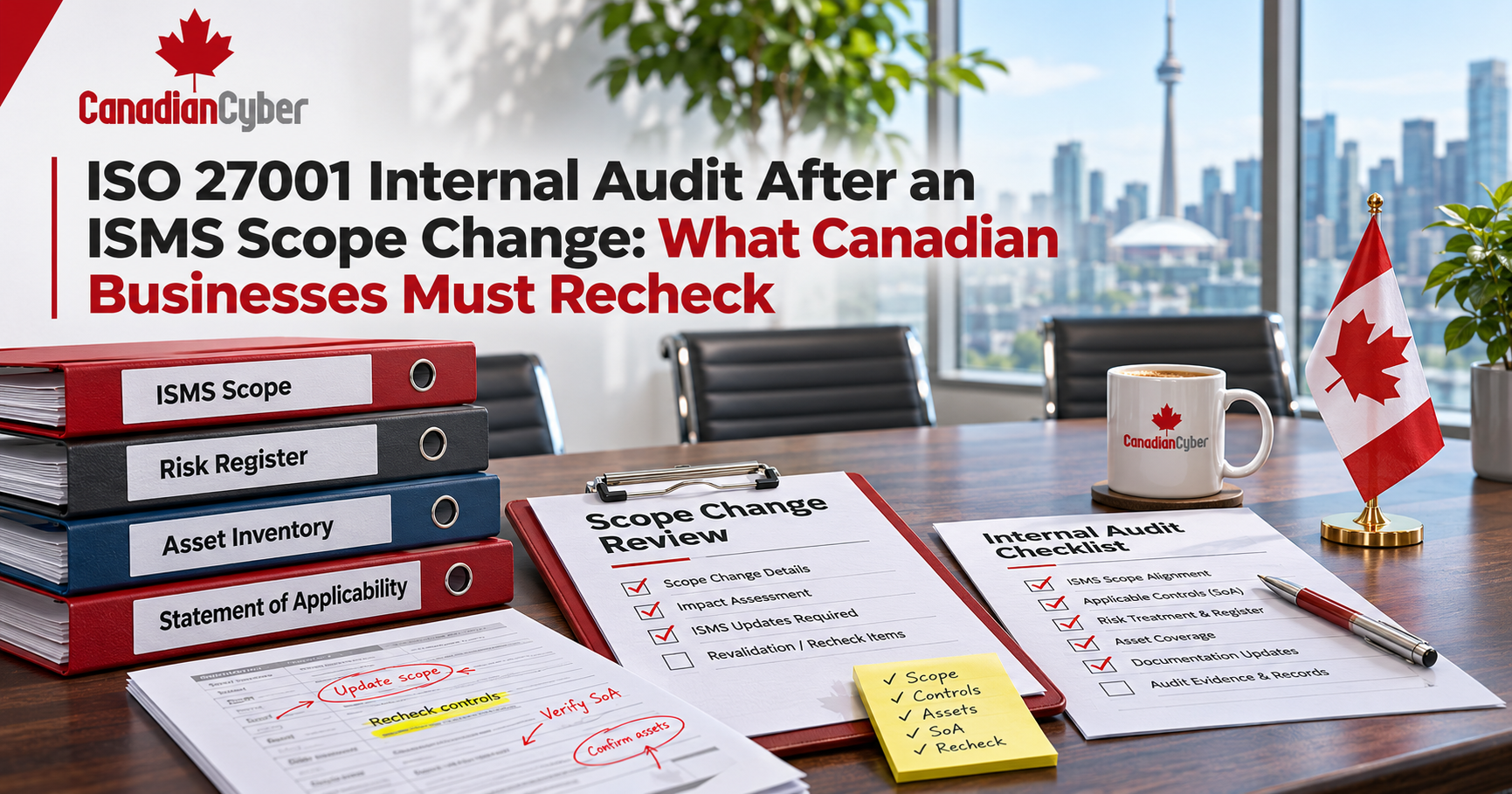
ISO 27001 Internal Audit After an ISMS Scope Change: What Canadian Businesses Must Recheck
Added a product, office, cloud platform, acquisition, supplier, or business unit to your ISO 27001 scope? Learn what should be reassessed, retested, and evidenced before your next certification assessment.
Your ISO 27001 Scope Changed. Did Your Internal Audit Change Too?
Consider a Canadian SaaS company that was originally certified for one product running in Azure.
Six months later, it launches a second platform in AWS.
New developers join.
A new supplier receives production access.
More customer data enters the environment.
The organization updates its ISMS scope statement.
Then it stops.
That creates a problem.
A meaningful ISO 27001 internal audit after a scope change should test more than the wording in the scope document.
It should determine whether risks, controls, owners, suppliers, evidence, and audit coverage changed with the business.
Quick Answer
What Must You Recheck After an ISMS Scope Change?
Scope → Risk Assessment → Statement of Applicability → Assets → Suppliers → Access → Control Owners → Evidence → Internal Audit → Management Review
The size of the review should match the significance of the change.
Adding one low-risk application is very different from adding an acquired business, customer-facing platform, or new cloud environment.
What Is an ISO 27001 Scope Change?
A scope change happens when the boundary of your ISMS changes.
Common examples include:
Some changes are planned. Others happen gradually.
That is why internal audit should compare the documented scope with actual operations.
1. Confirm What Actually Changed
Before auditing controls, define the change clearly.
Product B and its supporting AWS environment were added to the existing certification scope.
Now identify everything that came with Product B.
The scope statement may be one sentence. The audit impact may involve dozens of controls.
2. Reassess Information Security Risks
A significant scope change can introduce risks that did not exist during the previous assessment.
Example: Acquisition
An acquired company may introduce:
- Legacy systems.
- Unsupported software.
- New administrators.
- Different suppliers.
- Different backup practices.
- New personal information.
- Weak access controls.
- New regulatory or contractual requirements.
Your existing risk register may no longer tell the whole story.
3. Recheck the Statement of Applicability
A changed risk environment may affect your Statement of Applicability.
Review whether:
- New controls became applicable.
- Previous exclusions remain justified.
- Implementation descriptions are accurate.
- Control owners changed.
- New evidence is required.
Example
Your original environment did not include software development.
Then a development team enters the scope.
Now areas such as source-code access, secure development, security testing, change management, and development environments require more attention.
4. Update Assets and Information Flows
Scope expansion usually adds assets.
That includes more than laptops and servers.
Source Code → CI/CD → Cloud Infrastructure → Database → Customer Data → Logs → Backups
For new assets, ask:
- Who owns them?
- Where is the data stored?
- Who can access it?
- Which suppliers support it?
- How is it backed up?
- How is it monitored?
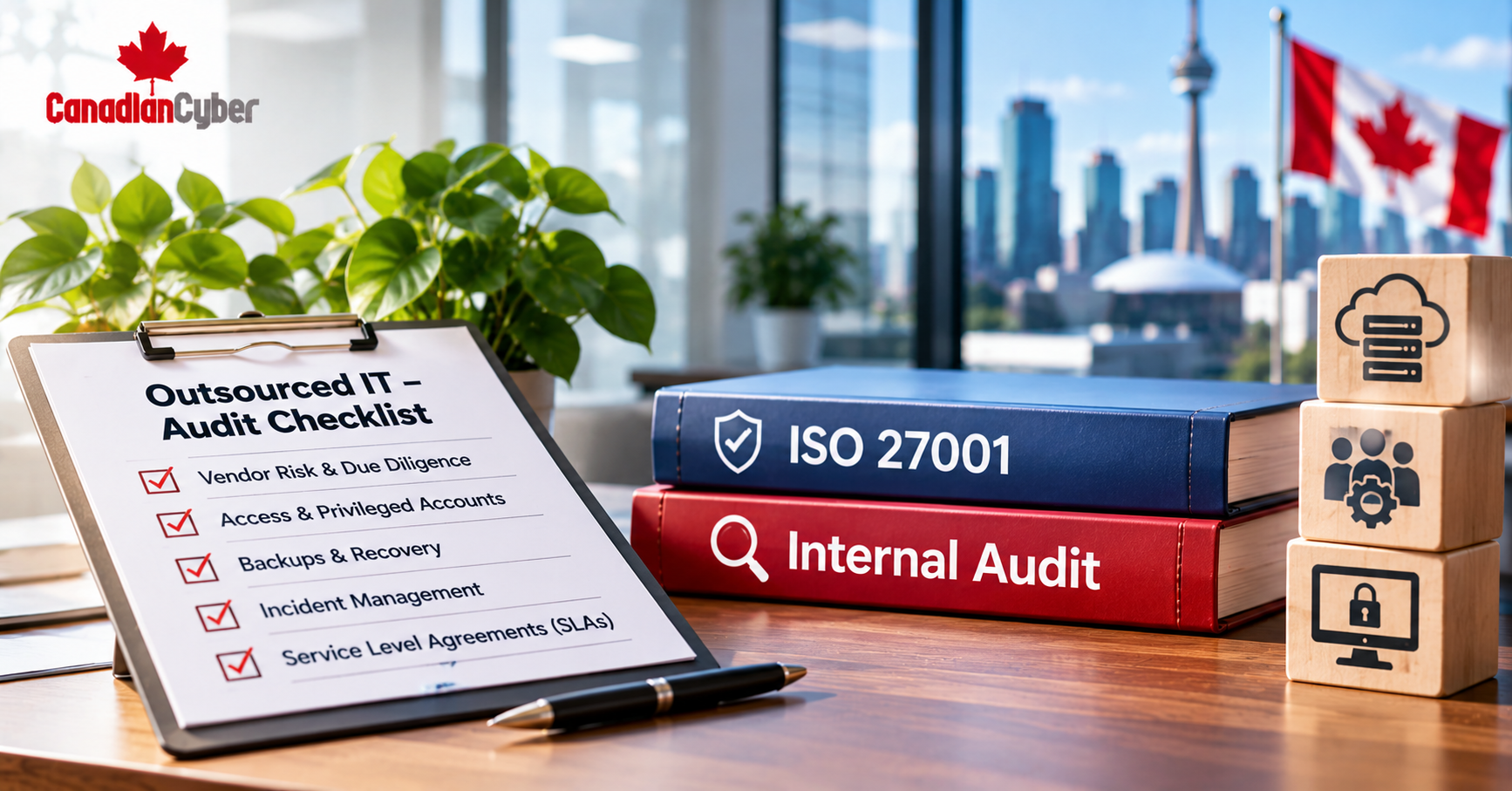
5. Review New Suppliers and Outsourced Services
A scope change often introduces new third parties.
MSP
External Developers
Payment Processor
Support Platform
Backup Provider
Internal audit should verify:
- Supplier risk assessment.
- Security requirements.
- Contractual responsibilities.
- Access rights.
- Incident notification.
- Monitoring.
- Periodic review.
Has Your ISMS Changed Since Your Last Internal Audit?
If you added a product, cloud platform, supplier, office, acquisition, or business unit, your previous audit may no longer provide enough assurance.
Canadian Cyber can independently test the changed areas before certification, surveillance, or recertification.
6. Retest User and Privileged Access
Scope changes commonly create access-control gaps.
A new environment may introduce:
- New employees.
- Contractors.
- Cloud administrators.
- MSP technicians.
- Service accounts.
- Application administrators.
The auditor should sample actual access.
Then verify:
Also confirm that the new system is part of your regular access-review process.
7. Check Whether Existing Procedures Still Work
Scope changes can make old procedures inaccurate.
For example, your procedures may describe Azure in detail. Then AWS enters the scope.
Now review whether the procedures address:
- AWS logging.
- AWS privileged access.
- Backups.
- Security configuration.
- Incident investigation.
- Vulnerability management.
8. Assign Control Owners for the New Scope
This step is easy to miss.
A new business unit may enter the ISMS, but its employees may not know they now own ISO 27001 controls.
For each changed area, identify:
Make responsibilities explicit before audit day.
9. Update Your Internal Audit Coverage
Do not simply reuse last year’s audit plan.
Corporate IT + Product A
Corporate IT + Product A + Product B + AWS + External Development Provider
Repeating the previous audit unchanged would leave major parts of the new environment untested.
| ISMS Change | What the Internal Auditor Should Recheck |
|---|---|
| New SaaS Product | Cloud, development, data, access, logging |
| New Office | Physical security, assets, people, networking |
| New Cloud Environment | Privileged access, configuration, backup, monitoring |
| Acquisition | Risks, inherited systems, access, suppliers, policies |
| New MSP | Administrative access, responsibilities, incidents, backups |
| New Development Team | Source code, CI/CD, change management, testing |
| New Business Unit | Awareness, roles, systems, access, evidence |
| Scope Reduction | Data retention, access removal, assets, dependencies |
10. Review Evidence Generated Since the Change
Do not only verify that controls were designed.
Look for evidence that they have operated.
A new environment may already have produced:
11. Check Previous Findings Against the New Environment
Previous corrective actions may not automatically extend to newly added systems.
Weak privileged-access reviews.
Access review process fixed for Azure.
When AWS was added, did the corrective action extend to AWS too?
Internal audit should test whether lessons learned were carried forward.
12. Make Sure Management Knows What Changed
A meaningful scope change may affect:
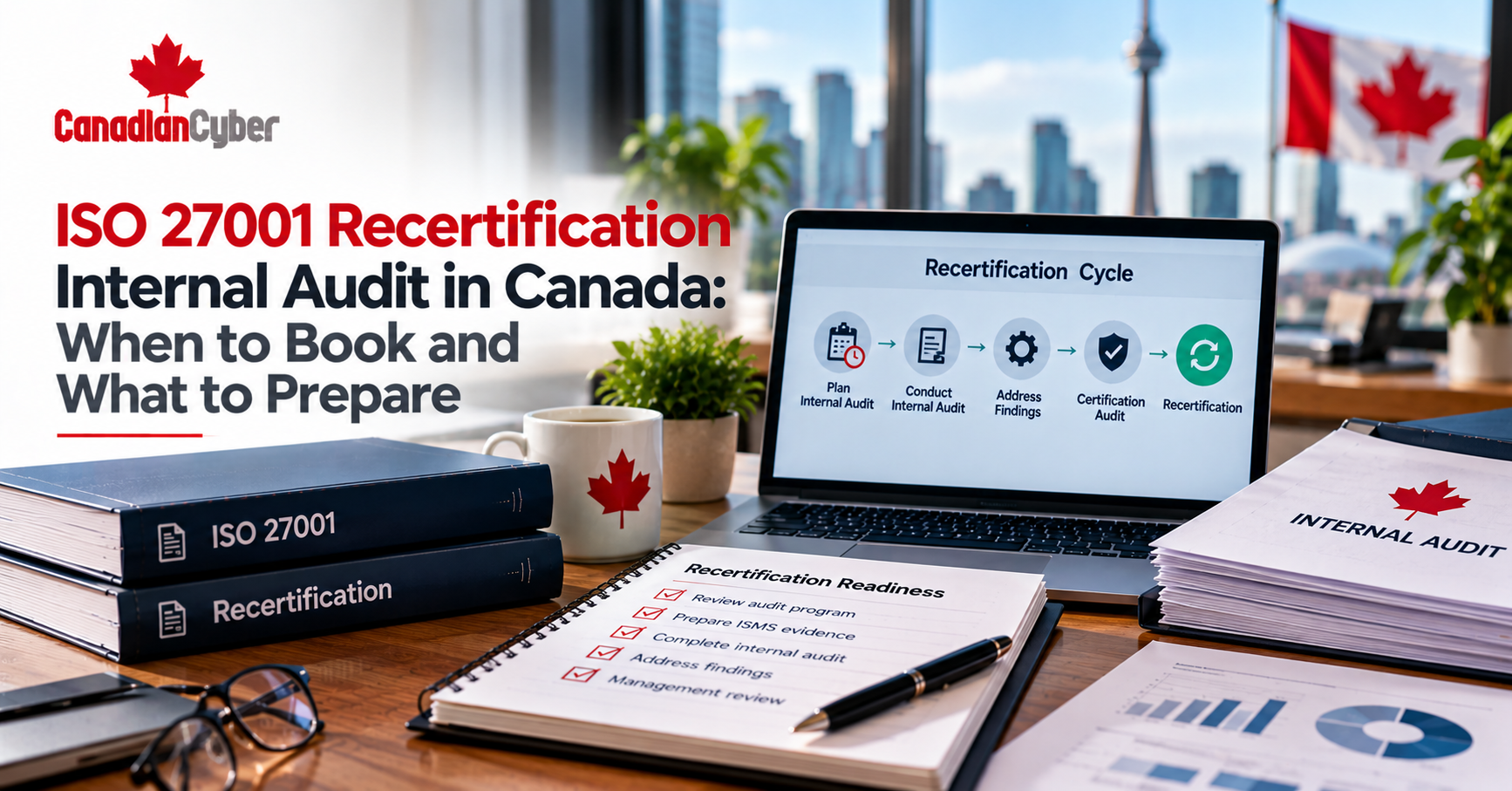
When Should You Schedule the Internal Audit?
Do not wait until the certification auditor is already booked for next week.
Scope Change
↓
Update Risks and Controls
↓
Generate Operating Evidence
↓
Internal Audit
↓
Correct Findings
↓
Verify Significant Fixes
↓
Management Review
↓
Certification Assessment
The audit needs enough time to create value. If a significant problem is found, your team should still have time to fix it.
Practical ISMS Scope-Change Audit Checklist
☐ Revised ISMS scope is documented.
☐ New systems and locations are identified.
☐ Interfaces and dependencies are understood.
☐ New risks were assessed.
☐ Risk treatment was updated.
☐ Statement of Applicability remains accurate.
☐ New assets were inventoried.
☐ New suppliers were assessed.
☐ New privileged access was approved.
☐ New systems are included in access reviews.
☐ Procedures reflect current operations.
☐ Control owners are assigned.
☐ Evidence has been generated.
☐ Internal audit coverage includes the change.
☐ Previous corrective actions still work.
☐ Management reviewed significant impacts.
☐ Certification body was contacted where necessary.
Need an Independent Audit of Your Changed ISMS?
Canadian Cyber can test whether your updated scope, risks, controls, suppliers, access, evidence, and internal audit coverage are ready for your next certification assessment.
Frequently Asked Questions
Does every ISO 27001 scope change require a full new internal audit?
No. The response should be proportionate to the change. A major acquisition or new customer platform may justify significant additional testing, while a small administrative adjustment may require much less.
Should we update the risk assessment after a scope change?
If the change introduces meaningful new assets, threats, suppliers, people, processes, or dependencies, reassess the related risks so the risk register reflects the organization that exists today.
Should the Statement of Applicability be reviewed?
Yes. Determine whether the revised risk environment changes control applicability, implementation, ownership, or evidence expectations.
What if we are already ISO 27001 certified?
If the change affects the certified scope, locations, legal entities, or other important certification details, discuss the change with your certification body.
Can the internal audit be performed remotely?
Often, yes. Cloud systems, access, risk records, suppliers, development evidence, and interviews can frequently be reviewed through secure screen sharing and remote evidence review. Physical controls may still require onsite testing.
When should we hire an independent internal auditor?
Consider independent support when your own team implemented the change, certification is approaching, the new environment has not been audited, or management needs objective assurance.
The Takeaway
Updating the scope statement is only step one.
A scope change can affect:
Your internal audit should follow the change all the way through:
What Changed?
↓
What New Risks Appeared?
↓
Which Controls Apply?
↓
Were They Implemented?
↓
Can You Prove They Operate?
If that chain breaks anywhere, fix the gap before the external auditor finds it.
Has Your ISMS Scope Changed Since Your Last Audit?
A new product, office, cloud platform, acquisition, supplier, business unit, or outsourced service may introduce risks your previous internal audit never tested.
Canadian Cyber can independently verify that your revised scope, risks, controls, suppliers, access, and evidence are ready for your next certification assessment.
Stay Connected With Canadian Cyber
Follow Canadian Cyber for practical guidance on ISO 27001 internal audits, certification readiness, risk management, scope changes, and ISMS improvement.