

ISO 27001
Small Business
Internal Audit
Canada
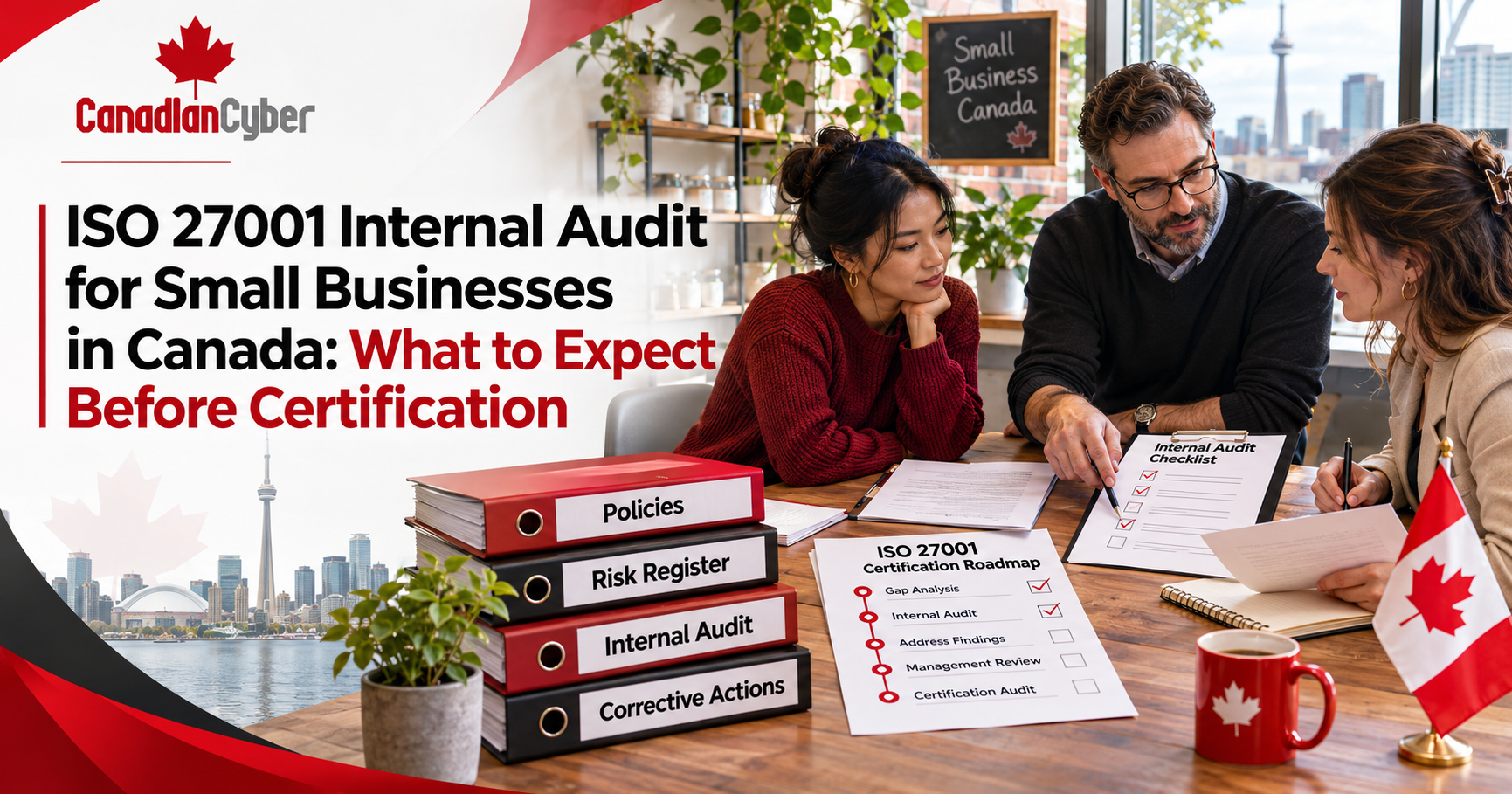
ISO 27001 Internal Audit for Small Businesses in Canada: What to Expect Before Certification
Small businesses do not need an enterprise-sized audit process. Learn what your ISO 27001 internal audit should cover, which evidence to prepare, who may be interviewed, and how to get ready for certification.
Does ISO 27001 Internal Audit Have to Be Complicated for a Small Business?
You may have 15 employees.
Perhaps you have 40.
Your entire security and compliance function may be handled by only one or two people.
Then you reach Clause 9.2 and realize:
You still need an internal audit.
That can sound intimidating.
Do you need weeks of interviews?
Do you need hundreds of documents?
Does every employee need to be interviewed?
Do you need a full-time internal auditor?
Usually, the answer is simpler.
An ISO 27001 internal audit for small businesses should reflect the real size, risks, technology, scope, and complexity of the ISMS.
The audit still needs to be objective and evidence-based. However, small does not have to mean complicated.
Quick Answer
What Should a Small-Business ISO 27001 Internal Audit Test?
Before certification, expect the internal auditor to test whether:
Your internal audit should test the ISMS you actually operate. It should not create an enterprise-sized compliance exercise that your team cannot maintain.
Does a Small Business Really Need an ISO 27001 Internal Audit?
Yes.
Company size does not remove the internal audit requirement.
However, the audit should reflect:
- Your certification scope.
- Your processes.
- Your technology environment.
- Your information security risks.
- Your locations.
- Your previous audit results.
- Changes to your organization.
What Makes a Small-Business Internal Audit Different?
Small organizations usually have fewer management layers.
The CEO may also be the risk owner.
The IT manager may manage security.
The same employee may own access control, backups, incident response, and supplier management.
This can make the ISMS easier to understand.
However, it can create another challenge:
What Happens During a Small-Business ISO 27001 Internal Audit?
A well-planned audit should feel structured rather than disruptive.
Scope Confirmation
↓
Audit Planning
↓
Document Review
↓
Interviews
↓
Evidence Sampling
↓
Findings
↓
Closing Meeting
↓
Internal Audit Report
↓
Corrective Actions
1. The Auditor Confirms Your ISMS Scope
First, the auditor needs to understand what is being certified.
The ISMS covers the development, hosting, support, and operation of the company’s SaaS platform, including supporting corporate IT systems and employees.
A small business should clearly explain:
- Products or services in scope.
- Employees included.
- Locations included.
- Cloud platforms used.
- Important suppliers supporting the service.
2. The Auditor Reviews Your Risk Assessment
Risk management is central to the ISMS.
The auditor may review:
- Risk methodology.
- Risk register.
- Risk owners.
- Risk scoring.
- Risk treatment.
- Risk acceptance.
- Statement of Applicability.
They may ask:
3. The Auditor Reviews the Statement of Applicability
The Statement of Applicability connects your risk-treatment decisions with applicable Annex A controls.
The auditor may review:
- Which controls are applicable.
- Which controls are excluded.
- Why decisions were made.
- Whether implementation status is accurate.
- Whether evidence supports that status.
A.5.18 Access Rights — Implemented
Show me the access-review evidence.
4. Expect Interviews, But Not With Everyone
A small business does not usually need every employee interviewed.
The auditor will focus on people who own or perform important processes.
One employee may cover several of these roles. That is normal in a small company.
5. Expect Evidence Sampling
The auditor does not need every record your company has ever created.
Risk-based sampling is more practical.
Sample employees and compare access with business need.
Sample recent departures.
Review selected important vendors.
Trace selected findings through remediation.
Sample recent production changes.
Review selected security incidents.
6. Access Control Will Usually Get Attention
Access control is one of the most practical areas to test.
Expect the auditor to review:
- New-user approvals.
- Departing users.
- Privileged accounts.
- MFA.
- Shared accounts.
- Periodic access reviews.
- Service accounts.
Employee access is removed immediately after termination.
Select recent departures and verify whether access was actually removed.
Small Team? Your Internal Audit Can Still Be Practical
Canadian Cyber can independently review your ISMS without turning the audit into an enterprise-sized exercise.
We focus on your actual scope, risks, controls, technology, evidence, and certification timeline.
Request Your ISO 27001 Internal Audit Quote from Canadian Cyber
7. Supplier Security Still Matters for Small Companies
Small businesses often rely heavily on external providers.
Examples include:
Microsoft 365
Azure
AWS
Payroll Systems
SaaS Applications
MSPs
Developers
The auditor may review:
- Supplier register.
- Supplier criticality.
- Security assessments.
- Contracts.
- Supplier reviews.
- Data-processing arrangements.
Use a risk-based approach. High-risk suppliers need more attention than low-risk vendors.
8. The Auditor Will Review Real Security Operations
Your ISMS should produce evidence through normal business operations.
The exact evidence depends on your organization. A professional-services business will not be tested exactly like a SaaS company with production cloud infrastructure.
9. You Do Not Need Hundreds of Policies
Small businesses sometimes overbuild ISO 27001.
They create a separate document for every control.
Then nobody uses them.
That does not automatically make the ISMS stronger.
10. Prepare Operational Evidence Before the Audit
One of the biggest differences between implementation and audit readiness is evidence.
We perform quarterly access reviews.
Q1 review completed.
Q2 review completed.
Access removed where required.
That is what proves the process actually operates.
Small-Business ISO 27001 Internal Audit Evidence Checklist
Core ISMS
- ISMS scope.
- Risk assessment.
- Risk treatment plan.
- Statement of Applicability.
- Information security policy.
- Security objectives.
People and Access
- Employee list.
- Joiner records.
- Leaver records.
- Access approvals.
- Access reviews.
- Awareness training.
Technology
- Asset inventory.
- Vulnerability reports.
- Patch evidence.
- Backup reports.
- Restore-test evidence.
- Security logs.
- Change records.
Suppliers
- Supplier register.
- Critical supplier reviews.
- Relevant contracts.
Governance
- Internal audit program.
- Previous findings.
- Corrective-action register.
- Management review records.
How Long Will a Small-Business ISO 27001 Internal Audit Take?
There is no universal number of audit days for every small business.
Audit effort can depend on:
- ISMS scope.
- Employee count.
- Locations.
- Technology.
- Business complexity.
- Evidence maturity.
- Number of control owners.
- Remote or onsite delivery.
Can a Small-Business ISO 27001 Internal Audit Be Remote?
Often, yes.
Remote audits may use:
Screen Sharing
SharePoint
Secure File Sharing
Live System Walkthroughs
Onsite verification may still be useful where physical-security controls form an important part of the audit scope.
What Findings Should a Small Business Expect?
A successful audit does not mean the auditor finds nothing.
A useful audit may identify:
Finding these issues before certification is useful. That is one of the main purposes of internal audit.
What Happens After the Internal Audit?
The audit report should not simply sit in a folder.
Finding
↓
Corrective Action
↓
Owner
↓
Target Date
↓
Evidence
↓
Verification
↓
Closure
Example
Quarterly access review was required but not completed.
Complete the review and establish a recurring reminder.
Confirm that the review occurred and inappropriate access was removed.
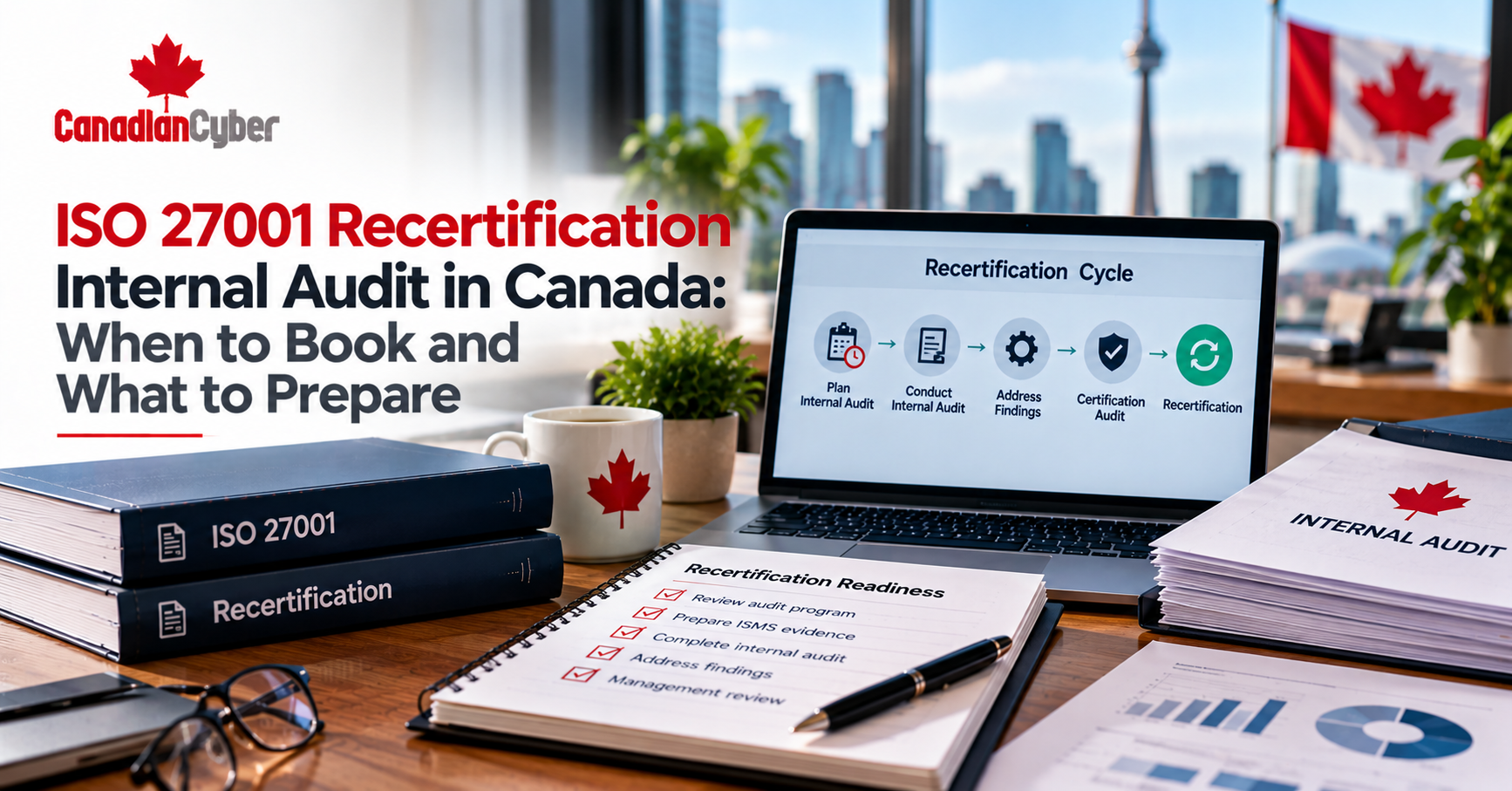
How Does Internal Audit Fit Before Certification?
Implement ISMS
↓
Operate Controls
↓
Internal Audit
↓
Correct Findings
↓
Verify Significant Fixes
↓
Management Review
↓
Stage 1 / Stage 2 Certification
Do not schedule the internal audit so late that your team has no time to correct important findings.
Should a Small Business Hire an Independent Internal Auditor?
It can be a practical option.
External support may make sense when:
- The compliance lead implemented most of the ISMS.
- No internal employee has audit experience.
- Your team cannot provide enough independence.
- Certification is approaching.
- Management wants an objective readiness view.
- You want technical and management-system evidence tested together.
What Should You Ask Before Hiring an Auditor?
- Have you audited small businesses before?
- Do you understand our industry?
- Will you test real evidence?
- Can the audit be remote?
- How will auditor independence be protected?
- What should we prepare?
- What will the final report include?
- Will findings be clearly explained?
- Can corrective actions be retested?
- How early should we book before certification?
What Information Should You Provide for an Internal Audit Quote?
Providing useful information helps the auditor scope the engagement properly.
Ready to Scope Your Small-Business Internal Audit?
Send Canadian Cyber your employee count, ISMS scope, locations, certification timeline, technology environment, and audit expectations. We can use that information to understand your audit requirements.
Request Your ISO 27001 Internal Audit Quote from Canadian Cyber
Frequently Asked Questions
Does a small business need an ISO 27001 internal audit?
Yes. Company size does not remove the internal audit requirement when an organization is implementing and maintaining an ISO 27001 ISMS.
Is ISO 27001 suitable for small businesses?
Yes. Small organizations can use ISO 27001 and design an ISMS that is proportionate to their scope, risks, technology, and business complexity.
Does every Annex A control have to apply?
No. Applicability should follow your risk-treatment decisions and Statement of Applicability.
Can the same person implement and audit the ISMS?
Auditor objectivity and impartiality need to be protected. For very small teams, external internal-audit support can therefore be practical.
Do we need an internal audit before certification?
Your certification plan should provide enough time to complete the required internal audit activities, address findings, and complete related management-system activities before the certification audit.
How much evidence does a small business need?
Enough reliable evidence to demonstrate that the processes and controls within your audit scope are actually operating.
Can a small-business internal audit be remote?
Yes, where reliable audit evidence can be obtained remotely. Cloud-based and remote-first SMEs are often well suited to screen sharing and virtual interviews.
How much does a small-business ISO 27001 internal audit cost?
Pricing depends on scope, technology, employee count, locations, complexity, audit depth, and required follow-up. A scoped quotation is more useful than estimating cost from company size alone.
The Takeaway
ISO 27001 internal audit does not need to overwhelm a small business.
You do not automatically need:
You need a working ISMS.
The internal audit should answer:
For a small Canadian organization, the strongest approach is usually:
Keep the ISMS Practical
↓
Prepare Real Evidence
↓
Use Risk-Based Sampling
↓
Protect Auditor Independence
↓
Find Gaps Early
↓
Fix Them Before Certification
Preparing Your Small Business for ISO 27001 Certification?
Canadian Cyber helps Canadian SMEs, SaaS companies, MSPs, startups, and growing organizations independently test their ISMS before certification.
Internal audit support can include:
- Clauses 4–10 internal audit testing.
- Applicable Annex A control testing.
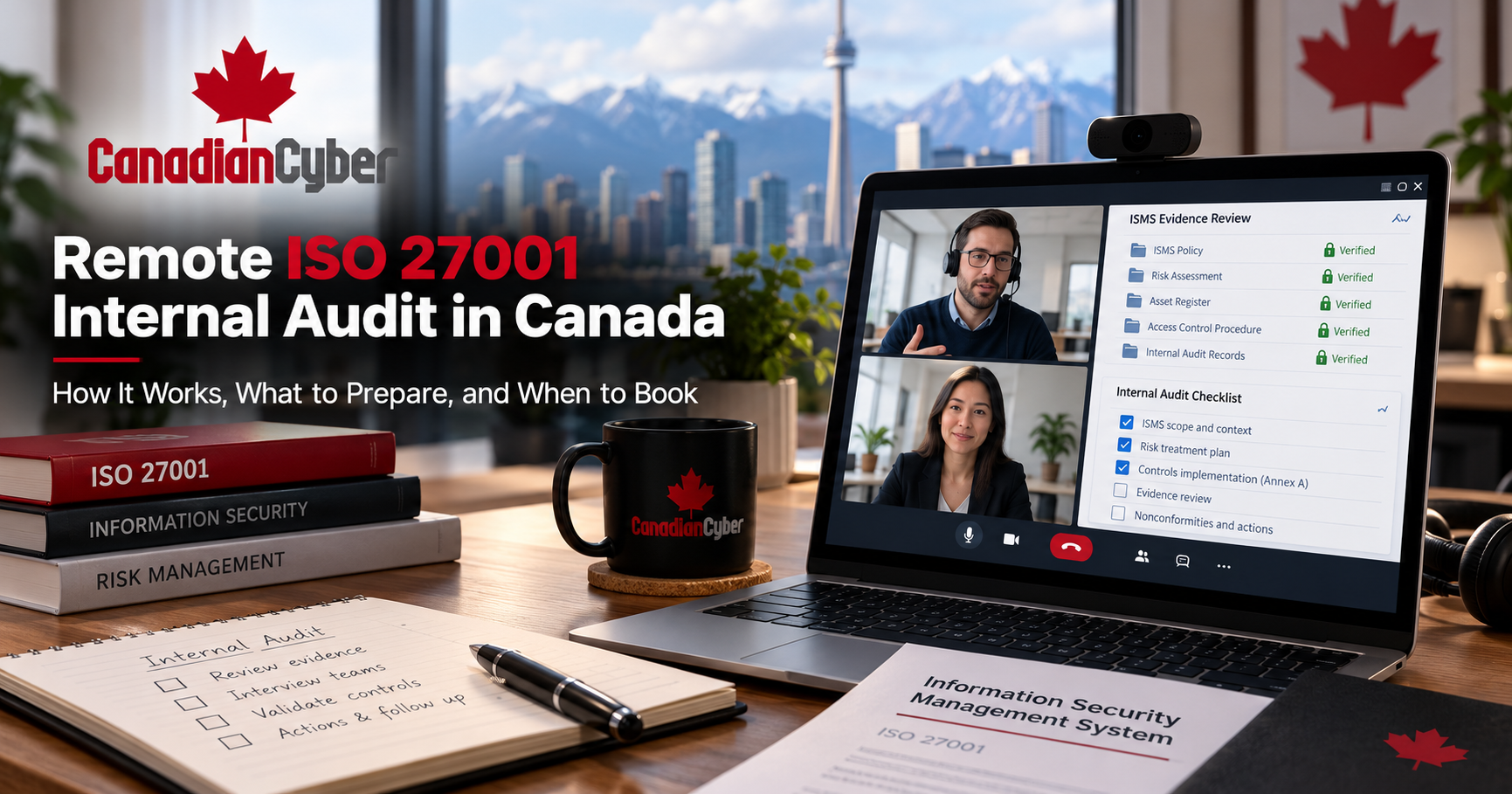
- Remote interviews and screen sharing.
- Risk and Statement of Applicability review.
- Access-control sampling.
- Supplier evidence review.
- Vulnerability evidence review.
- Findings and corrective actions.
- Certification-readiness support.
Request Your ISO 27001 Internal Audit Quote from Canadian Cyber
Stay Connected With Canadian Cyber
Follow Canadian Cyber for practical guidance on ISO 27001 internal audits, certification readiness, risk management, and ISMS improvement.