Why this matters (and why auditors get confused with Kubernetes)
Kubernetes changes how services are built and operated. Infrastructure becomes declarative, workloads change daily,
access splits between cloud IAM and Kubernetes RBAC, and observability is distributed.
What auditors fail teams for (in practice)
- unclear responsibility boundaries (cloud vs platform vs app teams)
- missing evidence (no proof controls operated)
- unmanaged defaults (cluster-admin sprawl, open networking, secrets sprawl)
High intent reality: Kubernetes security must be explainable in one page and provable in evidence packs.
What ISO 27017 adds to “regular ISO 27001”
ISO 27001 sets ISMS requirements. ISO 27017 adds cloud-specific guidance, especially around shared responsibility,
cloud admin access, tenant separation, workload security, secure configuration, and monitoring/incident handling.
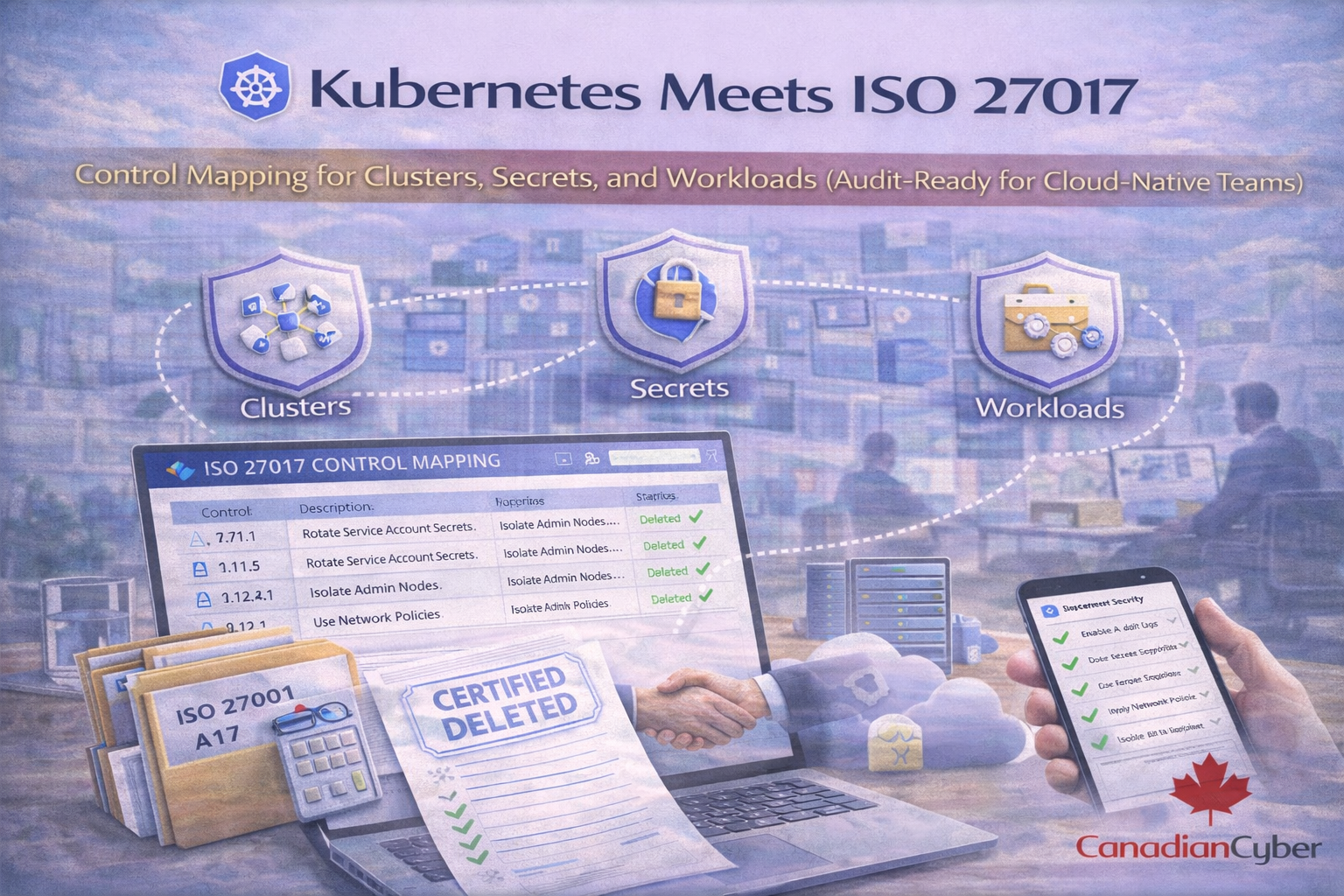
For Kubernetes, translate this into three domains
- Cluster security: control plane, nodes, RBAC, network policies
- Secrets and identity: storage, rotation, access paths
- Workload governance: image integrity, isolation, monitoring
The Kubernetes shared responsibility model (the part your contract should reflect)
In managed Kubernetes (EKS/AKS/GKE), responsibility typically splits across cloud provider, your platform team, and app teams.
Document it clearly so auditors have an anchor.
One-page platform responsibility statement (copy structure)
- Cloud provider: physical infrastructure; managed control plane responsibilities (varies); baseline service security
- Platform team (you): cluster configuration, access, policies, logging, add-ons; node settings if you manage nodes
- App teams: namespaces, deployments, service configuration, secrets usage patterns, application-level monitoring
- Customers (sometimes): only for BYOC / customer-managed cluster models
Audit tip:
put this statement in your audit pack. It prevents scope confusion.
ISO 27017 control mapping for Kubernetes (practical + evidence-driven)
This mapping focuses on control intent plus operational evidence. Exact numbering varies by your internal mapping,
but auditors care most about clear implementation and proof over time.
1) Cluster access control (cloud IAM + Kubernetes RBAC)
Intent: authorized access, least privilege, periodic reviews
Implement
- central identity integration (cloud IAM/SSO)
- RBAC least privilege + namespace scope
- limit cluster-admin; break-glass procedure
- quarterly access reviews
Evidence
- export of cluster-admin bindings + role bindings
- cloud IAM group membership for cluster access
- dated access review record
- break-glass procedure + monitoring proof
2) Secure configuration / baseline hardening (cluster + nodes)
Intent: secure defaults removed; configuration consistent
Implement
- written secure cluster baseline
- disable anonymous/legacy auth
- CIS Kubernetes Benchmark alignment (as baseline)
- node hardening and patch approach (if you manage nodes)
Evidence
- baseline document + version history
- managed service configuration exports/screenshots
- periodic configuration check report
3) Network segmentation and workload isolation
Intent: reduce lateral movement; isolate environments/tenants
Implement
- namespace segmentation by environment/sensitivity
- NetworkPolicies to restrict traffic
- separate prod vs non-prod clusters (preferred)
- restrict Kubernetes API endpoint access
Evidence
- namespace model documentation
- NetworkPolicy manifests
- cluster separation diagram
- API endpoint access settings
4) Secrets management (the biggest audit risk)
Intent: secrets protected, controlled access, rotation evidence
Implement
- secret handling standard (allowed/not allowed)
- external secret manager integration (AWS/Azure/GCP)
- encryption at rest (KMS) for secrets
- rotation cadence + incident-driven rotation
- ban secrets in Git + scanning
Evidence
- KMS encryption configuration proof
- access controls to secret manager
- rotation tickets/automation logs
- CI secret scanning evidence
5) Workload integrity (images + CI/CD supply chain)
Intent: only approved/verified software runs in prod
Implement
- image scanning in CI
- approved registries only
- signed images (where feasible)
- admission policies: allowlisted registries, no privileged containers
Evidence
- CI logs showing scan execution + thresholds
- registry access controls
- admission policy manifests
- sample PR/release evidence showing enforcement
6) Admission control and policy enforcement (guardrails)
Intent: prevent insecure deployments by default
Implement
- Pod Security Standards (baseline/restricted)
- Gatekeeper/Kyverno policies (no privileged pods, limits, non-root)
- CI validation + admission validation
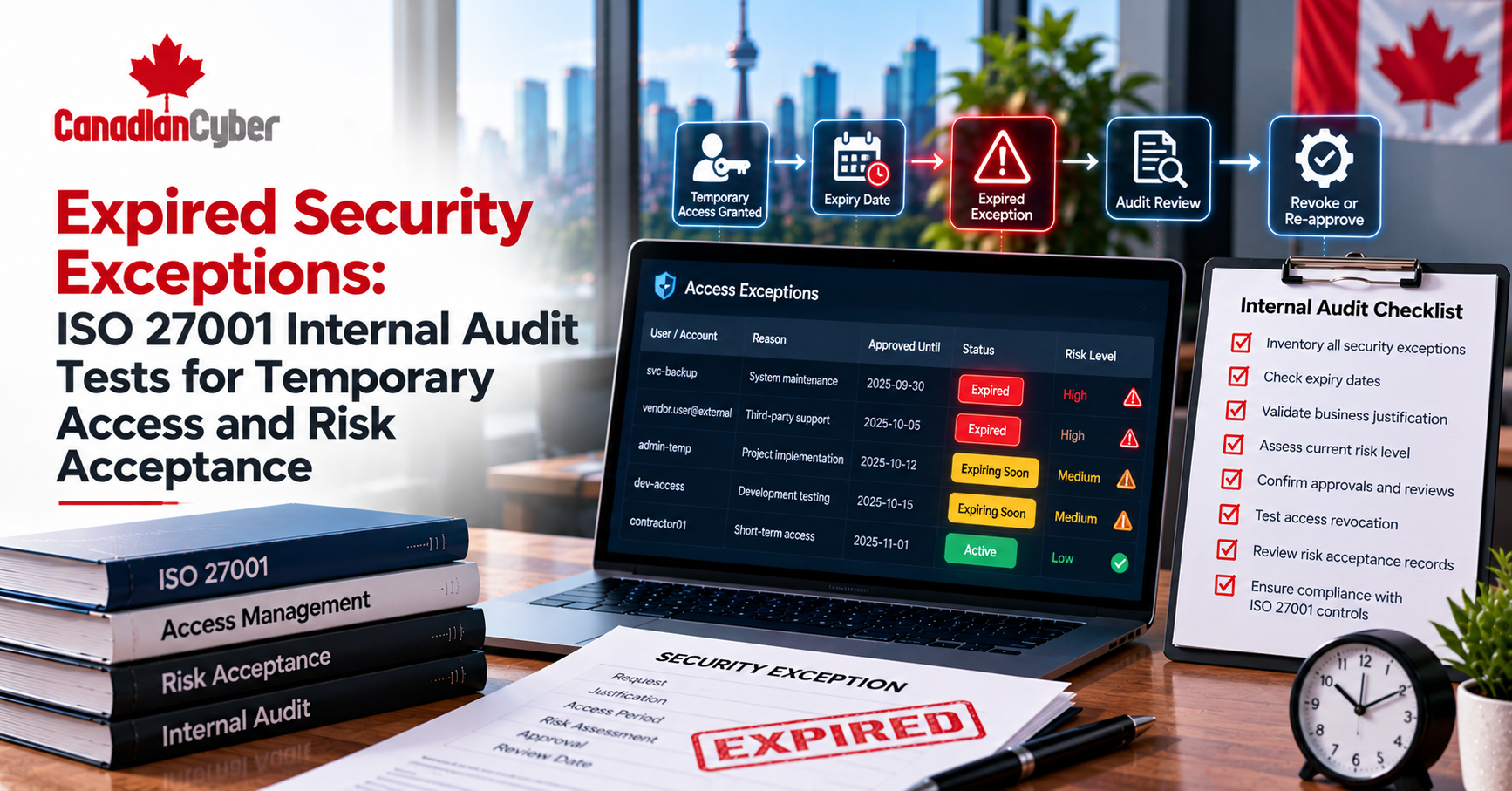
- exception process (risk acceptance)
Evidence
- policy manifests
- sample denied deployment logs
- exception approvals and expiry dates
- policy review/update records
7) Logging, monitoring, and detection (cluster + workload)
Intent: security events logged, reviewed, acted on
Implement
- Kubernetes audit logging enabled (where supported)
- central logging for control plane, nodes, and key workloads
- alerts: new cluster-admin, suspicious API calls, privileged pods
- Kubernetes incident runbooks + tabletop
Evidence
- logging config + retention
- sample alert → ticket → resolution
- log review sign-off (monthly/quarterly)
- tabletop exercise record
8) Vulnerability management and patching
Intent: manage known vulns within defined timelines
Implement
- patch policy for cluster components/nodes
- vulnerability SLAs for base images and dependencies
- ticketed triage → remediation → verification
- risk acceptance for exceptions
Evidence
- policy + SLA definitions
- scanner output reports
- tickets showing scan-to-fix chain
- risk acceptance records with expiry
9) Change management (IaC + deployment approvals)
Intent: prod changes authorized, reviewed, traceable
Implement
- IaC (Terraform/ARM/CloudFormation) with PR reviews
- deployment approvals for production
- restricted access to prod pipelines
- discourage direct kubectl in prod; require traceable change path
Evidence
- PR review records + merge protections
- deployment logs
- change tickets (if used)
- audit trail of who deployed what and when
10) Backup and recovery (cluster state and critical data)
Intent: restore critical services after failure/incident
Implement
- backup strategy for PVs and critical configs
- restore tests with documented outcomes
- RTO/RPO statements where applicable
Evidence
- backup schedules/configuration
- restore test records
- RTO/RPO statements (if committed)
The Kubernetes audit pack (what to prepare before audits)
If you can produce this pack, Kubernetes becomes audit-friendly.
- architecture diagram (clusters, namespaces, networking, registries)
- responsibility statement (cloud vs platform vs app teams)
- access control evidence (RBAC exports + reviews)
- secrets model (storage/rotation + proof)
- policy enforcement (admission policies + denial logs)
- logging and monitoring (what’s logged + sample alert tickets)
- vulnerability management (scan-to-fix samples)
- change management (PR protections + deployment logs)
- backup/restore evidence (restore test proof)
- exception handling (risk acceptance records)
Convert Kubernetes “security intent” into evidence-ready governance
If you’re running Kubernetes and preparing for ISO 27001/27017 alignment, the fastest win is building traceable evidence packs.
Canadian Cyber’s ISMS SharePoint solution helps cloud-native teams:
- map Kubernetes controls to ISO and SOC 2 requirements
- build a live evidence pack (Control → Evidence → Period)
- run approval workflows for exceptions (risk acceptance)
- create an auditor view that shows what’s needed without oversharing
Practical FAQ (quick answers buyers and auditors ask)
Do we need every Kubernetes security control to be “ISO 27017 aligned”?
No. You need controls appropriate to your risk and scope and evidence that they operate. Document decisions and exceptions.
Are managed Kubernetes services automatically secure?
They reduce infrastructure burden, but you still own configuration, access control, workload security, secrets handling, and monitoring.
What’s the most common audit failure for Kubernetes?
Secrets management and privilege sprawl (too many cluster-admins), followed by lack of evidence for monitoring and access reviews.
Download the Kubernetes ISO 27017 Mapping Pack
Get a ready-to-use toolkit for audit mapping and evidence collection.
Includes:
- ISO 27017 ↔ Kubernetes control mapping table
- evidence checklist for clusters, secrets, and workloads
- access review template (RBAC + IAM)
- exception/risk acceptance workflow template
- SharePoint evidence pack folder structure + metadata fields
Follow Canadian Cyber
Practical cybersecurity + compliance guidance for cloud-native teams: