ISO 27001 • Manufacturing Cybersecurity • IT Security • OT Security • Vendor Risk
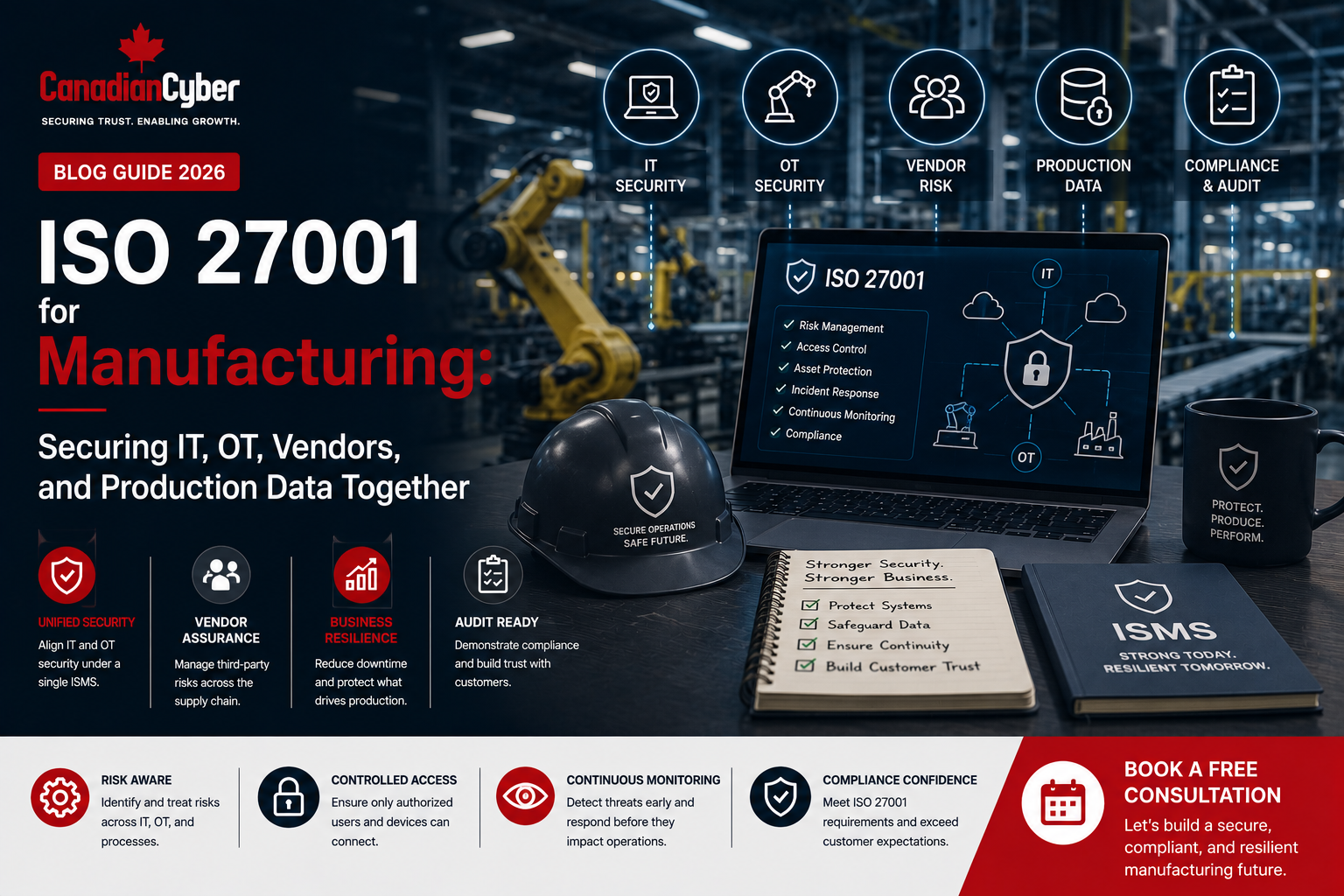
ISO 27001 for Manufacturing: Securing IT, OT, Vendors, and Production Data Together
Manufacturing companies now rely on connected systems. ISO 27001 helps protect IT, OT, vendors, production data, and business operations through one structured security program.
Canadian Cyber Manufacturing ISO 27001 Support
Build an ISO 27001 ISMS That Matches Real Manufacturing Operations
Canadian Cyber helps manufacturers prepare for ISO 27001. We support IT risk, OT risk, vendor access, production data, incident response, internal audits, and SharePoint ISMS evidence workspaces.
The goal is simple. Help your manufacturing business protect operations and prove controls with clear evidence.
Quick Answer
ISO 27001 helps manufacturing companies manage cybersecurity across IT systems, OT environments, vendors, production data, users, and business processes.
A strong program should define scope clearly. It should identify IT and OT assets. It should also manage vendor access, backups, incidents, employee training, and audit evidence.
Practical takeaway: ISO 27001 should connect cybersecurity governance with real manufacturing operations.
Quick Snapshot
| Area | Why It Matters |
|---|---|
| IT Systems | ERP, email, cloud, identity, and business systems support production. |
| OT Systems | Machines, controllers, sensors, and production systems affect operations. |
| Vendors | Remote support vendors may access critical systems. |
| Production Data | Schedules, designs, formulas, quality records, and machine data need protection. |
| Audit Evidence | Manufacturers need proof that controls operate regularly. |
Why ISO 27001 Matters for Manufacturing
Manufacturing cybersecurity is not only about office computers. It also affects production, suppliers, machines, engineering files, and customer commitments.
A cyber incident can stop production. It can delay shipments. It can expose intellectual property. It can also damage customer trust.
ISO 27001 gives manufacturers a structured way to manage these risks. It helps connect policies, controls, evidence, leadership review, internal audit, and continual improvement.
For manufacturing, ISO 27001 should protect business operations, not only office IT.
Who This Guide Is For
- Manufacturing companies preparing for ISO 27001.
- Plant managers and operations leaders.
- IT, OT, and engineering teams.
- Quality, compliance, and production teams.
- Supply chain and vendor management teams.
- Manufacturers selling to enterprise customers.
- Organizations worried about ransomware, downtime, and vendor access.
IT and OT Are Now Connected
Manufacturers often think of IT and OT as separate worlds. That idea is now outdated.
IT includes systems like email, ERP, Microsoft 365, cloud platforms, finance systems, and identity tools.
OT includes machines, production lines, sensors, PLCs, SCADA, HMIs, and industrial control systems.
Today, these systems often connect. Vendors may use remote access. Production data may move to cloud dashboards. ERP systems may connect to production scheduling.
Practical rule: If IT and OT are connected in operations, they should be connected in cybersecurity governance.
ISO 27001 Scope for Manufacturing
Scope is one of the most important ISO 27001 decisions. A weak scope can leave major risks outside the ISMS.
Manufacturing scope should consider:
- Manufacturing sites and head office.
- IT systems and OT systems.
- ERP, MES, and quality systems.
- Production data platforms.
- Remote maintenance tools.
- Critical vendors and support teams.
- Backup and incident response processes.
Manufacturing ISO 27001 scope should follow operational dependency, not only corporate IT boundaries.
IT Security Controls in Manufacturing
IT systems support almost every manufacturing process. If IT is compromised, production may be affected.
IT areas to review include:
- Identity and access management.
- MFA and admin access.
- Endpoint protection and patching.
- Backups and restore testing.
- Cloud security.
- Logging and monitoring.
- Incident response.
Evidence to prepare:
- Asset inventory.
- MFA report.
- Access review evidence.
- Patch management report.
- Backup report.
- Incident response plan.
OT Security Controls in Manufacturing
OT security needs a practical approach. Manufacturing environments often have legacy machines and limited maintenance windows.
ISO 27001 can still help. It supports risk assessment, access control, asset visibility, vendor controls, and documented treatment plans.
OT areas to review include:
- OT asset inventory.
- Network segmentation.
- Remote vendor access.
- Operator accounts and shared accounts.
- Machine configuration backups.
- Production change approval.
- OT incident escalation.
Practical rule: OT security should be risk-based and realistic. Controls must fit production operations.
Vendor Risk in Manufacturing
Manufacturers depend on vendors. Some vendors provide machines. Others provide maintenance, cloud tools, ERP systems, logistics platforms, and remote support.
Vendor risk becomes serious when vendors can access production systems or affect operations.
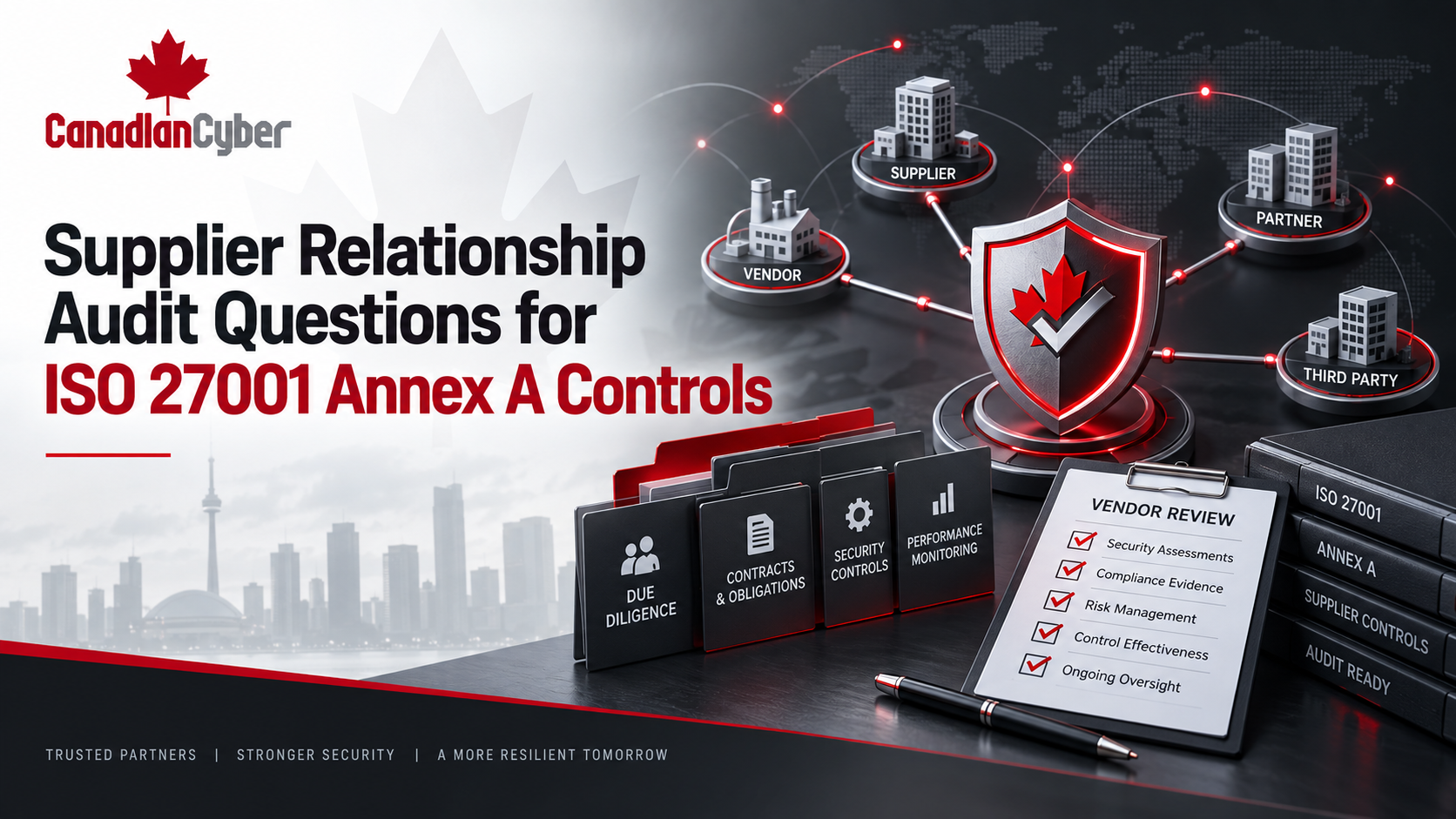
Ask these vendor questions:
- Which vendors are critical to production?
- Which vendors can access IT systems?
- Which vendors can access OT systems?
- Which vendors use remote access tools?
- Are vendor access rights reviewed?
- Are vendor incidents reported to us?
A vendor that can access production systems should never be treated like a normal office supplier.
Production Data Needs Protection
Production data is valuable. It may not always be personal data, but it can still be sensitive.
Examples include:
- Production schedules.
- Machine configurations.
- Quality records.
- Customer specifications.
- Engineering drawings and CAD files.
- Product formulas.
- Maintenance logs.
- Manufacturing performance data.
This data can affect operations, customer trust, competitiveness, and intellectual property.
Practical rule: Production data should be protected based on business impact, not only privacy status.
Access Control for IT, OT, and Vendors
Access control is one of the most important manufacturing security areas.
Manufacturers should know who can access critical systems. They should also know why that access is needed.
Access types to review include:
- Employee and contractor access.
- Vendor remote access.
- Administrator access.
- Operator access.
- ERP and cloud access.
- Emergency access.
Manufacturing access control should include vendors and OT users, not only office employees.
Remote Access to Production Systems
Remote access is useful. Vendors may need it for maintenance, troubleshooting, monitoring, or emergency repair.
However, remote access can also create major risk if it is not controlled.
Strong controls include:
- Approved remote access tools.
- MFA and unique accounts.
- Time-bound access.
- Manager approval.
- Vendor access logs.
- Access removal after work is complete.
Practical rule: Remote access to production systems should be temporary, approved, monitored, and reviewed.
Incident Response for Manufacturing
Manufacturing incident response must consider operational impact. A cyber incident may affect production, quality, shipments, vendors, and customer commitments.
Plan for scenarios such as:
- Ransomware affecting office IT.
- Compromised vendor remote access.
- ERP outage.
- Production data corruption.
- Cloud dashboard compromise.
- Stolen engineering drawings.
Evidence to prepare:
- Incident response plan.
- Manufacturing escalation matrix.
- Tabletop exercise report.
- Incident register.
- Corrective action tracker.
Business Continuity and Backup Readiness
Manufacturers must think carefully about recovery. If a key system is down, production may stop.
Review these systems:
- ERP and MES.
- Quality systems.
- Production scheduling.
- Engineering document systems.
- Identity systems.
- Critical OT configurations.
A backup strategy is not complete until the organization has tested restoration.
Internal Audit for Manufacturing ISO 27001
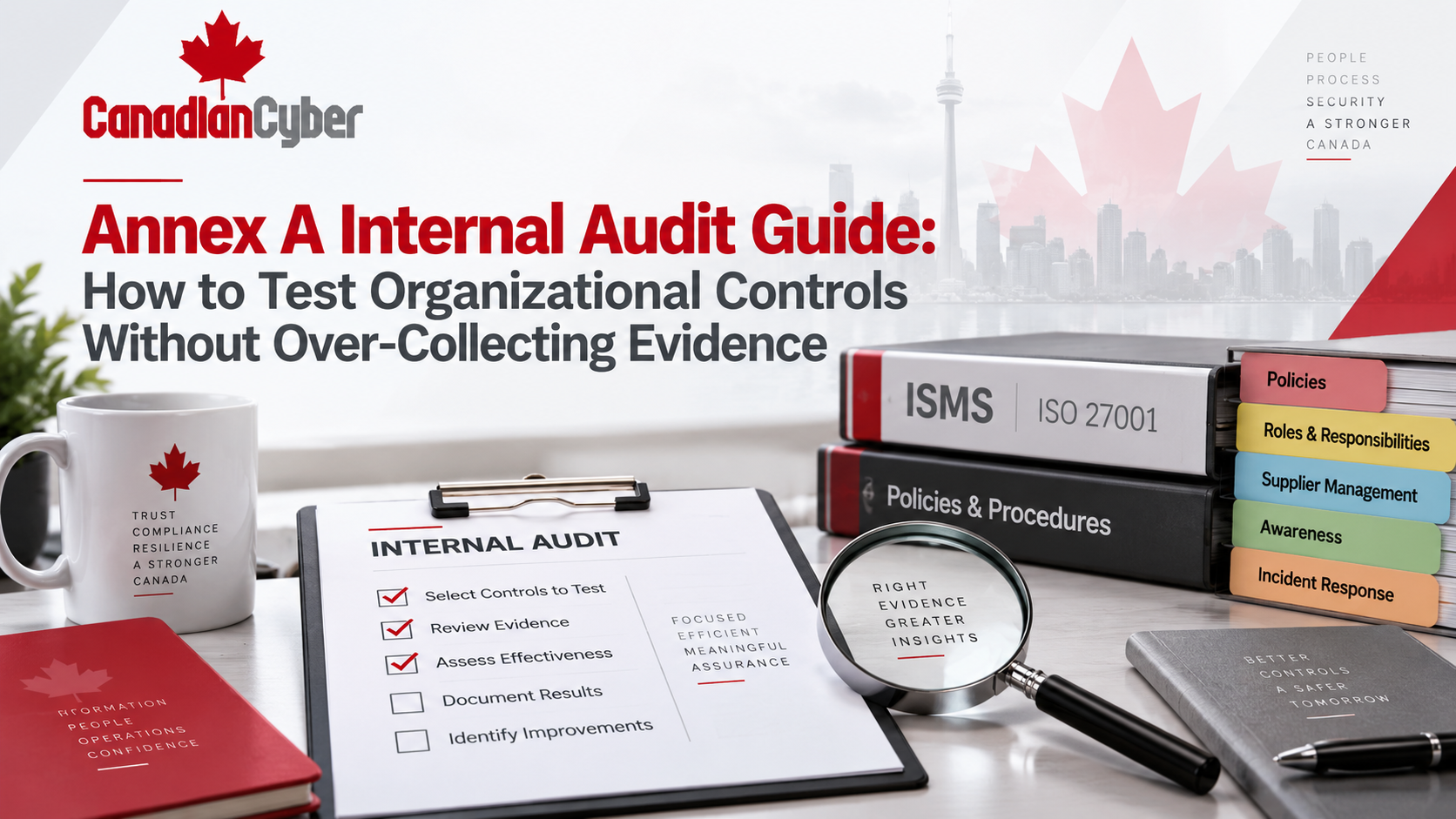
An ISO 27001 internal audit should test whether the manufacturing ISMS is working.
It should not only review documents. It should also include interviews with IT, OT, production, quality, procurement, HR, and leadership.
The audit should test:
- Scope accuracy.
- IT and OT risks.
- Vendor remote access.
- Production data protection.
- Backup and restore testing.
- Incident response readiness.
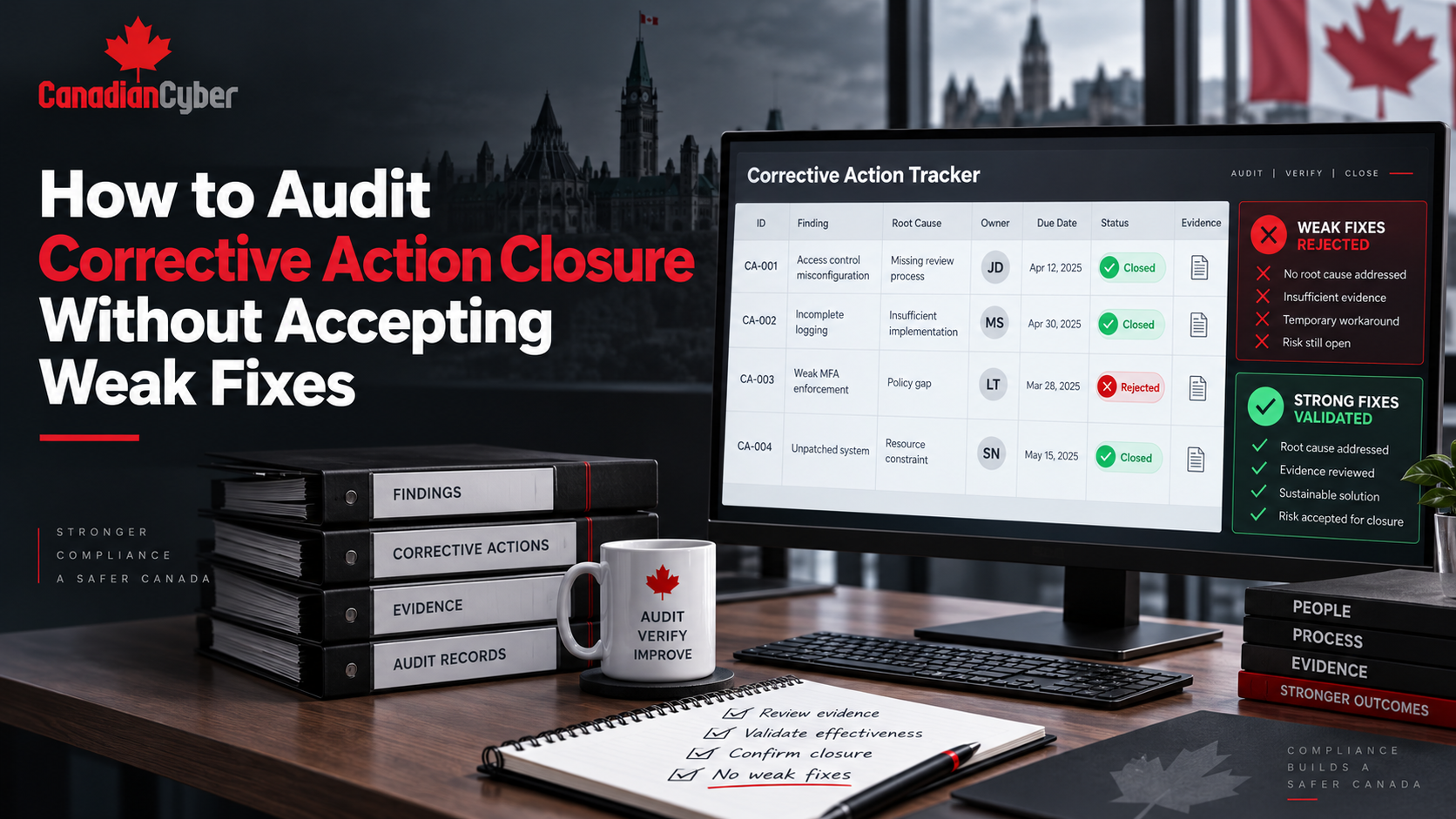
- Corrective actions.
Practical rule: A manufacturing ISO 27001 internal audit should follow the production process, not only the IT checklist.
Management Review for Manufacturing ISO 27001
Leadership must review whether the ISMS is suitable and effective.
For manufacturing, this review should include operational cybersecurity risks.
Management review should include:
- Top cyber risks.
- IT and OT risk status.
- Vendor risk issues.
- Internal audit findings.
- Corrective actions.
- Backup restore results.
- Production downtime risks.
Manufacturing ISO 27001 Readiness Checklist
| Readiness Area | Ready? |
|---|---|
| ISO 27001 scope includes IT, OT, vendors, and production data. | |
| IT and OT asset inventories exist. | |
| Production data is classified and protected. | |
| Vendor remote access is approved and reviewed. | |
| MFA is enforced for remote and privileged access. | |
| Access reviews include IT, OT, ERP, and vendors. | |
| Backup and restore testing is performed. | |
| Incident response includes manufacturing scenarios. | |
| OT risks are included in the risk register. | |
| Evidence is stored in a controlled workspace. |
Common ISO 27001 Mistakes in Manufacturing
- Scoping only office IT. Production systems and vendors may be missed.
- Ignoring OT risks. OT may be hard to patch, but it still needs risk treatment.
- Uncontrolled vendor access. Vendor access should be approved and reviewed.
- Not classifying production data. Production data can be sensitive.
- Not testing backups. Untested backups create false confidence.
- Generic management review. Leadership should review production risk.
- Scattered evidence. Audit evidence should be organized and current.
How SharePoint Can Help Manufacturing ISO 27001
A structured SharePoint ISMS can help manufacturing companies manage ISO 27001 evidence across IT, OT, vendors, production, and leadership.
Canadian Cyber’s ISMS SharePoint Solution can organize:
- Policy and procedure libraries.
- Risk register and OT risk tracker.
- Asset inventory and control register.
- Vendor register and remote access tracker.
- Access review tracker.
- Backup and restore evidence.
- Internal audit workspace.
- Management review dashboard.
Practical rule: Manufacturing ISO 27001 works better when IT, OT, vendors, and production evidence are managed in one controlled system.
How Canadian Cyber Helps
Canadian Cyber helps manufacturing companies prepare for ISO 27001. We build practical and audit-ready security programs.
We help connect cybersecurity governance with real manufacturing operations.
- ISO 27001 implementation.
- ISO 27001 internal audits.
- Manufacturing cybersecurity assessments.
- IT and OT risk reviews.
- Vendor remote access reviews.
- Production data protection reviews.
- Incident response tabletop exercises.
- vCISO services.
- SharePoint ISMS implementation.
Frequently Asked Questions
Why does ISO 27001 matter for manufacturing?
ISO 27001 helps manufacturers manage cybersecurity risks across IT, OT, vendors, production data, operations, customers, and business continuity.
Should OT be included in ISO 27001 scope?
OT should be considered when it supports the systems, information, services, or production processes covered by the ISMS.
What manufacturing data should be protected?
Production schedules, machine settings, quality records, engineering drawings, customer specifications, supplier data, ERP records, and maintenance logs may all need protection.
How does ISO 27001 help with vendor risk?
ISO 27001 helps identify critical vendors, assess risk, control vendor access, review security evidence, and manage supplier security obligations.
Can Canadian Cyber help manufacturing companies with ISO 27001?
Yes. Canadian Cyber supports ISO 27001 implementation, internal audits, manufacturing cybersecurity assessments, vendor reviews, vCISO services, tabletop exercises, and SharePoint ISMS implementation.
Takeaway
Manufacturing cybersecurity is now a connected business issue.
IT, OT, vendors, cloud systems, production data, engineering files, ERP, remote access, and leadership decisions all affect security.
ISO 27001 helps bring these areas together into one structured ISMS.
The goal is not paperwork. The goal is operational trust.
Preparing Your Manufacturing Company for ISO 27001?
Canadian Cyber can help you build an ISMS that reflects real production operations.
We support ISO 27001 implementation, internal audits, IT and OT risk reviews, vendor remote access reviews, tabletop exercises, vCISO services, and SharePoint ISMS implementation. You can also learn more through Waqar Mehboob’s profile.
Stay Connected With Canadian Cyber
Follow Canadian Cyber for guidance on ISO 27001 for manufacturing, IT and OT security, vendor risk, production data protection, internal audits, SharePoint ISMS, cybersecurity assessments, incident response, and vCISO support.