ISO 27001
Dependency Confusion
Typosquatting
Software Supply Chain
Dependency Confusion and Typosquatting: Audit Your Package Controls Before Attackers Do
Learn how ISO 27001 internal auditors can test package registries, lockfiles, version controls, provenance, CI/CD rules, and malicious package risks.
One Package Mistake Can Change the Entire Build
A developer wants to install a trusted package.
They type the name incorrectly.
A package still installs.
The build succeeds.
Nobody notices.
However, the package came from an attacker.
Another attack can be even quieter.
Your company may use a private package called:
An attacker discovers that name.
Next, they publish the same name to a public registry.
Their package has a higher version number.
As a result, the build may select the wrong package.
Malicious code can enter the environment through normal package installation.
These are software supply chain risks.
Therefore, internal audit should ask:
Quick Answer
What Should a Dependency Confusion Audit Test?
A strong dependency confusion audit should test whether:
- Approved package registries are defined.
- Internal packages use protected namespaces.
- Public registries cannot override private packages.
- Package versions are pinned where appropriate.
- Lockfiles are controlled.
- Package integrity is verified.
- New dependencies are reviewed.
- Typosquatting risk is considered.
- CI/CD pipelines enforce package rules.
- Malicious packages can be detected.
- Dependency changes leave audit evidence.
OWASP recommends trusted repositories, fixed references, version controls, and integrity checks.
Bottom line: package installation should be a controlled security decision.
What Is Dependency Confusion?
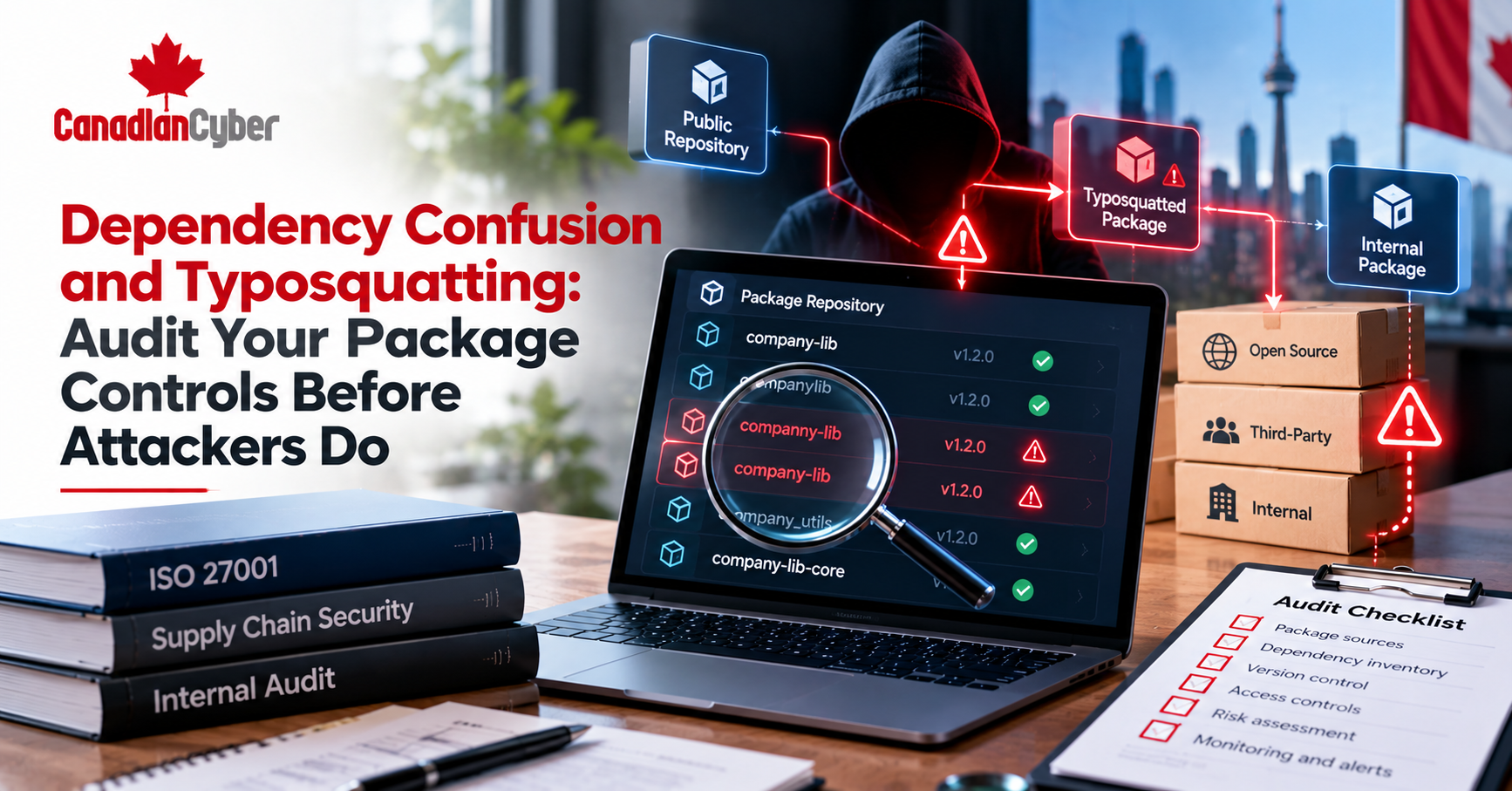
Dependency confusion happens when a build selects a public package instead of the intended private package.
A typical scenario looks like this:
Internal Application
↓
Requests
company-payment-utils
↓
Package manager checks several registries
↓
Public package looks preferable
↓
Malicious Package Installs
OWASP describes this attack as a public package using the same name as a private package.
A higher public version may then win during resolution.
The package may execute during:
- Development.
- Testing.
- CI/CD.
- Build.
- Deployment.
By then, malicious code may already have reached credentials, source code, or build systems.
What Is Typosquatting?
Typosquatting uses a different trick.
The attacker creates a package name that looks like a trusted one.
Malicious: requsets
Malicious: company-secur1ty
A developer makes a small typing mistake.
The package manager follows the request.
Then the wrong package installs.
Therefore, package security should not depend only on human attention.
Technical controls should help prevent the mistake.
Why This Belongs in ISO 27001 Internal Audit
Dependency confusion and typosquatting affect more than development.
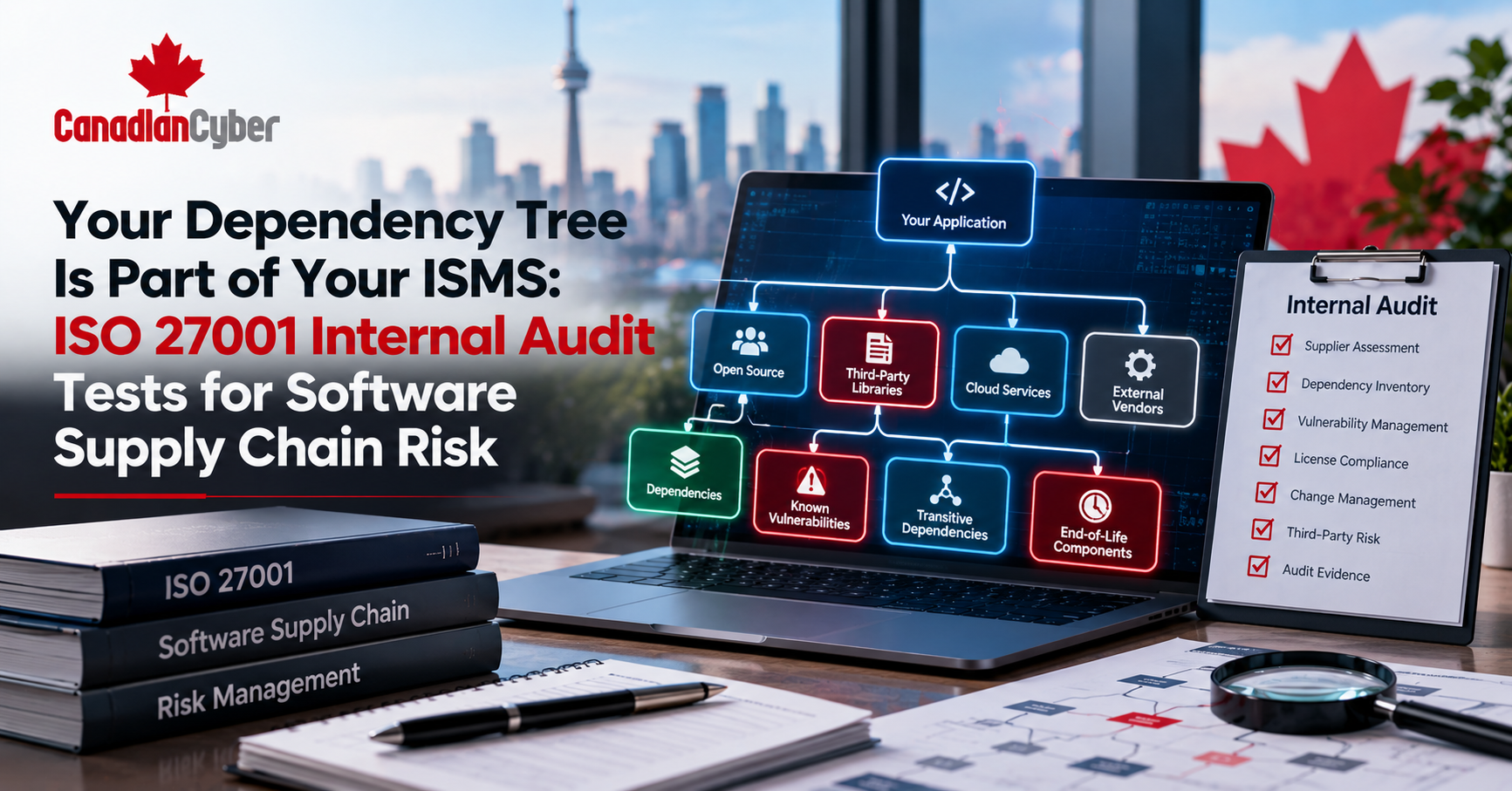
A malicious package may compromise:
OWASP’s 2025 Top 10 places Software Supply Chain Failures at A03.
Therefore, package controls can affect secure development, change management, vulnerability management, and ICT supply chain risk.
That makes them relevant to ISO 27001 internal audit.
1. Audit Where Packages Can Come From
Start with package sources.
Ask:
Examples include:
- npm.
- PyPI.
- Maven Central.
- NuGet.
- GitHub Packages.
- Internal artifact repositories.
- Private container registries.
Next, inspect the actual configuration.
Internal Audit Should Check
- Approved registries are documented.
- Private packages use controlled repositories.
- Public sources are restricted where needed.
- Developers cannot silently add arbitrary registries.
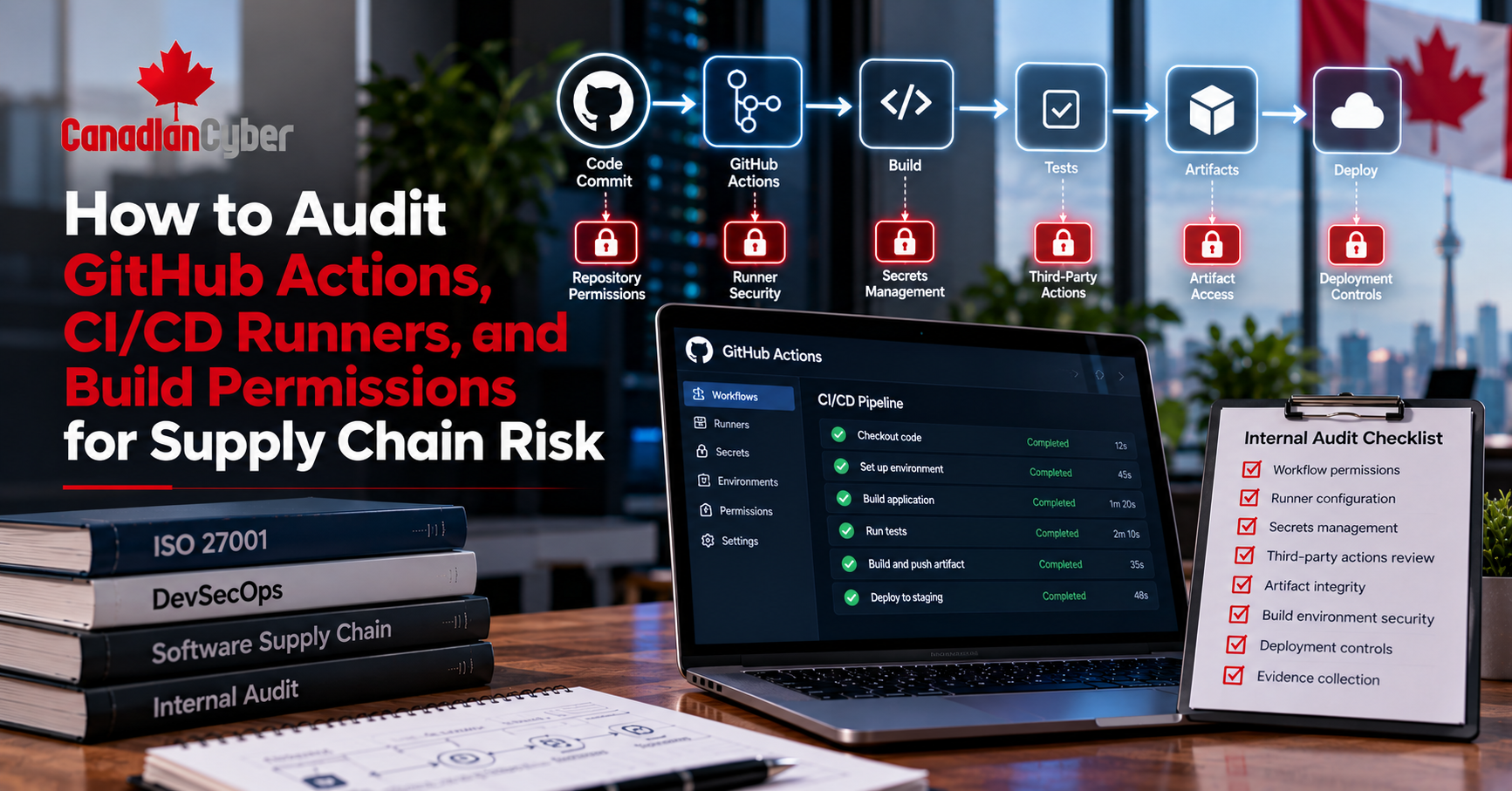
- CI/CD uses approved settings.
- Repository changes require approval.
OWASP recommends using controlled repositories and trusted sources.
Red flag: policy requires the corporate registry, but the build checks a public registry first.
2. Test Internal Package Naming
Internal package names can create dependency confusion risk.
Ask:
Private names may leak through manifests, public repositories, or error messages.
Therefore, internal audit should review:
- Naming conventions.
- Namespace controls.
- Scoped packages.
- Public registry conflicts.
- Private package exposure.
For example, instead of:
A supported ecosystem may use:
The exact method depends on the package manager.
The goal is simple: prevent public packages from being mistaken for internal packages.
3. Test Registry Resolution Rules
This is one of the most important technical checks.
Ask:
Do not accept “It should use the internal one.”
Test the configuration.
Review settings for:
- npm.
- pip.
- NuGet.
- Maven.
Useful Audit Evidence
.npmrcpip.confnuget.config- Maven settings.
- Repository manager configuration.
- CI/CD configuration.
- Private registry policy.
The goal is deterministic and intentional package resolution.
4. Review Version Pinning
Flexible versions can make development easier.
However, they can also allow unexpected changes.
For example:
^4.2.04.2.3OWASP recommends version pinning and fixed dependency references as useful controls.
Internal Audit Should Ask
- Are production dependencies pinned?
- Are version ranges permitted?
- If yes, why?
- Are lockfiles used?
- Are dependency updates reviewed?
Version pinning is not enough by itself.
However, it can reduce unexpected package changes.
5. Audit Lockfiles
Lockfiles record the exact dependency versions used in a build.
Common examples include:
package-lock.jsonyarn.lockpoetry.lockPipfile.lock
Internal audit should test whether lockfiles are:
- Generated.
- Stored in source control.
- Reviewed.
- Updated through change management.
- Used during CI/CD builds.
Audit red flag: the repository contains a lockfile, but the production build ignores it.
6. Test Package Integrity
The correct package name and version are not enough.
Ask:
Integrity controls may include:
- Cryptographic hashes.
- Checksums.
- Digital signatures.
- Package provenance.
- Trusted publishing.
- Controlled artifact repositories.
OWASP recommends checking downloaded package integrity against trusted values.
Modern package systems may also provide provenance information.
Can Your Build Prove Which Package It Installed?
Canadian Cyber can help test package sources, private registries, dependency controls, CI/CD enforcement, software supply chain risk, and ISO 27001 evidence.
The goal is to make package installation controlled, repeatable, and auditable.
7. Review Every New Dependency
A package should not enter production only because a developer typed a command.
For example:
npm installpip installInstead, new dependencies should receive suitable review.
Useful questions include:
- Why is this package needed?
- Is there already an approved alternative?
- Who maintains it?
- How old is it?
- Does it have known vulnerabilities?
- Does it use suspicious install scripts?
- Is the source repository legitimate?
- Is the package name correct?
- What could it access during installation?
Dependency review tools can also show package additions and updates during pull requests.
A Stronger Process
Developer Proposes Package
↓
Pull Request Shows Dependency Change
↓
Security Checks Run
↓
Reviewer Approves
↓
Build Proceeds
8. Test Typosquatting Defences
Typosquatting often works because package installation feels routine.
Therefore, controls should go beyond:
Possible controls include:
- Internal allowlists.
- Approved package catalogs.
- Repository proxies.
- Dependency review.
- Package-age checks.
- Publisher verification.
- Automated malware detection.
OWASP also warns against blindly installing packages suggested by AI coding tools.
Practical Audit Test
Select several recently introduced packages.
Verify:
- The package name.
- The publisher.
- The expected repository.
- The package history.
- The security review.
- The approval evidence.
The goal is to test whether suspicious packages are likely to be caught.
9. Add AI-Generated Dependencies to the Audit
AI coding assistants create a newer supply chain issue.
An AI assistant may suggest a package that:
- Exists.
- Is outdated.
- Is the wrong package.
- Does not exist at all.
OWASP warns that AI tools may suggest nonexistent dependencies.
An attacker may later register that name as a malicious package.
Therefore, internal audit should ask:
AI can suggest a dependency. It should not establish trust in that dependency.
10. Review CI/CD Enforcement
Package controls are weak if developers can bypass them.
Therefore, internal audit should test whether CI/CD enforces:
Ask
- Can a developer disable package security checks?
- Can a failing scan still deploy?
- Who can change the pipeline?
- Do pipeline changes require review?
The pipeline should enforce policy, not simply show warnings.
11. Audit Private Registry Security
Private package registries can reduce some supply chain risks.
However, a private registry is not automatically secure.
Audit:
- Who can publish packages?
- Who can modify packages?
- Can packages be overwritten?
- Are deleted packages recoverable?
- Are malware scans enabled?
- Are access logs retained?
- Are tokens protected?
- Are upstream public packages controlled?
OWASP notes that private repositories still need strong provenance and entry controls.
12. Test the Malicious Package Scenario
A practical test can reveal more than a policy review.
Ask the team:
A malicious package has just been found in our ecosystem. Show me how you determine whether we installed it.
The team should be able to identify:
- Which repositories contain it.
- Which applications depend on it.
- Which versions were used.
- Which builds included it.
- Which environments received it.
- Which credentials may have been exposed.
- Who owns remediation.
Dependency graphs and related security tools can support this investigation.
If the team must ask developers one by one, package visibility may be weak.
ISO 27001 Controls to Consider
Dependency confusion and typosquatting do not have dedicated ISO 27001 control names.
However, the risks connect to several ISO/IEC 27001:2022 controls.
| ISO 27001 Control | Audit Focus |
|---|---|
| A.5.21 ICT Supply Chain | Are software supply chain risks controlled? |
| A.8.8 Technical Vulnerabilities | Are vulnerable or malicious components detected? |
| A.8.19 Installation of Software | Is software installation controlled? |
| A.8.25 Secure Development Life Cycle | Are package controls built into development? |
| A.8.26 Application Security Requirements | Are supply chain requirements defined? |
| A.8.28 Secure Coding | Are external components introduced securely? |
| A.8.29 Security Testing | Are new dependencies tested and reviewed? |
| A.8.31 Separation of Environments | Are development and production separated? |
| A.8.32 Change Management | Are package additions and updates controlled? |
The exact mapping should reflect your development process, risk assessment, scope, and Statement of Applicability.
Evidence Internal Audit Should Request
A useful audit evidence pack may include:
- Approved package registry list.
- Package manager configuration.
- Private registry configuration.
- Dependency manifests.
- Lockfiles.
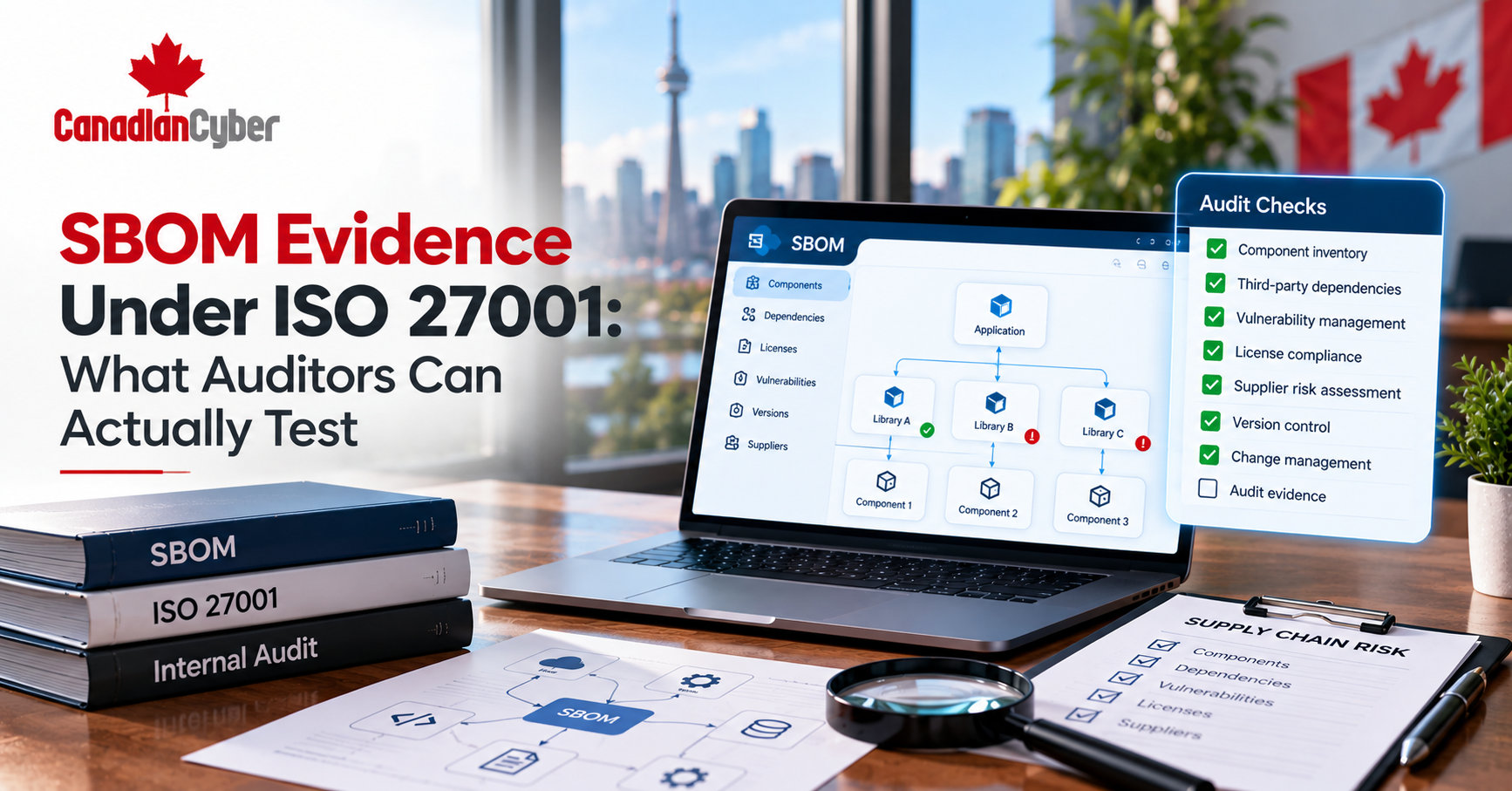
- SBOMs.
- Dependency review records.
- Pull requests.
- Software composition analysis reports.
- Malware alerts.
- CI/CD security rules.
- Package integrity verification.
- Artifact repository logs.
- Internal package naming standards.
- Secure development procedures.
- Exception approvals.
- Incident records.
You do not need every item for every application.
Use risk-based sampling.
Common Internal Audit Findings
Watch for these common patterns.
Package resolution is not safely configured.
Attackers may be able to register the same names publicly.
Production builds resolve dependencies differently.
Builds may silently consume newer versions.
Any developer can introduce any dependency.
The only control is asking developers to type carefully.
The build trusts whatever the registry returns.
Too many accounts can publish trusted packages.
A failed check does not stop deployment.
Developers trust generated package names.
Quick Package Security Audit Checklist
Before closing the audit, confirm:
- Approved package sources are defined.
- Internal packages use controlled namespaces.
- Public registries cannot override private packages.
- Registry resolution is tested.
- Production dependencies are pinned where appropriate.
- Lockfiles are committed and enforced.
- New dependencies go through review.
- Package integrity can be verified.
- Provenance is checked where available.
- Dependency scanning is active.
- Malicious package detection is considered.
- Typosquatting risk is addressed.
- AI-suggested packages require verification.
- Private registry publishing is restricted.
- CI/CD enforces package policies.
- Security checks cannot be casually bypassed.
- Package changes leave evidence.
- Malicious dependencies can be traced to affected applications.
Connect Package Security Evidence to Your ISMS
Development teams may keep technical evidence in repositories and CI/CD tools.
However, ISO 27001 findings and risk records may sit elsewhere.
That separation can make audit traceability harder.
Canadian Cyber’s ISMS SharePoint Solution can help centralize:
Frequently Asked Questions
What is dependency confusion?
Dependency confusion happens when a build retrieves a public package instead of the intended private package.
This often happens because package names conflict or resolution rules are unsafe.
What is package typosquatting?
Typosquatting uses malicious package names that resemble trusted packages.
Developers may install them after a spelling mistake or visual mix-up.
Is dependency confusion relevant to ISO 27001?
Yes.
It can affect ICT supply chain security, secure development, installation, testing, vulnerability management, and change control.
Does version pinning prevent dependency confusion?
Not by itself.
Combine version controls with trusted registries, protected namespaces, lockfiles, integrity checks, and dependency review.
Can private registries prevent package attacks?
They can reduce some risks.
However, access, publishing, provenance, upstream sources, and integrity still need controls.
Can AI coding tools increase package-squatting risk?
Potentially.
AI-suggested package names should be independently verified before installation.
What should an auditor test first?
Start with registry configuration.
Determine where the build retrieves packages.
Then test whether private packages can resolve to unexpected public sources.
The Takeaway
Developers should not have to win a spelling contest to keep software secure.
Build systems should not decide trust only because one version number is higher.
A stronger control environment can answer:
That is what an ISO 27001 internal audit should test.
A strong model looks like:
Package managers are powerful automation tools.
Attackers know that too.
Audit the package controls before they do.
Need Help Auditing Software Supply Chain Controls?
Canadian Cyber helps organizations test secure development, package management, software dependencies, CI/CD controls, supplier risk, and technical vulnerability management.
We also help organizations collect audit evidence and track corrective actions as part of ISO 27001 internal audits.
Our ISMS SharePoint Solution can centralize software supply chain risks, application registers, SBOM references, controls, findings, owners, review dates, and corrective actions.
Stay Connected With Canadian Cyber
Follow Canadian Cyber for practical guidance on ISO 27001 internal audits, secure development, package security, software supply chains, SharePoint ISMS, and cybersecurity governance.