SOC 2 • AI SaaS • API Security • Logs • Support Access • Canada
Checklist: SOC 2 Controls for Secure AI Features, APIs, Logs, and Support Access in Canada
AI SaaS companies in Canada are under growing pressure to prove that their AI features, APIs, logs, and support access are secure. SOC 2 is no longer just a compliance badge. It can directly affect enterprise sales, procurement, investor trust, and customer confidence.
Quick Snapshot
| Control Area | What SOC 2 Buyers Want to See |
|---|---|
| AI Features | Controls over prompts, outputs, model providers, embeddings, training data, and AI changes. |
| APIs | Authentication, scoped access, rate limits, abuse monitoring, and token lifecycle evidence. |
| Logs | Secure logging, retention, review, alerting, and protection from sensitive data exposure. |
| Support Access | Least privilege, approval, monitoring, customer data controls, and access review evidence. |
| Best Outcome | A SOC 2-ready control set that protects customer data and supports faster security reviews. |
Introduction
AI SaaS companies are moving fast.
New AI features are launched quickly. APIs connect customers, partners, and integrations. Logs help teams investigate activity. Support teams need access to help customers. Enterprise buyers ask tougher questions. Auditors expect evidence.
That creates a challenge.
A SaaS company may have strong product security, but still struggle to prove it. Buyers now ask:
- How do you protect customer prompts?
- Are model outputs stored?
- Do APIs use scoped access?
- Can tokens be revoked?
- Do logs contain sensitive data?
- Who can access customer accounts?
- Can you show evidence?
For companies searching for SOC 2 services in Canada, the need is usually clear: practical control design, evidence collection, and audit readiness support that reflects how modern AI SaaS platforms actually work.
This checklist explains the SOC 2 controls AI SaaS teams should prepare for secure AI features, APIs, logs, and support access.
Need SOC 2 Readiness for an AI SaaS Product in Canada?
Canadian Cyber helps SaaS and AI companies prepare for SOC 2 with control mapping, evidence packs, AI vendor reviews, access reviews, API security evidence, logging reviews, SharePoint evidence workspaces, and vCISO support.
Why AI SaaS SOC 2 Controls Need Extra Attention
Traditional SaaS SOC 2 readiness usually focuses on access control, vendor risk, change management, incident response, backup recovery, logging, monitoring, policies, risk management, onboarding, and offboarding.
AI SaaS still needs all of these. But AI features add new trust questions.
| Buyer Question | Why It Matters |
|---|---|
| Are customer prompts stored? | Prompts may contain confidential or personal information. |
| Are outputs stored? | Outputs may reveal customer-specific data. |
| Are embeddings retained? | Embeddings may be derived from sensitive content. |
| Is customer data used for training? | This is a major customer, legal, and procurement concern. |
| Can support staff view prompts or outputs? | This creates access control and confidentiality risk. |
| Are AI changes reviewed? | Prompt and model changes can affect production behavior. |
If your AI feature touches customer data, it belongs in your SOC 2 control discussion.
SOC 2 Control Area 1: Secure AI Features
AI features may process prompts, documents, outputs, embeddings, feedback, and training data. That means AI controls should cover both product security and data governance.
| AI Feature Control Question | Evidence to Prepare |
|---|---|
| Is the AI feature included in SOC 2 scope? | SOC 2 scope statement and system description. |
| Are AI data flows mapped? | AI data flow diagram. |
| Are prompts classified as customer data where appropriate? | Data classification policy. |
| Are model outputs protected? | Output handling rules. |
| Are embeddings stored securely? | Vector database access and encryption evidence. |
| Is customer data used for training? | Approved customer data use statement. |
| Are AI incidents included in response plans? | AI incident tabletop scenario. |
AI data types to track:
- prompts and uploaded files
- chat history and model outputs
- embeddings and vector database records
- feedback and evaluation data
- fine-tuning and training data
- support screenshots and AI logs
Strong buyer answer:
Customer prompts, uploaded files, outputs, and embeddings are treated as customer data where applicable. We define how this data is processed, stored, accessed, retained, and deleted. Customer data is not used to train shared models unless explicitly approved in writing.
SOC 2 Control Area 2: AI Vendor and Model Provider Reviews
AI vendors are often part of the production service. If they process customer data, they need proper review.
AI vendors may include LLM providers, embedding providers, vector databases, MLOps platforms, AI monitoring vendors, data labeling vendors, content moderation providers, AI security tools, cloud providers, and support platforms with AI features.
| AI Vendor Review Question | Evidence |
|---|---|
| What data is sent to the vendor? | Data flow map. |
| Are prompts or outputs retained? | Vendor terms review. |
| Is customer data used for training? | Vendor data use statement. |
| Where is data processed? | Contract or DPA. |
| Does the vendor have SOC 2 or ISO 27001? | Assurance report review. |
| Is the vendor risk-rated? | Vendor register entry. |
A model provider is not “just an API.” If it processes customer data, it is a critical vendor.
Review AI Vendor Risk Before the Buyer Does
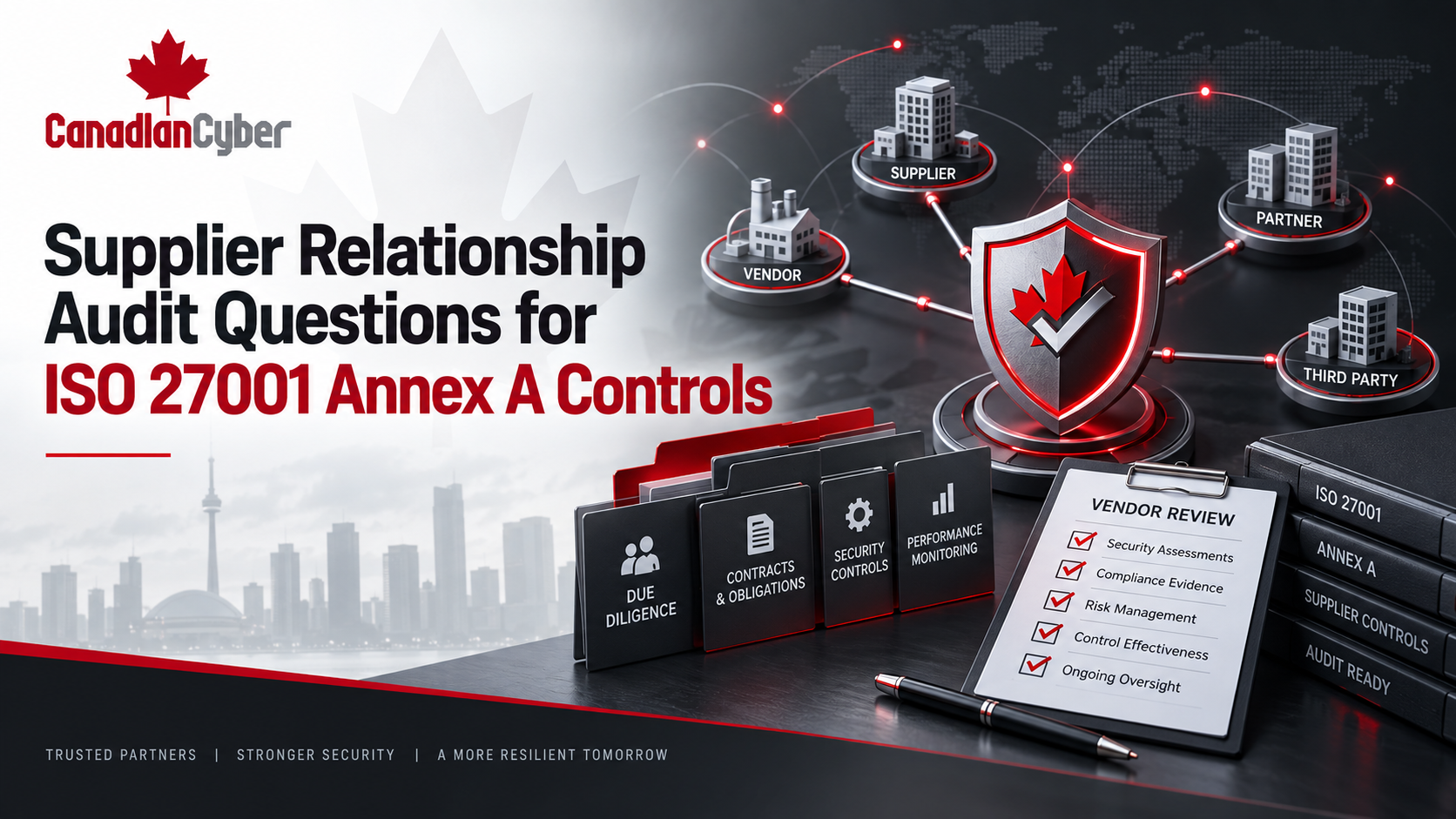
Canadian Cyber helps AI SaaS companies review model providers, vector databases, AI vendors, and support platforms as part of SOC 2 readiness.
SOC 2 Control Area 3: API Authentication and Authorization
APIs are a major trust area for SaaS platforms. A weak API can expose customer data, integrations, and admin functions.
| API Authentication Question | Evidence to Prepare |
|---|---|
| Do APIs require secure authentication? | API authentication standard. |
| Are API keys scoped? | Scope matrix. |
| Can tokens be revoked? | Token revocation procedure. |
| Are tokens rotated? | Rotation record or sample ticket. |
| Are privileged API actions separated? | Privileged endpoint list. |
| Are service accounts reviewed? | Service account review evidence. |
Practical rule: API security evidence should prove who can access what, under which scope, and how access can be revoked.
SOC 2 Control Area 4: API Rate Limits and Abuse Monitoring
Enterprise buyers want to know that your APIs cannot be abused easily. Rate limits and abuse monitoring help reduce scraping, credential attacks, runaway jobs, and denial-of-service impact.
| API Abuse Control Question | Evidence |
|---|---|
| Are rate limits defined? | API rate limit policy. |
| Are limits applied per user, token, tenant, or endpoint? | Gateway configuration evidence. |
| Are bulk export endpoints restricted? | Export control evidence. |
| Are repeated failures monitored? | Alert configuration. |
| Are 429 spikes reviewed? | API monitoring report. |
| Is API abuse included in incident response? | API abuse runbook. |
API evidence examples:
APIAuth-OAuthScopeMatrix-2026-Q2.pdf
APIRateLimits-GatewayConfig-2026-Q2.pdf
APIAbuse-AlertReview-2026-06.pdf
APITokenLifecycle-RevocationProcedure-v1.0.pdf
SOC 2 Control Area 5: Secure Logging
Logs are essential for SOC 2. But logs can also create risk if they contain sensitive content. AI SaaS teams must be especially careful because prompts, outputs, files, and API payloads may contain customer data.
| Logging Control Question | Evidence |
|---|---|
| Are log sources documented? | Log source inventory. |
| Are logs retained for a defined period? | Retention configuration. |
| Are admin actions logged? | Admin audit log sample. |
| Are API events logged? | API log sample. |
| Are AI events logged safely? | AI logging standard. |
| Are logs reviewed regularly? | Monthly or quarterly review sign-off. |
What to avoid logging:
- API keys, tokens, passwords, and secrets
- full prompts where not required
- full outputs where not required
- sensitive payloads
- personal information unless necessary and controlled
Log enough to investigate. Do not turn logs into a sensitive data dump.
Need API and Logging Evidence for SOC 2?
Canadian Cyber can help your team document API authentication, token lifecycle, rate limits, abuse alerts, logging standards, retention settings, and alert-to-ticket evidence.
SOC 2 Control Area 6: Logging Review and Alert Response
Having logs is not the same as reviewing logs. SOC 2 evidence should show that logs and alerts are monitored and acted upon.
| Log Review Question | Evidence |
|---|---|
| Are critical logs reviewed on a schedule? | Review sign-off. |
| Are security alerts triaged? | Alert queue or ticket sample. |
| Are high-risk events escalated? | Incident ticket. |
| Are API abuse events reviewed? | API alert report. |
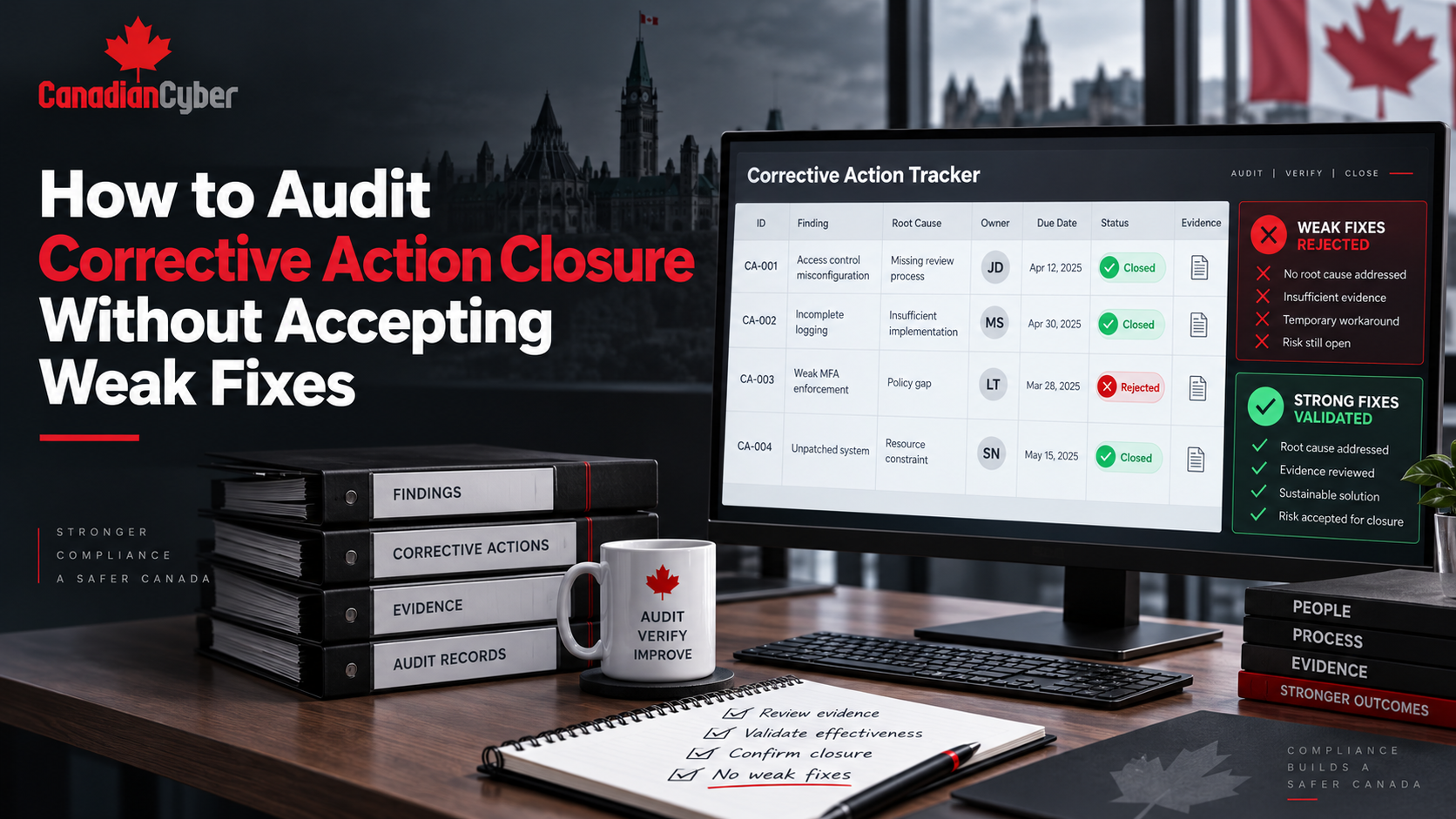
| Are corrective actions tracked? | CAPA record. |
SOC 2 Control Area 7: Support Access to Customer Data
Support access is one of the most sensitive areas in SaaS. Support teams may need access to resolve issues, but that access must be controlled.
| Support Access Question | Evidence |
|---|---|
| Is support access role-based? | Role matrix. |
| Is customer data access limited? | Permission review. |
| Is support access logged? | Support access log. |
| Are privileged support actions reviewed? | Review report. |
| Is customer approval required for sensitive access? | Approval workflow. |
| Are support users trained? | Training completion evidence. |
Practical rule: Support access should be helpful, limited, logged, and reviewed.
SOC 2 Control Area 8: AI Support Access
AI SaaS support access needs extra attention because support staff may see prompts, uploaded files, model outputs, chat histories, AI error logs, customer screenshots, vector search results, integration data, or AI configuration settings.
| AI Support Access Question | Evidence |
|---|---|
| Can support staff view prompts? | Permission matrix. |
| Can support staff view outputs? | Permission matrix. |
| Are prompts and outputs masked where possible? | Product or control evidence. |
| Is access logged? | Support access logs. |
| Is sensitive access approved? | Approval workflow. |
| Are support users trained on AI data handling? | Training report. |
If support can see AI customer data, SOC 2 controls must show why, when, how, and by whom.
Control Support Access Before SOC 2 Testing
Canadian Cyber can help define support access roles, customer data handling rules, access logs, review workflows, training evidence, and support access controls for AI SaaS companies.
SOC 2 Control Area 9: Change Management for AI Features and APIs
AI SaaS changes may not always look like normal code changes. Prompt templates, model settings, RAG sources, API scopes, and support access roles can all affect security or customer outcomes.
| Change Type | Evidence |
|---|---|
| Code change | Pull request, approval, deployment record. |
| Prompt template change | Prompt review and test record. |
| Model version change | Model change approval. |
| API scope change | Scope review and approval. |
| RAG source change | Source permission review. |
| AI vendor change | Vendor risk review. |
SOC 2 Control Area 10: Incident Response for AI, APIs, Logs, and Support Access
Incident response should include realistic SaaS and AI scenarios.
| Incident Scenario | What It Tests |
|---|---|
| API token compromise | Token revocation, log review, and customer impact. |
| AI vendor breach | Vendor escalation and data exposure analysis. |
| Prompt log exposure | Confidentiality and privacy response. |
| Support account compromise | Support access containment. |
| Cross-tenant output issue | AI data isolation and customer communication. |
| Sensitive data in logs | Log containment and corrective action. |
Evidence to keep:
- incident response plan
- AI/API incident runbook
- tabletop exercise report
- participant list and decision log
- lessons learned
- corrective action tracker and customer notification template
SOC 2 Evidence Pack for AI Features, APIs, Logs, and Support Access
A strong evidence pack helps auditors and buyers review your controls faster.
| Section | Evidence |
|---|---|
| AI Features | AI data flow map, customer data use policy, AI risk register. |
| AI Vendors | Model provider review, DPA, assurance report review. |
| APIs | Authentication standard, scope matrix, rate limit proof. |
| Logs | Log source inventory, retention settings, alert review. |
| Support Access | Role matrix, support access logs, access review. |
| Incident Response | AI/API incident runbooks and tabletop evidence. |
| Management Review | SOC 2 readiness status, open risks, decisions. |
| SharePoint Evidence Metadata | Purpose |
|---|---|
| Control Area | AI, API, logs, support access. |
| Control ID | Maps to SOC 2 control. |
| Evidence Owner | Person responsible. |
| Period Covered | Month, quarter, year. |
| Review Status | Requested, uploaded, approved, rejected. |
| Framework | SOC 2, ISO 27001, ISO 42001, customer review. |
SOC 2 Readiness Checklist for AI SaaS Companies in Canada
Use this checklist before your next SOC 2 readiness review, buyer questionnaire, or audit.
| AI Features | Yes / No |
|---|---|
| Are AI features included in SOC 2 scope? | |
| Are AI data flows documented? | |
| Are prompts, outputs, and embeddings classified? | |
| Are AI vendors reviewed? |
| APIs | Yes / No |
|---|---|
| Are APIs authenticated securely? | |
| Are API scopes least privilege? | |
| Can tokens be revoked and rotated? | |
| Are API abuse alerts reviewed? |
| Logs and Support Access | Yes / No |
|---|---|
| Are log sources inventoried? | |
| Are sensitive prompts, outputs, tokens, and secrets excluded where appropriate? | |
| Is support access role-based and logged? | |
| Are support access reviews documented? |
Common Mistakes to Avoid
- Treating AI features like normal SaaS screens. AI features may process prompts, files, outputs, embeddings, and model provider data. Map them.
- Forgetting API token lifecycle. Auditors want to see creation, rotation, revocation, and review evidence.
- Logging too much sensitive data. Logs should support investigation without becoming a new data exposure risk.
- Giving support teams too much access. Support access should be limited and reviewed.
- Not reviewing AI vendors. Model providers and embedding services can process customer data.
- Waiting until audit fieldwork. SOC 2 readiness should happen before the auditor starts testing.
What Good Looks Like
A strong SOC 2 control set for AI SaaS can show:
- AI data flow map
- customer data use statement
- AI vendor review
- API scope matrix
- token lifecycle process
- rate limit evidence
- API abuse alert review
- log source inventory
- support access role matrix
- prompt and model change records
- AI/API incident tabletop
- SharePoint evidence vault, risk register, and management review notes
That is the difference between saying “we are secure” and proving it.
Canadian Cyber’s Take
At Canadian Cyber, we often see AI SaaS teams with strong engineering but weak evidence.
The team knows the platform is secure. But buyers and auditors need proof.
For AI features, APIs, logs, and support access, that proof must be specific. It should show how customer data is handled, how access is limited, how integrations are protected, how logs are reviewed, and how incidents are managed.
For companies looking for SOC 2 readiness or SOC 2 services in Canada, the best approach is not a generic checklist. It is a control and evidence plan built around your real product architecture.
Takeaway
SOC 2 readiness for AI SaaS in Canada needs practical controls over AI features, model providers, customer prompts, model outputs, embeddings, APIs, tokens, rate limits, logs, alerts, support access, incident response, and evidence.
Start by mapping the data. Then assign owners. Then build controls. Then collect evidence.
That is how AI SaaS companies prepare for SOC 2 and win enterprise trust.
How Canadian Cyber Can Help
Canadian Cyber helps AI SaaS companies in Canada prepare for SOC 2 with practical control design and audit-ready evidence.
- SOC 2 readiness assessments
- SOC 2 control mapping
- AI feature security reviews
- AI vendor risk reviews
- API security evidence packs
- log review workflows
- support access reviews
- SharePoint evidence workspace setup
- customer data governance
- AI incident tabletop exercises
- SOC 2 GRC tool strategy
- vCISO support for AI SaaS governance
Stay Connected With Canadian Cyber
Follow Canadian Cyber for practical guidance on SOC 2, AI SaaS security, API security, logging, support access, SharePoint ISMS, ISO 27001, ISO 42001, and vCISO support.