ISO 27001 • Manufacturing Cybersecurity • IT/OT Security • Vendor Risk • Plant Operations
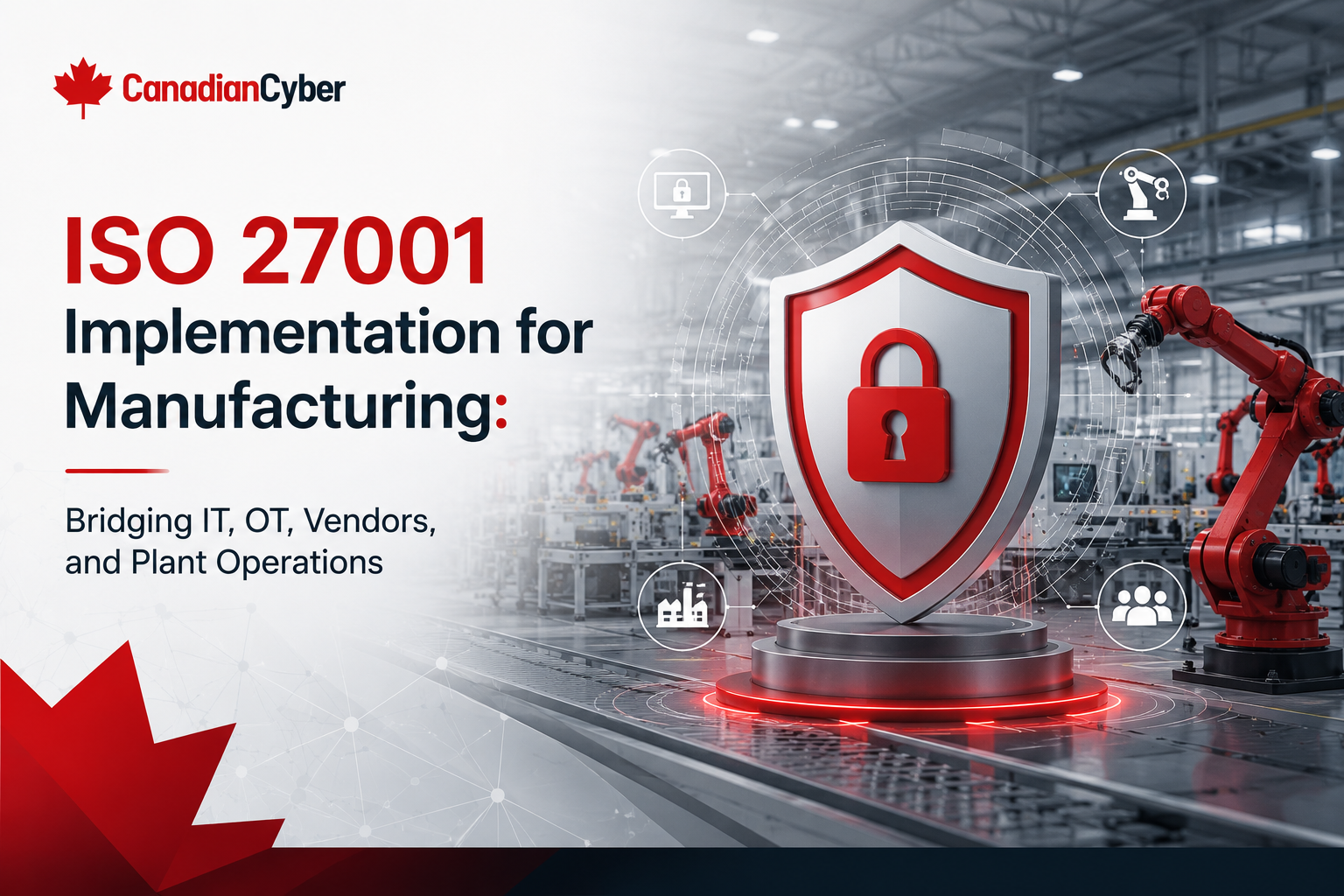
ISO 27001 Implementation for Manufacturing: Bridging IT, OT, Vendors, and Plant Operations in Canada
ISO 27001 implementation for manufacturing is different from office-based compliance. A manufacturer must protect business systems, production environments, plant operations, suppliers, maintenance vendors, remote access, intellectual property, and operational technology. The goal is not only to pass an audit. The goal is to reduce downtime risk, protect customer trust, and keep production moving.
Quick Snapshot
| Manufacturing Area | Why It Matters for ISO 27001 |
|---|---|
| IT Systems | Protects email, ERP, finance, HR, file shares, endpoints, identity, and cloud systems. |
| OT Systems | Protects plant equipment, industrial networks, PLCs, HMIs, SCADA, sensors, and production systems. |
| Vendors | Controls access from maintenance providers, equipment suppliers, MSPs, cloud vendors, and software providers. |
| Plant Operations | Connects cybersecurity with uptime, safety, production schedules, quality, and recovery planning. |
| Evidence | Proves access reviews, risk treatment, vendor reviews, incident response, backups, and management review. |
| Outcome | A practical ISMS that supports security, resilience, audit readiness, and operational continuity. |
Introduction
Manufacturing companies are under pressure from every side.
Customers want reliable production. Executives want uptime. Plant managers want minimal disruption. IT wants secure systems. OT teams want stable equipment. Vendors need remote access. Auditors want evidence. Insurers want proof of controls. Attackers want weak access points.
This is why ISO 27001 implementation in manufacturing cannot be treated like a normal policy project.
A manufacturer does not only need to protect laptops and email. It must also think about:
- plant networks and production lines
- industrial control systems and remote maintenance access
- ERP, inventory systems, supplier portals, and engineering files
- quality records, customer specifications, and machine data
- backup, recovery, vendor dependencies, and physical access
- business continuity and incident response
The biggest challenge is bridging IT, OT, vendors, and plant operations.
If ISO 27001 lives only with IT, it will miss plant reality. If it lives only with compliance, it will become paperwork. If it ignores OT, it may fail to reduce the risks that matter most to manufacturing.
Need ISO 27001 for Manufacturing?
Canadian Cyber helps manufacturing companies build practical ISO 27001 programs that connect IT, OT, vendors, plant operations, incident response, risk management, SharePoint ISMS evidence, and audit readiness.
Why ISO 27001 Matters for Manufacturing
Manufacturing cybersecurity is no longer only an IT issue.
A cyber incident can affect production schedules, plant uptime, order fulfilment, quality control, customer commitments, supplier coordination, maintenance operations, intellectual property, regulatory obligations, insurance renewals, and enterprise customer trust.
Common Manufacturing Cyber Risks
| Risk | Business Impact |
|---|---|
| Ransomware affects production planning | Delayed orders and downtime. |
| Remote vendor account is compromised | Unauthorized access to plant systems. |
| ERP outage disrupts shipping or inventory | Operational delays. |
| Engineering drawings are stolen | Intellectual property loss. |
| OT network visibility is weak | Slow incident detection. |
| Backups are not tested | Recovery uncertainty. |
| Unapproved USB use affects plant systems | Malware or operational disruption. |
For manufacturing, ISO 27001 should protect business continuity and production trust, not just create audit documents.
The Manufacturing ISO 27001 Challenge: IT and OT Are Different
IT and OT have different priorities. Both matter.
| IT Environment | OT Environment |
|---|---|
| Email, cloud, ERP, laptops, identity. | PLCs, HMIs, SCADA, sensors, industrial networks. |
| Security patches can often be scheduled normally. | Patching may require production downtime. |
| Confidentiality is often a major focus. | Availability and safety are often major focus areas. |
| Systems change frequently. | Systems may run for years with limited change. |
| IT owns many controls. | Engineering, maintenance, and plant operations may share ownership. |
Practical rule: ISO 27001 for manufacturing must respect OT constraints while still managing OT risk.
Step 1: Define a Manufacturing-Specific ISO 27001 Scope
Scope is where many projects go wrong. A manufacturer should not copy a generic scope statement. It must define what part of the business, locations, systems, processes, and data are included.
| Scope Question | Why It Matters |
|---|---|
| Which manufacturing sites are included? | Defines plant coverage. |
| Which business systems are included? | ERP, finance, HR, email, cloud. |
| Are OT systems included? | Defines plant cyber risk coverage. |
| Which production processes are critical? | Supports risk prioritization. |
| Which vendors support plant systems? | Defines supplier risk. |
| Which engineering files or IP are protected? | Supports intellectual property protection. |
Example scope statement:
The ISMS covers the information security management activities supporting manufacturing operations, including corporate IT systems, ERP, production planning systems, selected OT and plant support systems, remote vendor access, supplier security processes, engineering documentation, customer specifications, incident response, access control, vendor risk management, backup and recovery, and supporting governance activities across the defined manufacturing sites.
Practical rule: A good scope is realistic, defensible, and connected to manufacturing risk.
Step 2: Build a Risk Register That Includes Plant Reality
Generic risk registers fail in manufacturing. You need risks that reflect actual operations.
| Manufacturing Risk | Possible Treatment |
|---|---|
| Remote vendor access to plant systems is not reviewed | Vendor access review and MFA. |
| Ransomware disrupts production planning | Backup testing and incident tabletop. |
| Engineering drawings are accessed by unauthorized users | Access control and classification. |
| OT network has limited visibility | OT asset inventory and monitoring plan. |
| ERP outage affects shipping | Recovery plan and business continuity review. |
| Backup restore for production systems is untested | Restore testing and evidence. |
Risk Register Fields
| Field | Purpose |
|---|---|
| Risk ID | Unique reference. |
| Affected Area | IT, OT, vendor, plant, ERP, engineering. |
| Business Impact | Downtime, safety, quality, customer, financial. |
| Risk Owner | Accountable person. |
| Treatment Plan | What will reduce risk. |
| Evidence Required | Proof of action. |
If plant managers do not recognize the risks in the register, the risk register is too generic.
Step 3: Assign Owners Across IT, OT, Vendors, and Operations
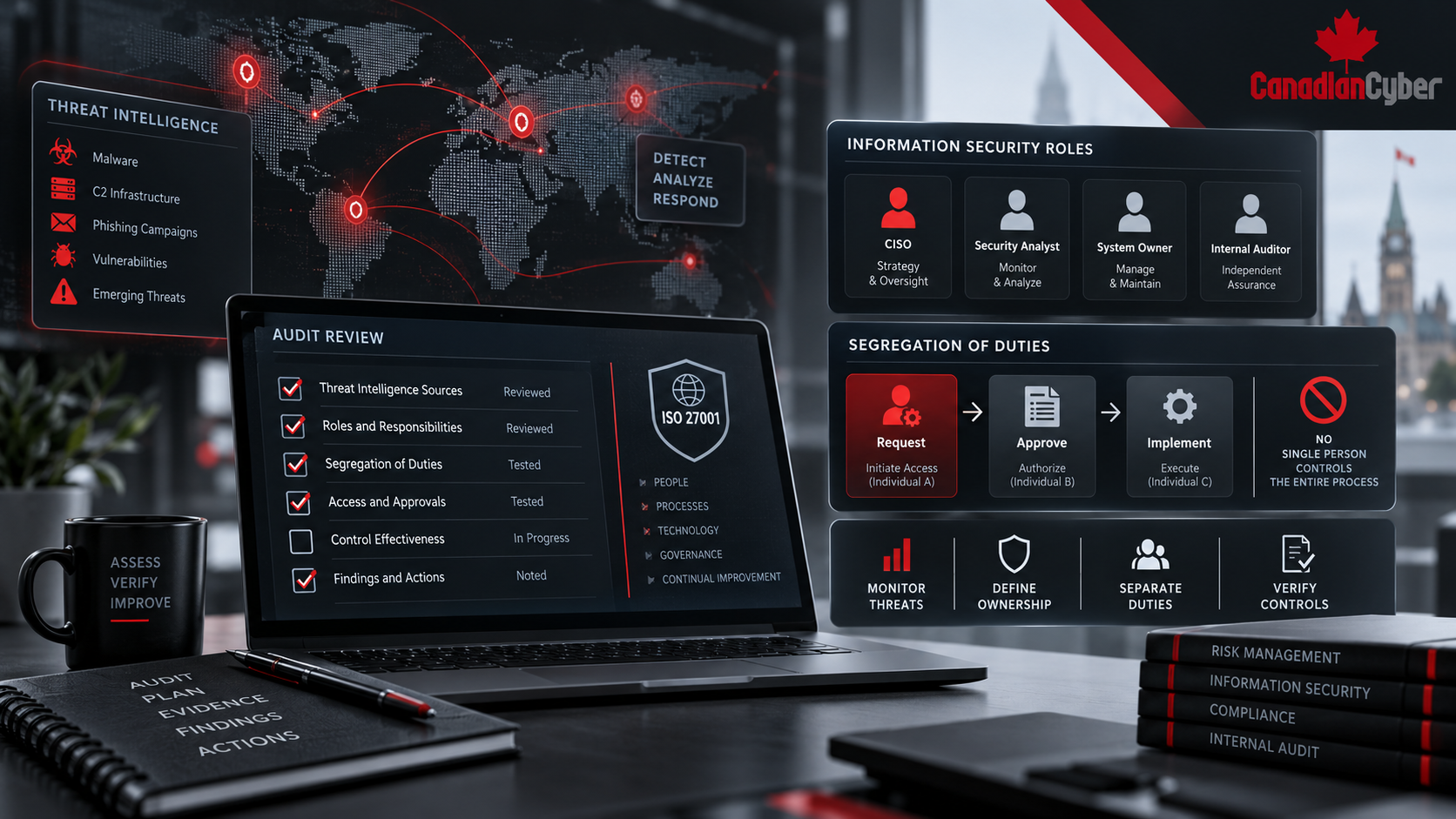
ISO 27001 needs ownership. In manufacturing, ownership is shared. IT cannot own everything.
| Control Area | Likely Owner |
|---|---|
| Corporate identity and MFA | IT. |
| ERP access | ERP owner / IT. |
| OT asset inventory | Plant operations / OT lead. |
| Remote vendor access | IT + maintenance / engineering. |
| Engineering document access | Engineering manager. |
| Incident response | Security / IT / plant leadership. |
Practical rule: Manufacturing ISO 27001 needs plant-level control owners, not only corporate IT owners.
Step 4: Separate IT Access, OT Access, and Vendor Access
Access control is one of the highest-value areas for manufacturing. But not all access is the same.
| Access Type | Examples |
|---|---|
| IT Access | Microsoft 365, ERP, file shares, VPN, HR, finance. |
| OT Access | Engineering workstations, HMIs, SCADA, plant network tools. |
| Vendor Access | Remote maintenance, equipment supplier portals, MSP access. |
| Physical Access | Server rooms, plant floors, control rooms. |
| Support Access | Helpdesk, MSP, cloud providers, software vendors. |
Access Control Checklist
| Question | Yes / No |
|---|---|
| Is MFA enforced for remote and privileged access? | |
| Are admin accounts reviewed regularly? | |
| Are plant system users reviewed? | |
| Are vendor accounts reviewed? | |
| Is remote access approved and logged? | |
| Are access exceptions time-bound? |
Evidence to collect: MFA report, privileged access review, OT user access review, vendor access list, remote access logs, offboarding samples, exception register, service account register, and emergency access records.
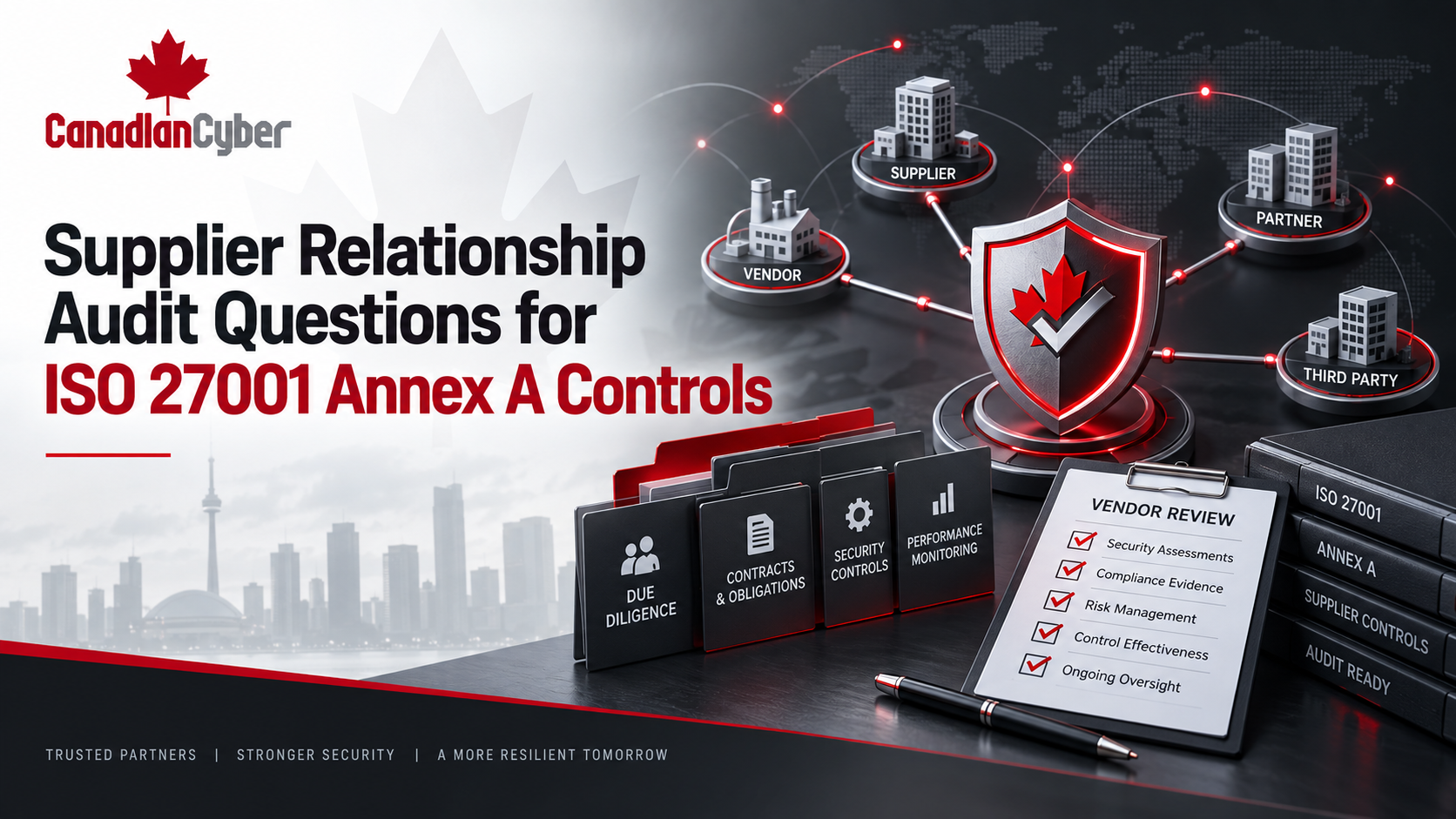
Step 5: Review Vendors That Touch Manufacturing Operations
Manufacturing depends heavily on vendors. Some vendors may have deep access to operations.
Vendor types to review include:
- equipment manufacturers and maintenance vendors
- MSPs, ERP providers, and cloud hosting providers
- industrial software vendors and remote monitoring providers
- logistics partners and quality system providers
- backup providers, cybersecurity vendors, raw material suppliers, and plant contractors
| Vendor Risk Question | Why It Matters |
|---|---|
| Does the vendor access plant systems? | OT risk. |
| Does the vendor access customer data? | Confidentiality risk. |
| Does the vendor support critical production? | Availability risk. |
| Does the vendor have remote access? | Access risk. |
| Is the vendor incident contact known? | Response readiness. |
| Is the vendor critical to recovery? | Business continuity. |
Build a Manufacturing Vendor Risk Register
Canadian Cyber helps manufacturers build vendor risk registers that include IT vendors, OT suppliers, maintenance providers, MSPs, and plant-critical third parties.
Step 6: Protect Engineering Files and Intellectual Property
Manufacturing companies often hold valuable intellectual property. This may include engineering drawings, CAD files, product formulas, production methods, customer specifications, quality procedures, machine settings, supplier pricing, R&D documents, and proprietary process data.
| IP Protection Control | Evidence |
|---|---|
| Data classification | Classification policy and labels. |
| Access control | Engineering folder access review. |
| Version control | Document control evidence. |
| External sharing review | Sharing report. |
| Vendor access control | Vendor review and access logs. |
| Offboarding | Access removal samples. |
Practical rule: For manufacturers, intellectual property protection should be part of the ISMS risk conversation.
Step 7: Build Incident Response for Plant and Business Disruption
A manufacturing incident is not only a data breach. It can become a production outage.
Manufacturing incident scenarios include:
- ransomware affects ERP or production scheduling
- plant network disruption or OT workstation malware
- remote vendor account compromise
- engineering file theft or supplier breach
- backup failure during outage
- unauthorized remote access or quality system unavailability
| Group | Tabletop Questions |
|---|---|
| Executives | When do we declare a crisis? |
| IT | Which systems are affected? |
| Plant Operations | Can production continue safely? |
| OT / Engineering | Are plant systems affected? |
| Legal | Are notification obligations triggered? |
| Procurement | Are suppliers or vendors involved? |
Run a Manufacturing Incident Tabletop
Canadian Cyber helps manufacturers run ransomware, plant disruption, vendor breach, and OT/cloud incident tabletop exercises.
Step 8: Align Backup and Recovery With Production Priorities
Backups are not enough. Manufacturers need recovery priorities.
| Recovery Question | Why It Matters |
|---|---|
| Which systems must recover first? | Production continuity. |
| Is ERP recovery prioritized? | Orders, inventory, shipping. |
| Are plant support systems backed up? | Operational recovery. |
| Are backups protected from ransomware? | Recovery confidence. |
| Has restore testing been performed? | Evidence. |
| Are manual workarounds documented? | Plant resilience. |
Evidence to collect: backup configuration, backup success reports, restore test records, recovery priority list, business impact analysis, manual workaround procedures, vendor recovery contacts, and ransomware recovery tabletop evidence.
Step 9: Use SharePoint as the ISMS Evidence Hub
Manufacturers often struggle with evidence. Evidence may live in emails, Excel files, maintenance systems, ERP exports, vendor portals, IT tickets, plant records, shared drives, paper records, and cloud consoles.
A structured SharePoint ISMS can bring order.
| SharePoint ISMS Area | Purpose |
|---|---|
| Risk Register | IT, OT, vendor, plant, cloud, IP risks. |
| Control Library | Controls, owners, evidence, framework mapping. |
| Evidence Vault | Audit-ready proof. |
| Vendor Register | Supplier and maintenance vendor reviews. |
| Access Review Tracker | IT, OT, vendor, remote access reviews. |
| Management Review Library | Leadership decisions and action items. |
Explore the ISMS SharePoint Solution
Canadian Cyber’s ISMS SharePoint solution helps manufacturers manage ISO 27001 risks, controls, vendors, evidence, audits, corrective actions, and management review in one Microsoft 365 workspace.
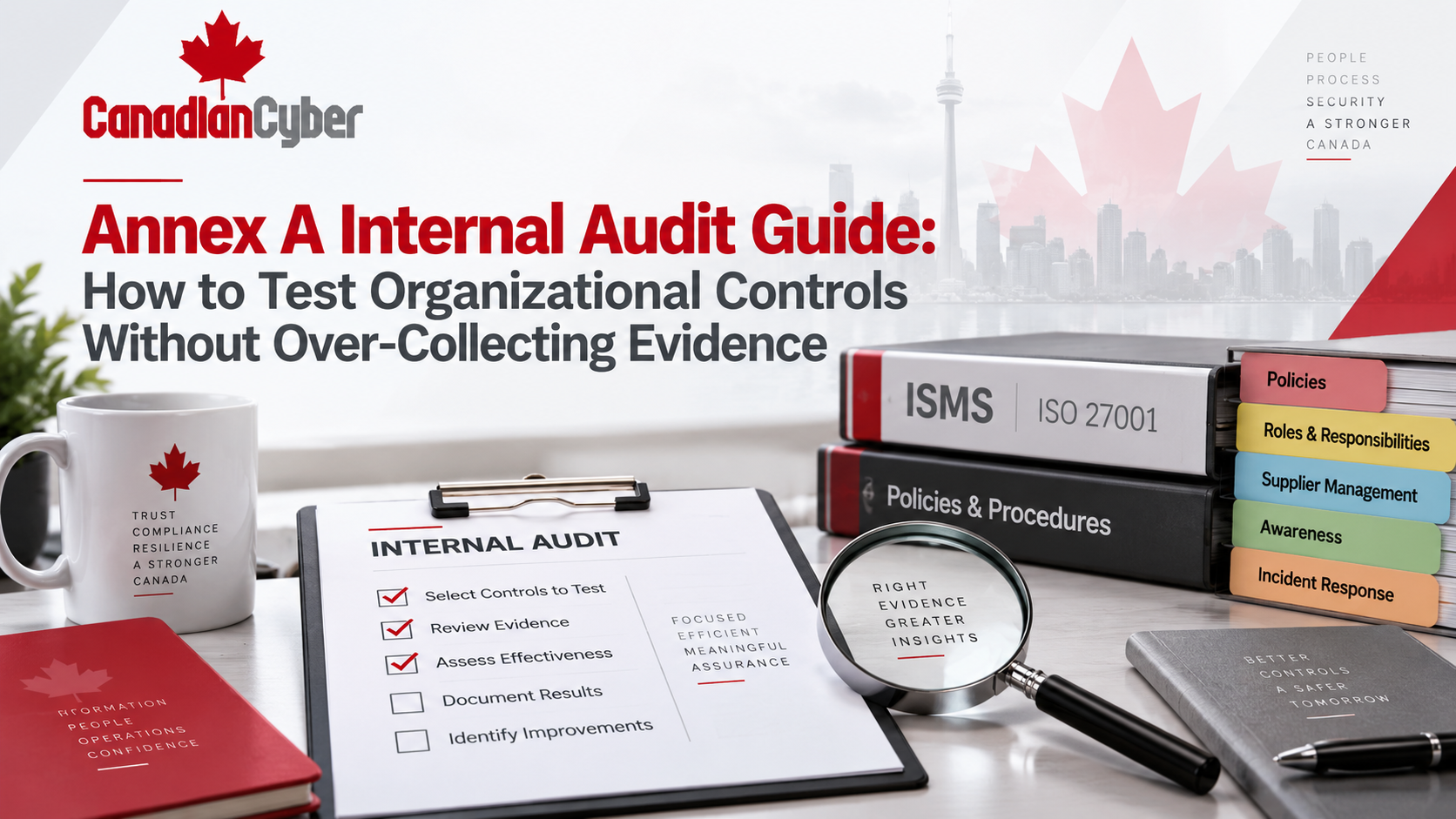
Step 10: Prepare Internal Audit Without Disrupting the Plant
Internal audit should test the ISMS without creating unnecessary plant disruption.
| Internal Audit Area | What to Test |
|---|---|
| Access Control | IT, OT, vendor, remote access. |
| Vendor Risk | Critical suppliers and maintenance vendors. |
| Incident Response | Plant disruption scenarios. |
| Backup Recovery | Restore testing and recovery priorities. |
| Engineering Data | Access to CAD, drawings, customer specs. |
| Management Review | Leadership decisions and actions. |
Internal audit should include plant operations input, not just IT evidence.
Manufacturing ISO 27001 Implementation Checklist
Scope and Governance
| Question | Yes / No |
|---|---|
| Is the ISO 27001 scope manufacturing-specific? | |
| Are IT, OT, vendors, and plant operations included where relevant? | |
| Is there an executive sponsor? | |
| Is plant leadership involved? |
Risk and Controls
| Question | Yes / No |
|---|---|
| Does the risk register include plant and OT risks? | |
| Are remote vendor access risks tracked? | |
| Are engineering file risks included? | |
| Are ransomware and downtime risks included? |
Evidence and Audit Readiness
| Question | Yes / No |
|---|---|
| Are access reviews documented? | |
| Are vendor reviews documented? | |
| Are backup restore tests documented? | |
| Has incident response been tested? | |
| Is evidence stored in a structured ISMS workspace? | |
| Has management review been completed? |
If several answers are “no,” your ISO 27001 implementation may not yet reflect manufacturing reality.
Common Mistakes to Avoid
- Treating ISO 27001 as an IT-only project. Manufacturing risk includes plant operations, vendors, engineering, physical access, and OT.
- Ignoring OT because it is hard. OT may be difficult to assess, but ignoring it creates blind spots.
- Over-scoping without owners. Do not include systems if nobody can own controls or evidence.
- Forgetting remote maintenance vendors. Remote access to plant systems is a major risk area.
- Not testing recovery. Backups must be tested against production priorities.
- Using generic policies. Manufacturing policies must reflect real plant workflows.
- Leaving plant managers out. Plant operations must be part of incident response, risk assessment, and recovery planning.
What Good Looks Like
A strong ISO 27001 program for manufacturing can show:
- clear ISMS scope
- IT and OT risk register
- plant operations involvement
- vendor risk register
- remote access review evidence
- engineering file access controls
- backup and restore evidence
- incident response tabletop evidence
- supplier security process
- policy library and control ownership matrix
- SharePoint evidence vault, internal audit tracker, corrective action register, and management review minutes
That is how ISO 27001 becomes operational. Not just certified.
Canadian Cyber’s Take
At Canadian Cyber, we often see manufacturers start ISO 27001 with policies and templates.
That is not enough.
Manufacturing needs a practical ISMS that understands how the business actually runs. Production matters. Plant uptime matters. Vendor access matters. Engineering files matter. Remote maintenance matters. ERP matters. OT matters. Recovery matters.
The strongest manufacturing programs bridge IT, OT, vendors, and plant operations from the start. That is how security supports resilience, customer trust, and business continuity.
Takeaway
ISO 27001 implementation for manufacturing must be practical. It should not live only in IT.
It should connect:
- IT systems and OT environments
- plant operations and remote vendors
- critical suppliers and engineering data
- ERP systems and incident response
- backup recovery and leadership decisions
Start with scope. Build a manufacturing-specific risk register. Assign IT and plant owners. Review vendor access. Protect engineering files. Test incident response. Validate backups. Organize evidence in SharePoint. Prepare internal audit with plant input. That is how manufacturers build an ISMS that works in the real world.
How Canadian Cyber Can Help
Canadian Cyber helps manufacturing companies implement ISO 27001 in a practical, operations-aware way.
- ISO 27001 readiness assessments for manufacturing
- ISMS scope definition
- IT and OT risk register development
- vendor risk register setup
- remote access control reviews
- plant incident response tabletop exercises
- backup and recovery evidence reviews
- engineering file access reviews
- policy library development
- SharePoint ISMS implementation
- internal audit preparation
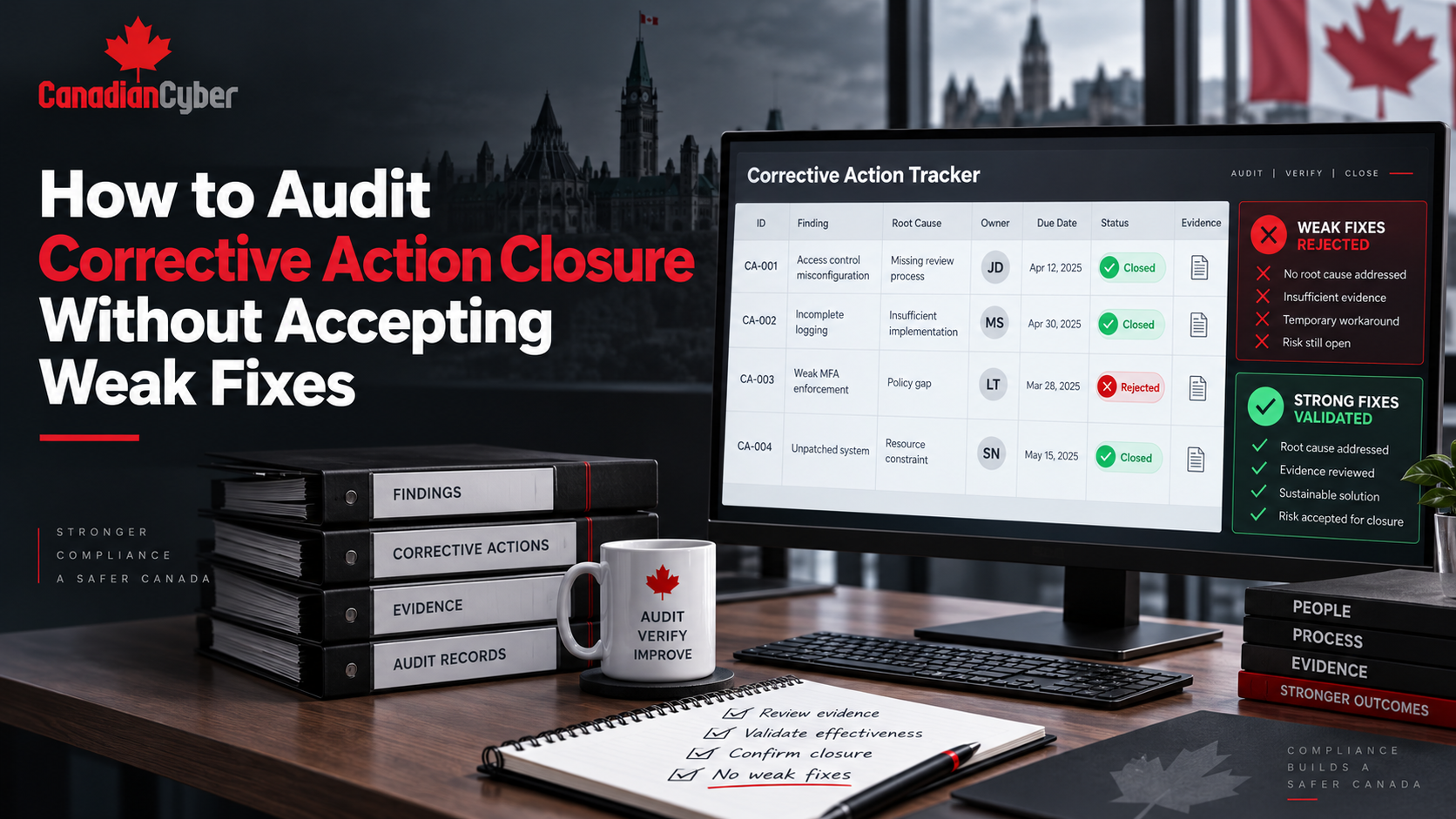
- corrective action tracking
- management review preparation
- vCISO support for manufacturing cybersecurity
Stay Connected With Canadian Cyber
Follow Canadian Cyber for practical guidance on ISO 27001, manufacturing cybersecurity, IT/OT security, vendor risk, SharePoint ISMS, incident response, audit readiness, and vCISO support.