

Internal Audit
Leadership Agenda
ISO 27001 Internal Audit Agenda: Save Leadership Time and Improve Readiness
Build a focused ISO 27001 internal audit agenda that helps leaders review risk, evidence gaps, corrective actions, decisions, and certification readiness without wasting time.
Quick Answer
What should an ISO 27001 internal audit agenda include?
An ISO 27001 internal audit agenda should help leadership make decisions.
It should focus on scope, top risks, readiness status, major findings, evidence gaps, corrective actions, risk acceptance, resource needs, and next steps.
The goal is simple: give leaders the truth, the risk, the decision, and the owner.
Leadership Time Is Expensive
A good ISO 27001 internal audit agenda respects leadership time.
Executives do not need every screenshot.
They do not need every access sample.
They also do not need a long folder walkthrough.
Instead, they need a clear view of risk, readiness, decisions, and accountability.
Practical rule: leadership should not discover audit details in the meeting. Leadership should make decisions based on audit results.
What Leadership Needs to Know
A leadership audit meeting should answer practical business questions.
Show certification readiness in plain language.
Show top risks and business impact.
Show major findings and repeat issues.
Show evidence gaps that could delay readiness.
Show owners, dates, and evidence needs.
Ask for approval, resources, or risk acceptance.
Quick Agenda Snapshot
| Agenda Section | Leadership Focus |
|---|---|
| Purpose | Why the internal audit matters now. |
| Scope | What teams, systems, vendors, and controls are included. |
| Readiness | Whether the organization is ready, blocked, or at risk. |
| Risks | Top risks that need attention or acceptance. |
| Findings | High-impact findings and repeat issues. |
| Actions | Owners, deadlines, evidence, and follow-up. |
What Not to Bring to Leadership
A leadership audit meeting should not become a technical review.
Keep operational details with process owners before the meeting.
Practical rule: escalate only what needs awareness, approval, funding, risk acceptance, or accountability.
1. Start With the Audit Purpose
Start with business context.
Do not start with a long technical deck.
Leaders should know why the audit matters now.
Questions to Answer
- Is certification approaching?
- Is a surveillance audit coming?
- Is a client asking for ISO 27001 evidence?
- Are previous findings still open?
- Did the business add new systems, vendors, or AI tools?
2. Confirm the Audit Scope
Leadership should understand what is in scope.
This section should be short. However, missing scope items should be escalated quickly.
Ask leadership: does the audit scope match our business, systems, vendors, data, AI tools, and certification goals?
3. Show Certification Readiness
Leadership should not need to guess the readiness status.
Use simple ratings.
| Area | Status | Leadership Concern |
|---|---|---|
| ISMS Scope | Mostly Ready | Needs final approval. |
| Risk Register | Partially Ready | Some risks need updates. |
| Access Reviews | At Risk | Privileged review is incomplete. |
| Backup and Restore | At Risk | Restore test is not documented. |
Need a Leadership-Ready Internal Audit Agenda?
Canadian Cyber helps teams turn audit details into clear leadership decisions.
We help prepare agendas, readiness dashboards, risk summaries, evidence gap reports, and corrective action trackers.
4. Review Top Risks Only
Leadership should not review the full risk register line by line.
Instead, show the risks that need attention.
Bring These Risks to Leadership
- High residual risks.
- Risks needing acceptance.
- Risks with overdue treatments.
- Risks that affect certification.
- Risks that need budget or support.
5. Escalate Major Findings
Leadership does not need every finding.
Group findings by risk and business impact.
| Finding Theme | Risk | Decision Needed |
|---|---|---|
| Privileged access review missing. | High | Assign owner and deadline. |
| Vendor reviews incomplete. | Medium | Prioritize critical vendors. |
| Restore testing not documented. | High | Approve immediate test. |
6. Show Evidence Gaps That Matter
Not every missing file needs leadership attention.
Escalate evidence gaps only when they create readiness risk.
7. Review Corrective Actions
Corrective actions show whether the ISMS is improving.
Leadership should focus on overdue, high-risk, repeat, and blocked actions.
| Status | Leadership Action |
|---|---|
| Open | Monitor owner and due date. |
| Pending Evidence | Push evidence completion. |
| Overdue | Escalate immediately. |
| Closed and Verified | No action needed. |
8. Ask for Clear Decisions
Do not make leadership guess what is needed.
State each decision clearly.
Decision Examples
- Approve audit scope.
- Approve risk acceptance.
- Approve remediation timeline.
- Approve urgent restore testing.
- Approve AI governance review.
- Approve certification readiness next steps.
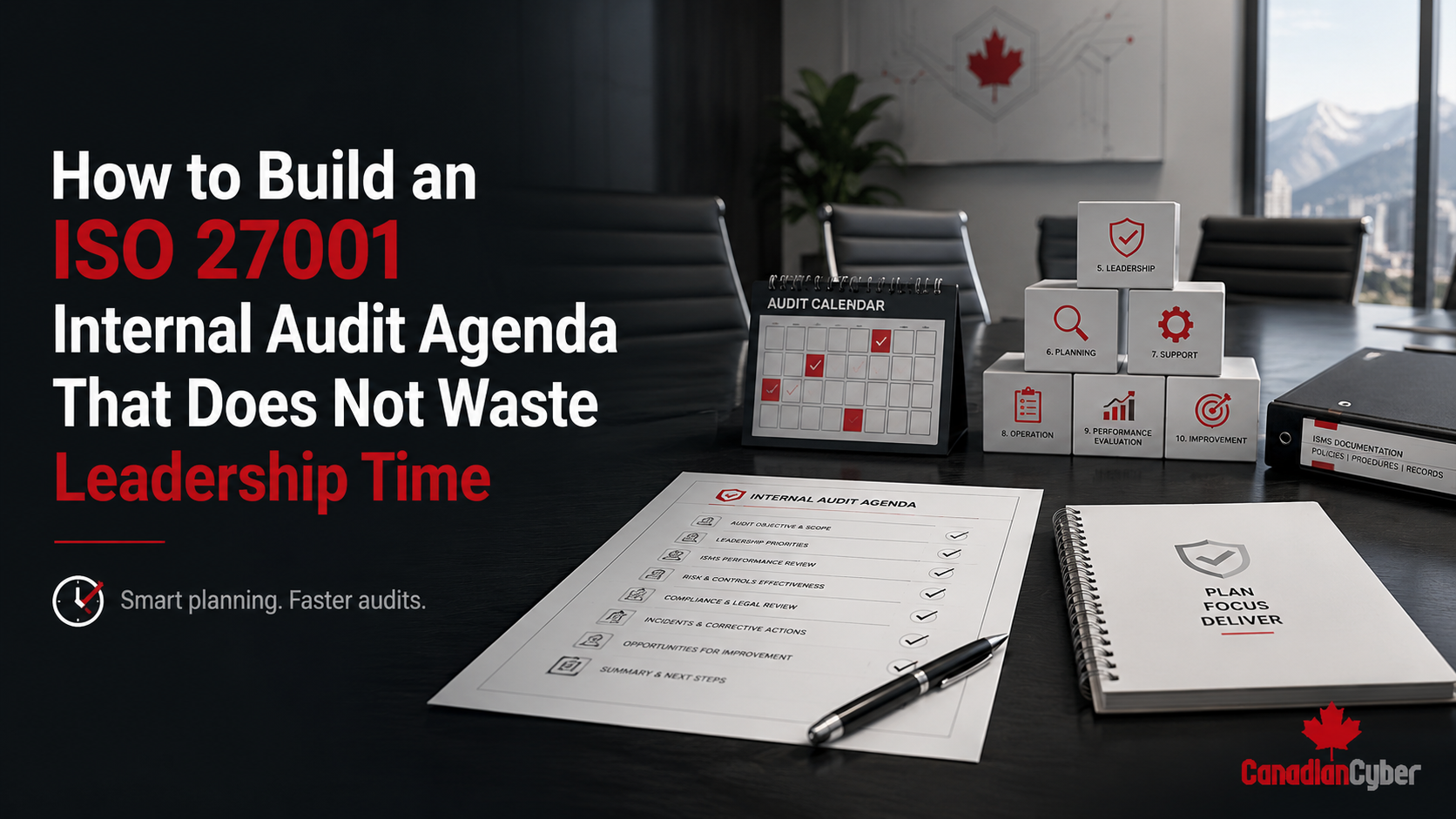
Sample 45-Minute Leadership Audit Agenda
| Time | Topic |
|---|---|
| 5 minutes | Purpose, scope, and objectives. |
| 7 minutes | Certification readiness summary. |
| 8 minutes | Top risks and risk changes. |
| 8 minutes | Major findings and business impact. |
| 7 minutes | Corrective action dashboard. |
| 10 minutes | Decisions, owners, deadlines, and next steps. |
Leadership Agenda Checklist
- Meeting purpose is clear.
- Audit scope is summarized.
- Readiness status is shown.
- Top risks are highlighted.
- Major findings are risk-ranked.
- Evidence gaps are linked to impact.
- Corrective actions are summarized.
- Decisions needed are listed.
- Owners and due dates are confirmed.
- Follow-up date is agreed.
How SharePoint Can Help
A SharePoint ISMS workspace can turn audit data into leadership-ready views.
It can help leaders see risk, readiness, findings, decisions, and corrective action status.
Show status by control area.
Show only items that need attention.
Track risk acceptance and approvals.
Track owner, due date, evidence, and closure.
How Canadian Cyber Helps
Canadian Cyber helps organizations build ISO 27001 internal audit agendas that save leadership time.
We help teams turn audit details into clear decisions, dashboards, and action plans.
Frequently Asked Questions
What should be included in an ISO 27001 internal audit agenda?
Include purpose, scope, readiness status, top risks, major findings, evidence gaps, corrective actions, decisions needed, resource needs, and next steps.
How long should a leadership audit meeting be?
A focused leadership audit meeting can often run in 45 to 60 minutes when the team prepares a clear dashboard and decision list.
What should leadership not review during an internal audit?
Leadership should not review raw exports, every sample, screenshot details, or low-risk document cleanup unless those items affect business risk.
What should be escalated to leadership?
Escalate high-risk findings, repeat findings, overdue actions, risk acceptance items, resource needs, and certification readiness blockers.
Can SharePoint help with leadership audit reporting?
Yes. SharePoint can support dashboards, evidence status, corrective actions, decision logs, risk views, and certification readiness summaries.
Can Canadian Cyber help build a leadership audit agenda?
Yes. Canadian Cyber helps teams build ISO 27001 audit agendas, dashboards, findings summaries, evidence gap reports, and corrective action trackers.
Takeaway
Leadership time should not be wasted during ISO 27001 internal audits.
Executives need clear information.
They need to know what is in scope, what is at risk, what is missing, and what needs a decision.
A strong ISO 27001 internal audit agenda turns audit results into leadership decisions, better accountability, and stronger certification readiness.
Build a Leadership-Ready ISO 27001 Internal Audit Agenda
Canadian Cyber can help you prepare a focused agenda that saves time and drives decisions.
We support ISO 27001 internal audit planning, leadership dashboards, evidence reviews, corrective actions, SharePoint ISMS workspaces, vCISO services, SOC 2 readiness, ISO 42001, ISO 27017, ISO 27018, and cybersecurity assessments.
Stay Connected With Canadian Cyber
Follow Canadian Cyber for practical guidance on ISO 27001 internal audits, certification readiness, leadership reporting, SharePoint ISMS, SOC 2 readiness, AI governance, and vCISO services.