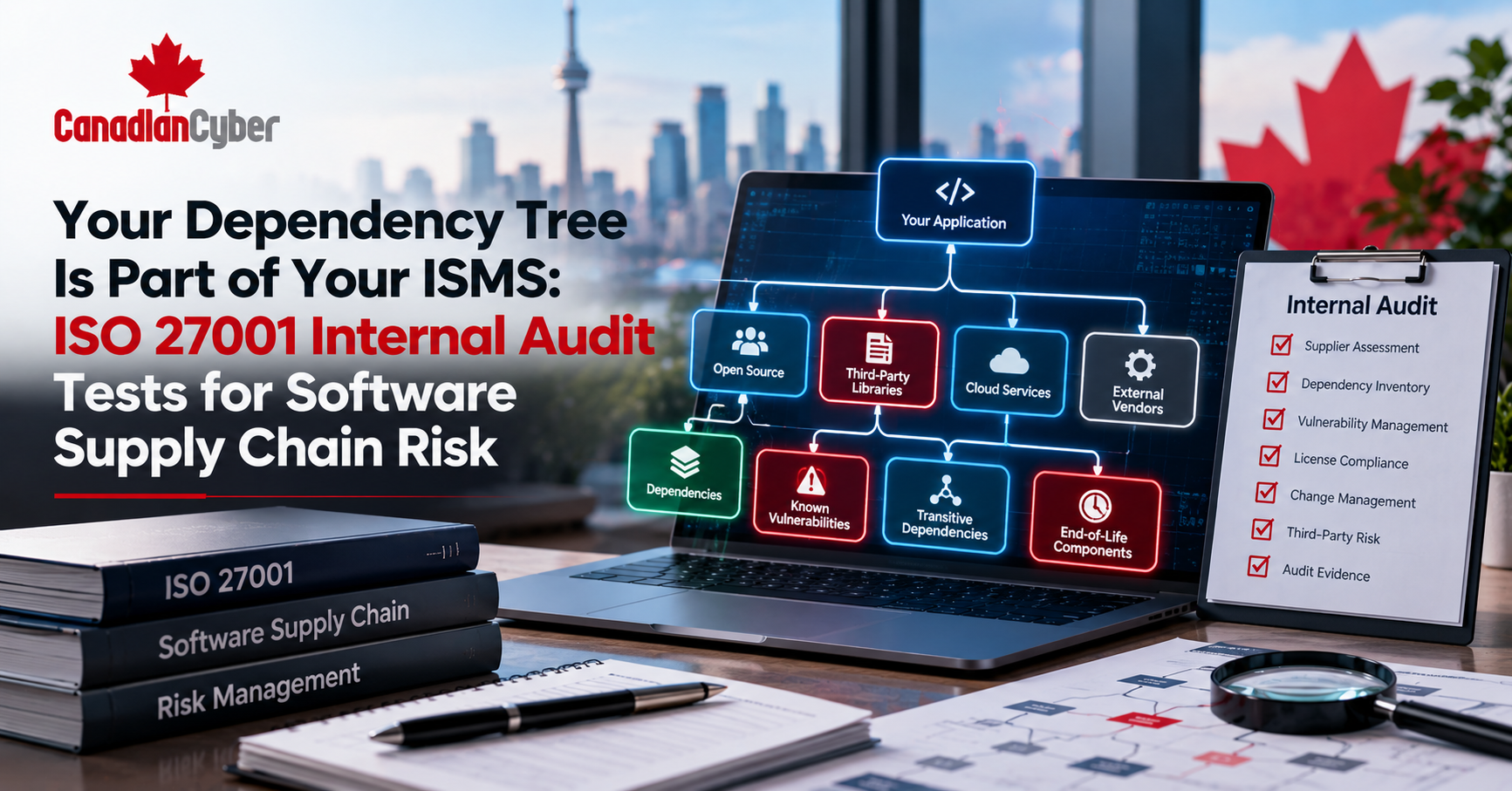
ISO 27001 • Internal Audit Evidence • DIY Audit Preparation • Evidence Readiness • ISMS Proof
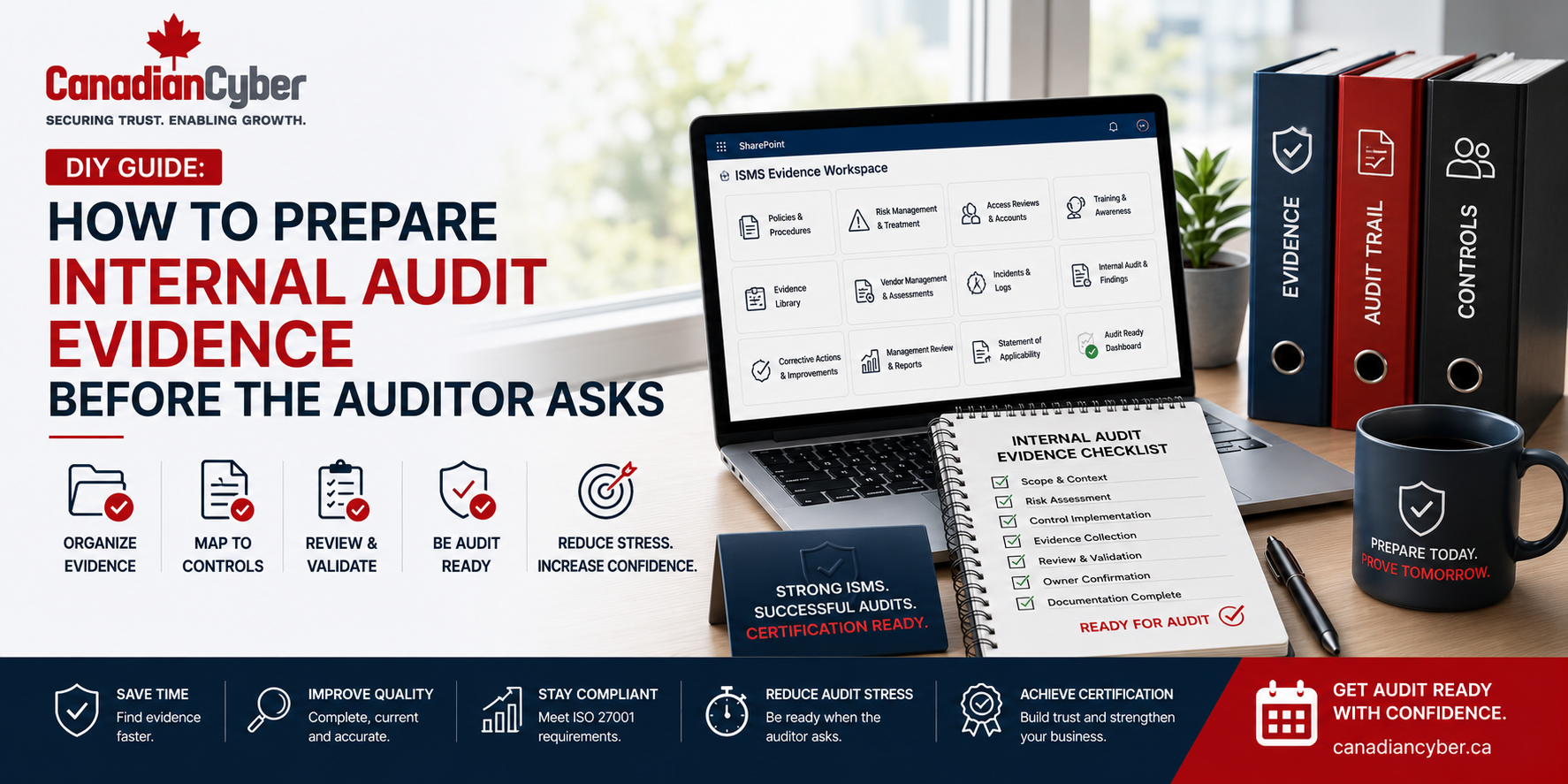
DIY Guide: How to Prepare Internal Audit Evidence Before the Auditor Asks
ISO 27001 internal audit evidence should not be collected at the last minute. Prepare it early, organize it clearly, and make it easy to explain.
Quick Answer
To prepare ISO 27001 internal audit evidence before the auditor asks, create one central evidence workspace.
Then map evidence to ISO 27001 clauses and Annex A controls. Assign owners, define evidence frequency, use naming rules, and collect proof when controls operate.
Practical takeaway: Audit evidence should be current, complete, easy to find, and easy to explain.
Quick Snapshot
| Evidence Step | What to Do Before the Auditor Asks |
|---|---|
| Central Workspace | Store evidence in one controlled location. |
| Control Mapping | Link evidence to clauses, controls, risks, and procedures. |
| Ownership | Assign a named owner for each recurring evidence item. |
| Frequency | Define whether evidence is annual, quarterly, monthly, weekly, daily, or event-based. |
| Quality Review | Check dates, owners, approvals, exceptions, and follow-up. |
| Evidence Pack | Prepare a clean pack before audit review week. |
Why You Should Prepare Evidence Before the Auditor Asks
Internal audit should not become a document hunt.
It should test whether the Information Security Management System is implemented, operating, reviewed, and improving.
When evidence is prepared early, the audit becomes smoother.
The team can answer questions faster, identify gaps earlier, prepare control owners, and avoid weak last-minute screenshots.
If evidence is collected only when the auditor asks, the organization is already late.
Who This Guide Is For
- ISMS managers and compliance leads.
- Internal audit coordinators and security managers.
- IT managers, risk owners, and control owners.
- vCISO teams supporting ISO 27001 programs.
- Canadian businesses preparing for ISO 27001.
- SaaS, MSP, FinTech, HealthTech, manufacturing, and professional services firms.
- Organizations using Microsoft 365 or SharePoint for evidence.
What Counts as ISO 27001 Internal Audit Evidence?
Internal audit evidence is proof that the ISMS is operating.
Evidence can include approved documents, system exports, reports, meeting minutes, screenshots, logs, tickets, review records, training reports, risk records, vendor reviews, access reviews, incident records, backup reports, restore tests, corrective actions, and approval records.
Good evidence should show:
- what happened.
- when it happened.
- who performed or approved it.
- which system or process it relates to.
- what exceptions were found.
- what follow-up occurred.
- which ISO 27001 requirement it supports.
Practical rule: Evidence should prove control operation, not just document existence.
Step 1: Build a Central Evidence Workspace
The first DIY step is to create one controlled place for internal audit evidence.
Do not store evidence across personal folders, email attachments, chat messages, desktops, and random screenshots.
Suggested evidence workspace structure:
- 01 ISMS Scope and Context.
- 02 Interested Parties and Requirements.
- 03 Risk Assessment and 04 Risk Treatment Plan.
- 05 Statement of Applicability.
- 06 Policies and Procedures.
- 07 Asset Inventory and 08 Access Control.
- 09 Vendor Management and 10 Training.
- 11 Incident Response and 12 Backup Evidence.
- 13 Change Management and 14 Logging.
- 15 Management Review and 16 Internal Audit.
- 17 Corrective Actions, 18 Auditor Requests, and 19 Client-Ready Evidence.
If the auditor asks for evidence, your team should know exactly where to look.
Step 2: Map Evidence to ISO 27001 Requirements
Evidence should not sit in folders without context.
Each item should map to a clause, Annex A control, risk, policy, or procedure.
| Evidence | Supports |
|---|---|
| ISMS Scope Statement | Clause 4.3 |
| Interested Parties Register | Clause 4.2 |
| Risk Register | Clause 6.1 and Clause 8.2 |
| Risk Treatment Plan | Clause 6.1 and Clause 8.3 |
| Statement of Applicability | Clause 6.1.3 |
| Training Records | Clause 7.2 and Clause 7.3 |
| Internal Audit Plan and Report | Clause 9.2 |
| Management Review Minutes | Clause 9.3 |
| Corrective Action Tracker | Clause 10.1 |
Create a simple evidence index with evidence name, clause or control, risk reference, owner, frequency, location link, last updated date, status, and notes.
Practical rule: A good evidence index helps answer, “What does this evidence prove?”
Step 3: Assign Evidence Owners
Evidence without ownership becomes delayed.
Each recurring evidence item should have a named owner.
| Evidence Type | Suggested Owner |
|---|---|
| Risk Register | ISMS Manager |
| Access Reviews | IT Manager |
| Vendor Reviews | Procurement or Vendor Owner |
| Training Records | HR or Compliance Lead |
| Backup Reports | IT Operations Lead |
| Incident Register | Security Lead |
| Corrective Actions | Finding Owner |
Owners should:
- collect evidence on time.
- check completeness.
- upload evidence to the workspace.
- explain exceptions.
- support corrective actions.
Step 4: Define Evidence Frequency
Different controls produce evidence at different times.
Some evidence is annual. Some is quarterly, monthly, weekly, daily, or event-based.
| Frequency | Evidence Examples |
|---|---|
| Annual | Management review, internal audit, policy review, training, vendor review. |
| Quarterly | Access reviews, risk reviews, privileged access reviews. |
| Monthly | Backup review, vulnerability review, security metrics. |
| Event-Based | Onboarding, offboarding, incidents, changes, vendor onboarding. |
Evidence should be collected when the control operates, not recreated later.
Step 5: Use Clear Evidence Naming Rules
Evidence names should be easy to understand.
Avoid file names like “screenshot1,” “new final,” “policy latest,” or “final final approved.”
Suggested Naming Format
ControlArea_EvidenceType_Period_Owner_Status
AccessReview_UserAccess_Q2-2026_ITManager_Approved
Training_SecurityAwareness_2026_HR_Completed
Backup_RestoreTest_July2026_ITOps_Completed
CorrectiveAction_IA-2026-05_ClosureEvidence_Verified
Step 6: Prepare Core ISO 27001 Evidence First
Start with the evidence auditors usually ask for early.
Core evidence pack:
- ISMS scope statement and context of organization.
- Interested parties register.
- Risk assessment methodology and risk register.
- Risk treatment plan and Statement of Applicability.
- Policy library and asset inventory.
- Internal audit program and internal audit report.
- Management review minutes.
- Corrective action tracker.
Practical rule: Core ISMS evidence should be ready before detailed control evidence is requested.
Step 7: Prepare Access Control Evidence
Access control is one of the most common audit finding areas.
Prepare access evidence early.
Evidence to collect:
- MFA report and admin account list.
- User access review and privileged access review.
- Cloud, support, and contractor access reviews.
- Offboarding evidence and access request approvals.
- Exception register and shared account review.
Quality check:
- Does the review show the system name and date?
- Does it show the reviewer?
- Does it show users reviewed and exceptions found?
- Does it show access removed and sign-off?
Step 8: Prepare Vendor Evidence
Vendor evidence should show that suppliers are identified, risk-rated, reviewed, and monitored.
Evidence to collect:
- Vendor register and critical vendor list.
- Vendor risk assessments and vendor review records.
- Contracts, DPAs, SOC 2 reports, and ISO certificates.
- Subprocessor list and vendor owner assignments.
- AI vendor reviews where relevant.
Rate vendors based on data sensitivity, service dependency, customer impact, access level, contractual importance, availability impact, and AI or cloud involvement.
A vendor that touches sensitive data, production systems, or customer service delivery should be reviewed before the audit.
Need Help Preparing ISO 27001 Evidence?
Canadian Cyber helps organizations organize internal audit evidence before the auditor asks.
Step 9: Prepare Training and Awareness Evidence
Training evidence should prove that employees understand information security responsibilities.
Evidence to collect:
- Training completion report.
- New hire and contractor training records.
- Policy acknowledgments and security awareness content.
- Phishing awareness records and role-based training.
- Overdue follow-up and AI acceptable use acknowledgment where relevant.
Step 10: Prepare Incident Response Evidence
Even if no major incidents occurred, the organization should still show incident readiness.
Evidence to collect:
- Incident response plan and severity matrix.
- Incident register and reporting procedure.
- Escalation contact list and tabletop exercise report.
- Lessons learned and corrective action tracker.
- Employee incident reporting awareness.
Practical rule: An empty incident register is better than no incident register, as long as it reflects reality.
Step 11: Prepare Backup and Recovery Evidence
Backups are not enough.
The organization should show that recovery has been tested.
Evidence to collect:
- Backup policy and backup schedule.
- Backup reports and backup failure review.
- Critical system list and restore test report.
- Disaster recovery plan and business continuity plan.
- Recovery owner assignments.
Quality check:
- Was restore testing performed?
- Which system was restored?
- Who performed the test?
- Were issues resolved?
Step 12: Prepare Change Management Evidence
Change management evidence should prove that changes are requested, reviewed, approved, tested, and deployed.
Evidence to collect:
- Change management procedure and change tickets.
- Pull request approvals and release approvals.
- Deployment records and testing evidence.
- Emergency change records and rollback records.
- Security review evidence and change calendar.
Change evidence should tell the full story from request to deployment.
Step 13: Prepare Management Review Evidence
Management review is leadership evidence.
It should show that leadership reviewed the ISMS and made decisions.
Evidence to collect:
- Management review agenda and attendee list.
- Input pack and risk dashboard.
- Security objectives status and internal audit summary.
- Incident summary and corrective action status.
- Vendor risk summary.
- Meeting minutes, decision log, and action tracker.
Step 14: Prepare Corrective Action Evidence
Corrective actions show continual improvement.
They should be tracked and verified.
Corrective action tracker fields:
- Finding ID, source, and finding type.
- Root cause, correction, and corrective action.
- Owner, deadline, and status.
- Evidence link and verification owner.
- Closure date and verification records.
Practical rule: A corrective action is not closed until evidence proves the fix worked.
Step 15: Review Evidence Quality Before the Audit
Do not wait for the auditor to tell you that evidence is weak.
Review it yourself first.
Evidence quality checklist:
- Is it current and dated?
- Is the owner clear?
- Is approval visible?
- Is the system or process identified?
- Is the period covered?
- Are exceptions documented?
- Is follow-up shown?
- Can the owner explain it?
Step 16: Prepare Control Owners for Auditor Questions
Auditors may interview owners.
Control owners should be ready to explain what they do.
Owner preparation questions:
- What control do you own?
- How often does it operate?
- Where is evidence stored?
- What happens if the control fails?
- Were there exceptions?
- How were exceptions handled?
Step 17: Build a Missing Evidence Tracker
Before the audit, track anything that is missing.
Missing evidence should become an action item before it becomes an audit finding.
Tracker fields:
- Evidence item and control area.
- Owner and status.
- Reason missing and risk level.
- Target date and temporary note.
- Corrective action needed and final evidence link.
Step 18: Create a Clean Internal Audit Evidence Pack
Once evidence is organized, prepare a clean pack for the auditor.
This helps the auditor focus on control testing, not file searching.
The evidence pack should include:
- approved current documents.
- relevant records only.
- clear folder structure and evidence index.
- control mapping and owner list.
- audit period and status notes.
- exception explanations and corrective action links.
DIY ISO 27001 Evidence Readiness Checklist
| Evidence Preparation Question | Ready? |
|---|---|
| Is there one central evidence workspace? | |
| Is evidence mapped to ISO 27001 clauses and controls? | |
| Does each evidence item have an owner? | |
| Is evidence frequency defined? | |
| Are naming rules used consistently? | |
| Is the ISMS scope ready? | |
| Is the risk register current? | |
| Is the Statement of Applicability justified? | |
| Are policies approved and current? | |
| Are access reviews complete? | |
| Are vendors reviewed? | |
| Is training evidence complete? | |
| Is incident response evidence prepared? | |
| Is backup restore testing documented? | |
| Is change management evidence traceable? | |
| Is management review complete? | |
| Are corrective actions verified? | |
| Are control owners prepared? |
Common DIY Evidence Mistakes
- Collecting evidence too late. Evidence should be collected throughout the year.
- Saving evidence without control mapping. The team should know which ISO requirement the evidence supports.
- No evidence owner. Every recurring evidence item needs accountability.
- Screenshots without context. Screenshots should include date, system, purpose, and explanation.
- Draft policies mixed with approved policies. Keep approved evidence separate from working drafts.
- Ignoring exceptions. Exceptions should be documented and followed up.
- Control owners are unprepared. Owners should understand their process and evidence.
- No corrective action verification. Closure needs evidence and review.
How SharePoint Can Help With DIY Evidence Preparation
SharePoint is a practical option for organizations that already use Microsoft 365.
It can help teams prepare internal audit evidence before the auditor asks.
Canadian Cyber’s ISMS SharePoint Solution can structure:
- Policy library and procedure library.
- Risk register and Statement of Applicability tracker.
- Control register and evidence library.
- Access review tracker and vendor register.
- Incident, training, backup, and change evidence.
- Management review dashboard and internal audit workspace.
- Corrective action tracker and missing evidence tracker.
- Audit request tracker, client-ready evidence room, Power Automate reminders, and Teams notifications.
SharePoint works best when it is designed as an ISMS evidence system, not a file dump.
How Canadian Cyber Helps
Canadian Cyber helps organizations prepare ISO 27001 internal audit evidence in a structured, practical, and audit-ready way.
We help teams reduce evidence panic, prepare control owners, fix missing proof, and organize ISMS records before review week.
Canadian Cyber can support:
- ISO 27001 evidence readiness reviews.
- ISO 27001 internal audits.
- SharePoint ISMS implementation.
- Control-to-evidence mapping.
- Risk register and SoA reviews.
- Policy evidence review.
- Access and vendor evidence checks.
- Training, incident, backup, and change evidence review.
- Management review preparation.
- Corrective action verification and evidence pack preparation.
- vCISO services, SOC 2 readiness, ISO 27017, ISO 27018, and ISO 42001 support.
Frequently Asked Questions
What evidence is needed for an ISO 27001 internal audit?
Common evidence includes ISMS scope, interested parties, risk register, risk treatment plan, Statement of Applicability, policies, access reviews, vendor reviews, training records, incident records, backup restore tests, change records, management review minutes, and corrective action records.
When should internal audit evidence be prepared?
Evidence should be prepared throughout the year as controls operate. Waiting until the auditor asks can create missing records and weak proof.
How should ISO 27001 evidence be organized?
Evidence should be stored in a central workspace. It should be mapped to ISO 27001 clauses and Annex A controls, assigned to owners, named consistently, reviewed for quality, and tracked by status.
Can SharePoint be used for ISO 27001 evidence?
Yes. SharePoint can manage policies, risks, SoA, evidence libraries, access reviews, vendor records, internal audit records, management review dashboards, and corrective actions.
What makes evidence audit-ready?
Audit-ready evidence is current, complete, dated, approved where required, mapped to a control, owned by someone, and easy to explain.
Can Canadian Cyber help prepare evidence before the audit?
Yes. Canadian Cyber helps organizations prepare ISO 27001 evidence, build SharePoint ISMS workspaces, perform evidence readiness reviews, conduct internal audits, and verify corrective actions.
Takeaway
ISO 27001 internal audit evidence should not be a last-minute scramble.
The best approach is to prepare before the auditor asks.
Start with one central evidence workspace. Then map evidence to clauses and controls, assign owners, define frequency, use naming rules, collect proof when controls operate, review evidence quality, track missing items, prepare control owners, and build a clean evidence pack.
When the auditor asks, the evidence should already be ready.
Want Your ISO 27001 Evidence Ready Before Review Week?
Canadian Cyber can help you prepare evidence before the auditor asks.
We provide ISO 27001 evidence readiness reviews, ISO 27001 internal audits, SharePoint ISMS implementation, control-to-evidence mapping, management review preparation, corrective action verification, vCISO services, cybersecurity assessments, SOC 2 readiness, ISO 27017, ISO 27018, and ISO 42001 AI governance support.
Stay Connected With Canadian Cyber
Follow Canadian Cyber for practical guidance on ISO 27001 internal audits, evidence preparation, SharePoint ISMS, audit readiness, corrective actions, SOC 2, ISO 42001, ISO 27017, ISO 27018, cybersecurity assessments, and vCISO support.